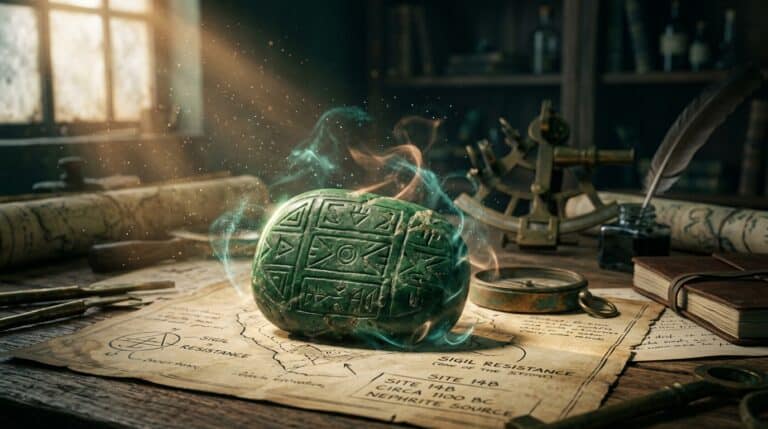

The Eternal Enigma Of The Count Of St Germain
Deep within the heart of Naples, a centuries-old secret continues to baffle scientists and believers alike, often referred to by seekers as the San Germano mystery. Inside the grand Cathedral of the Assumption of Mary, two small, sealed glass vials hold the dried, dark remains of Saint Januarius, a martyr from the fourth century. Three times every year, thousands of people gather in hushed anticipation to witness a phenomenon that defies the known laws of physics. As the bishop handles the reliquary, the solid, crusty substance suddenly transforms into a flowing, vibrant crimson liquid.
This recurring event is far more than a simple ritual; for the people of Italy, the state of the blood is a powerful omen for the future. History shows a chilling pattern where years the blood failed to liquefy were followed by catastrophic earthquakes, eruptions of Mount Vesuvius, or the outbreak of war. While skeptics search for chemical explanations and the faithful pray for a miracle, the vials remain a haunting bridge between the physical world and the divine. The mystery invites everyone to wonder if some forces are simply beyond the reach of modern documentation.
Key Takeaways
- The recurring liquefaction of Saint Januarius’s blood in Naples serves as a powerful cultural omen, with failed transformations historically preceding major disasters like earthquakes and wars.
- The Count of Saint Germain remains one of history’s most enduring enigmas due to consistent 18th-century accounts of his unchanging, youthful appearance over several decades.
- Historical reports of the Count’s mastery over alchemy, unique dietary habits, and fluency in ancient history suggest a potential early understanding of biological preservation or advanced chemistry.
- Sustained sightings of the Count throughout the 19th and 20th centuries by credible figures challenge standard concepts of mortality and the limits of documented science.
A Man Of Many Faces And Centuries
The Count of St. Germain remains one of the most baffling figures to ever walk the halls of European royalty during the eighteenth century. While many adventurers of the era sought fame through trickery, this mysterious alchemist claimed a much more profound secret: the gift of eternal life. Witnesses from various decades reported seeing the same man in different cities, yet his face never seemed to age a single day. Historical accounts from the French court of Louis XV describe a man who appeared to be in his mid forties, possessing a sharp intellect and a staggering knowledge of history. Curiously, elders who had seen him forty years prior claimed he looked exactly the same then as he did in their old age.
Observers were consistently mesmerized by his ability to speak nearly every European language with perfect fluency while discussing ancient events as if he had personally attended them. He often hinted at possessing the Philosopher’s Stone, a legendary alchemical substance said to grant immortality and turn lead into gold. While skeptics of the time tried to unmask him as a clever fraud, they struggled to explain how he maintained his youthful appearance over such a long period. Some journals from the era even suggest he was spotted in different countries long after his reported death, fueling the legend that he had mastered the art of biological preservation. This enduring mystery invites us to wonder if he was simply a master of disguise or if he truly discovered a secret of nature that modern science has yet to uncover.
What do you think was the secret behind the Count’s unchanging appearance across the centuries? Do you believe it is possible for someone to master alchemy to the point of halting the aging process, or was he just the world’s most talented storyteller? Share your thoughts on whether this was a case of historical misidentification or a genuine brush with the supernatural.
Alchemy And The Secret Of Immortality
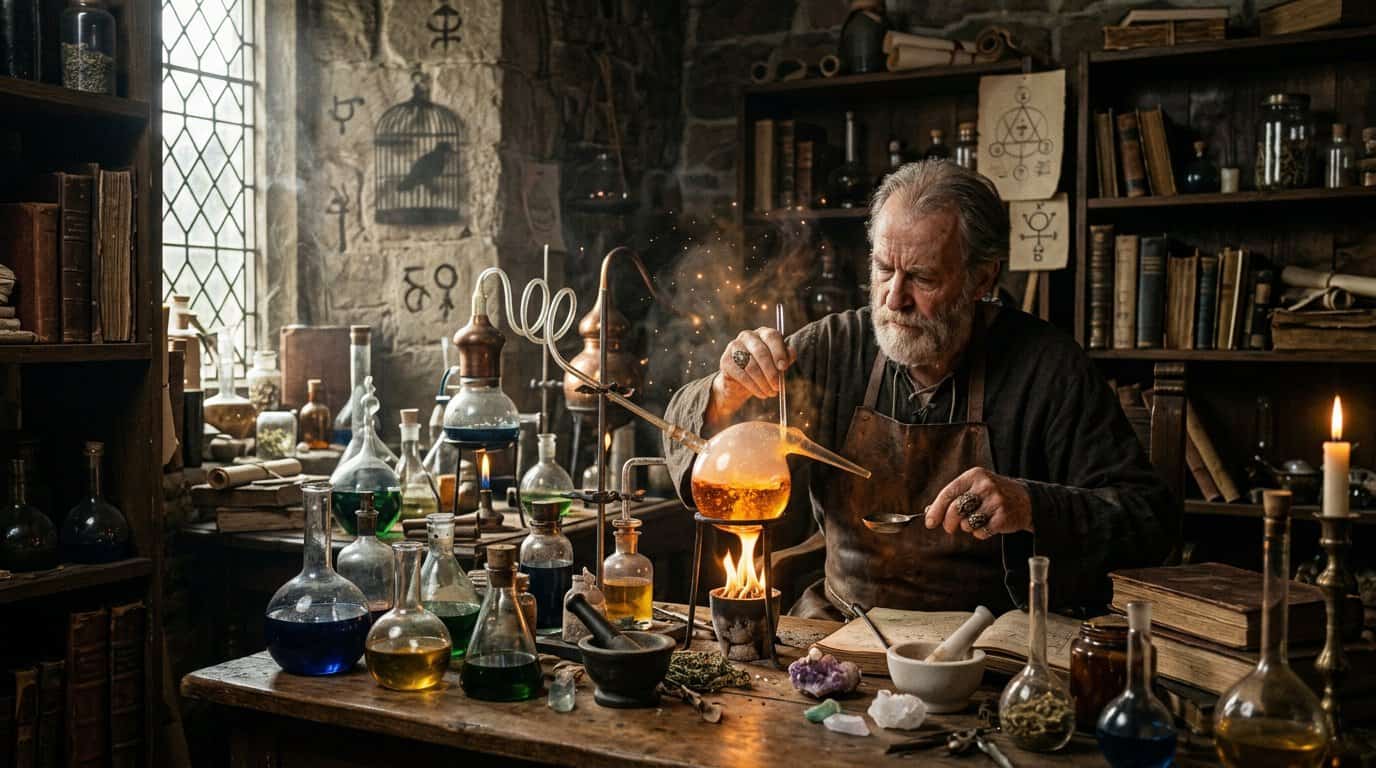
The Count of Saint Germain was often seen hunched over bubbling retorts and glowing crucibles in his private laboratories, fueled by a passion for the transformative power of chemistry. Witnesses throughout 18th century Europe, including the philosopher Voltaire, noted that the Count possessed an uncanny mastery over alchemy and the ability to remove flaws from precious diamonds and create vibrant, synthetic pigments that outshone natural dyes. These alchemical pursuits were not merely for wealth, as many believed he was searching for the universal solvent capable of purifying the human body. By mastering the composition of matter, Saint Germain allegedly developed a unique understanding of how to halt the natural process of decay. His contemporaries often remarked that he appeared to be a man in his mid forties for several decades, never showing the typical signs of aging that claimed his peers.
Rumors of a secret elixir of life followed the Count wherever he traveled, bolstered by his peculiar habit of never eating in public. He claimed to subsist on a mysterious diet of groat porridge and a special herbal tea, which some biographers like Isabel Cooper-Oakley suggest contained potent alchemical properties. This concoction was whispered to be the true source of his vitality, allowing him to maintain his youthful appearance and sharp intellect well beyond a normal human lifespan. While skeptics argue his longevity was a ruse involving wigs and makeup, others point to historical records where he was recognized by elderly aristocrats who remembered him looking exactly the same forty years prior. The mystery of whether he truly discovered a chemical fountain of youth remains one of history’s most fascinating puzzles.
Modern science has struggled to explain how a single individual could appear in historical accounts spanning over a century without seemingly aging a day. Some researchers suggest that his knowledge of chemistry allowed him to create advanced medicines that were far ahead of his time, effectively extending his health and vigor. Whether he was a master of biological manipulation or simply a brilliant illusionist, the legend of the man who never dies continues to captivate those who believe the secrets of the ancients are still waiting to be rediscovered. This leads us to wonder if such a breakthrough is truly possible through the study of forgotten sciences. Do you think a mastery of chemistry could actually unlock the secret to eternal life, or was the Count just a master of staying young at heart?
Sightings Beyond The Eighteenth Century
Reports of the Count of St. Germain did not cease with his burial in 1784, leading many to wonder if his alchemical secrets truly granted him eternal life. Throughout the nineteenth century, various aristocrats and public figures claimed to have encountered the mysterious gentleman in the salons of Europe. One of the most famous accounts comes from the Comtesse d’Adhémar, who insisted she met the Count multiple times long after his supposed death. She described him as appearing exactly as he had decades prior, showing no signs of aging despite the passage of time. These sightings often occurred during moments of great political upheaval, suggesting the Count remained a silent observer of history.
The mystery deepened as the twentieth century approached, with sightings spreading far beyond the borders of France and Germany. Theosophist Annie Besant claimed to have met the Count in 1896, while others reported seeing a man matching his distinct description in locations as far-flung as India and the United States. These witnesses frequently noted his profound knowledge of history and his ability to speak numerous languages with native fluency. Skeptics often argue these were cases of mistaken identity or clever imposters, yet the consistency of the descriptions remains a point of fascination. The enduring nature of these reports keeps the legend of the immortal alchemist alive in the modern imagination.
As we look at these strange historical footnotes, one has to wonder if it is possible for a man to truly step outside the bounds of time. Whether these sightings were the result of a secret society carrying on his name or a genuine supernatural phenomenon, the impact on culture is undeniable. The Count remains a figure who challenges our understanding of mortality and the potential of ancient science. What do you think is the most likely explanation for these persistent sightings across the centuries? Share your thoughts in the comments below and let us know if you believe in the possibility of an undying traveler.
The Ageless Legacy of a Master Alchemist
The enigma of the Count of Saint Germain remains one of history’s most captivating puzzles, blending the lines between documented fact and impossible legend. Whether he was truly a master of alchemy who discovered the secret to eternal life or simply a brilliant polyglot with a talent for reinvention, his impact on the 18th century was undeniable. His presence in the royal courts of Europe left behind a trail of witnesses who swore he never aged, possessing a youthfulness that defied the natural passing of decades. This fascination stems from his unique ability to master every craft he touched, from fine art and music to the complex sciences of his day. Even centuries later, the stories of his mysterious disappearances and reappearances continue to spark curiosity among those who seek the truth behind the fringe.
As we look back on the various accounts of his life, it becomes clear that Saint Germain was either a man far ahead of his time or something entirely beyond our understanding. Historical documentation proves his existence and his impressive intellect, yet it fails to explain the supernatural aura that seemed to follow him through every country he visited. Some believe he was a mere charlatan using clever tricks to fool the elite, while others are convinced he was a genuine immortal who walked through history as a silent observer. The mystery invites us to question the boundaries of human potential and the quest for immortality that has been pursued by various cultures throughout time. We want to hear your thoughts on this legendary figure and whether you believe he was a gifted genius or a being from a realm we have yet to comprehend.
Frequently Asked Questions
1. What exactly is the miracle of the blood in Naples?
The miracle involves the dried blood of Saint Januarius, which is kept in two sealed glass vials within the Naples Cathedral. Three times every year, this solid substance mysteriously transforms into a flowing liquid in front of thousands of witnesses. This event remains one of the most famous unexplained phenomena in the religious world.
2. Why is the liquefaction of the blood considered an omen?
Local tradition holds that the state of the blood predicts the safety of the city and the world. History shows that when the substance failed to liquefy, it often preceded dark times such as the 1980 Irpinia earthquake or the outbreak of major wars. It serves as a spiritual barometer that the people of Naples watch with great intensity.
3. Who was the mysterious Count of St. Germain?
The Count was a legendary alchemist and adventurer who became a sensation in the 18th-century French court of Louis XV. He was famous for his vast knowledge of history and his claim to have discovered the secret to eternal life. He remains a figure of intense fascination because he never seemed to age over several decades.
4. Is there any evidence that the Count of St. Germain lived for centuries?
Historical accounts from various European cities describe a man with the exact same features appearing across different generations. Elders in the French court reported that the Count looked identical to the man their parents had described forty years earlier. While science cannot confirm his immortality, these consistent witness reports create a compelling historical puzzle.
5. How do scientists explain the liquid blood phenomenon?
Skeptics often suggest that the vials might contain thixotropic substances, which are materials that liquefy when stirred or handled. However, no definitive chemical explanations have ever fully replicated the specific behavior of the Saint Januarius relics under controlled conditions. The mystery continues to sit at the intersection of scientific curiosity and deep-seated faith.
6. Why are these two different stories linked together?
Both the miracle of the blood and the life of the Count represent the enduring human quest to understand the impossible. They bridge the gap between our physical world and the divine, challenging the idea that everything can be explained by modern documentation. These stories invite us to keep an open mind about the secrets hidden within history, much like the debates surrounding The Shroud of Turin and its origins.