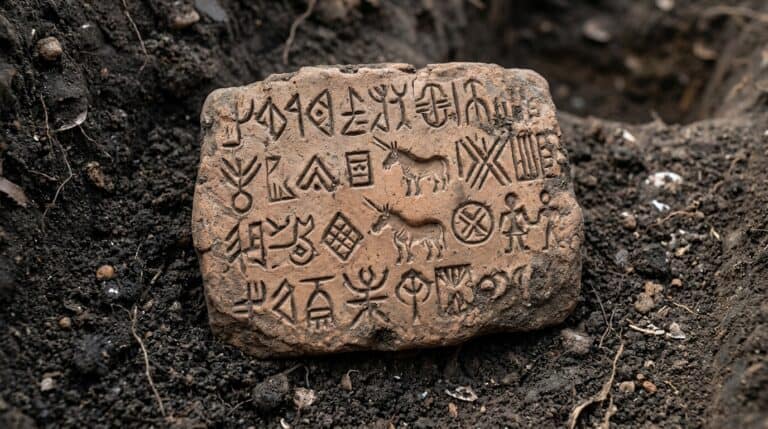
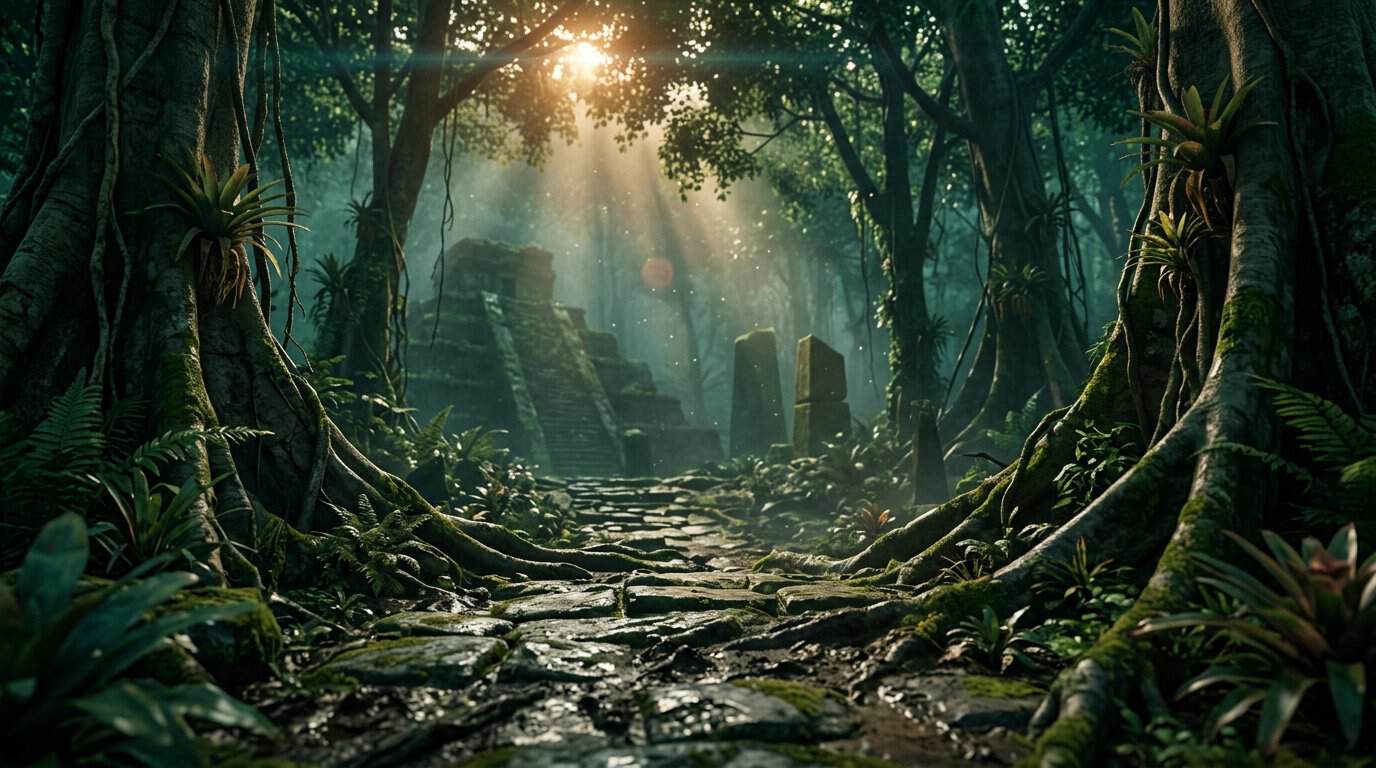
The Rondonia Path Discovery And The Lost Civilizations Of The Amazon
Deep beneath the emerald canopy of the Brazilian rainforest, a long-hidden secret is finally coming to light. The recent rondonia path discovery is fundamentally changing how the world views the Amazon, revealing that this vast wilderness was once a bustling hub of human activity. Using advanced laser technology to peer through the thick trees, researchers have uncovered a massive network of ancient roads that hint at a sophisticated civilization lost to time.
These are not just simple trails, but straight, engineered highways that stretch for hundreds of kilometers across the terrain. The sheer scale of these findings suggests that the ancestors of the Amazon were master builders who organized their world with incredible precision. As the dirt is brushed away from these ceremonial avenues and forgotten settlements, a new story of human history begins to emerge from the shadows of the jungle.
Key Takeaways
- The discovery of nearly 1,000 ancient, engineered roads in Rondônia proves that the Amazon was once a bustling hub of human activity rather than an untouched wilderness.
- Advanced LiDAR technology has revealed that 95% of these pathways are perfectly straight and up to 40 meters wide, demonstrating sophisticated mathematical precision and engineering dating back to 763 BCE.
- The presence of massive geometric geoglyphs and interconnected roadways suggests the ancient Amazonians operated a highly organized ‘garden city’ with a deep understanding of astronomy and social cooperation.
- This extensive network of ceremonial avenues and settlements challenges traditional historical timelines, indicating the region supported a massive, structured civilization long before European contact.
Laser Technology Reveals The Hidden Aquiry Roadways
Deep beneath the emerald canopy of the Amazon, a silent revolution is unfolding as LiDAR technology peels back layers of dense vegetation to reveal a forgotten world. This advanced laser technology has exposed an incredible network of 955 ancient roads that stretch across the region of Rondonia and its neighboring areas. These pathways are not the winding trails one might expect from a primitive culture, but instead represent a masterclass in ancient engineering. Researchers have found that nearly ninety five percent of these roads are perfectly straight, cutting through the terrain with mathematical precision. Dating back as far as 763 BCE, these structures suggest that a highly organized and sophisticated society flourished in the rainforest long before modern history began.
The sheer scale of this discovery challenges previous assumptions about the history of the Americas. These roads vary from narrow paths to massive ceremonial avenues reaching forty meters in width, connecting a series of mysterious geometric earthworks known as geoglyphs. Scientific studies indicate that this network covers over three hundred kilometers, serving as a physical blueprint of a lost civilization. While some experts view these as simple transit routes, others believe they held a deeper, perhaps spiritual purpose for the people who built them. The presence of such straight lines over vast distances implies a level of planning and social cooperation that rivals the great civilizations of the ancient world.
The mystery of why these people chose to build such rigid, straight roadways through a wild and curving environment remains one of the most intriguing questions in modern archaeology. These out of place artifacts suggest that the Amazon was not a pristine wilderness, but a carefully managed garden city teeming with life and activity. As more of the Rondonia path discovery comes to light, we are forced to reconsider the possibility of advanced knowledge held by these early inhabitants. Was this network a map of the stars reflected on the earth, or perhaps a grand statement of power over the natural world? We want to hear your thoughts on these incredible findings, so do you believe these roads are proof of a legendary lost empire hidden in the jungle?
Geometric Earthworks And The Mystery Of The Geoglyphs
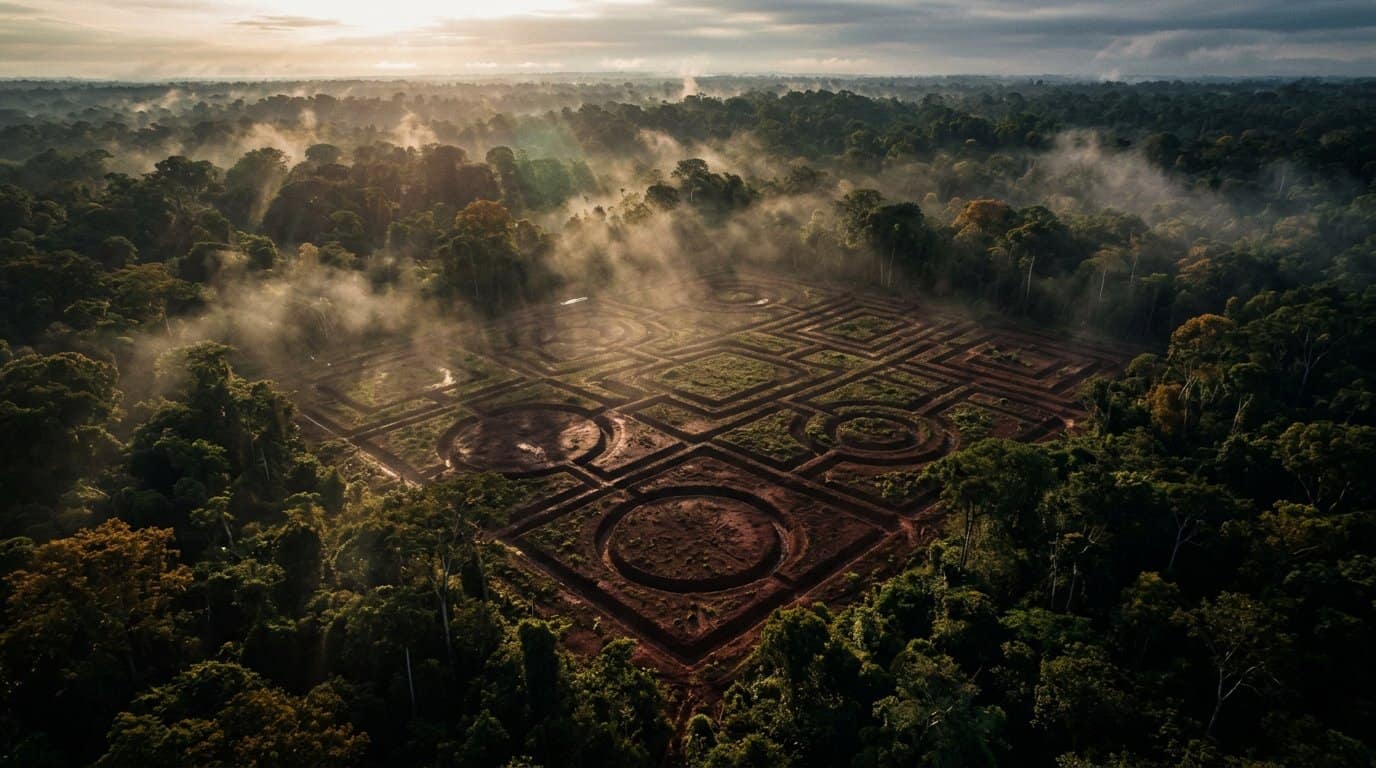
Deep beneath the thick canopy of the Amazon rainforest in Rondônia, a series of massive geometric patterns has emerged from the earth like a forgotten language. These geometric geoglyphs, consisting of perfectly formed circles and squares, were only revealed to the modern world after decades of deforestation cleared the area. Archaeologists utilizing LiDAR technology have mapped hundreds of these structures, which suggest that the ancient inhabitants possessed a sophisticated understanding of geometry and large scale engineering. These are not merely random clearings, but intentional earthworks that hint at a highly organized society capable of transforming the jungle floor into a structured environment.
The precision of these shapes raises fascinating questions about the tools and techniques used by these early builders. Many of the earthworks are connected by a vast network of straight roads, some stretching for hundreds of kilometers across the southwestern Amazon. Recent studies highlight that nearly ninety five percent of these paths follow remarkably straight lines, indicating a level of planning that rivals the famous Roman roads. This discovery challenges the long held belief that the Amazon was a pristine wilderness, revealing instead a region that was once a bustling hub of human activity and advanced architectural design.
While some researchers suggest these sites served as ceremonial centers or defensive fortifications, the sheer scale of the geometric earthworks points to a deeper mystery. The alignment of these structures suggests they may have held astronomical significance or served as markers for a civilization that has since vanished into myth. As we uncover more of these hidden paths, we are forced to reconsider the true history of the Americas and the hidden civilizations and lost knowledge of its original architects. What do you think these massive shapes were used for, and could they be the remnants of a legendary lost city hidden in the green vastness of Brazil?
Sacred Alignments And The Lost City Of Rondonia
The recent discovery of a colonial settlement in Rondônia has opened a new chapter in our understanding of the Amazonian region. Using advanced LiDAR technology, researchers have peeled back the thick jungle canopy to reveal a hidden world that was once thought to be a pristine wilderness. These high tech scans have identified nearly a thousand ancient roads stretching across hundreds of miles, connecting long lost sites with surprising precision. The sheer scale of these earthworks suggests that a highly organized society once thrived here, creating a complex network that defies traditional historical timelines. This find challenges the old belief that the rainforest could only support small, nomadic groups of people.
What makes these discoveries truly captivating is the geometric perfection of the paths and their alignment with the natural world. Nearly ninety five percent of these roads are remarkably straight, cutting through the dense terrain with a level of engineering that rivals modern planning. Many of these avenues appear to align with specific cardinal directions and celestial patterns, suggesting they served a purpose far beyond simple transportation. Archaeologists and researchers believe these paths may have been used for grand ceremonial processions, guiding ancient travelers toward sacred sites under the watchful eyes of the stars. This intentional design hints at a deep spiritual connection between the architecture of the lost city and the cosmos above.
The discovery of these sacred alignments invites us to reconsider the sophistication of the people who built them. While some scientists focus on the logistical power required to move such vast amounts of earth, others wonder if these geometric patterns were meant to be seen from the heavens. The presence of wide ceremonial avenues alongside narrow footpaths suggests a society that valued both function and profound symbolism. As we continue to map these hidden ruins in the southwestern Amazon, we are left to wonder what other secrets remain buried beneath the roots and vines. Do you think these straight lines were built for practical travel, or were they meant to mirror the stars for a forgotten religious ritual?
Rethinking The Amazon As A Managed Garden
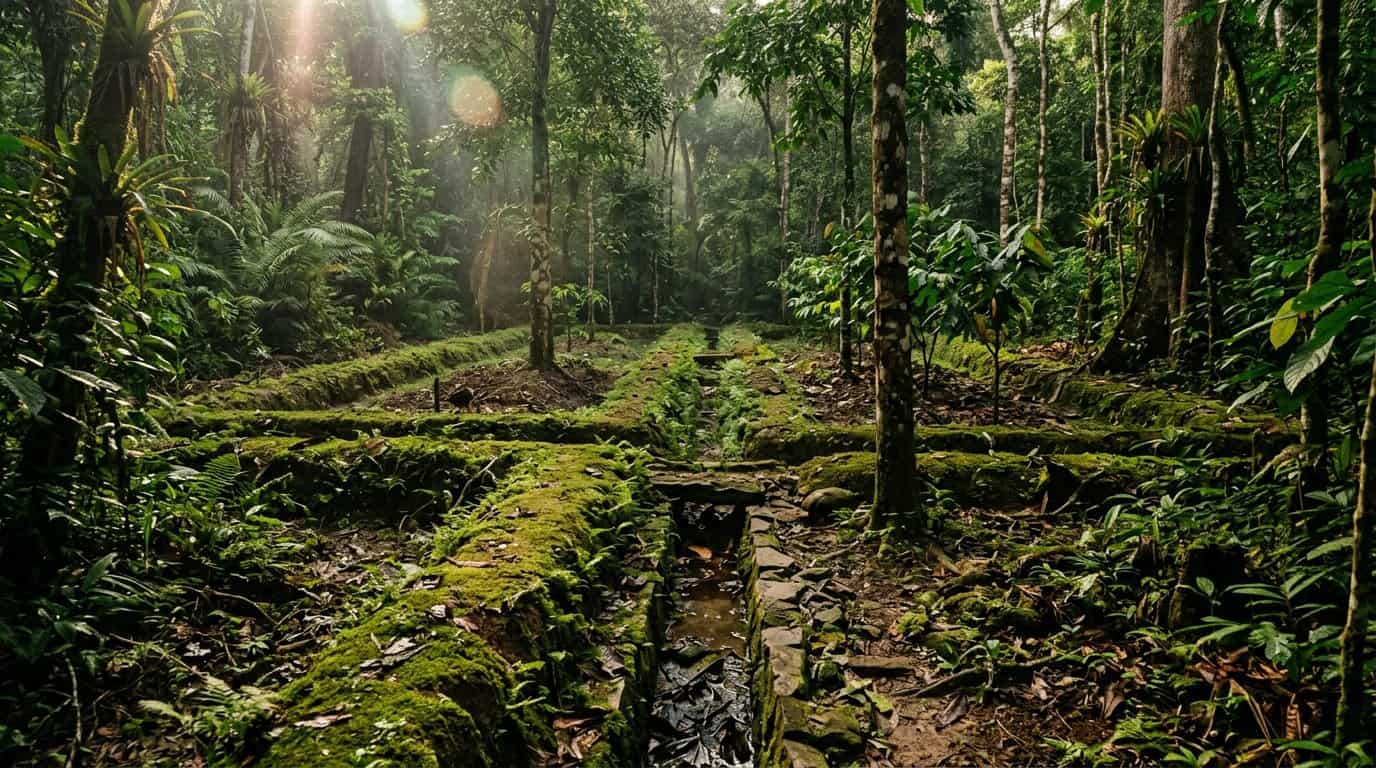
The recent discovery of nearly one thousand ancient roads in the Rondônia region has shattered the long held belief that the Amazon was a pristine wilderness untouched by human hands. Using advanced LiDAR technology to peer through the dense canopy, researchers have uncovered a massive network of straight, engineered paths that stretch for hundreds of miles. These findings suggest that the rainforest was not a wild jungle, but rather a carefully managed area designed by a sophisticated civilization. Instead of living in isolated groups, these ancient people built a connected world that functioned like a massive, sprawling garden. This architectural evidence points to a high level of social organization and a deep understanding of the local environment.
The sheer scale of these earthworks reveals a level of planning that rivals some of the greatest civilizations of the ancient world. With some ceremonial avenues reaching widths of up to forty meters, these paths served as the literal backbone of a bustling regional hub. Archaeologists note that the remarkable straightness of these roads indicates a mastery of engineering and a clear vision for long distance travel. These were not random trails made by wandering tribes, but intentional structures that linked settlements, farms, and sacred sites together. By shaping the earth and directing the growth of the forest, these inhabitants created a sustainable urban environment that thrived for centuries.
These discoveries invite us to look at the Amazon through a new lens, moving away from the idea of a green desert and toward the reality of a lost metropolitan center. The geometric precision of the mounds and roads found in Rondônia suggests that much of the rainforest we see today actually grew over the ruins of a complex society. This shift in perspective forces us to wonder what other secrets remain hidden beneath the roots and vines of the Brazilian interior. If the Amazon was once a meticulously managed garden, it raises fascinating questions about how many people truly lived there and what eventually led to their disappearance. What do you think these vast road networks say about the true history of the Americas, and could there be even larger cities still waiting to be found?
Unearthing the Amazon’s Hidden Ancient Highways
The discovery of these ancient paths in Rondônia invites us to wonder what other secrets remain buried in the mud and how these out-of-place artifacts redefine human history. For decades, the dense canopy of the Amazon was thought to be a pristine wilderness untouched by large-scale civilization. Now, the straight lines and complex road networks revealed by LiDAR technology suggest a highly organized society that mastered the area long before European contact. These findings challenge the traditional narrative of a primitive past, hinting at a sophisticated culture that possessed advanced engineering skills and a deep understanding of geometry. Each new road uncovered acts as a bridge to a forgotten era, forcing us to reconsider the scale and intelligence of the people who once called this rainforest home.
The mystery of these geometric earthworks and vast transportation systems leaves us with more questions than answers about the true nature of ancient Brazil. While researchers have documented hundreds of kilometers of these straight paths, the purpose behind their precise construction remains a subject of intense curiosity. Some believe they were ceremonial avenues for grand processions, while others see them as evidence of a lost city of interconnected cities hidden beneath the soil. As deforestation continues to peel back the layers of the forest, it reveals a blueprint of human achievement that was nearly lost to time. These discoveries serve as a powerful reminder that history is often deeper and more complex than the stories we find in modern textbooks.
What do you think these massive, straight roads were used for by the ancient people of the Amazon? Could there be even larger cities still waiting to be found deep within the unexplored parts of Rondônia? The idea that a massive civilization thrived in a place once considered uninhabitable is a thrilling prospect for anyone interested in the mysteries of our world. We invite you to share your thoughts and theories on these incredible findings in the comments below. By looking closely at the evidence left behind in the earth, we can begin to piece together the true story of the ancient masters of the rainforest.
Frequently Asked Questions
1. What exactly is the Rondonia path discovery?
The Rondonia path discovery refers to a massive network of over 900 ancient roads hidden beneath the thick Brazilian rainforest. These engineered highways reveal that a highly organized and advanced civilization lived in the Amazon much earlier than previously thought.
2. How did researchers find these roads through the thick jungle?
Scientists used a specialized laser technology called LiDAR to peer through the dense emerald canopy. This light based scanning strips away the digital image of the trees to reveal the hidden shapes of the ground and structures underneath.
3. How old are these ancient Amazonian highways?
Evidence suggests these structures date back as far as 763 BCE, showing that sophisticated builders were active in the region over 2,500 years ago. This timeline challenges the traditional idea that the rainforest was a wild wilderness untouched by large scale human engineering.
4. Were these paths just simple dirt trails for walking?
These were complex, engineered roads that reached widths of up to forty meters in some areas. Nearly ninety five percent of them are perfectly straight, cutting through the terrain with a level of mathematical precision that suggests they were used for major trade and ceremonies.
5. What does this discovery tell us about the people who lived there?
The scale and precision of the roadways indicate the ancestors of the Amazon were master builders part of a highly organized society. They transformed the jungle into a bustling hub of activity, connecting different settlements through a vast and intentional urban network.
6. Why is the Rondonia path discovery considered so significant for history?
This find fundamentally changes the story of human history in the Americas by proving the Amazon was not a sparsely populated forest. It shows that a lost civilization once thrived there, creating a structured world that was eventually swallowed by the jungle shadows.