The Giant Walls Of Siberia: Investigating The Gornaya Shoria Megaliths
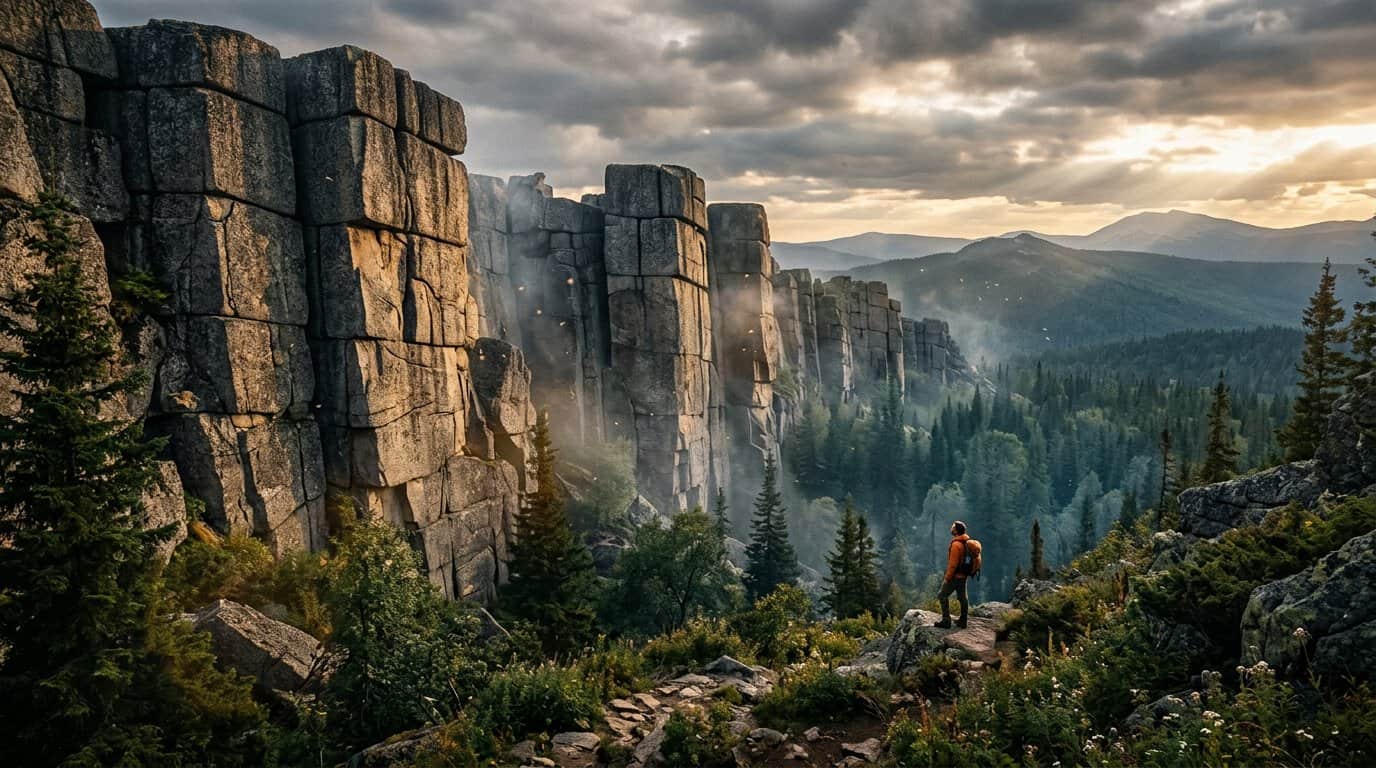
Deep in the rugged wilderness of Southern Siberia, a discovery on Mount Kuylyum has sparked a global debate about the true history of our planet. The gornaya shoria megaliths appear as colossal walls of granite, with some individual blocks estimated to weigh an incredible 4,000 tons. These massive stones are stacked with such precision that they challenge our understanding of what nature, or an ancient civilization, is capable of creating.
While many geologists suggest these towering structures are the result of natural weathering over millions of years, the sheer scale of the site leaves room for wonder. Standing forty meters high against the Siberian sky, the formations look hauntingly like the ruins of a forgotten fortress. Exploring this remote ridge requires a balance between scientific logic and the undeniable sense that history may hold secrets yet to be uncovered.
Key Takeaways
- The Gornaya Shoria megaliths on Mount Kuylyum feature granite blocks weighing up to 4,000 tons, dwarfing the famous monoliths of Baalbek and challenging current understanding of ancient engineering.
- Geological theories attribute these 40-meter-high walls to natural spheroidal weathering and tectonic pressure, yet the precise 90-degree angles and vertical stacking suggest intentional, prehistoric construction.
- Unique magnetic anomalies and erratic compass behavior reported at the site add a layer of scientific mystery that distinguishes these formations from standard geological outcrops.
- The remote Siberian location and extreme elevation of these massive stones create a significant logistical puzzle, as transporting such weight would require technology far beyond known historical records.
Enormous Granite Walls Of Mount Kuylyum
The granite walls atop Mount Kuylyum present a visual spectacle that defies easy explanation, standing as some of the most massive structures ever documented in the Siberian wilderness. These immense formations reach heights of forty meters and stretch for nearly two hundred meters along the mountain ridge, creating a silhouette that looks strikingly like a fortress from a distance. The sheer scale of the site is difficult to grasp until one realizes that single blocks are estimated to weigh between one thousand and four thousand tons. If these were indeed moved by human hands, they would dwarf the stones found at the famous Temple of Jupiter in Baalbek, which have long been considered a high standard for ancient engineering.
The precision with which these blocks appear to be stacked creates a compelling mystery that draws researchers and curious travelers alike to this remote region of Russia. Many of the granite slabs feature flat faces and sharp, ninety degree angles that look remarkably like the work of master stonemasons. While geologists often point to a process called spheroidal weathering, where natural forces crack granite into rectangular shapes, the way these blocks are layered on top of one another suggests a deliberate design. This has led many to wonder if a forgotten civilization possessed technology far beyond what we currently understand, or if nature simply has a way of mimicking architecture with uncanny accuracy.
Evidence gathered from early expeditions to the site highlights the unique magnetic anomalies found around these specific walls. Some visitors have reported that their compass needles behave erratically when brought close to the stones, a phenomenon that adds a layer of high strangeness to the physical grandeur. Whether these walls are the result of millions of years of tectonic pressure and erosion or the ruins of a prehistoric superpower, they remain one of the most significant archaeological puzzles in the world. Standing at the base of a forty meter granite wall, it is hard not to feel that we are looking at a chapter of history that has yet to be fully written.
Comparing Shoria Blocks To Baalbek Monoliths
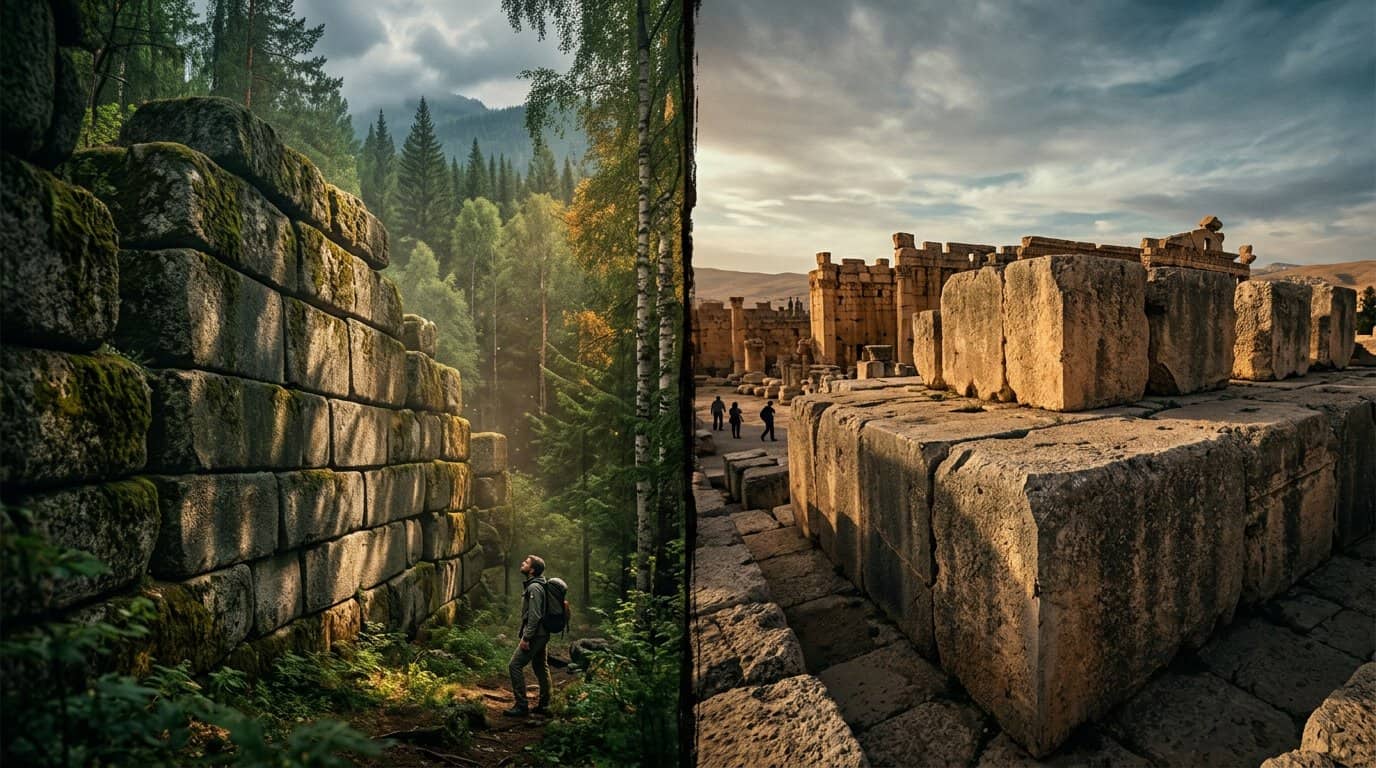
The ruins of Baalbek in Lebanon have long been considered a benchmark for ancient engineering, featuring the massive Trilithon stones that weigh roughly 800 tons each. For centuries, historians have wondered how any civilization could move such immense weight without modern machinery. However, the discovery of the Gornaya Shoria megaliths in the Siberian wilderness has completely shifted the scale of this conversation. These granite blocks are estimated to weigh between 1,000 and 4,000 tons, making them significantly larger than anything found in the Middle East. If these stones were indeed placed by human hands, they would represent a level of technology that far surpasses our current understanding of prehistoric capabilities.
The sheer size of the Shoria formations creates a visual spectacle that challenges the boundaries between natural geology and intentional construction. Unlike the weathered surfaces of many ancient ruins, these blocks feature flat faces and sharp right angles that stack atop one another to heights of 40 meters. While many geologists suggest that a process called spheroidal weathering created these shapes over millions of years, the precision of the stacking remains a point of intense curiosity. Comparing these to the monoliths of Baalbek highlights a staggering jump in scale, as the Siberian blocks are nearly five times heavier than the largest stones in Lebanon. This massive weight difference forces us to reconsider what might have been possible for a forgotten chapter of human history.
When looking at the sheer volume of material at Mount Kuylyum, the logistical challenge of moving such stones becomes the central mystery. At Baalbek, researchers can at least point to nearby quarries and theorize about the use of rollers and ramps. In the rugged terrain of the Shoria Mountains, the elevation and remote location make the idea of transporting 4,000 ton blocks seem almost impossible. This leads many independent researchers to wonder if we are looking at a site that predates our known historical timeline. Whether they are a masterpiece of nature or a triumph of ancient engineering, these Siberian giants stand as a silent challenge to the records found in our history books.
Natural Geological Weathering Versus Prehistoric Engineering
The debate surrounding the Gornaya Shoria megaliths centers on whether these massive formations are a masterpiece of nature or a lost feat of prehistoric engineering. Geologists often point to a process called spheroidal weathering, where granite naturally fractures along vertical and horizontal lines over millions of years. This process can create rectangular blocks that look remarkably like stacked bricks, giving the appearance of intentional masonry. However, the sheer scale of these walls, which reach heights of 40 meters, challenges the imagination. Many observers find it difficult to believe that natural erosion alone could produce such precise right angles and tight joints.
When comparing these Siberian structures to famous sites like Baalbek, the mystery deepens because the blocks at Shoria are significantly larger. Some of these individual granite stones are estimated to weigh up to 4,000 tons, which is nearly triple the size of the largest stones moved by known ancient civilizations. If these were placed by human hands, it would represent a level of technology far beyond what history books currently record. Researchers like Georgy Sidorov have highlighted the unusual magnetic readings and strange behavior of compasses near the stones, suggesting there may be more to the site than simple geology.
As visitors walk along the 200 meter stretch of these towering walls, the visual evidence of intentional construction remains incredibly compelling. Even if science leans toward natural tectonic forces and frost wedging, the way the blocks are stacked creates an undeniable sense of architectural order. It raises the question of whether an ancient civilization could have utilized and refined natural rock formations to create their monuments. Whether these are the ruins of a forgotten empire or a geological wonder, they invite us to rethink the limits of what is possible. Do you think nature is capable of such perfect geometry, or are we looking at the fingerprints of a lost civilization?
The Enormous Stones Challenging Ancient History
The Gornaya Shoria megaliths stand as some of the most provocative structures in the world, challenging our understanding of ancient history. These immense granite blocks, some weighing upwards of 4,000 tons, dwarf even the famous stones of Baalbek and suggest a scale of engineering that seems impossible for prehistoric people. Whether they are the result of rare geological theories like frost weathering or the remnants of a forgotten civilization, their sheer presence on Mount Kuylyum is undeniable. The precision of the stacked walls and the sharp angles found deep in the Siberian wilderness continue to spark debate among researchers and explorers alike.
While many geologists point toward natural tectonic forces as the architect of these walls, the visual evidence keeps the door to mystery wide open. It is difficult to look at these 40 meter tall formations and not wonder if an advanced culture once harnessed technology that has since been lost to time. These silent mountain sentinels remain a bridge between the known world and the deep, unexplained past of our planet. Every new expedition brings more questions than answers, keeping the legend of the Siberian giants alive for a new generation of seekers.
What do you think about these massive stone walls hidden in the heart of Russia? Do you believe that nature alone could create such perfect right angles and massive stacks, or is it more likely that we are looking at the ruins of a lost era of engineering? The scale of these stones suggests a story that is still waiting to be fully told by modern science. We invite you to share your theories and join the conversation about what truly happened on the peaks of Gornaya Shoria.
Frequently Asked Questions
1. What exactly are the Gornaya Shoria megaliths?
The Gornaya Shoria megaliths are a collection of massive granite formations found atop Mount Kuylyum in Southern Siberia. These structures resemble giant walls built from stacked stones, with some individual blocks reaching heights of forty meters. While they look like ancient ruins, their true origin remains a subject of intense debate between geologists and alternative historians.
2. How much do the largest stones at the site weigh?
The scale of these granite blocks is truly staggering, with the largest specimens estimated to weigh between one thousand and four thousand tons. To put this in perspective, these stones are significantly heavier than the famous megaliths found at Baalbek in Lebanon. If these were moved by people, they would represent the greatest feat of engineering in human history.
3. Where is Mount Kuylyum located?
This mysterious site is hidden deep within the rugged wilderness of the Shoria Mountains in Southern Siberia, Russia. Reaching the ridge requires a difficult journey through remote terrain, which is why the site remained largely undocumented by the wider world for so long. Its isolated location adds to the haunting, fortress like atmosphere of the granite walls.
4. Are these structures man made or a natural phenomenon?
Many geologists believe the walls are the result of a process called spheroidal weathering, where tectonic forces and erosion crack granite into rectangular shapes. However, the presence of sharp ninety degree angles and perfectly flat faces leads others to believe they are the work of a lost civilization. The site sits in a fascinating gray area between natural science and archaeological mystery.
5. How do these stones compare to other famous megalithic sites?
The Gornaya Shoria site dwarfs most other famous ancient ruins in terms of sheer mass. While the stones at Stonehenge or the Egyptian pyramids are impressive, they are tiny compared to the four thousand ton blocks found in Siberia. The precision of the stacking at Mount Kuylyum rivals the famous masonry seen in Inca sites like Sacsayhuaman.
6. Can tourists visit the Gornaya Shoria megaliths?
Adventurous travelers can visit the site, but it requires careful planning and a sturdy pair of hiking boots. Because it is located in such a remote part of Russia, most visitors hire local guides to navigate the mountain trails. Standing at the base of these forty meter walls provides a sense of wonder that science alone cannot fully explain.