Paititi The Real Golden City Of The Peruvian Amazon
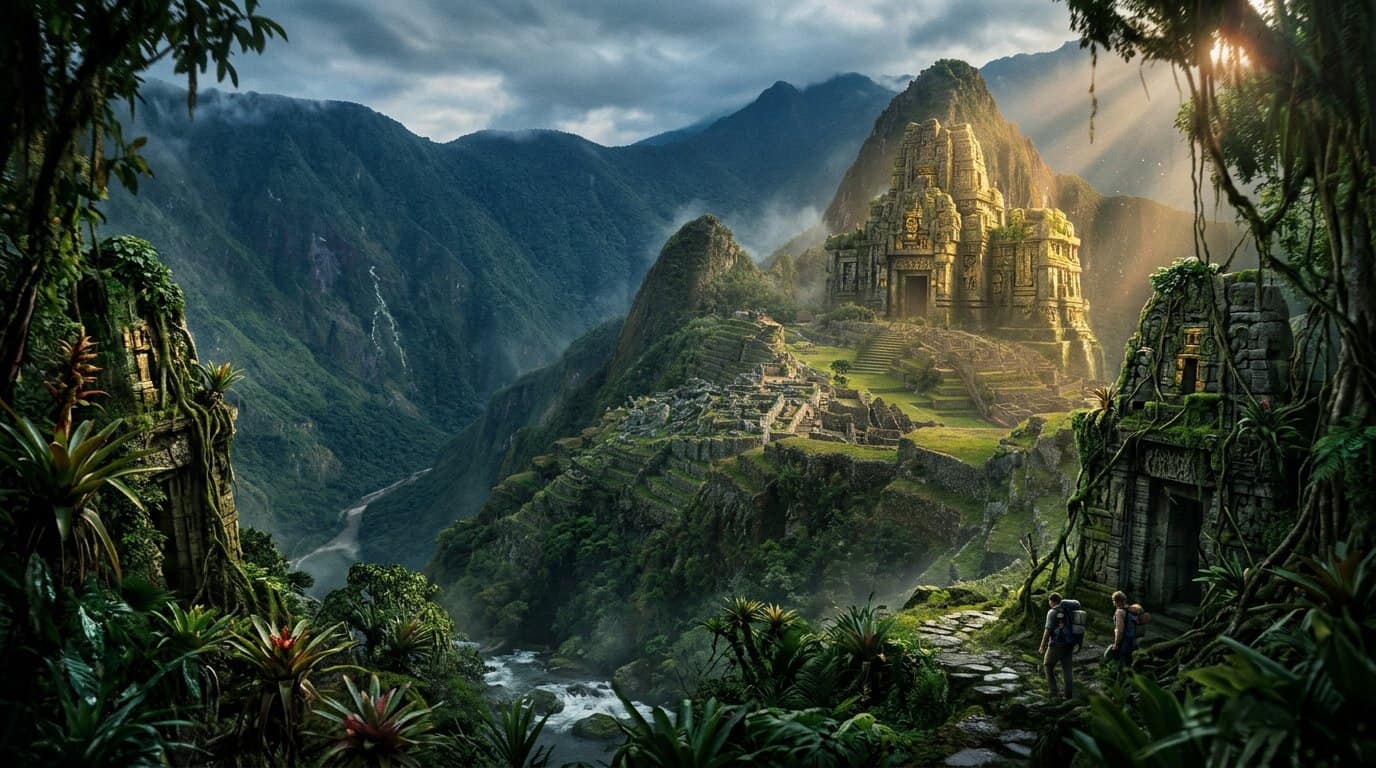
Deep within the emerald shadows of the Amazon rainforest, a secret has been waiting for five centuries to be told. Legends speak of the paititi lost city, a hidden mountain refuge where the last Inca leaders supposedly fled with their most sacred treasures to escape the Spanish conquest. For generations, explorers have vanished into the dense jungles of Peru’s Madre de Dios region, driven by rumors of a golden sun disk and a civilization that refused to be conquered.
Modern technology is now breathing new life into these ancient tales, turning myths into measurable data. Satellite imagery and recent archaeological breakthroughs are revealing that the jungle floor hides far more than just trees, uncovering a massive network of stone roads and outposts. While the search for a single city of gold continues, the evidence suggests that a sophisticated mountain empire once thrived exactly where the maps said nothing could exist.
Key Takeaways
- Historical evidence from 17th-century Jesuit archives, including a report to the Pope by missionary Andres Lopez, confirms that colonial and church officials recognized Paititi as a tangible, wealthy Inca sanctuary rather than a mere myth.
- Modern satellite imagery and digital archaeology have identified man-made geometric anomalies and stone structures, such as the ‘Square Mountain,’ suggesting the lost city may be a vast network of interconnected outposts rather than a single location.
- The search for Paititi has transitioned from a hunt for mythical gold to a scientific investigation of a sophisticated mountain empire that successfully utilized the hostile Amazonian environment to preserve Inca culture from Spanish conquest.
- Recent discoveries of paved roads and agricultural terraces in the Madre de Dios region prove the Inca were capable of building complex, permanent settlements in areas previously thought to be uninhabitable.
The Secret Vatican Report And Missionary Chronicles
The mystery of Paititi shifted from mere folklore to historical possibility in 2001 when an archaeologist uncovered a hidden gem within the Jesuit archives. This document, a report from the year 1600 written by a missionary named Andres Lopez, describes a city of immense wealth located deep within the tropical forests. Lopez wrote to the Pope about a place the locals called Paititi, claiming it was a kingdom rich in gold, silver, and jewels. This discovery suggests that the stories of a hidden Inca refuge were not just campfire tales but were recognized by the church and colonial officials of the time.
According to the chronicles of Lopez, the city was situated behind mountains and waterfalls, serving as a sanctuary for the Inca who fled the Spanish invasion. The report even mentions that the inhabitants were advanced and lived in a well organized society far removed from the eyes of the conquistadors. While many explorers have searched for this site based on vague maps, the discovery provides a concrete historical anchor for the legend. It moves the conversation away from pure myth and toward a tangible archaeological search for a lost civilization.
Today, researchers use these ancient missionary accounts to narrow down potential locations in the Madre de Dios region of Peru. The Vatican document serves as a vital piece of evidence that suggests the Inca may have successfully hidden a vast portion of their culture and treasures from the world. If a missionary in the 17th century believed in its existence enough to report it to the Vatican, it raises the question of what else might be waiting to be found beneath the jungle canopy. Do you believe the Vatican holds more secrets about the location of this golden city, or is it still waiting for a modern explorer to stumble upon it?
Satellite Technology And The Square Mountain Theory
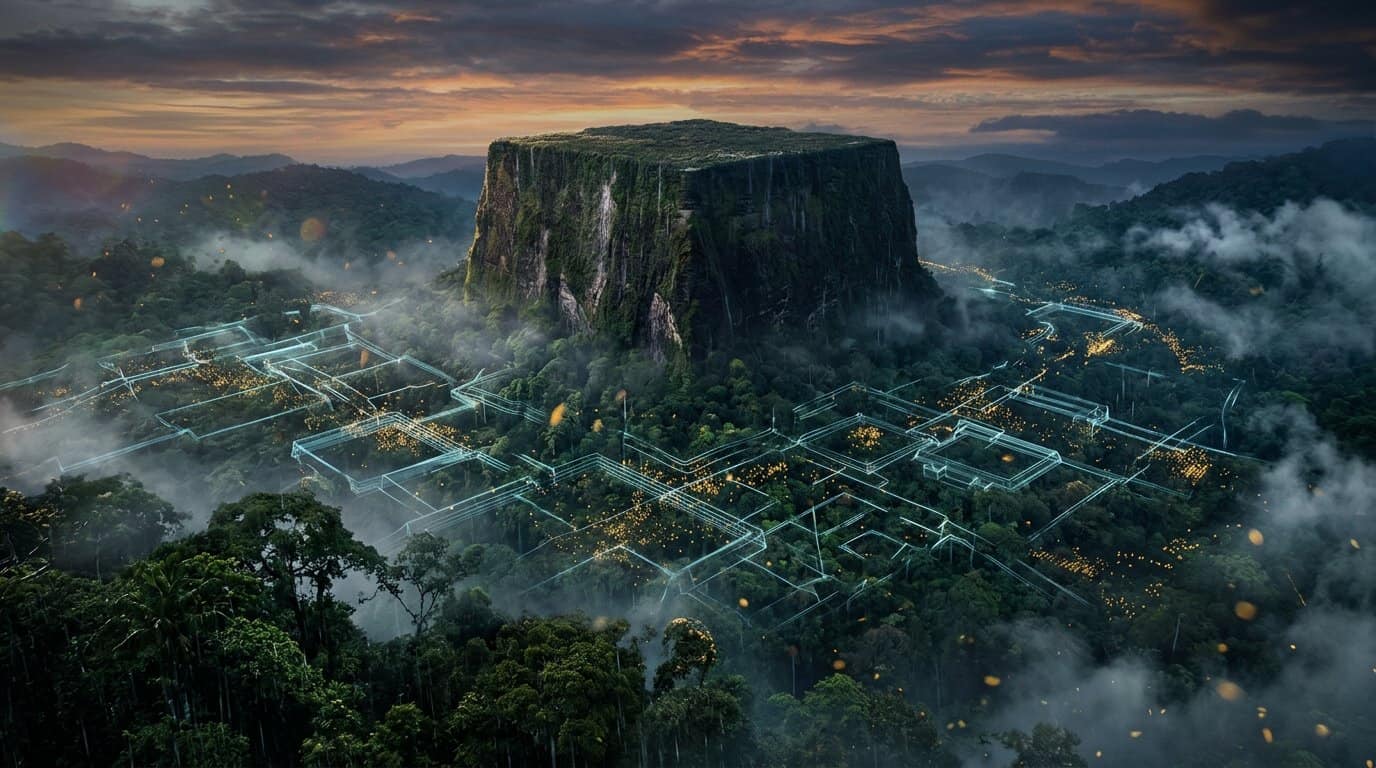
Modern explorers are no longer limited to hacking through thick vines with machetes, as high-tech satellite imagery has changed the search for Paititi. Researchers have spent years analyzing these bird’s-eye views to identify anomalies that nature simply does not produce on its own. One of the most compelling discoveries involves a series of strange formations in the Madre de Dios region that appear to be man-made structures hidden beneath a thick emerald carpet of trees. These digital eyes in the sky allow researchers to peer through the dense jungle, revealing geometric shapes that hint at an organized civilization living far beyond the known borders of the Inca Empire.
The most famous of these anomalies is the Square Mountain, a peculiar feature that stands out due to its unnaturally straight edges and flat top. Exploration teams believe this site could be the legendary refuge where the Inca elite hid their most sacred treasures from the Spanish. While skeptics suggest these shapes might be natural geological formations, the precision of the angles continues to fuel the theory that an ancient city remains entombed in the earth. The discovery of nearby petroglyphs and stone tools adds weight to the idea that this remote location was once a bustling hub of human activity.
This shift toward digital archaeology has transformed Paititi from a golden myth into a tangible target for scientific investigation. By combining 16th-century Spanish chronicles with modern thermal imaging, researchers are narrowing down the search area to specific coordinates in the Peruvian Amazon. Much like the aerial perspective needed for unraveling the secrets of other Peruvian wonders, each new image provides another piece of the puzzle, suggesting that the Lost City might actually be a vast network of interconnected outposts rather than a single isolated site. Do you think these geometric shapes are the work of ancient architects, or is the jungle simply playing tricks on our eyes?
From Mythical El Dorado To Real Inca Outposts
The legend of Paititi has long been overshadowed by the glittering tales of El Dorado, yet recent evidence suggests this lost Inca sanctuary is far more than a simple fairy tale. While the Spanish conquistadors obsessed over finding a city made of solid gold, modern researchers are uncovering something much more fascinating. Satellite imagery and aerial scans have revealed unusual geometric patterns and hidden structures beneath the dense canopy of the Madre de Dios region. These discoveries suggest that Paititi might not be a single golden palace, but rather a vast, interconnected network of stone outposts and agricultural terraces. By shifting the focus from mythical treasures to real stone foundations, archaeologists are finally tracing the path of a civilization that refused to be conquered.
Historical documents found within the secret archives of the Vatican provide a compelling roadmap for this ongoing search. In 2001, researchers discovered a report from the year 1600 written by a missionary named Andres Lopez, which described a thriving city hidden deep in the tropical forests. This account aligns with the indigenous myth of Inkarri, which tells of the last Inca leaders retreating into the jungle to preserve their culture and sacred relics. Instead of a lonely ruin, these records point toward a sophisticated mountain refuge that served as a final stronghold against European advancement. The presence of these colonial reports adds a layer of historical weight to the high tech scans currently mapping the Amazonian floor.
Today, the search for Paititi sits at a thrilling crossroads where ancient legends meet cutting edge science. Small expeditions have already located isolated stone ruins and paved roads that seem to lead deeper into the unexplored green wilderness of southeastern Peru. These sites prove that the Inca were masters of the jungle environment, capable of building complex settlements in areas once thought to be uninhabitable. As more of these hidden outposts come to light, the boundary between myth and reality continues to blur. Do you believe Paititi was a single majestic capital, or was it a series of secret fortresses designed to keep the Inca spirit alive in the heart of the rainforest?
The Unsolved Mystery of the Amazon’s Golden City
The mystery of Paititi remains one of the most captivating chapters in South American history, as the dense Amazon rainforest continues to guard its secrets with a firm grip. While modern satellite imagery and LIDAR technology have revealed fascinating geometric patterns and hidden structures beneath the canopy, the legendary city of gold still eludes a definitive discovery. These technological leaps have shifted the search from mere treasure hunting to a serious archaeological pursuit of a vast, interconnected network of Inca outposts. Researchers now look at the Madre de Dios region not just as a jungle, but as a complex map of potential history waiting to be decoded. The intersection of 16th century Spanish chronicles and high tech mapping suggests that something substantial is indeed hidden out there.
Even as explorers return with stories of stone walls and ancient roads, the ultimate prize of the Golden Sun Disk remains a haunting whisper in the wind. Many believe that the last Inca leaders successfully retreated into the green abyss, carrying their most sacred relics far beyond the reach of the conquistadors. The persistence of the Inkarri myth and the discovery of Jesuit documents in the Vatican archives keep the flame of hope alive for historians and adventurers alike. Whether Paititi is a single majestic city or a series of strategic mountain retreats, the truth is likely still buried under centuries of overgrowth. The jungle is a patient protector of the past, leaving us to wonder if the most significant find in archaeological history is simply waiting for the right moment to be revealed.
Do you believe that Paititi is a physical city of gold still hidden in the brush, or is it a symbolic legend representing the enduring spirit of the Inca people? The search for hidden civilizations raises important questions about how much of our world remains unexplored despite our modern advancements. As researchers continue to piece together the clues from ancient maps and satellite data, the line between myth and reality becomes thinner every year. We invite you to share your thoughts on whether the Golden Sun Disk will ever see the light of day again. Join the conversation and tell us if you think the secrets of the Amazon are better left undisturbed or if the world deserves to finally know the truth about Paititi.
Frequently Asked Questions
1. What exactly is the lost city of Paititi?
Paititi is a legendary hidden kingdom believed to be the final refuge of the Inca people during the Spanish conquest. It is described as a sophisticated mountain sanctuary where the empire preserved its most sacred traditions and vast treasures away from colonial eyes.
2. Where is Paititi thought to be located?
Most explorers focus their search on the dense, unexplored jungles of the Madre de Dios region in southeastern Peru. This area is filled with steep mountains and thick rainforests, making it the perfect place for an ancient civilization to remain hidden for centuries.
3. Is there any historical evidence that Paititi actually exists?
A significant piece of evidence was found in the Jesuit archives, which describes a 1600s report from a missionary named Andres Lopez. This document informed the Pope of a wealthy, organized city deep in the forest, suggesting the legend is rooted in historical reality.
4. Did the Inca really hide gold in this lost city?
Legends tell of the Inca transporting a massive golden sun disk and other treasures to Paititi to protect them from being melted down by conquistadors. While the gold remains a mystery, the historical records of the Inca fleeing into the Amazon suggest they likely took their most valuable cultural items with them.
5. How is modern technology helping to find the city?
Archaeologists are now using satellite imagery and advanced scanning tools to look beneath the thick jungle canopy without moving a single leaf. These technologies have already revealed a massive network of ancient stone roads and outposts that were previously invisible to the naked eye.
6. Why hasn’t anyone found the city yet?
The search is incredibly difficult because the Amazon rainforest is one of the most hostile environments on Earth. Explorers must navigate through impenetrable vegetation, dangerous terrain, and unpredictable weather, which has kept the heart of the region a secret for five hundred years.
7. What makes Paititi different from Machu Picchu?
While Machu Picchu was a royal estate that was eventually abandoned, Paititi is believed to be a functioning capital of resistance that thrived long after the fall of Cusco. It represents a missing chapter of history where the Inca culture continued to flourish in total isolation.
The discovery of such sites often mirrors The Enigma Of Pampa De Las Llamas Moxeke, another ancient Peruvian city that showcases the advanced engineering of civilizations that predated the Inca. Similarly, the enigma of the Diquis stone spheres in Costa Rica highlights how ancient cultures across the Americas created enduring monuments that still baffle modern science.