The Legend Of Gog And Magog And The Mystery Of The Iron Gates
Across ancient scrolls and modern headlines, the prophecy of Gog and Magog remains one of history’s most chilling and persistent mysteries. These figures represent a massive, hostile force destined to emerge from the edges of the map during the world’s final hours. Whether viewed as literal kings, symbolic nations, or a supernatural army, their arrival signals a turning point for humanity that has fascinated scholars for millennia.
The story stretches from the visions of Ezekiel to the warnings of the Book of Revelation and the Arabic traditions of the Quran. While skeptics dismiss these accounts as ancient folklore, others point to shifting geopolitical borders and modern conflicts as signs that the old prophecies are waking up. Exploring this legend requires a journey into the heart of human fear and the enduring hope for a world reborn after the storm.
Key Takeaways
- The legend of Gog and Magog represents a universal prophetic archetype of a chaotic force confined behind an ancient, impenetrable barrier of iron and copper.
- Historical and religious traditions identify the righteous leader Dhu al-Qarnayn (or Alexander the Great) as the architect who sealed these civilizations within remote mountain passes like the Caucasus or Caspian Gates.
- The eventual erosion or collapse of this physical barrier serves as a global eschatological catalyst, signaling the end of the current age and a final spiritual awakening for humanity.
- Despite modern satellite surveillance, the mystery persists through theories of hidden dimensions, unexplored geographical regions, and archaeological discoveries of massive underground cities.
Ancient Barriers And The Wall Of Dhu al-Qarnayn
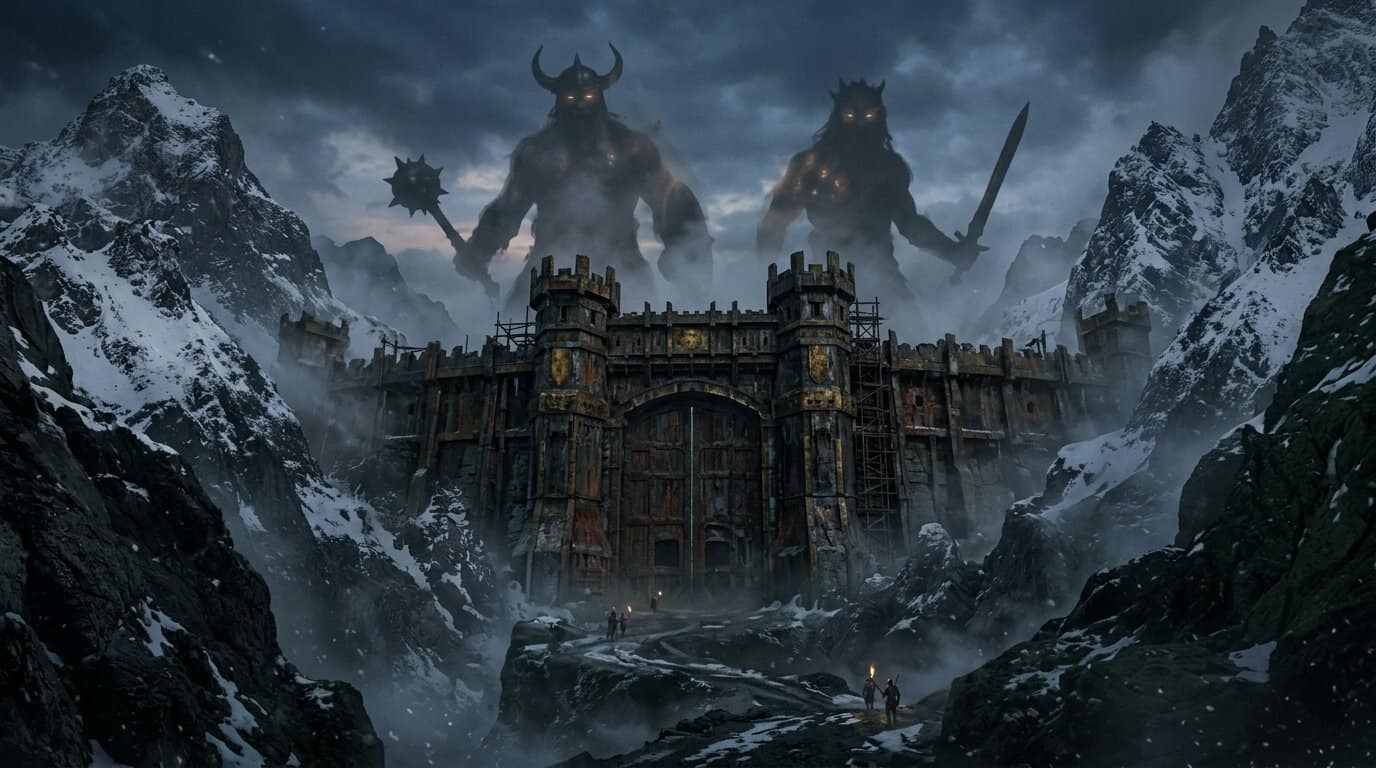
The Quranic narrative introduces a powerful and righteous leader known as Dhu al-Qarnayn, who traveled to the farthest reaches of the world to establish order. During his journeys, he encountered a people living in fear of the relentless destruction caused by Gog and Magog, a chaotic civilization of giants. To protect the local population, Dhu al-Qarnayn utilized his advanced knowledge of engineering to bridge a massive mountain pass. He did not merely build a fence, but instead forged a colossal barrier by stacking blocks of iron and pouring molten copper over them. This legendary construction created a seamless, impenetrable wall that effectively sealed the giants away from the rest of humanity.
For centuries, explorers and cartographers have scanned historical maps and remote landscapes in hopes of locating the physical remains of this ancient gate. Many early scholars, including the famous traveler Ibn Battuta, recorded accounts of people searching for the wall in the rugged terrain of Central Asia and the Caucasus Mountains. Some theories suggest the barrier might be linked to the Caspian Gates or the Iron Gates of Derbent, where ancient fortifications once stood against northern invaders. While modern satellite imagery has yet to provide a definitive answer, the persistent search reflects a deep human curiosity about what might still be hidden in the world’s most inaccessible corners.
The mystery of this trapped civilization continues to spark debate between skeptics and those who believe the wall remains hidden by divine or geographical means. If such a massive structure exists, it represents one of the greatest architectural feats of the ancient world, designed specifically to contain a force of immense power. These legends suggest that the world we see on our maps might not be as complete as we think, leaving room for hidden realms tucked away behind forgotten mountains. What do you think about the possibility of ancient civilizations remaining hidden in the modern age? Could a barrier of iron and copper still be standing in a place we have yet to rediscover?
Mapping The Mystery Of The Caspian Gates
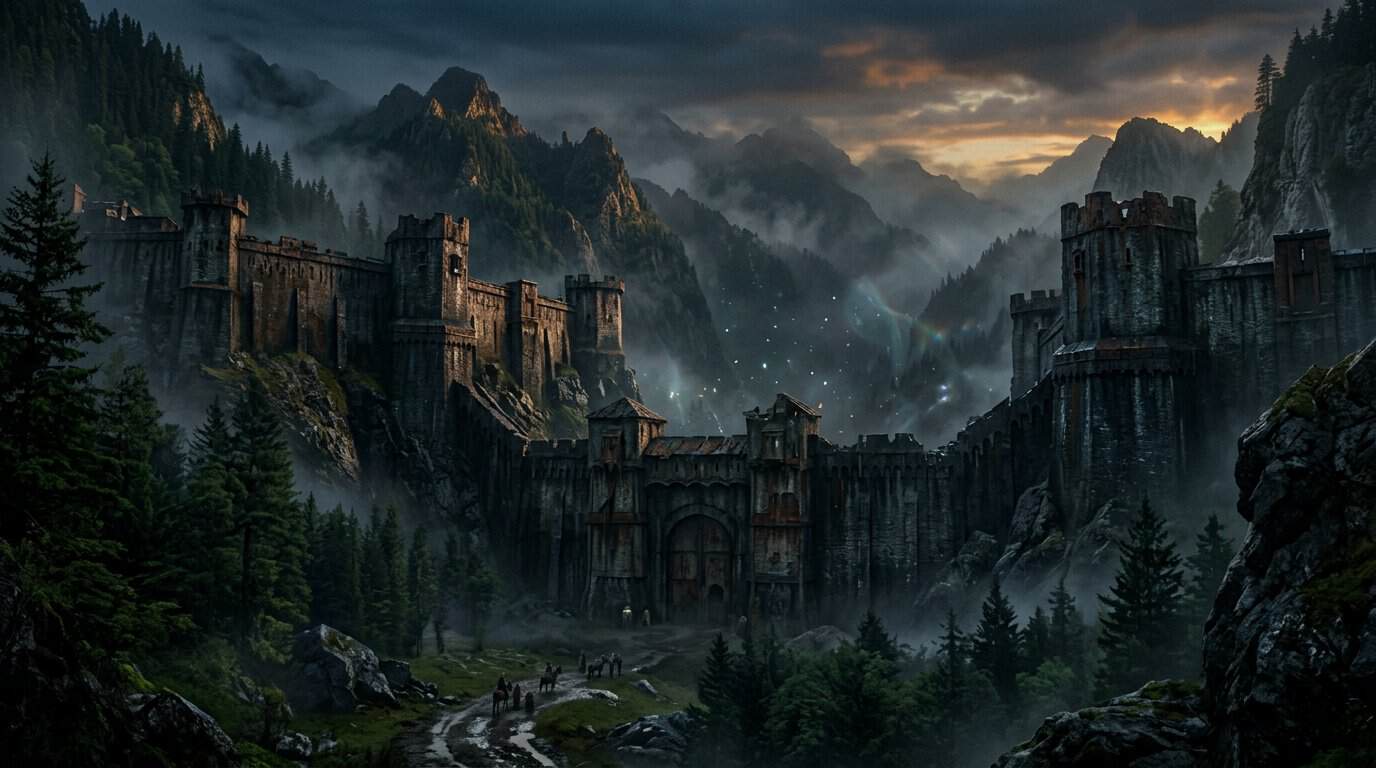
Historical cartographers once viewed the edge of the known world as a place where geography and prophecy collided. For centuries, mapmakers placed a massive, impenetrable barrier known as the Caspian Gates within the rugged peaks of the Caucasus Mountains. This was not just a mountain pass to them, but a physical prison designed to hold back the legendary giant civilizations of Gog and Magog. Famous travelers like Marco Polo documented these locations in their journals, blending their observations of the terrain with the terrifying stories of the tribes trapped behind the iron walls. These early explorers truly believed that by mapping the mountains, they were locating the literal site of a future apocalypse.
The search for the physical gate often centered on the Pass of Derbent in modern day Russia, where ancient stone fortifications still stand as a testament to human engineering. Legends frequently credited Alexander the Great with forging these massive gates to protect the civilized world from the chaotic forces of the north. While modern satellite imagery shows us every corner of the globe, the mystery remains in how these specific coordinates became so deeply rooted in the collective human psyche. It is fascinating to consider how a real geological feature could serve as the foundation for a story about trapped giants waiting for their moment to emerge. Could there be a forgotten truth hidden beneath the layers of myth and ancient masonry?
Prophetic Legends Of The Final Great Awakening
The legend of a hidden civilization waiting behind a massive physical barrier has captivated the human imagination for centuries, bridging the gap between ancient maps and spiritual prophecy. According to various cultural traditions, these powerful nations were confined behind great gates of iron and brass by a legendary figure often identified as Alexander the Great or Dhul-Qarnayn. This barrier was said to be located in the remote mountain passes of the Caucasus or Central Asia, effectively sealing away a massive force until a predetermined moment in history. As the wall slowly erodes through the passage of time, many believers look toward the horizon for signs that the ancient architecture is finally beginning to fail.
The eventual crumbling of this barrier is frequently described as a catalyst for a global transformation that will reshape the world as we know it. In many of these stories, the release of the trapped forces represents a final test for humanity, signaling the end of one age and the beginning of a profound spiritual awakening. Scholars who study these myths, such as those examining the visions of Ezekiel or the Quran, note that the escape is often tied to environmental shifts or divine intervention. These narratives suggest that the physical world and the spiritual realm are deeply connected, with the broken gates serving as a bridge between our current reality and a mysterious future.
While modern geography has mapped most of the earth’s surface, the persistent mystery of these lost civilizations continues to inspire explorers and researchers alike. Some theorists suggest that the gates might not be literal walls of metal, but could instead represent hidden dimensions or inner world regions that remain inaccessible to our current technology. This blend of historical documentation and eschatological wonder encourages us to look at our world with a more curious and open mind. Do you believe these ancient barriers are hidden in plain sight, or are they waiting to be discovered in a location we have yet to explore?
The Mystery of a Hidden World
The enduring fascination with Gog and Magog reflects a deep-seated human curiosity about the unknown corners of our world. For centuries, cartographers and explorers scanned the horizons for the legendary iron gates said to hold back this massive civilization. This story survives because it taps into the primal thrill of a world that still feels vast and untamed. Even in an age of satellite imagery, the idea of a hidden society tucked away in a remote mountain range or subterranean cavern remains a powerful narrative. It bridges the gap between ancient scripture and the modern encounters with the unknown that still haunt our desire for discovery.
These legends suggest that our ancestors viewed the earth as a place filled with moral and physical boundaries that were never meant to be crossed. The image of a trapped civilization serves as a reminder of the fragility of peace and the mysteries that might still be waiting to be revealed. Many people find comfort and excitement in the possibility that history is not yet fully written. Whether viewed as an literal historical account or a symbolic warning about the future, the tale of these lost peoples continues to haunt our collective imagination.
Historical maps and religious texts have long hinted that the world is much more complex than we often assume. If ancient legends from across different cultures all point toward the existence of hidden nations, it raises questions about what remains buried beneath the earth. Modern archaeology continues to uncover massive underground cities and forgotten structures that were once dismissed as mere myths. Do you believe that ancient ruins could still hold the secrets of these legendary peoples, or has the map of the world finally been completed?
Frequently Asked Questions
1. Who are Gog and Magog in historical traditions?
Gog and Magog are described as a powerful and chaotic force destined to emerge during the final chapters of human history. Depending on the tradition, they are viewed as literal kings, entire nations, or even a supernatural army that represents the ultimate challenge to global peace.
2. What is the Wall of Dhu al-Qarnayn?
This legendary barrier was constructed by a righteous leader who used iron blocks and molten copper to seal a mountain pass. It was designed to protect innocent civilizations from the destructive raids of Gog and Magog, effectively trapping them until a destined time.
3. Where is the physical location of the iron barrier?
Explorers and scholars like Ibn Battuta have long searched for the wall in remote regions such as the Caucasus Mountains and Central Asia. While modern satellites have yet to confirm its location, historical maps frequently placed these figures in the rugged, unexplored edges of the north.
4. How do different religions view this prophecy?
The story bridges several faiths, appearing in the visions of Ezekiel in the Bible and the warnings of the Quran. While the details vary, each account describes a massive event that signals a major turning point and the eventual rebirth of the world.
5. Are Gog and Magog considered giants?
Many ancient narratives describe these beings as a civilization of giants possessing overwhelming strength and a thirst for chaos. This physical description emphasizes their role as a force that cannot be stopped by conventional human means alone. Some modern accounts even parallel these legends, such as the mystery of the giant of Kandahar, which suggests that massive humanoids might still inhabit remote caves.
6. Why does this ancient story still matter today?
The legend taps into deep human fears about global conflict and the end of the world as we know it. Many people look at shifting geopolitical borders and modern tensions as potential signs that these ancient prophecies are finally beginning to wake up.