The Beast Of The Billabong: Exploring Bunyip Sightings History
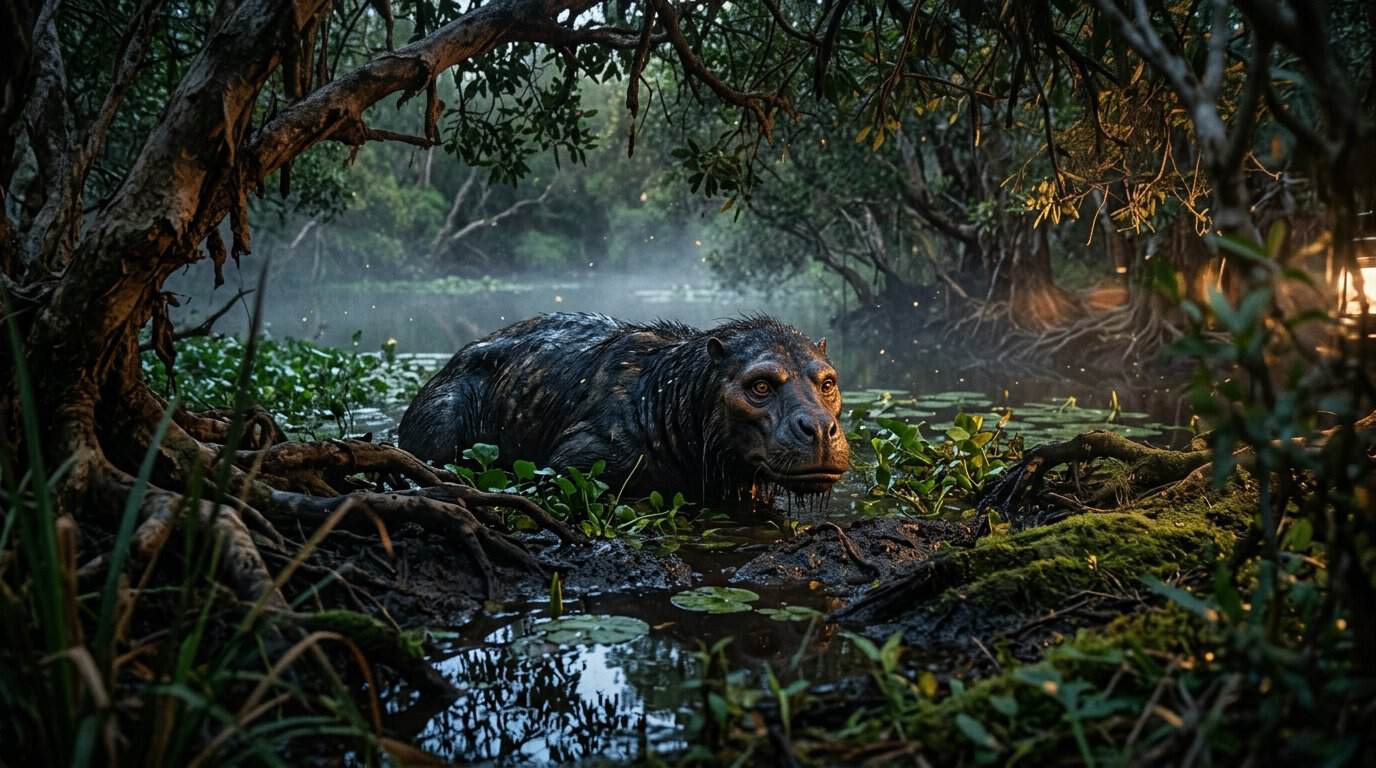
Deep in the murky swamps and winding billabongs of the Australian outback, a shadow has lurked in the collective imagination for centuries. The bunyip sightings history began long before European ships reached these shores, rooted in the ancient stories of the Wemba-Wemba and Wergaia peoples. These early accounts describe a powerful spirit that guarded the waterways, serving as both a terrifying predator and a protector of the natural world.
As colonial settlers pushed into the bush during the 1800s, strange encounters shifted from spiritual lore into a frantic public mystery. Strange bellows echoing through the reeds and glimpses of tusked, seal-like creatures led many to believe that a prehistoric beast had survived in the continent’s isolated wetlands. While modern science often looks for logical explanations, the sheer consistency of these historical reports suggests that something truly unusual may have been hiding just beneath the water’s surface.
Key Takeaways
- The bunyip originated as a powerful spiritual guardian in Indigenous Australian lore, serving as a moral enforcer that protected waterways and promoted ecological conservation.
- Nineteenth-century colonial encounters transformed the bunyip from a spiritual entity into a physical mystery, fueled by strange sightings and the discovery of unidentified fossils and skulls.
- Scientific theories suggest the legend may be rooted in ancestral memories of the extinct Diprotodon or misidentifications of seals traveling far inland through river systems.
- The enduring legacy of the bunyip bridges the gap between ancient cultural storytelling and modern natural history, representing the deep, unexplored mysteries of the Australian wilderness.
Aboriginal Lore And The Spiritual Origins
The bunyip is far more than a simple campfire story, as its roots reach deep into the spiritual soil of the Australian continent. For the Wemba-Wemba and Wergaia peoples of the Victoria region, this creature was known as a powerful spirit that occupied the murky depths of swamps, billabongs, and river systems. Rather than being a mere animal to be hunted, it was often viewed as a supernatural force that bridged the gap between the physical and spirit worlds. These early accounts describe a presence that was felt as much as it was seen, vibrating through the water and the air. By acknowledging these ancient perspectives, we can see how the bunyip represents a unique intersection of geography and spirituality.
In many indigenous traditions, the bunyip functioned as a vital moral enforcer and a spiritual guardian of the natural environment. Stories passed down through generations warned that those who took more fish than they needed or disrespected the water would face the wrath of this formidable protector. The Ngarrindjeri people of the Murray River spoke of a similar being called the Mulyawonk, which served to teach children about the dangers of deep water and the importance of conservation. This role as a spiritual judge suggests that the creature was a fundamental part of a complex social and ecological system. It reminds us that every ripple in the water might have been watched by a vigilant sentinel.
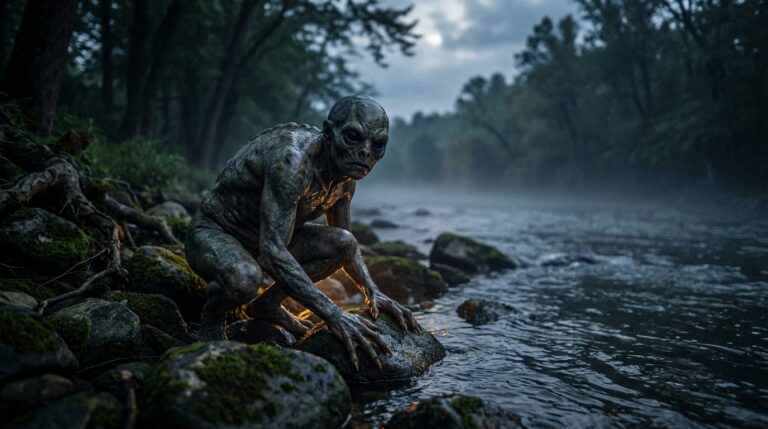
While European settlers often tried to categorize the bunyip as a physical beast, Aboriginal lore presents a much more fluid and mysterious image. Descriptions varied wildly between different groups, with some depicting the entity as a feathered serpent and others as a tusked, seal-like creature with a terrifying roar. This diversity of appearance highlights the bunyip’s status as a shapeshifting guardian that could adapt to any watery environment. These accounts were documented by early researchers such as Robert Brough Smyth, who noted that the fear of the bunyip was universal across many distinct tribal lands. Whether it was a physical remnant of ancient megafauna or a purely spiritual manifestation remains one of the great questions for modern researchers.
Colonial Encounters And Nineteenth Century Bunyip Mania
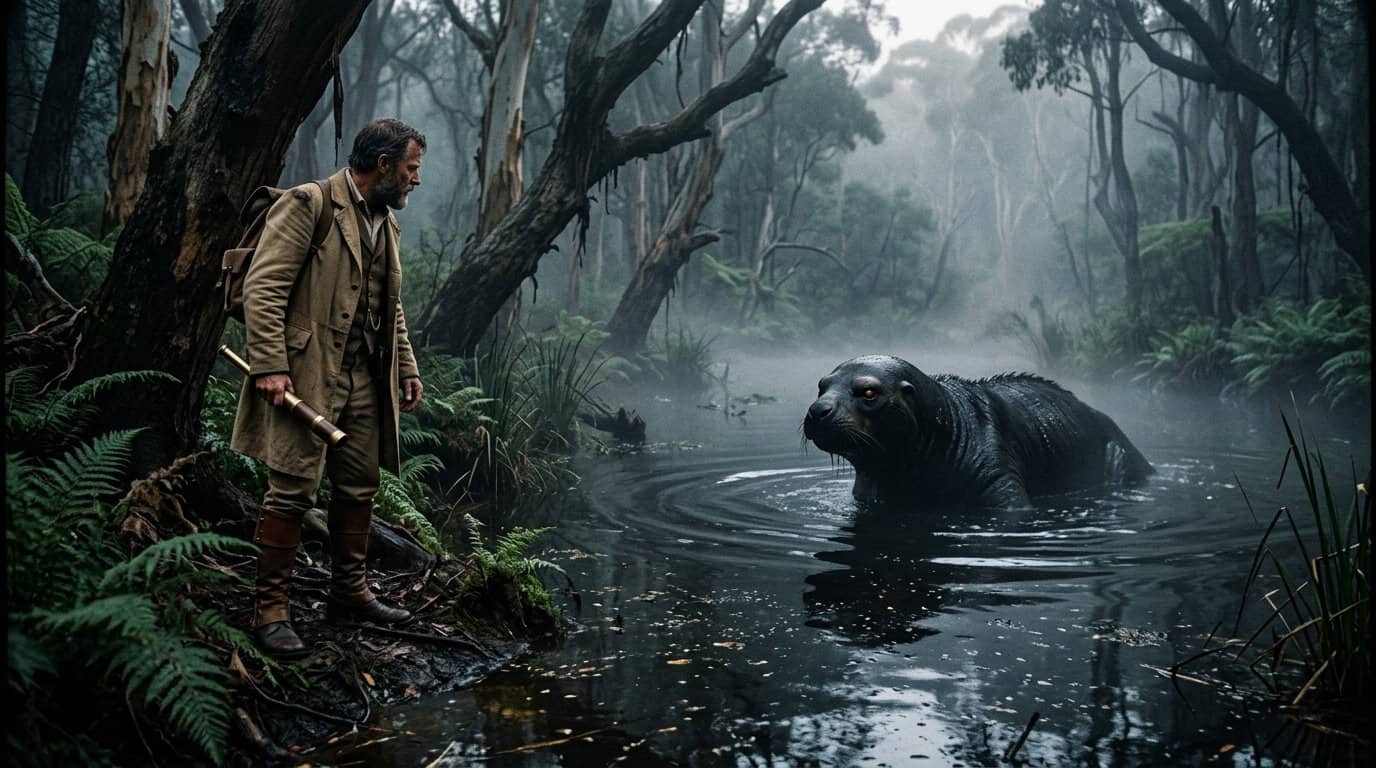
European settlers arriving in Australia during the early 1800s quickly became obsessed with the strange reports of a water-dwelling beast known as the bunyip. This period saw a surge of sightings across the swamps and rivers of New South Wales and Victoria. Newcomers struggled to reconcile the unfamiliar surroundings with their own scientific understanding, leading many to believe that a prehistoric monster might truly inhabit the billabongs. Local newspapers frequently published accounts of terrifying encounters, fueling a national curiosity that blended genuine fear with a desire for discovery. The creature became a focal point for colonial encounters as settlers tried to make sense of the mysterious Australian wilderness.
The year 1845 marked a turning point in this fascination when a strange fossil was discovered near Geelong, Victoria. An Aboriginal man identified the bone as belonging to a bunyip, providing a tangible link between ancient legends and physical evidence. This discovery was widely reported in local newspapers and caught the attention of the scientific community. It suggested that the stories were not merely myths but could be based on a real, biological animal that had survived from a distant era. This find pushed the bunyip out of the realm of folklore and into the spotlight of early Australian natural history.
Public excitement reached a fever pitch in 1847 when a mysterious, elongated skull was put on display at a prominent museum in Sydney. Found on the banks of the Murrumbidgee River, the skull featured strange characteristics that did not seem to match any known livestock or native wildlife. Thousands of people flocked to see the specimen, which many believed was definitive proof that the bunyip was a living reality. While some experts later suggested it might have been a deformed calf or foal, the skull remained a symbol of the unexplained for years. This era of intense scrutiny highlights how colonial Australia was a place where the line between myth and science remained fascinatingly blurred.
Scientific Theories Behind The Swamp Monster
While the bunyip is often dismissed as a myth, some researchers believe the legends are actually based on ancient memories of Australia’s extinct megafauna. One leading theory suggests that the creature described by Aboriginal people closely matches the extinct Diprotodon, a massive marsupial that resembled a giant wombat and stood nearly six feet tall. These heavy animals likely frequented the same watering holes and swamps where bunyip sightings were later reported by European settlers. Scientists posit that oral traditions could have preserved the image of these prehistoric beasts for thousands of years after they went extinct. This connection offers a fascinating bridge between modern paleontology and ancient cultural storytelling.
Another practical explanation for these swamp-dwelling monsters involves the accidental travel of seals into inland waterways. During periods of heavy flooding, southern elephant seals or leopard seals have been known to swim hundreds of miles up the Murray and Darling river systems. To a settler or a local resident who had never seen a marine mammal, the sight of a dark, sleek head with large eyes and a barking call would be terrifying. These misplaced animals often have dog-like faces and tusks, which perfectly aligns with many historical descriptions of the bunyip. This theory provides a logical reason for why bunyip sightings often occurred near deep pools and riverbanks.
Even with these scientific possibilities, the bunyip remains a symbol of the great mysteries hidden within the Australian wilderness. Much like the legends surrounding the haunted peaks found elsewhere on the continent, the consistency of the accounts suggests that witnesses were seeing something very real. These theories do not necessarily debunk the creature, but rather add a layer of historical depth to the mystery. It is possible that the truth lies somewhere in the middle, combining natural history with the enduring power of local folklore. What do you think is the most likely explanation for the bunyip sightings reported throughout history?
The Lasting Legacy of Australia’s Water Spirit
The bunyip stands as a remarkable testament to the enduring power of Australian folklore, bridging the gap between ancient Indigenous wisdom and modern curiosity. While colonial explorers once scoured the billabongs for physical evidence of this elusive creature, its true strength lies in its role as a cultural guardian of the natural world. This legend reminds us that the vast Australian wilderness still holds secrets that challenge our understanding of biology and history. By blending spiritual significance with hundreds of historical accounts, the bunyip remains a cornerstone of the global cryptid conversation.
Even as technology advances and the world feels smaller, the mystery of the bunyip continues to spark a sense of wonder about the unexplored corners of the bush. These stories encourage us to look closer at the environment and respect the deep connections between the land and its traditional custodians. Whether the sightings describe a prehistoric survivor or a misunderstood natural phenomenon, the legacy of the bunyip invites every explorer to keep an open mind. As we continue to document the unexplained, this iconic figure ensures that the spirit of discovery remains alive in the heart of the Australian wild.
Do you believe the historical bunyip sightings were misidentified animals, or is there still something unknown lurking in the remote waterways of Australia?
Frequently Asked Questions
1. Where did the first reports of the bunyip come from?
The history of the bunyip began with the Wemba-Wemba and Wergaia peoples of Australia, who recognized the creature as a powerful water spirit. These ancient accounts describe a guardian of the billabongs that existed long before colonial settlers arrived. This spiritual figure served as a bridge between the physical world and the supernatural realm.
2. What does a bunyip actually look like?
Historical reports describe a wide variety of features, but most witnesses agree on a tusked, seal-like appearance with a large, powerful body. Some accounts from the 1800s suggest the creature has a dog-like face and a terrifying, bellowing cry. This consistency across different sightings suggests a physical animal may have truly inhabited the murky swamps.
3. Why was the bunyip so important to Indigenous Australian cultures?
In many traditions, the bunyip acted as a moral guardian of the natural world and punished those who disrespected the environment. It taught communities to take only what they needed from the rivers and billabongs to ensure the waters remained healthy. This role turned the creature into a vital protector of the ecosystem.
4. Is there any scientific evidence for the bunyip’s existence?
While no specimen has been captured, many researchers point to the fossils of the Diprotodon as a possible explanation for the legend. This giant, prehistoric marsupial shared many physical traits with descriptions of the bunyip and lived alongside early humans. It is possible that ancestral memories of these real animals evolved into the stories we hear today.
5. What happened when European settlers encountered the bunyip?
As settlers moved into the Australian bush during the 19th century, they transformed the bunyip from a spiritual figure into a physical mystery, fueled by strange sightings and the discovery of unidentified fossils and skulls. Strange sounds and glimpses in the reeds led to a frantic search for a prehistoric beast hiding in the wetlands. These colonial reports added a layer of modern intrigue to the ancient lore already established by Indigenous groups.
6. Are there still bunyip sightings in modern times?
Reports of strange ripples and deep, booming sounds continue to emerge from the remote waterways of the outback. While modern science often looks for logical explanations like falling branches or known animals, the mystery remains alive for those who explore the deep billabongs. Much like Australia’s Min Min lights, the persistence of these stories suggests that the secrets of the Australian bush are far from being fully understood.