Why The Indus Script Remains Undeciphered
For more than 4,000 years, tiny seals and tablets from the Indus Valley have carried a message no one can confidently read. The Indus script undeciphered remains one of archaeology’s most enduring mysteries, with short sequences of symbols appearing across present-day Pakistan and northwestern India. Despite decades of study, no proposed translation has gained broad support, and the language behind the signs remains unknown.
The mystery is grounded in evidence, not empty speculation. Researchers have cataloged the symbols, studied their patterns, and traced their use to the height of the Harappan Civilization, around 2600 to 1900 BCE. Some theories suggest the signs recorded names, trade, rituals, or an early language now lost to time. Others question whether the symbols represent writing at all. The evidence offers tantalizing clues, but no verified key.
Key Takeaways
- The Indus script, used by the Harappan Civilization around 2600–1900 BCE, remains undeciphered, with no proposed translation broadly accepted by specialists.
- More than 5,000 inscriptions have been found across present-day Pakistan and northwestern India on seals, pottery, tablets, copper objects, and other artifacts, suggesting uses linked to trade, administration, identity, or ritual.
- Decipherment is hindered by the inscriptions’ extreme brevity, the unknown underlying language, sign variations, and the absence of a long bilingual text comparable to the Rosetta Stone.
- Statistical analysis and improved sign catalogs reveal recurring patterns but cannot establish meaning; a long inscription, bilingual artifact, or clearer evidence of the Harappan language is still needed for a verified reading.
Introduction To The Indus Script Undeciphered
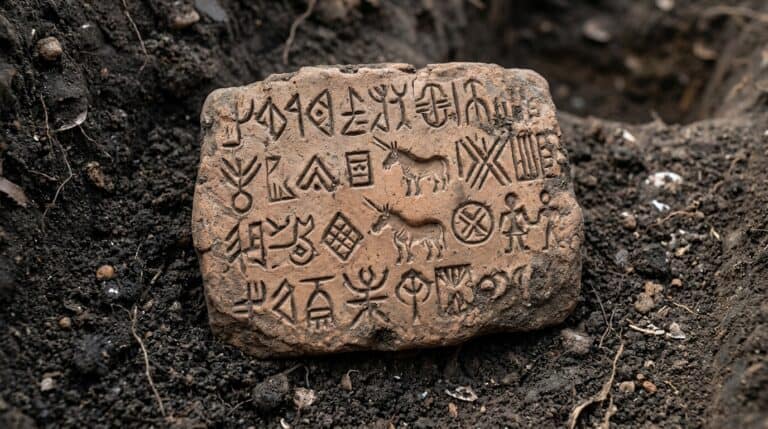
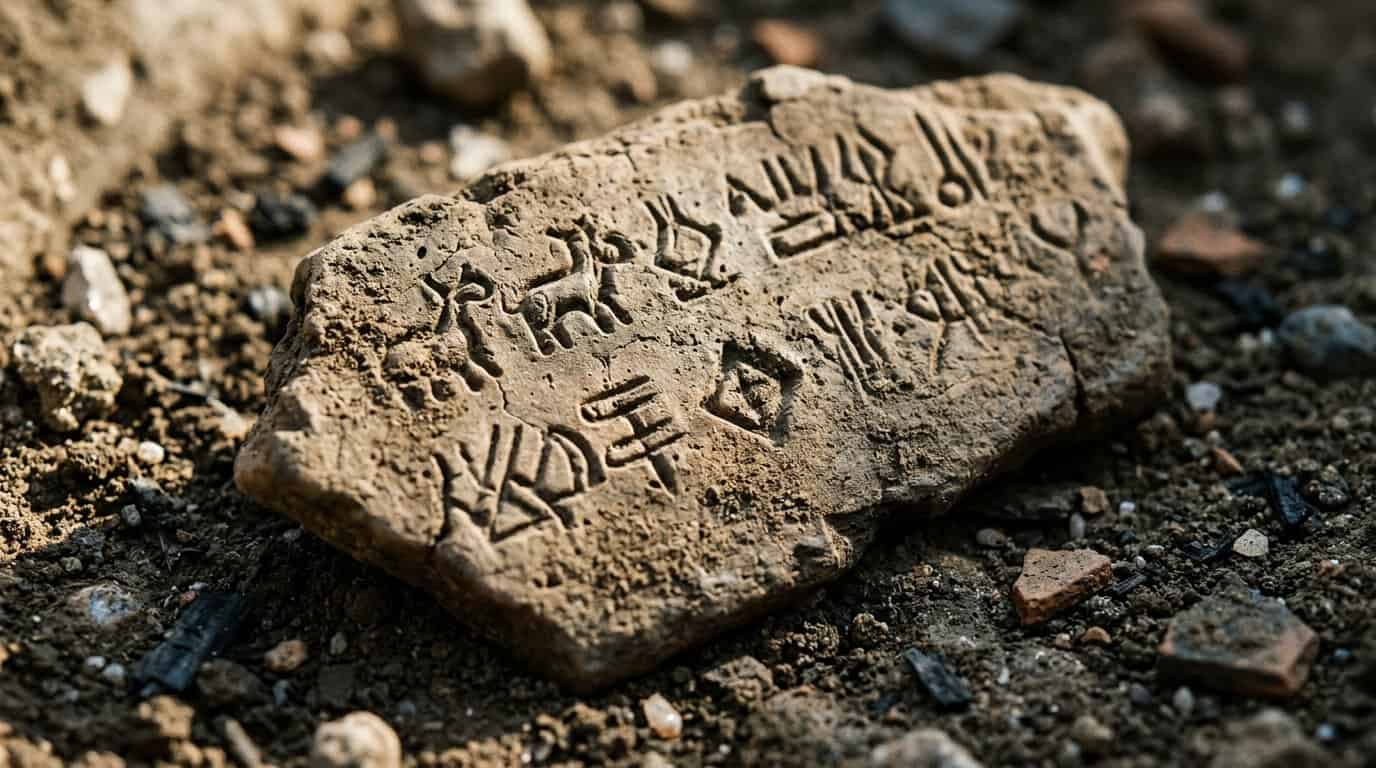
The Indus script remains one of archaeology’s most enduring mysteries. Used by the Indus, or Harappan, Civilization mainly between about 2600 and 1900 BCE, it appears on steatite seals, pottery, tablets, copper objects, and other goods found across present-day Pakistan and northwestern India. The surviving inscriptions are usually very short, often showing only a few signs beside animals or geometric symbols. As of August 2026, the Indus script is still undeciphered, and no proposed reading has gained broad acceptance among specialists.
The mystery began to take shape during the major excavations of Harappan cities in the 1920s, when researchers recognized that the repeated marks formed a consistent sign system rather than random decoration. Since then, scholars have compared the symbols with known ancient writing systems, studied their order and frequency, and used computers to classify patterns across the growing collection. This work has improved knowledge of the signs, but the underlying language remains uncertain. No long bilingual inscription has been found to provide a reliable key. That gap leaves room for serious historical debate while reminding researchers that an attractive theory is not the same as a verified translation.
Each small inscription may preserve part of a much larger story about trade, administration, religious practice, or knowledge that disappeared with the civilization. The seals could have identified merchants or goods, marked authority, or carried symbols whose meanings modern observers can only partly imagine. Some theories connect the script to early forms of languages known in South Asia, while others suggest different linguistic or symbolic traditions. The evidence does not yet settle the question. What might these quiet signs reveal if the Indus script is finally read, and which parts of the ancient world would they bring back into view?
Harappan Signs And Archaeological Evidence
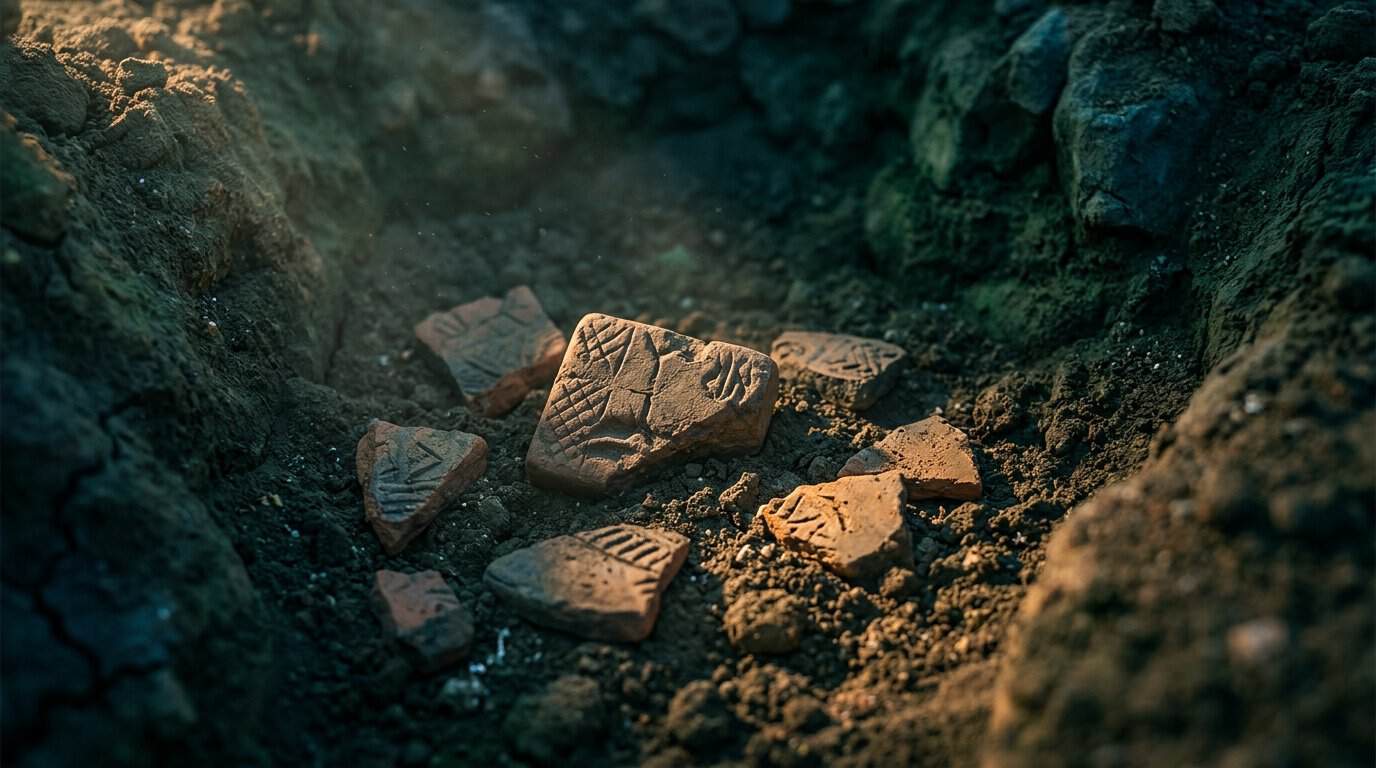
The Indus signs appear across the material remains of the Harappan Civilization, whose main urban period ran from about 2600 to 1900 BCE. Many are carved into steatite stamp seals, pressed into clay sealings, or scratched onto small tablets and copper objects. Other examples occur on pottery, metal tools, ornaments, and terracotta objects. This range suggests that the signs may have been used in trade, administration, craftwork, or ritual settings. At Dholavira, archaeologists also found a remarkable signboard made from large pieces of gypsum, showing that the system could be displayed publicly rather than kept only on small objects.
Taken together, the evidence includes more than 5,000 recorded inscriptions or inscribed objects, although the total changes depending on whether damaged pieces, repeated impressions, duplicate sealings, and small sign variations are counted separately. Research catalogs help organize this changing record, but classification remains difficult because many inscriptions are extremely short. A single seal may carry only a few signs, leaving little context for testing a proposed reading. Even so, the range of objects gives researchers a valuable trail through ancient trade networks, workshops, homes, and ceremonial spaces. It also keeps the central mystery alive because no interpretation has gained broad specialist acceptance.
A visual map of major Indus Civilization sites, including Harappa, Mohenjo-daro, Dholavira, Lothal, and other settlements, would help readers see how widely these signs traveled. Comparing objects by place and date may reveal regional habits, changing sign forms, or links between distant communities. This is why archaeology remains essential to the search for meaning. Statistical studies and sign catalogs have narrowed some possibilities, but they have not securely identified the language behind the script or produced a verified translation. The evidence supports both careful analysis and open-minded curiosity, inviting readers to consider whether future discoveries will connect these brief marks to lost knowledge, everyday record keeping, or a system whose purpose was more complex than writing alone.
Indus Script Discoveries Through Time
The story of the Indus script began to take shape in the 19th century, when ruins and inscribed objects drew attention across the Indus region. Early observations at Harappa were followed by systematic excavations in the 1920s, led by archaeologists including Daya Ram Sahni. R. D. Banerji’s work at Mohenjo-daro revealed another major city of the Harappan world. Seals, pottery, tablets, and other objects carried repeated signs, hinting at an organized writing system linked to a sophisticated urban culture. For a wider look at the settlements behind this mystery, explore the related article on the lost cities of the Indus Valley.
Later excavations at Harappa and Mohenjo-daro expanded the collection, while Dholavira added important evidence from a different part of the civilization. Careful recording helped researchers compare where signs appeared, which symbols stood together, and whether inscriptions were connected to trade, ownership, ritual, or administration. Scholars created sign catalogs and grouped recurring forms, turning scattered discoveries into a much larger body of evidence. Yet the inscriptions are usually very short, and the absence of a confirmed bilingual text has made it difficult to test competing readings.
Modern photography, improved excavation records, and digital databases now allow researchers to study thousands of signs more consistently than earlier scholars could. Statistical tools can reveal patterns in sign order and may show that the system followed rules, but patterns alone cannot identify the language or provide a verified translation. As of August 12, 2026, the Indus script remains undeciphered, with no proposed reading accepted by a broad majority of specialists. That unresolved gap leaves room for careful theories about lost knowledge and distant connections while reminding readers that the most exciting mystery is still one the evidence has not solved.
Why The Indus Script Resists Decipherment
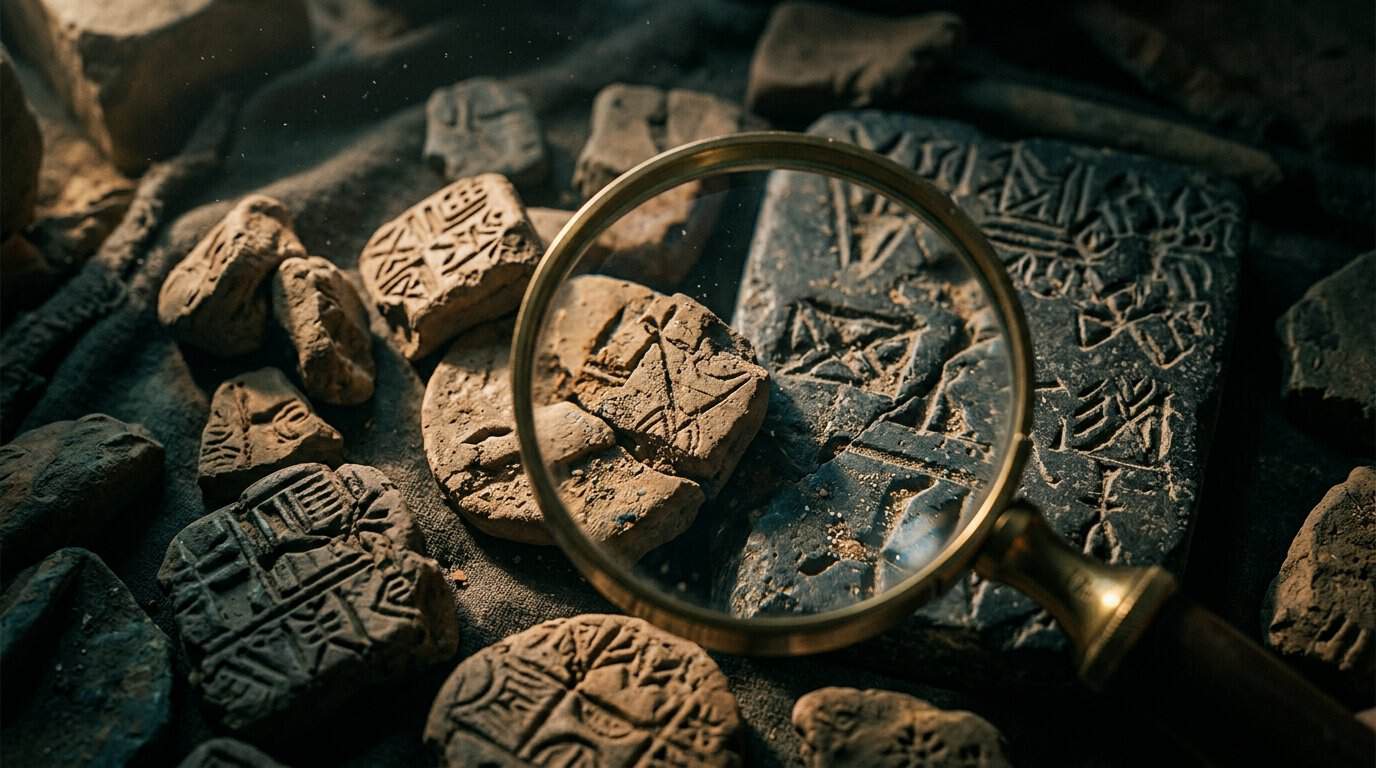
The Indus script remains undeciphered because its clues arrive in unusually small packages. Most inscriptions appear on stamp seals, pottery, tablets, and metal objects, often containing only a handful of signs rather than a sentence or story. Unlike Egyptian writing, it has no bilingual text comparable to the Rosetta Stone, where the same message appears in known languages. As a result, researchers cannot easily confirm whether a proposed sign reading is correct by comparing it with a reliable translation.
Another obstacle is that no one knows for certain which language the signs recorded, if they recorded language at all. Some scholars see a full writing system, while others suggest that the marks were symbols, names, titles, or part of a mixed system with several functions. Sign variations make the puzzle harder because similar marks may represent different signs, artistic styles, or changes caused by carving tools and regional practice. Repeated sequences offer important clues, but damaged seals and incomplete objects can hide the beginning or end of a message, leaving several interpretations open.
Modern studies have improved sign catalogs and used statistics to examine patterns, yet the evidence still cannot be tested against long historical texts. The Harappan Civilization flourished around 2600 to 1900 BCE, but it left no securely identified literary archive that explains its script in plain language. That gap allows theories about lost languages, distant cultural connections, and forgotten knowledge to remain intriguing while keeping them difficult to prove. Until a longer text, a bilingual inscription, or new archaeological evidence appears, the Indus script will remain a genuine historical mystery rather than a solved code.
Modern Theories And Statistical Tests
The search for a language behind the Indus script has produced several serious proposals, but none has won broad scholarly agreement. Some researchers connect it to an early Dravidian language, while others argue for an Indo-Aryan, Munda, or even a lost language family that left few other traces. The short inscriptions, often found on seals and small tablets from about 2600 to 1900 BCE, make the mystery especially difficult because there are no long texts or bilingual inscriptions to guide a translation. As of August 12, 2026, the script remains undeciphered, leaving each theory to explain both the signs and the society that used them.
Modern researchers can still test important questions without knowing what any individual sign means. Sign classification helps separate likely symbols from variations, while computer models compare sign order, repeated groups, and possible word-like units. Frequency analysis and pattern studies can show whether sequences behave in ways that resemble language, such as predictable beginnings, endings, or combinations. These methods may reveal structure, but they cannot identify a sound, word, or meaning on their own. A convincing reading must also fit the archaeological evidence and a known historical language.
That careful balance keeps the debate open without treating every attractive pattern as a solution. A proposed Dravidian or Indo-Aryan reading must explain the full sign system, its regional changes, and the objects on which the inscriptions appear, rather than relying on a few suggestive matches. Readers interested in how scholars approach similar mysteries can explore the site’s article on undeciphered ancient writing systems, then consider which evidence might finally connect the Indus signs to a living language family or reveal a language now lost to history.
Conclusion On The Indus Script Undeciphered
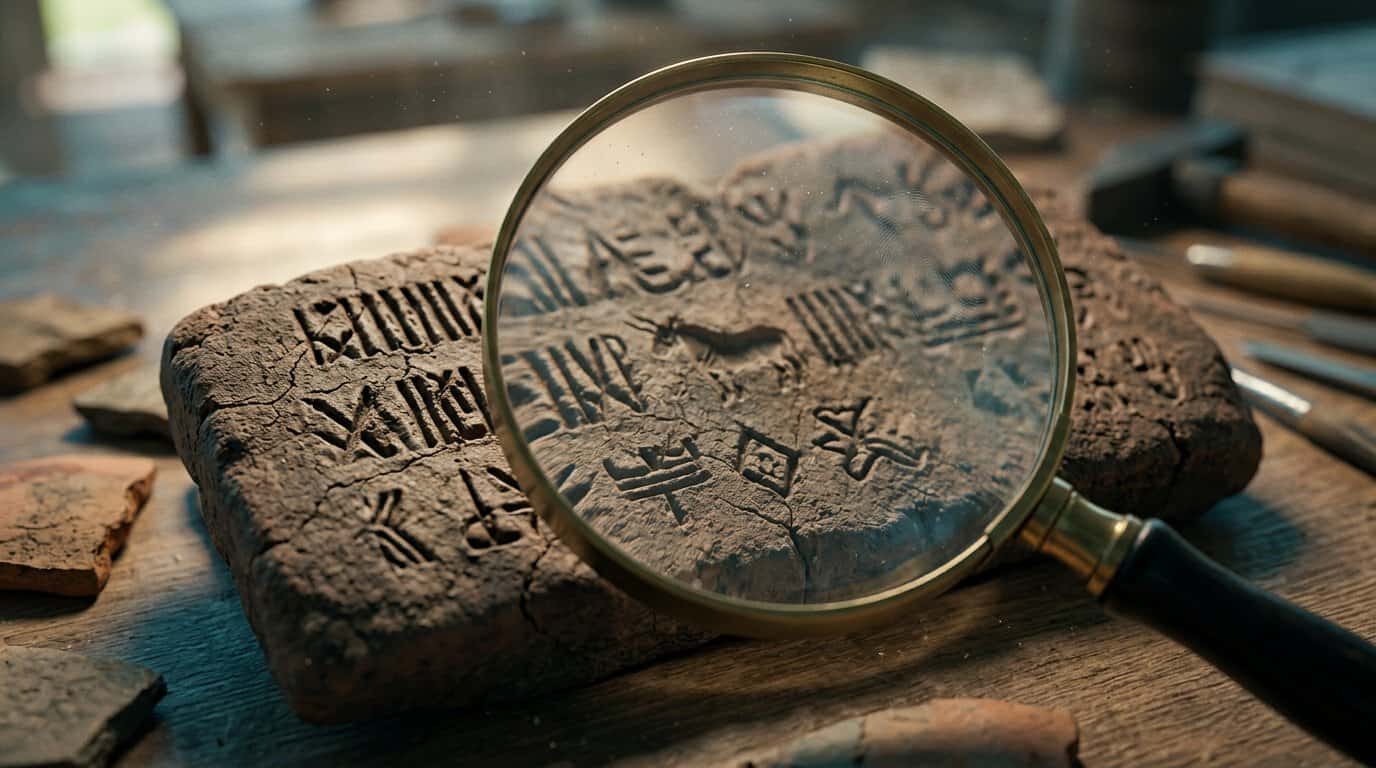
Archaeological discoveries have made the Indus script far easier to study, even though it remains undeciphered. Excavations across present-day Pakistan and northwestern India have revealed signs on seals, tablets, pottery, tools, and other objects, helping researchers build larger and more detailed records of the writing system. Modern catalogs and statistical studies have also improved sign classification and highlighted patterns in how symbols appear together. Yet the inscriptions are usually very short, and no proposed reading has won broad agreement among specialists. The Harappan language itself has not been securely identified, leaving the script connected to a lost world whose written knowledge remains just beyond reach.
That uncertainty keeps the subject compelling without turning every theory into fact. A longer inscription could reveal grammar or repeated phrases. A bilingual artifact might connect the signs to a known language, while new evidence about the Harappan language could provide the missing key. Each possibility would need to be tested against the full archaeological record rather than accepted because it produces a tempting translation. Until then, the evidence documents a sophisticated communication system, but it does not provide a verified reading. Which future discovery might finally unlock the Indus script, a longer inscription, a bilingual artifact, or new evidence about the Harappan language?
Why the Indus Script Still Resists Decipherment
The Indus script remains undeciphered, even after more than a century of excavation, cataloging, and debate. Used mainly between about 2600 and 1900 BCE, its short sequences appear on seals, tablets, pottery, tools, and ornaments connected to the Harappan Civilization. Researchers have identified recurring signs and studied their patterns, but no proposed translation has won broad agreement, and the language behind the script remains unknown. The limited length of many inscriptions, combined with the absence of a bilingual text like the Rosetta Stone, continues to make the mystery especially difficult.
Modern statistical methods and improved sign catalogs have sharpened the search, but they have not produced a verified reading. Theories linking the script to early Dravidian languages, Indo-European traditions, or other lost languages remain possible but unproven. This leaves room for careful speculation alongside archaeological evidence. The uncertainty does not make the inscriptions meaningless, since they may still preserve clues about trade, identity, religion, or administration in one of the ancient world’s great urban cultures. Until stronger evidence appears, the Indus script stands as a genuine historical mystery, inviting readers to consider which discoveries, from new excavations to better analytical tools, might finally give its silent signs a voice.
Frequently Asked Questions
1. What does “Indus script undeciphered” mean?
It means that researchers can identify and catalog the Indus signs, but they cannot reliably translate the language behind them. The script was used by the Harappan Civilization mainly between about 2600 and 1900 BCE, yet no proposed reading has gained broad support among specialists.
2. Where has the Indus script been found?
Indus signs have been discovered across present-day Pakistan and northwestern India, especially at cities such as Harappa, Mohenjo-daro, Dholavira, and Lothal. They appear on steatite seals, pottery, tablets, copper objects, and other goods, suggesting that the signs were used in several areas of Harappan life.
3. Why has the Indus script not been deciphered?
The main obstacle is the lack of a long bilingual inscription, such as the Rosetta Stone, that pairs the Indus signs with a known language. Most inscriptions are extremely short, often containing only a few symbols, and the language spoken by the Harappan people remains unknown. The disappearance of the civilization also removed the living tradition needed to test possible readings.
4. How many signs are in the Indus script?
Researchers have recorded hundreds of distinct signs, although some may be variations of the same symbol or different forms created by writing style. The exact total depends on how scholars classify damaged, rare, and repeated signs. This uncertainty makes it difficult to determine whether every mark represented a separate word, sound, or idea.
5. Was the Indus script really a writing system?
Many researchers believe it was a form of writing because the signs occur in repeated sequences and follow recognizable patterns. However, some studies have argued that the symbols may have functioned as political, religious, or identity marks rather than recording full speech. The debate remains open because the inscriptions are short and lack a clear translation.
6. What do the Indus signs appear to have recorded?
The signs may have represented names, titles, places, goods, religious ideas, or parts of an unknown language. Their frequent appearance on seals suggests a possible connection with ownership, trade, or administration, but their exact purpose cannot yet be proven. Animal images beside the signs may offer clues, although they could be symbolic rather than literal.
7. Have any researchers deciphered the Indus script?
Several researchers, including Asko Parpola and Iravatham Mahadevan, along with computer-based research teams, have proposed readings or identified patterns in the signs. None of these efforts has produced a translation that can consistently explain the full body of evidence or win broad agreement from specialists. Claims of a complete decipherment should therefore be treated with caution until independent researchers can reproduce the results.
8. What discovery could finally help decipher the Indus script?
A long inscription found with a known language would be the most valuable breakthrough, especially if it came from a secure archaeological setting. More inscriptions, clearer evidence about the Harappan language, or a bilingual object could also test existing theories. Until such evidence appears, the strongest approach combines archaeology, linguistics, statistical analysis, and careful study of the symbols in their historical context.