The Mystery Of Devils Kettle Falls Where Half A River Vanishes
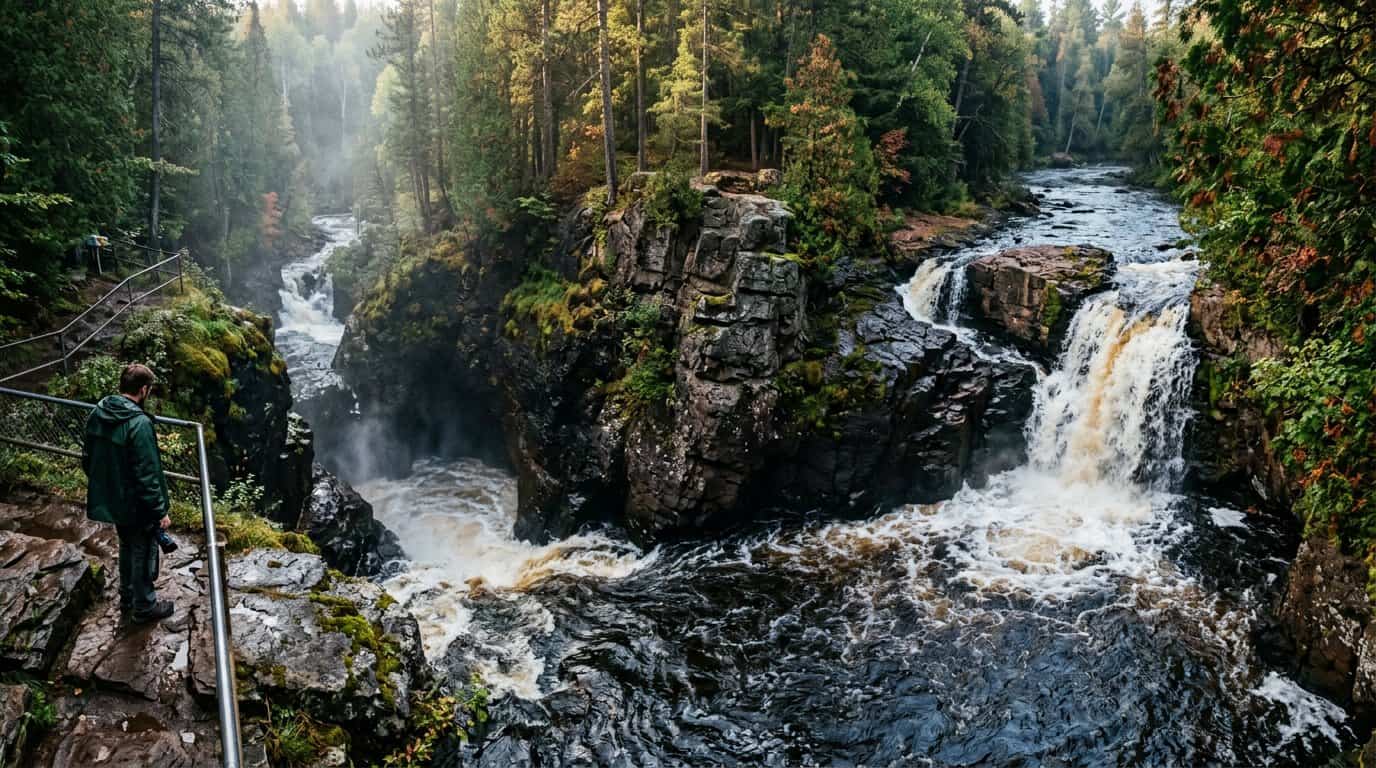
Deep within the rugged terrain of Judge C.R. Magney State Park, a geological anomaly known as devils kettle falls continues to baffle hikers and scientists alike. As the Brule River flows toward Lake Superior, it suddenly splits in two at a massive rock outcrop. While the eastern side tumbles down a standard cliff, the western half plunges into a dark, bottomless stone pit and simply vanishes.
For decades, locals and travelers have tossed logs, GPS trackers, and even ping-pong balls into the churning Kettle only to find that nothing ever emerges. The surrounding rhyolite rock is too hard for secret caves to exist, yet the river’s roar seems to swallow everything it touches. This mysterious disappearance turns a beautiful North Shore hike into a journey toward one of nature’s most stubborn secrets.
Key Takeaways
- The Devil’s Kettle at Judge C.R. Magney State Park features a unique geological anomaly where half of the Brule River vanishes into a rhyolite stone pothole.
- Decades of experiments using GPS trackers, dyes, and ping-pong balls have failed to produce any recovered items, fueling local legends of a bottomless pit.
- Hydrologists have used flow volume measurements to determine that the missing water likely reenters the main river channel through submerged underground passages.
- Despite scientific theories regarding water volume, the exact physical path and destination of the water remain unproven due to the region’s hard volcanic rock.
The Great Disappearing Act Of The Brule River
Deep within the rugged terrain of Judge C.R. Magney State Park, the Brule River performs a geological disappearing act that has baffled visitors for decades. As the river flows toward Lake Superior, it encounters a massive outcrop of rhyolite, a hard volcanic rock that forces the water to split into two distinct paths. The eastern side follows a predictable route, cascading fifty feet down a traditional waterfall and continuing its journey downstream. However, the western half takes a more cinematic turn as it plunges directly into a massive stone pothole known as the Devil’s Kettle. Instead of resurfacing at the base of the falls, this powerful surge of water simply vanishes into the earth without a trace.
The hike to witness this phenomenon is an adventure in itself, requiring travelers to navigate over two hundred wooden stairs through a lush forest. Upon reaching the overlook, the sheer power of the water disappearing into the dark, bottomless hole creates an eerie and captivating atmosphere. For years, curious onlookers and researchers have tossed everything from GPS trackers to colored dyes and even ping pong balls into the churning cauldron. Despite these efforts, none of those items have ever been seen again, fueling local legends and intense scientific curiosity. The hard volcanic rock of the region makes the existence of underground caves or hidden tunnels unlikely, leaving the water’s destination a persistent mystery.
While modern hydrologists have used flow measurements to suggest the water eventually reenters the river through underground channels, the physical evidence remains elusive. They argue that the volume of water downstream matches the total flow from above, yet no one has ever pinpointed the exact exit location of the Kettle’s contents. This lack of a visible connection keeps the sense of wonder alive, as the river continues to swallow half of its own strength every single day. It invites us to wonder what other secrets the earth might be hiding just beneath its surface. Do you believe the water simply flows through hidden cracks, or could there be a more complex geological secret waiting to be discovered?
Decades Of Ping Pong Balls And Lost Trackers
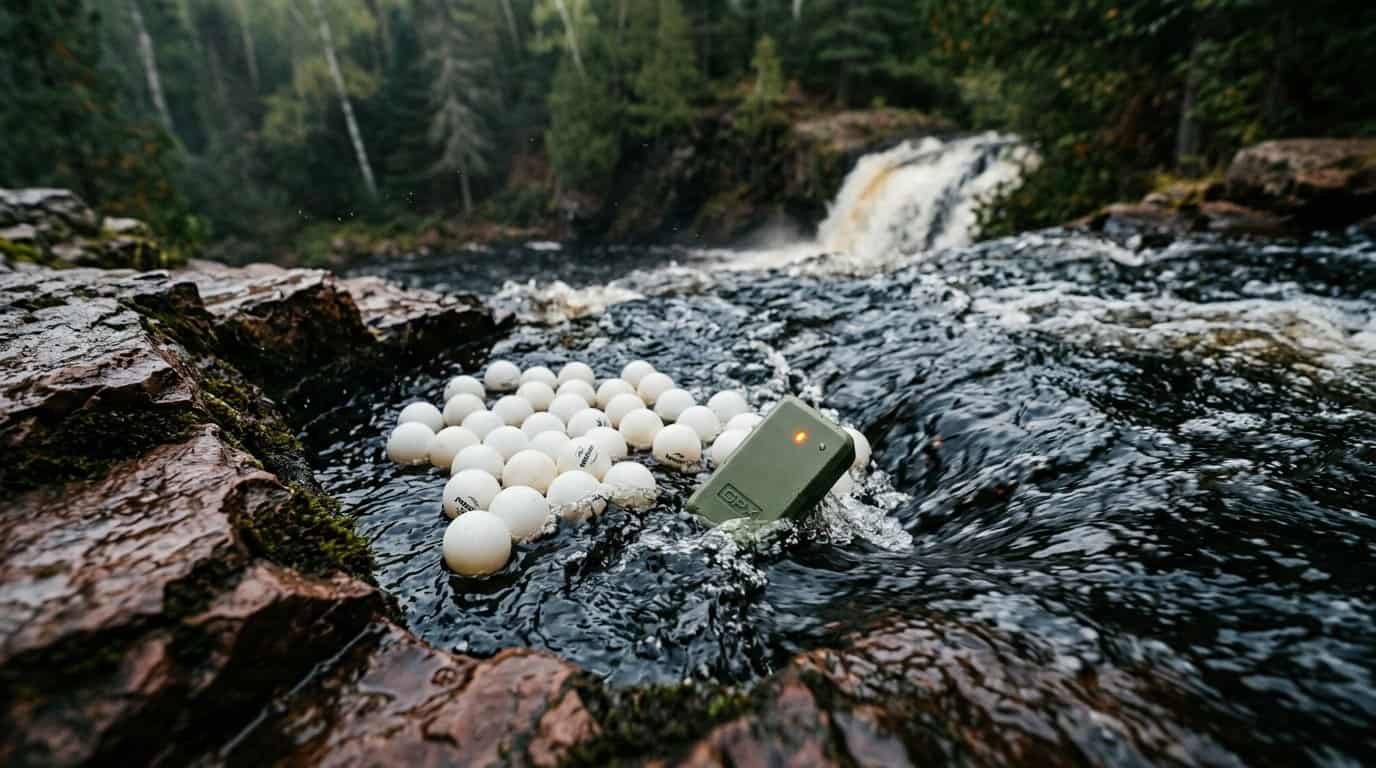
For decades, the Devil’s Kettle has acted as a giant, hungry mouth that swallows everything thrown into it without leaving a trace. Local legends tell of curious hikers tossing everything from sticks and logs to heavy rocks into the churning abyss, only to wait downstream and see nothing resurface. Some visitors have even gone as far as dropping ping pong balls and colorful dyes into the hole, hoping to spot a bright flash of color in the river below. This persistent disappearing act has fueled rumors of secret underground tunnels and hidden passages that defy the known laws of geology.
As technology advanced, the experiments became more sophisticated but remained just as unsuccessful for the average explorer. Modern adventurers have attempted to track the water’s path by dropping GPS trackers and waterproof cameras into the kettle, yet the signal always cuts out or the devices are never recovered. Even scientific groups have struggled to find a definitive physical exit point for the objects swallowed by the rhyolite rock. Much like silent zones where objects or people seem to vanish without explanation, the lack of recovered items keeps the mystery alive. There is something truly haunting about a natural feature that can consume thousands of plastic balls and electronic devices without ever giving them back.
If you stood at the edge of the falls today, what would you be tempted to toss into the kettle to solve the mystery? Many people believe that there is still a secret waiting to be discovered deep beneath the stone, tucked away in a place where human eyes have yet to reach. The sheer force of the Brule River creates a chaotic environment that could easily crush or trap objects, but the total absence of debris remains a puzzling local phenomenon. It is this balance between scientific explanation and the thrill of the unknown that keeps travelers returning to Judge C.R. Magney State Park year after year. Do you think the water follows a simple path, or is there something more complex happening beneath the surface of the North Shore?
Measuring The Flow To Solve A Geological Puzzle
For decades, the mystery of the Brule River was treated more like a magic trick than a geological reality. In 2017, hydrologists decided to apply a simple mathematical approach to this cinematic puzzle. They suspected that the water plunging into the dark pothole was not entering a secret underworld, but was actually surging back into the main river channel just below the falls. By measuring the volume of water above the split and comparing it to the flow downstream, they hoped to prove that no water was actually missing from the system.
The results of the study provided a compelling piece of evidence for those seeking a scientific explanation. Researchers found that the flow volume measurements hundreds of feet below the kettle was nearly identical to the volume measured before the river split in two. This suggested that the western half of the river likely travels through a short, submerged passage before reconnecting with the eastern flow. While the force of the water makes it impossible to see this connection with the naked eye, the numbers indicated that the river remains whole despite its disappearing act.
Even with these measurements, the Devil’s Kettle maintains its sense of wonder because the physical path remains unproven. Despite the findings, attempts to track the water using dyes or GPS trackers have historically failed to yield results. This leaves a lingering question for visitors and researchers alike regarding how the water navigates the hard rhyolite rock. Much like nature’s ghostly choir found in other parts of the world, science may have balanced the books on the water’s volume, but the specific secrets of the kettle’s internal chambers remain hidden beneath the churning white foam.
Witnessing the North Shore’s Great Disappearing Act
The Devil’s Kettle Falls remains one of the most mesmerizing stops along Minnesota’s North Shore because it challenges the imagination. While the eastern side of the Brule River follows the laws of nature, the western half continues to plunge into a dark rhyolite pothole that defies easy explanation. Hikers who brave the two hundred wooden stairs are rewarded with a front-row seat to a geological disappearing act. Even with modern flow studies suggesting the water eventually reemerges downstream, the lack of a visible connection keeps the air of mystery alive. It is a place where the roar of the water and the shadows of the rock create a truly cinematic experience for every visitor.
The allure of this site lies in the balance between scientific theory and the lingering secrets of the earth. Researchers have spent decades tossing everything from GPS trackers to ping pong balls into the abyss, yet nothing has ever surfaced to pinpoint the exact path of the water. Because rhyolite is a stubborn volcanic rock not known for underground tunnels, the persistence of the kettle remains a fascinating puzzle. This blend of rugged beauty and unexplained phenomena ensures that the park stays high on the list for those seeking nature’s hidden wonders. It serves as a powerful reminder that the world still holds pockets of mystery that technology cannot fully illuminate.
What do you think happens to the river once it disappears into the stone? Perhaps you believe in a hidden network of fissures yet to be mapped, or maybe you enjoy the more legendary tales whispered by locals over the years. The North Shore is full of surprises, but the Devil’s Kettle is undoubtedly its greatest unsolved riddle. We invite you to share your own theories or tell us about what you witnessed during your hike to the falls. Join the conversation below and let us know if you think the mystery is truly solved or if the kettle is still hiding something from us.
Frequently Asked Questions
1. Where exactly is Devil’s Kettle Falls located?
This mysterious waterfall is tucked away in Judge C.R. Magney State Park on Minnesota’s North Shore. Visitors can find it by following the Brule River as it winds through rugged volcanic rock toward Lake Superior.
2. What makes this waterfall different from others?
While most waterfalls flow into a pool and continue downstream, Devil’s Kettle splits in two at a massive rock outcrop. Half of the river tumbles down a standard cliff, while the other half vanishes into a deep, stone pothole and seemingly disappears from the face of the earth.
3. Have people tried to track where the water goes?
Curious hikers and researchers have tossed GPS trackers, colored dyes, and even thousands of ping-pong balls into the churning kettle over the years. Despite these efforts, none of the items have ever been seen again, adding to the site’s reputation as a bottomless pit.
4. Is there a scientific explanation for the disappearance?
Hydrologists suggest the water likely reenters the main river through underground channels. However, the hard rhyolite rock makes the existence of large secret caves unlikely, leaving the exact path of the water a subject of ongoing debate.
5. How difficult is the hike to see the falls?
The journey to the overlook is a scenic adventure that requires navigating over two hundred wooden stairs through a lush forest. It is a moderately challenging trek that rewards explorers with a front row seat to one of nature’s most stubborn secrets.
6. Can you see the bottom of the kettle?
The opening of the kettle is a dark and intimidating stone hole where the water plunges with immense force. Because of the constant spray and the depth of the pit, the bottom remains hidden from view, creating an eerie atmosphere for those standing on the edge.
7. Is it safe to get close to the water?
The power of the Brule River is immense and the currents near the split are incredibly dangerous. Visitors should always stay on the designated paths and observation decks to safely witness the phenomenon without getting caught in the river’s grasp.