

The Curious Case Of Beringer And The Lying Stones
In 1725, a respected professor named Johann Beringer began discovering a series of bizarre artifacts that seemed to defy the laws of nature. These limestone carvings, now famously known as the beringer lying stones, featured impossible images like spiders spinning webs, birds sitting on eggs, and even Hebrew letters etched into rock. To Beringer, these finds were a divine revelation that promised to rewrite the history of the natural world. He spent his life’s work documenting the 2,000 pieces, convinced he had stumbled upon a miraculous window into the past.
The truth behind the discovery, however, was far more scandalous than any scientific breakthrough. Two of Beringer’s own colleagues had meticulously hand-carved the stones and planted them on a nearby mountain to humiliate him. While history often remembers this as a simple case of a man being fooled, the story raises deeper questions about the thin line between faith and evidence. It remains a haunting reminder of how easily our own desires can blind us to the most elaborate deceptions.
Key Takeaways
- The 1725 Beringer ‘Lying Stones’ hoax demonstrates how professional jealousy and academic rivalry can weaponize scientific curiosity to destroy a peer’s reputation.
- Confirmation bias remains a primary threat to intellectual integrity, as the desire for a monumental discovery can blind even highly educated experts to obvious signs of deception.
- The transition from early natural history to modern paleontology was shaped by the need for rigorous evidence verification and skeptical peer review to prevent elaborate forgeries from entering the scientific record.
- The surviving Lügensteine serve as permanent historical monuments to the necessity of critical thinking and the danger of allowing personal faith to override physical evidence.
The Elaborate Deceptions Of Mount Eivelstadt
The limestone slopes of Mount Eivelstadt became the stage for a visual spectacle that defied every known law of nature. Professor Johann Beringer discovered nearly 2,000 stones that featured raised, three-dimensional carvings of creatures frozen in impossible moments. Some pieces showed spiders sitting perfectly atop their intricate webs, while others depicted birds guarding nests full of eggs. Most shocking were the stones showing frogs caught in the act of mating, a level of biological detail that seemed to preserve life itself rather than just bone. These artifacts were so perfectly preserved that they looked more like art than the typical skeletal remains found in the earth.
Beyond the animal kingdom, the stones ventured into the realm of the heavens and the divine. Beringer unearthed carvings of the sun with a human face, radiant stars, and the crescent moon surrounded by rays of light. Perhaps the most baffling discoveries were the stones inscribed with ancient Hebrew letters, including the sacred name of God. These celestial and linguistic symbols suggested a cosmic origin, leading Beringer to believe he had found a direct link between the physical world and a higher power. The sheer variety of the subjects made the collection feel like a complete library of the universe carved into rock.
While the professor viewed these finds as a miraculous breakthrough, they actually serve as a masterclass in the art of deception. The hoaxers, J. Ignatz Roderick and Johann Georg von Eckhart, meticulously hand-carved every detail to exploit Beringer’s scientific curiosity and his desire for prestige. By blending recognizable nature with religious symbolism, they created a puzzle that was too enticing for a dedicated scholar to ignore. This elaborate display reminds us that when we want to believe in a discovery, we might overlook the very signs that suggest it is too good to be true. Was Beringer’s mistake a lack of scientific rigor, or did his passion for the unknown simply blind him to the malice of his peers?
Professional Rivalry And The Würzburg Hoaxers

The Würzburg hoax was born from a toxic blend of academic rivalry and personal resentment rather than a simple desire for a prank. J. Ignatz Roderick, a professor of mathematics, and Johann Georg von Eckhart, the university librarian, viewed Beringer as an insufferable and arrogant peer. They sought to create a trap that would humiliate him publicly and dismantle his professional standing within the scientific community. By planting carved stones on Mount Eivelstadt, they exploited Beringer’s genuine passion for discovery and his somewhat prideful nature. Their goal was to watch him publish a monumental blunder that would make him a laughingstock in the intellectual world.
The deception was remarkably elaborate, involving the production of nearly two thousand hand-carved limestone pieces. Roderick and Eckhart hired local youths to hide these fossils in places where they knew Beringer would be searching for specimens. The stones featured increasingly absurd imagery, moving from simple animals to celestial bodies and even Hebrew inscriptions of the name of God. Despite the growing strangeness of the finds, Beringer’s curiosity outweighed his skepticism, leading him to believe he had uncovered a divine library of nature. This case serves as a powerful reminder of how personal vendettas can hide behind the mask of scientific discovery, clouding the judgment of even the most educated minds.
Historians often point to this event as a pivotal moment for critical thinking in the early days of modern paleontology. While the hoaxers eventually tried to warn Beringer that the stones were fakes, he was already too invested in his theories to turn back. He published his findings in a lavishly illustrated book, only to discover the truth shortly after when he reportedly found a stone with his own name carved into it. The fallout of this rivalry was devastating for all involved, as the scandal eventually ruined the reputations of both the victim and the perpetrators. It stands as a timeless cautionary tale about the importance of verifying evidence and remaining wary of those who might use our own curiosity against us.
The Publication Of Lithographiae Wirceburgensis
Driven by a profound sense of scientific wonder, Johann Beringer ignored several anonymous warnings that the strange stones were nothing more than a cruel prank. His confidence in the authenticity of the fossils was so absolute that he compiled his findings into a lavishly illustrated volume titled Lithographiae Wirceburgensis. This book was intended to be his crowning achievement, showcasing over two hundred plates of what he believed were divine imprints in stone. Beringer viewed the skeptics not as helpful colleagues, but as obstacles to a monumental discovery that would change the world of natural history forever. He invested his own reputation and finances into the publication, eager to share these celestial and biological marvels with the global academic community.
The narrative took a turn shortly after the book was released when Beringer returned to Mount Eivelstadt to continue his excavations. Among the limestone fragments, he discovered a stone that bore a pattern unlike any of the spiders or sunbeams he had previously documented. To his absolute horror, the carvings on this specific piece clearly spelled out his own name in Hebrew letters. This chilling discovery made it impossible to deny that he had been the victim of a sophisticated and malicious setup. The realization that his own colleagues, J. Ignatz Roderick and Johann Georg von Eckhart, had planted the stones shattered his spirit and his career.
This historical episode serves as a powerful reminder of how easily our own excitement can blind us to the truth. Beringer was not a foolish man, but his desire to find something extraordinary allowed him to overlook the obvious signs of a hoax. Even today, the Lying Stones stand as a testament to the importance of maintaining a skeptical mind, even when we are faced with something that seems to confirm our deepest hopes. Most of the original stones were eventually tracked down and hidden away, though a few surviving copies of the book remain as a warning to future researchers. What do you think prompted such an elaborate deception, and could a modern scientist fall for a similar trick in our age of misinformation?
Legacy Of The Surviving Lying Stones
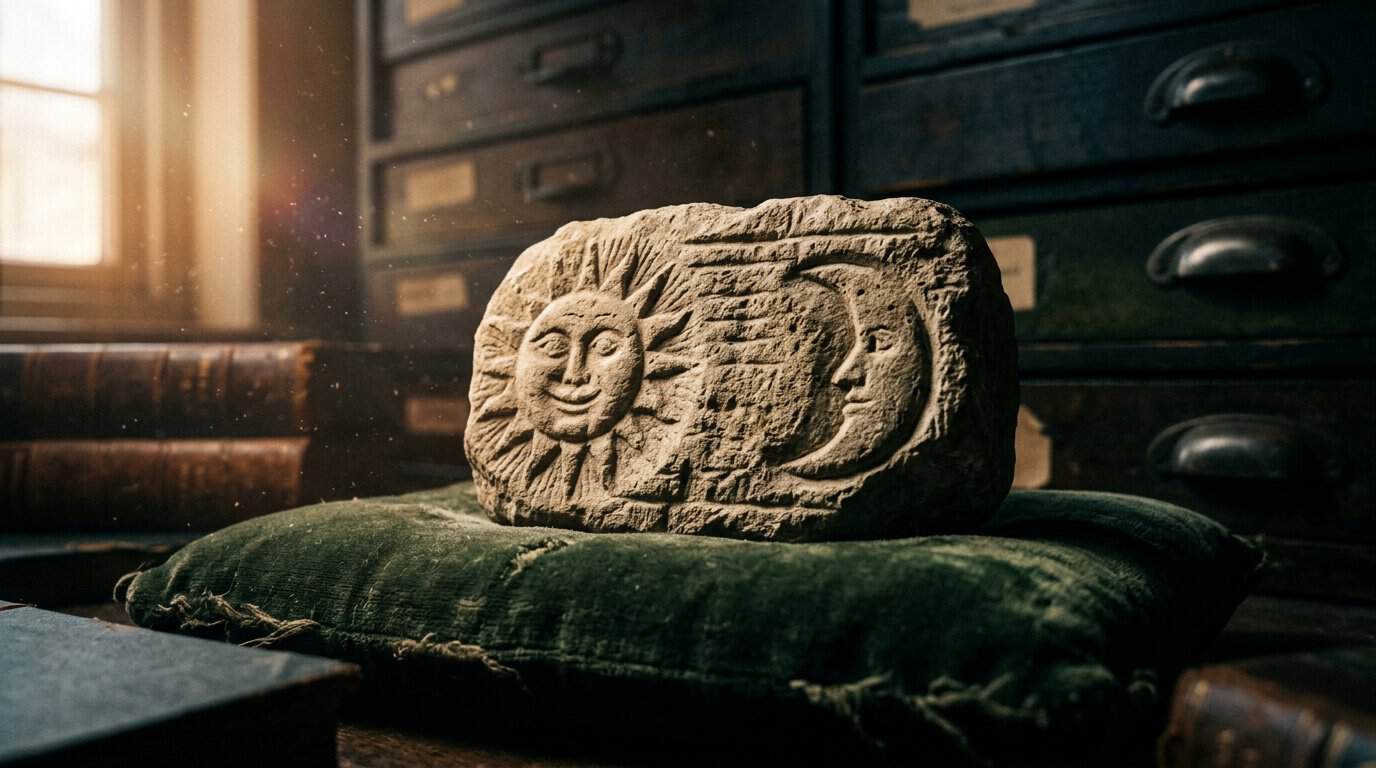
Today, between 500 and 600 of these infamous artifacts are preserved in various museum collections, serving as tangible reminders of a massive intellectual betrayal. These surviving specimens, including those held at the University of Würzburg and the Oxford University Museum of Natural History, offer a fascinating look at the craftsmanship used to deceive a respected scholar. The stones feature bizarre carvings of spiders in webs and Hebrew letters that should have raised immediate red flags for any researcher. By examining these physical objects, modern historians can trace the exact moment where Beringer’s passion for discovery overtook his capacity for logical deduction. They stand not just as relics of a prank, but as important tools for teaching the history of scientific methodology.
The legacy of the Lying Stones highlights the vital role of critical thought and healthy skepticism when exploring the mysteries of the natural world. While it is easy to mock Beringer for his mistakes, his story reminds us that even the most educated minds can be blinded by their own expectations and desires. This historical event encourages us to keep an open mind about the unknown while maintaining a rigorous standard for evidence. Science often moves forward through trial and error, and these stones prove that questioning our own confirmation bias is just as important as the research itself. We must always be willing to look closer at the facts presented to us, especially when they seem to perfectly confirm what we already want to believe.
What do you think was the biggest red flag that Beringer should have noticed before publishing his findings? Do you believe a similar hoax could succeed in the modern scientific community, or has our technology made such deceptions impossible?
The Lasting Legacy of a Scientific Hoax
The saga of the Beringer Lying Stones remains one of the most poignant reminders of how easily human ego and scientific curiosity can be weaponized. While the hoax eventually ruined the reputations of both the victim and the perpetrators, it paved the way for a more rigorous approach to natural history. This historical mishap forced the scientific community to realize that physical evidence must be scrutinized with a healthy dose of skepticism, especially when it seems too perfect to be true. Today, the surviving stones are kept in museums not as biological specimens, but as monuments to the necessity of critical thinking.
Modern science has developed numerous safeguards, such as peer review and advanced carbon dating, to prevent such elaborate deceptions from taking root. However, the Beringer story proves that even the most educated individuals can be blinded by their own desire for a monumental discovery. It encourages a balance between being open-minded to new possibilities and maintaining a disciplined, evidence-based mindset. By studying these moments of historical trickery, we learn to look past the surface of an incredible find to ensure the truth remains the primary goal of any investigation.
How do you think we can best protect ourselves from misinformation in an age where technology makes deceptions easier to create than ever before? Is it possible that our own excitement for a big find still clouds our judgment, just as it did for Professor Beringer in 1725? We invite you to share your thoughts on whether modern scientific methods are enough to catch every clever forgery. Join the conversation below and let us know if you believe a hoax of this magnitude could ever succeed in the present day.
Frequently Asked Questions
1. What exactly are the Beringer Lying Stones?
The Beringer Lying Stones are a collection of nearly 2,000 limestone carvings discovered in 1725 that featured impossible images like spiders in webs and Hebrew letters. These artifacts were believed by Professor Johann Beringer to be divine fossils that captured life in its living state. We now know them as the Lügensteine, or lying stones, because they were actually hand-carved hoaxes planted to deceive him.
2. Who was responsible for creating this elaborate hoax?
Two of Beringer’s colleagues at the University of Würzburg, J. Ignatz Roderick and Georg von Eckhart, orchestrated the scheme to ruin the professor’s reputation. They meticulously carved the stones and hid them on Mount Eivelstadt for Beringer to find during his walks. Their plan was fueled by professional jealousy and a desire to humiliate the respected academic.
3. How did the carvings manage to fool a respected professor?
Beringer was blinded by his own desire to make a world-changing discovery and his belief that nature could produce miraculous signs. At the time, the scientific understanding of how fossils formed was still in its infancy, making it easier to believe these stones were supernatural gifts. He viewed the presence of Hebrew characters and celestial symbols as proof of a divine origin rather than human intervention.
4. What happened when Beringer discovered the truth?
The realization came too late, as Beringer had already published a massive book titled Lithographiae Wirceburgensis detailing his findings. Legend says he discovered a stone with his own name carved on it, finally breaking the spell of the deception. He spent the rest of his life and his personal fortune trying to buy back every copy of the book to hide his public embarrassment.
5. Are any of the original Lying Stones still in existence today?
While Beringer attempted to destroy the evidence of his mistake, several hundred of the stones survived and are preserved in various museum collections. The University of Würzburg and the Teylers Museum in the Netherlands hold some of these infamous artifacts. They serve as a permanent reminder of one of the most successful and peculiar academic pranks in history.
6. Why is this story still relevant to modern science?
The tale of the Lying Stones highlights the dangers of confirmation bias, where we only see evidence that supports what we already want to believe. It serves as a cautionary lesson for researchers to remain skeptical and objective, even when a discovery seems too good to be true. Much like the debate surrounding the crystal skulls, this event helped shape the rigorous standards of evidence that define modern paleontology and archaeology. Similar debates often arise when researchers encounter an anachronistic artifact that appears to defy the established timeline of human history.