
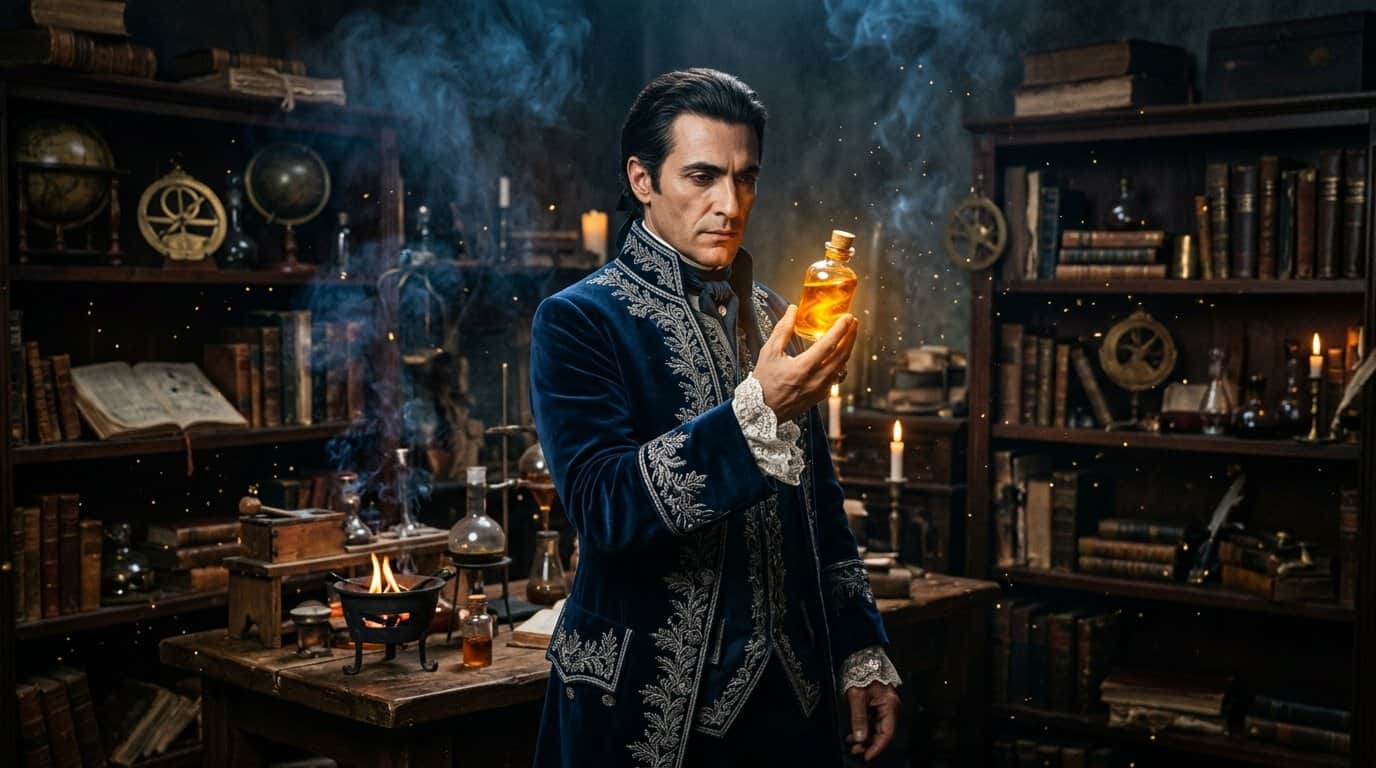
The Man Who Never Dies: Unraveling The Mystery Of Saint Germain
Imagine a man who speaks every language, masters every instrument, and possesses the secret to perfecting flawed diamonds with a single touch. This was the reality of the Count of Saint Germain, a mysterious 18th-century figure who captivated the royal courts of Europe and left even the greatest thinkers questioning the limits of time. Many who crossed his path believed he was the san germain immortal, a man who had discovered the elixir of life and walked the earth for centuries without aging a single day.
While history records a quiet death in 1784, whispers of his presence continued to surface in the shadows of the French Revolution and beyond. He was a polymath and an alchemist who seemed to exist outside the boundaries of a normal human lifespan, blending historical fact with the impossible. Exploring his life requires a look into a world where science meets the supernatural, challenging the standard understanding of what it means to be truly ageless.
Key Takeaways
- The Count of Saint Germain established himself as a legendary polymath and alchemist whose mastery of languages, music, and diamond purification captivated the 18th-century royal courts of Europe.
- Historical records and contemporary accounts suggest the Count possessed a supernatural longevity, maintaining the physical appearance of a middle-aged man for many decades through a secret elixir and alchemical diet.
- Despite his official death in 1784, persistent sightings of the Count across the 19th and 20th centuries suggest he may have faked his passing to maintain a hidden, ageless existence.
- A compelling historical theory identifies the Count as Leopold George, the hidden eldest son of Prince Francis II Rakoczi, explaining his immense wealth, royal access, and need for a permanent secret identity.
The Remarkable Talents Of The Wonderman
The Count of Saint Germain earned his nickname as the Wonderman of Europe by displaying talents that seemed impossible for a single lifetime. He moved through the royal courts of the 18th century as a true polymath and an alchemist, mastering the violin with the skill of a virtuoso and speaking nearly every European language with perfect fluency. King Louis XV was so impressed by the Count’s abilities that he provided him with a private laboratory at the Château de Chambord. It was here that Saint Germain reportedly performed alchemical feats, such as perfecting flawed diamonds to increase their value significantly. His contemporaries often noted that he possessed a vast knowledge of history, describing ancient events with such vivid detail that it felt as though he had personally witnessed them.
Beyond his artistic and scientific brilliance, the Count was most famous for his apparent victory over the passage of time. He claimed to possess a secret elixir of life and was rarely seen eating in public, leading many to believe he sustained himself on a special alchemical diet. Historical accounts from figures like the philosopher Voltaire described him as a man who knew everything and never died, reflecting the widespread belief in his supernatural longevity. Even as decades passed, those who encountered him remarked that he never seemed to age a single day, maintaining the appearance of a healthy man in his mid-forties. This consistency fueled rumors that he had discovered the philosopher’s stone, allowing him to stay eternally young while the world changed around him.
While official records indicate that he passed away in 1784 under the care of Prince Charles of Hesse-Kassel, the legend of his immortality only grew after his reported death. Numerous sightings of the Count occurred throughout the 19th and 20th centuries, suggesting that his mastery of alchemy may have truly granted him a life beyond the normal human span. He remains a figure who challenges our understanding of history and science, blending documented court life with the fringe possibilities of the occult. Was Saint Germain simply a brilliant man with a talent for reinvention, or did he actually unlock a secret of nature that remains hidden today? We invite you to share your thoughts on whether a person could truly master the arts of alchemy to achieve such remarkable longevity.
Historical Sightings Across Three Centuries

One of the most captivating accounts of the Count’s longevity comes from the memoirs of the Countess von Georgy, who encountered him at the French court in the 1750s. Upon meeting the mysterious man, she was struck by a sense of recognition and asked if his father had been in Venice fifty years prior. To her astonishment, the Count claimed that he was the very same man she had known decades ago, yet his physical appearance remained that of a middle aged man. He even reminded her of specific details from their previous meetings, leaving the Countess and the surrounding courtiers in a state of utter disbelief. This documented exchange served as the foundation for his reputation as a man who had successfully conquered the passage of time.
Despite official records stating that the Count passed away in 1784, reports of his presence continued to surface throughout the following century. He was allegedly seen providing counsel to Marie Antoinette before the French Revolution and was later spotted at various diplomatic gatherings across Europe. Witnesses often remarked that he appeared exactly as he had during the reign of Louis XV, showing no signs of aging or frailty. These persistent sightings were not merely rumors but were recorded by figures such as the Comtesse d’Adhémar, who claimed to have met him multiple times long after his supposed death. These persistent accounts suggest that the Count may have possessed a secret knowledge that allowed him to slip through the cracks of history.
The mystery of Saint Germain invites us to consider whether a person could truly exist outside the normal boundaries of a human lifespan. While skeptics suggest these sightings were the result of clever impersonators or historical confusion, the consistency of the descriptions remains a challenge to explain. His vast knowledge of history and his ability to recall ancient events as if he were a primary witness added a layer of credibility to his claims. Whether he was a master of alchemy or simply a brilliant performer, the documented evidence of his recurring appearances continues to fascinate those who seek the truth behind the legend. Do you believe it is possible for a person to remain unchanged by time, or was the Count simply a master of illusion?
Royal Secrets And The Transylvanian Connection
The most captivating explanation for the Count’s mysterious origins points toward the royal house of Transylvania. Many historians and researchers believe he was actually Leopold George, the eldest son of Prince Francis II Rakoczi. According to this theory, the young prince did not die in infancy as official records suggested, but was instead spirited away to be raised in secret to protect him from the political reach of the Habsburgs. This royal lineage would explain his immense wealth, his refined education, and his presence in the most exclusive circles of Europe. If true, the man who called himself Saint Germain was not a common fraud, but a displaced prince living a life of permanent disguise.
During his time in the French court, Saint Germain became much more than a mere guest to King Louis XV. The King was so fascinated by the Count’s vast knowledge of chemistry and history that he provided him with a private laboratory at the Chateau de Chambord. Records from the era suggest that Saint Germain acted as a secret diplomat and a trusted advisor on matters that went far beyond typical court gossip. He reportedly performed tasks that seemed like magic, such as removing flaws from the King’s diamonds and creating vibrant dyes that never faded. This intimate relationship with the French monarchy gave him a level of influence that few could ever hope to achieve.
While his official death is recorded as occurring in 1784, the legend of his immortality suggests that he simply moved on to a new chapter of his long life. Those who believe in his supernatural nature point to sightings of the Count decades after he was supposedly buried in Germany. Even the skeptic Voltaire famously described him as a man who knows everything and who never dies, highlighting the deep impression he left on his contemporaries. Whether he was a hidden prince or a master of the fountain of youth, his impact on the royal courts remains a verified historical fact. Do you think it is possible for a man to fake his own passing so many times that he becomes a legend, or did Saint Germain truly discover a secret to longevity?
The Endless Mystery of the Immortal Count
The story of the Count of Saint Germain remains one of history’s most fascinating puzzles, sitting right on the border between documented reality and the impossible. While official records suggest he passed away in 1784, the numerous sightings that followed his supposed death have kept the flame of his immortality alive for centuries. He was undeniably a man of immense talent, blending the skills of a master chemist with the grace of a royal courtier. Whether he was a clever Transylvanian prince hiding his identity or a true alchemist who discovered the secret to eternal life, his impact on European history is undeniable.
The legacy of the Wonderman continues to inspire those who look for magic in the margins of historical textbooks. By blending his vast knowledge of science with an aura of supernatural mystery, he became a figure that defies simple explanation. We are left to wonder if his longevity was a literal truth or a masterful performance designed to ensure his name would never be forgotten. His life serves as a reminder that history still holds secrets that modern science cannot fully reach.
There is something deeply compelling about the idea that someone could walk through the ages, witnessing the rise and fall of empires firsthand. Some believe he still wanders the world today, perhaps under a different name and in a different city. Others think his immortality was simply the result of his brilliant mind and the stories people chose to tell about him. Much like the legend of the cursed Hope Diamond, his story is filled with intrigue and high-society drama. What do you think really happened to the mysterious Count? Share your theories about his true identity or any strange accounts you have heard in the comments below.
Frequently Asked Questions
1. Who exactly was the Count of Saint Germain?
The Count of Saint Germain was an 18th century polymath and alchemist who became a legendary figure in the royal courts of Europe. He was known for his incredible mastery of multiple languages, musical instruments, and the scientific arts. King Louis XV was so fascinated by the Count that he granted him a private laboratory at the Château de Chambord to conduct his mysterious experiments.
2. Why is he often referred to as the san germain immortal?
He earned this reputation because he never appeared to age, looking like a man in his mid-forties for several decades. Many people who met him across different generations claimed he looked exactly the same as he did years prior. This led to the widespread belief that he had discovered the elixir of life or a way to halt the aging process entirely.
3. What were some of his most impressive alchemical feats?
The Count was famous for his ability to perfect flawed diamonds, reportedly removing internal spots to increase their value with a single touch. He also possessed a deep knowledge of chemistry and history, often describing ancient events with such vivid detail that listeners felt he had been there in person. His experiments at the Château de Chambord focused on blending science with the supernatural to achieve what others thought was impossible.
4. Did the Count of Saint Germain really die in 1784?
While official historical records state that he passed away in 1784, many people believe this was a ruse to hide his true nature. Sightings of the Count continued long after his recorded death, particularly during the turbulent years of the French Revolution. These persistent reports suggest that he may have simply moved on to a new identity to continue his ageless journey.
5. How did the Count maintain his youthful appearance?
Witnesses often noted that the Count followed very specific and unusual habits, such as rarely eating in public and consuming a special tea or elixir. He claimed to have a deep understanding of nature and time, which he used to preserve his vitality. His contemporaries were convinced these practices were the secret behind his victory over the passage of time.
6. Is there any evidence that he was more than just a talented man?
The evidence lies in the consistent accounts from high-ranking officials and thinkers of the 18th century who were baffled by his knowledge and longevity. While skeptics suggest he was a clever impostor, his ability to speak every European language fluently and perform complex alchemical tasks remains unexplained by traditional history. He existed at the fascinating intersection of documented historical fact and the unexplained supernatural.