
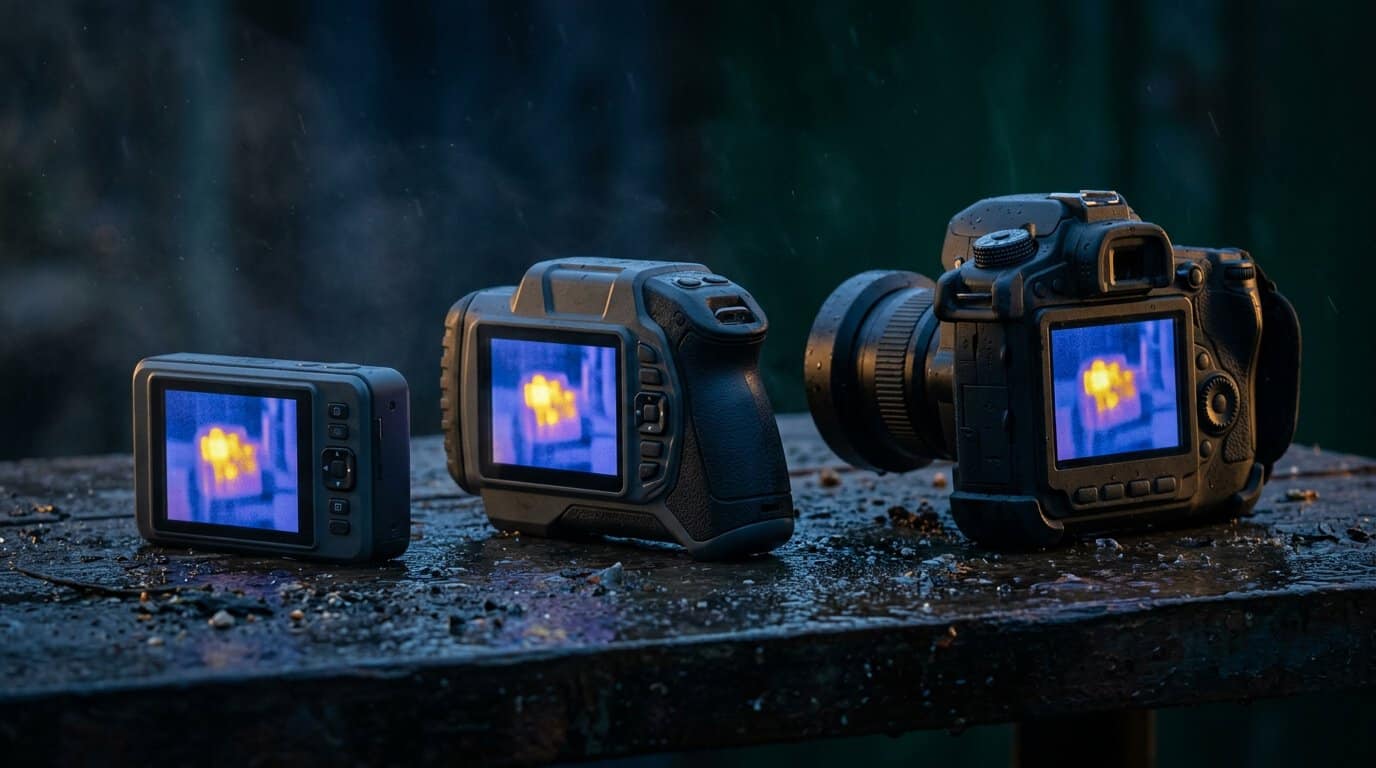
Thermal Camera Pricing: What Different Budgets Can Buy
Thermal camera prices range from a few hundred dollars for smartphone attachments to many thousands for advanced professional cameras. FLIR lists the ONE Pro at $429, with a promotional price of $349, and the standalone C8 at $999.
These examples show how much prices can vary with a camera’s design and capabilities. They are listed prices or offers, not market averages, and may change or vary by configuration. The best choice depends on the inspection task.
Key Takeaways
- Thermal camera prices range from a few hundred dollars for smartphone-connected models, such as FLIR’s ONE Pro listed at $429 or a promotional $349, to more than $10,000 for professional models such as the FLIR T530.
- Manufacturer-listed prices are examples, not guaranteed checkout prices or market averages, and promotions, location, and camera configuration can change the cost.
- A thermal camera shortlist should start with the inspection task and compare the right form, thermal resolution, frame rate, and lens configuration rather than price alone.
- Medical screening requires checking a camera’s intended use against IEC 80601-2-59, while certain U.S. exports of more than 100 specified cameras to most Country Group A:1 destinations may require reporting.
How Much Does a Thermal Camera Cost?
Thermal camera prices range from a few hundred dollars for smartphone-connected models to many thousands for advanced professional cameras. FLIR lists its ONE Pro at $429, with a promotional price of $349, and its wireless Edge Pro at $529. Standalone cameras cost more in these examples. FLIR lists the compact C8 at $999 and the E5 Pro at $1,399. Seek Thermal lists its handheld Reveal 300 at $1,299.99, putting it in a similar price range to the E5 Pro. Professional inspection models can cost much more. FLIR lists the E54 from $5,199.20 and the T530 from $10,799.20. One T530 configuration is listed at $13,999, and FLIR offers several lens configurations for the model. These are examples of manufacturer-listed prices and offers, not guaranteed checkout prices or neutral market averages. Prices may change, and configuration can affect the listed cost. Because the T530 is available with different lenses, comparisons should identify the specific configuration.
What Drives Thermal Camera Prices?
Thermal camera prices depend on factors such as form, image resolution, lens options, and features that help interpret thermal patterns. A compact or phone-connected camera serves a different purpose from a standalone inspection tool. Professional models may offer additional configuration choices and analysis features.
Resolution indicates how much detail a camera can capture, but a higher number alone does not determine whether a model suits a particular job. FLIR specifies a thermal resolution of 160 × 120 pixels for the E5 Pro. Seek Thermal lists the Reveal 300 at $1,299.99, with a sensor resolution of 320 × 240 and a frame rate greater than 25 Hz. These specifications offer a useful comparison between models in a similar price range. The Seek Thermal Reveal 300 listing provides current product details.
Lens choice can also affect the price of professional cameras. FLIR says the T530 is available with multiple lens configurations, so the model name alone does not describe every setup or its cost. Comparisons should account for the specific configuration being priced.
Some cameras combine thermal imaging with on-screen guidance. HIKMICRO says the B21LS uses Smart SuperScene AI to flag anomalies such as water leaks and insulation gaps. HIKMICRO’s B21LS product information describes the feature. Resolution, frame rate, lens options, and automated flags are useful comparison points. The right combination depends on the inspection task.
Which Price Range Fits the Job?
The right price range depends on whether an inspection calls for a phone-connected camera, a compact standalone model, or higher-end professional equipment. For a phone-connected option, FLIR lists the ONE Pro at $429, with a promotional price of $349, and the wireless Edge Pro at $529. These examples fall in the few-hundred-dollar range and pair thermal imaging with a smartphone. For a compact standalone camera, FLIR lists the C8 at $999. The E5 Pro costs $1,399 and has a listed thermal resolution of 160 × 120 pixels. Price is one factor to weigh alongside the model’s specifications and intended use. Professional equipment enters a much higher price range: FLIR lists the E54 from $5,199.20 and the T530 from $10,799.20. One T530 configuration is listed at $13,999, with the final price depending on the lens configuration. A shortlist can start with the inspection and working style:
- Identify the task, such as a phone-based check, a standalone inspection, or professional work.
- Choose the form that suits the job: smartphone-connected, compact standalone, or professional equipment.
- Compare relevant specifications, including thermal resolution and, for the T530, the lens configuration associated with the listed price.
Is a Low-Cost Thermal Camera Worth It?
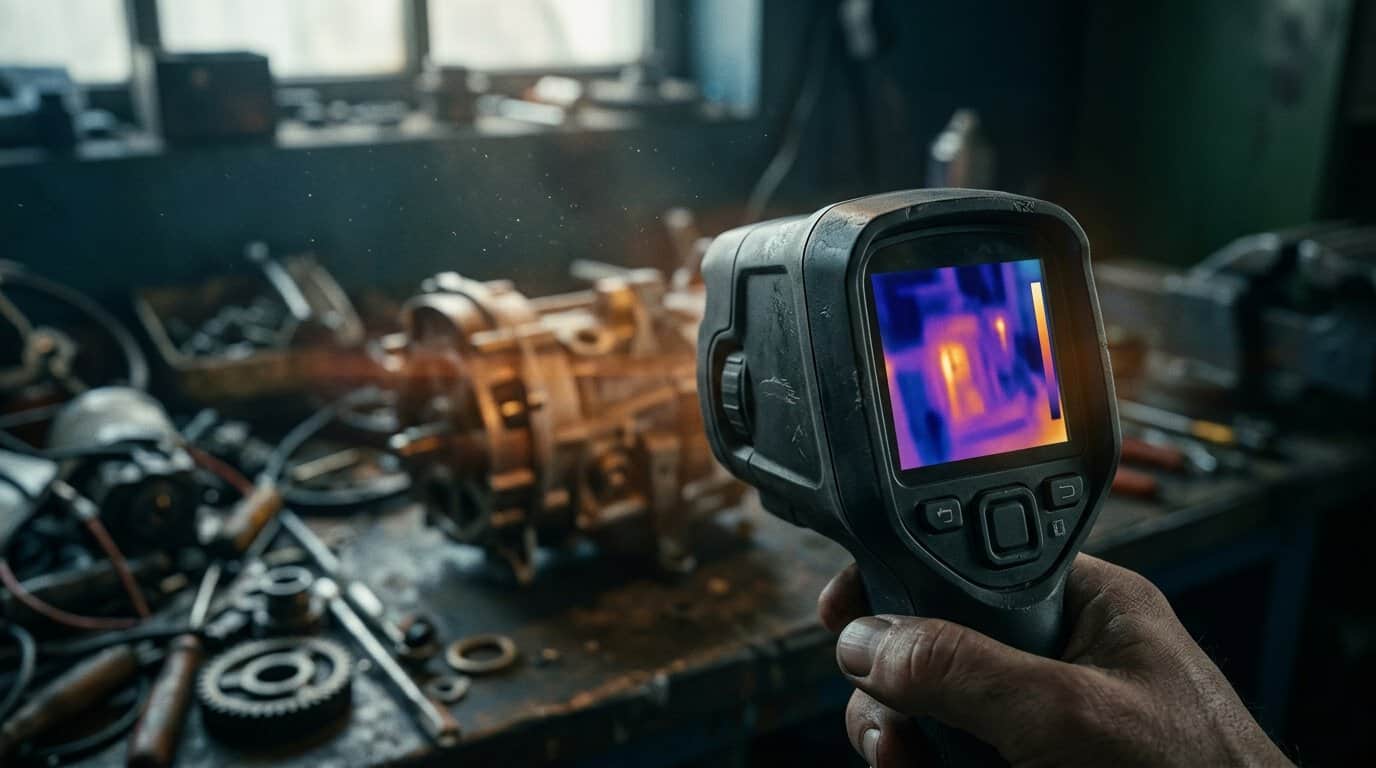
A low-cost thermal camera can be worth the price when its design and specifications fit the inspection. No single price range suits every task. A smartphone-connected camera costing a few hundred dollars may suit someone who wants thermal imaging paired with a phone, while a standalone model offers a different way to work. Neither design is automatically better.
Price alone can hide important differences. FLIR lists the standalone E5 Pro at $1,399 with a thermal resolution of 160 × 120 pixels. Seek Thermal lists the Reveal 300 at $1,299.99 with a sensor resolution of 320 × 240. The Reveal 300 listing offers one point of comparison, but resolution alone does not show which camera suits a particular inspection. The task, form, and relevant specifications all matter.
Higher-priced equipment may offer capabilities or configuration choices that matter for some professional work, but those features may not be needed for every inspection. Manufacturer-listed prices and promotional offers, including FLIR’s listed ONE Pro offer, can change. Comparisons should use the current price and configuration.
Standards and Export Rules to Check
Medical screening is a specialized use, not an ordinary home inspection. The International Electrotechnical Commission says IEC 80601-2-59:2017 sets basic safety and essential performance requirements for screening thermographs used for individual, non-invasive febrile-temperature screening under controlled environmental conditions. The IEC gives the publication date as September 19, 2017, and lists a consolidated version that incorporates Amendment 1:2023. The IEC standard information describes the scope and versions.
Export rules matter for businesses shipping equipment internationally, rather than for typical consumer purchases. Under U.S. Export Administration Regulations § 743.3, exporters must report exports of more than 100 specified thermal-imaging cameras to Country Group A:1 destinations, excluding Australia, Canada, and the United Kingdom, when the exports are not authorized by an individually validated license. The Bureau of Industry and Security provides the regulatory text.
Match the Price to the Question
A useful first step is to describe the inspection in one line: what needs to be found, where the camera will be used, and whether a phone connection or standalone handling is essential. The shortlist can then include specifications that may affect the task, such as thermal resolution or a required lens, before comparing current prices for that exact configuration. Optional features can be noted separately so they do not steer the decision unnecessarily. This approach turns a broad price search into a focused comparison.
For medical screening, an ordinary inspection camera should not be treated as suitable by default. The manufacturer’s documentation should be checked for the intended screening use and compared with the scope of IEC 80601-2-59, which addresses screening thermographs under controlled environmental conditions. A listed price does not establish suitability.
For international business shipments, the camera specifications, destination, quantity, and licensing status should be identified before arranging an export. The Bureau of Industry and Security explains the reporting rule for exports of more than 100 specified thermal-imaging cameras to most Country Group A:1 destinations without an individually validated license. Which inspection is being priced, and what requirement will shape the shortlist?
Frequently Asked Questions
1. Can a thermal camera attachment work with any smartphone?
No. A smartphone thermal camera attachment is not guaranteed to work with every phone. Compatibility depends on the attachment’s connector and software requirements, so the manufacturer’s supported-device information should be checked before purchase.
2. Can a thermal camera see through walls?
A thermal camera cannot show objects through a wall. It records temperature patterns on the wall’s surface. Those patterns may point to a temperature difference, but they do not reveal exactly what is behind the wall.
3. What accessories are included in a thermal camera’s listed price?
A listed camera price does not confirm which accessories are included. The exact product listing and configuration should be checked for items such as lenses or cables before prices are compared.
4. Why do thermal camera prices differ between countries?
A thermal camera’s listed price may vary by country. Local pricing, taxes, sales terms, and the exact camera configuration can affect the cost, so comparisons should use the same model and setup in the relevant market.
5. Is it legal to own a thermal camera?
The cited U.S. rule concerns export reporting, not a general ban on owning a thermal camera. The Bureau of Industry and Security describes reporting requirements for certain exports. Rules for a particular shipment or location may need to be checked separately.