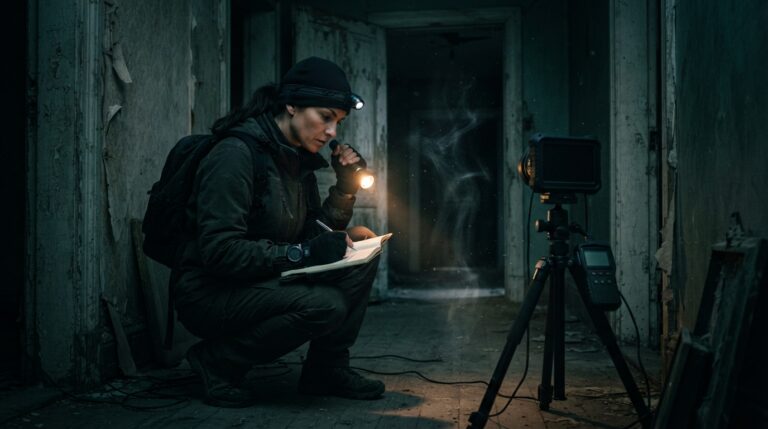
Ghost Hunting Camera Reviews: Night Vision, Full Spectrum, and Thermal Compared
Ghost-hunting cameras have no universal winner. The FLIR ONE Pro records thermal images at a native resolution of 160 × 120 pixels, while infrared and full-spectrum cameras capture different kinds of light. One 4K camera combines built-in infrared night vision with full-spectrum recording, but its listed battery estimate is about an hour in video mode and as little as 30 minutes with the infrared light running at high settings. Those limits matter when an investigation calls for extended recording.
The images are not interchangeable, and none proves that a ghost is present. Thermal cameras show patterns of emitted heat, which NASA explains can be measured using infrared instruments. Night-vision footage and modified full-spectrum images record different views of a scene. The useful question is not which camera promises the most paranormal evidence, but which one captures the details an investigator wants to review.
Key Takeaways
- Choose an infrared night-vision camera for dark-room video, a full-spectrum camera for modified light capture, or a thermal camera for heat patterns because the three record different kinds of images.
- Check battery life under the planned settings: one listed 4K infrared and full-spectrum camera runs about 1 hour, or as little as 30 minutes with its infrared light at high settings, while Sony lists up to 235 minutes of continuous recording for the FDR-AX43A.
- Confirm practical fit before buying by checking phone compatibility, recording time, illumination, storage needs, and everyday photo use; one listed full-spectrum camera produces pinkish daylight images, and FLIR lists the ONE Pro at $349 with 160 × 120-pixel thermal resolution.
- Treat unusual footage as a record to investigate, not proof of a ghost: thermal images show heat patterns, and dust, moisture, lens flare, or camera movement can create photographic anomalies.
What Is the Best Camera for Ghost Hunting?
There is no single best camera for every ghost hunter. Infrared night-vision camcorders suit dark video recording, full-spectrum modified cameras provide a different camera format, and thermal devices show heat patterns rather than ordinary images. The right choice depends on what an investigator wants to record and how the footage will be used, not on claims that a camera can detect ghosts.
An infrared camcorder records video in low light using infrared illumination, either built in or external. Sony’s FDR-AX43-series guide explains that the NIGHTSHOT Light setting controls whether the camcorder emits infrared light in dark conditions. Sony lists the FDR-AX43A battery for up to 235 minutes of continuous recording, a useful reference when comparing how long equipment can keep filming.
Full-spectrum modified cameras capture still photos and video in a modified format. One listed full-spectrum digital camera has 16.44-megapixel photos and HD video, but its pinkish daylight color makes it unsuitable for everyday photography. Thermal cameras, by contrast, display heat patterns rather than a conventional visible-light scene.
A useful comparison looks beyond image type to resolution, built-in or external illumination, battery life, recording duration, phone compatibility, and everyday photography use. Specifications can clarify what a device records, but they cannot establish what caused an unusual image. Skeptical Inquirer describes dust, moisture, lens flare, and camera movement as possible sources of photographic anomalies, and notes that ghost-hunting cameras have not been shown to detect ghosts. Skeptical Inquirer’s discussion of photographic anomalies offers useful context: a recording can document something unexpected without proving its cause.
Three Cameras, Three Kinds of Images
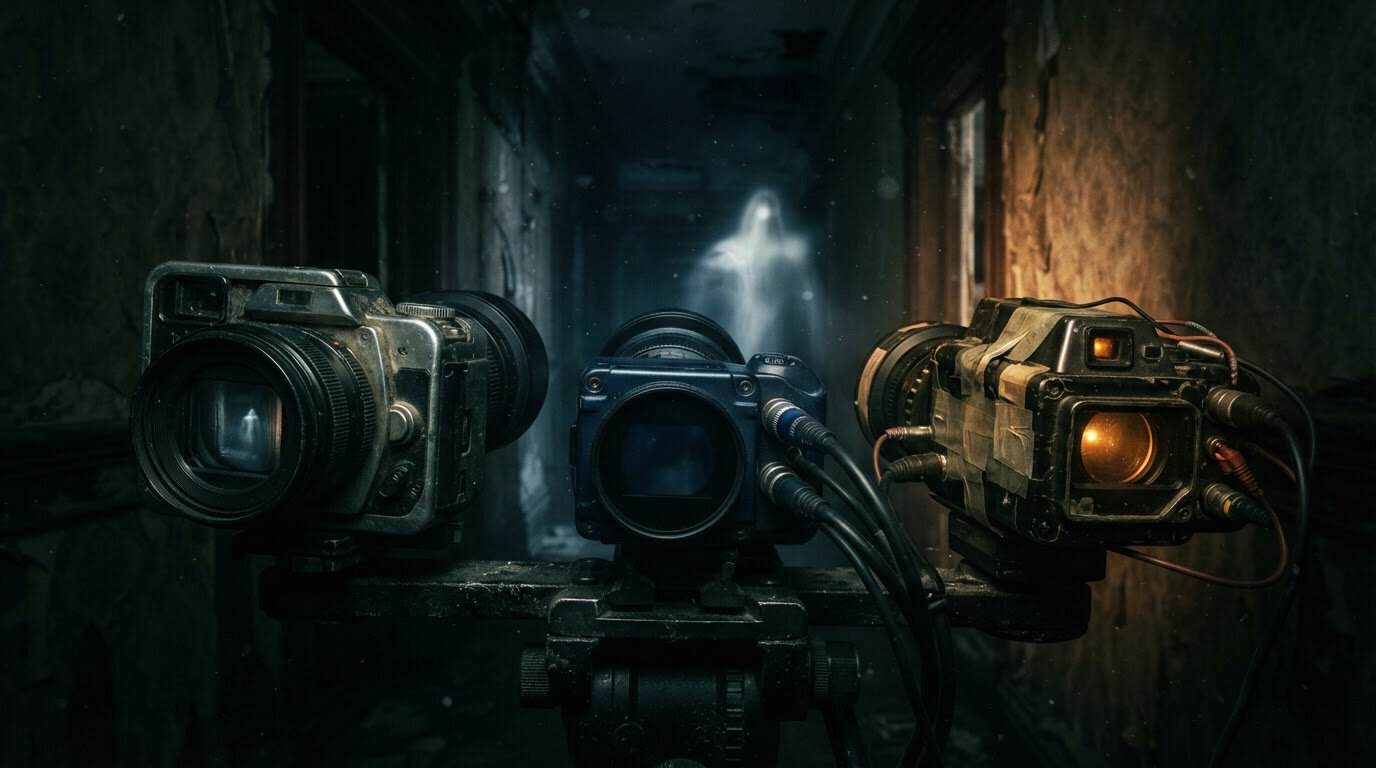
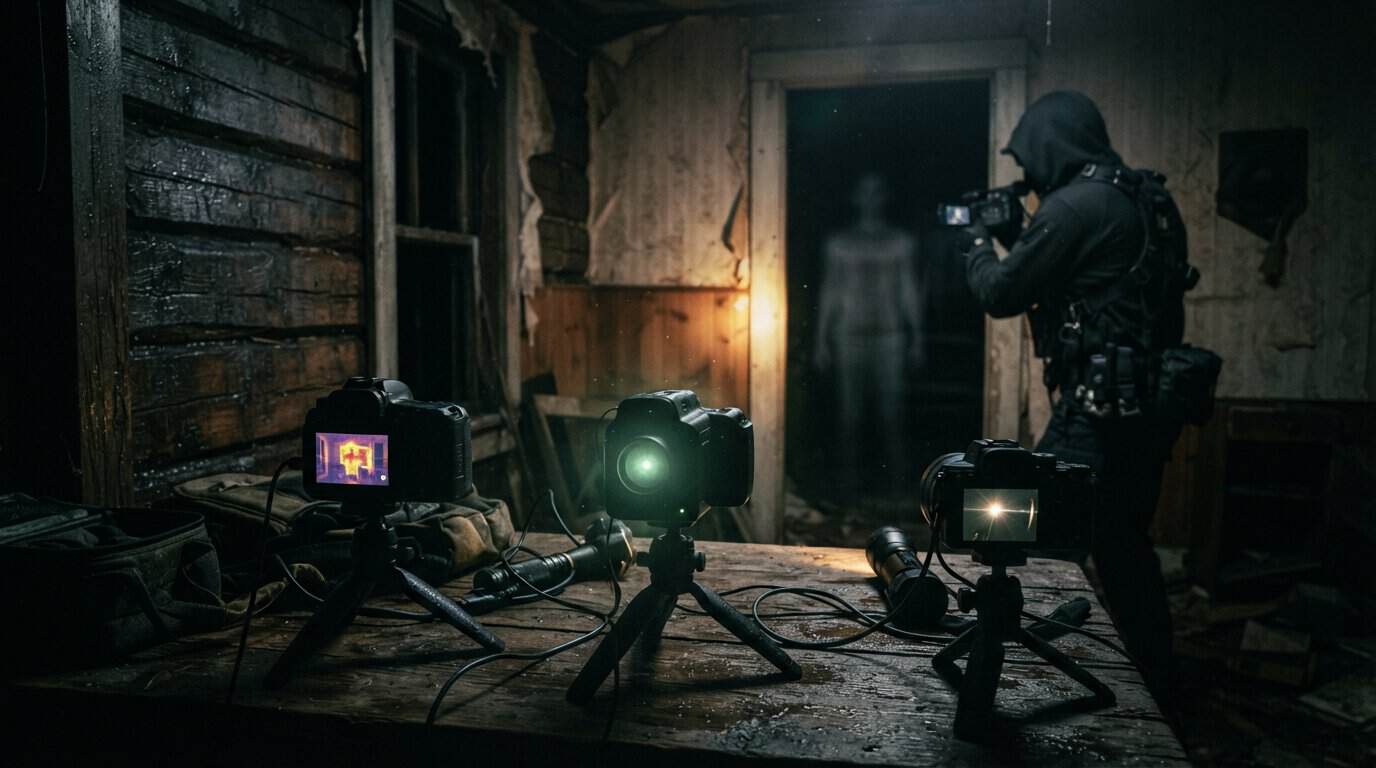
In a dark room, infrared night vision works like a camera with an invisible lamp. The camera records infrared light reflected from nearby objects, using an illuminator built into the camera or a separate infrared light source. The result is a video view of the room, even when ordinary light is scarce. It can show where a person or object is, but the picture depends on reflected illumination reaching the camera.
A full-spectrum camera takes a different route: its sensor and filters are modified to record a broader or altered range of light. It still produces photographs or video, but the altered color response can make daylight images look unlike those from an ordinary camera. Some modified models may therefore be less suited to everyday photography. Full-spectrum footage is not simply infrared night vision with another label; the two approaches capture light differently.
Thermal imaging does not use reflected light to make a conventional picture. A thermal camera measures infrared energy emitted as heat and turns differences in temperature into a visual pattern. NASA Science describes how instruments measure infrared emission to study surface temperatures. A thermal image may reveal a warm body against a cooler background, but it does not show a visible-light portrait of a person, much less establish that a shape is a spirit.
That difference matters when footage is reviewed later. Night vision records a light-based scene under infrared illumination; thermal imaging maps heat. A warm patch might stand out on a thermal display while leaving little detail about the room’s appearance, whereas night-vision video can show visible outlines and movement without measuring temperature. For a mental model, choose night vision to see a dark scene, full spectrum to record a modified range of light, and thermal imaging to compare heat patterns.
How Do the Leading Cameras Compare?
The leading cameras differ in what they record, how long they can run, and which listed specifications buyers can compare. None of the supplied information establishes a paranormal detection result.
| Camera | Listed specifications | Performance claims and limits | Price and real-world results |
|---|---|---|---|
| 4K infrared and full-spectrum camera | The listed camera records 4K video with built-in infrared night vision and full-spectrum recording. | The listed estimate is about 1 hour of video battery life, dropping to as little as 30 minutes when the built-in IR light is used at high resolution and frame rates. | Price and independent real-world results are not established by the supplied information. |
| Dual-mode full-spectrum and night-vision video camera | The listed specifications include 1080p video, 30-megapixel still photos, an 18× zoom, and built-in infrared night vision. | These features describe recording options, not proof that the camera can identify a ghost. | Price and real-world results are not established by the supplied information. |
| Full-spectrum digital camera | The listed specifications include 16.44-megapixel photos, HD video, and 24× zoom. | The listed daylight images have a pinkish hue, making the camera unsuitable for everyday use. That is a stated use limitation, not an independent test result. | No listed price or independent real-world results are provided for this model. |
| Sony FDR-AX43A Handycam | Sony lists a $949.99 MSRP and says the supplied battery supports up to 235 minutes of continuous recording on its product page. | Sony’s help guide says NIGHTSHOT Light controls whether the camcorder emits infrared light when recording in a dark place with NightShot enabled. | The listed price and battery figure are manufacturer specifications, not a real-world comparison with the specialist models. |
| FLIR ONE Pro | FLIR lists a $349 price, reduced from $429, native thermal resolution of 160 × 120 pixels, and approximately 1 hour of battery life on its product page. | FLIR specifies thermal sensitivity of 70 mK and typical temperature-measurement accuracy of ±3°C or ±5%. Those describe thermal measurement, not paranormal detection. | The supplied information gives specifications and a listed price, but no real-world paranormal result. |
The thermal figures may matter to someone comparing temperature patterns, but they do not show that a camera can identify the source of a heat signature. Likewise, a zoom specification or high video resolution describes an imaging feature, not whether an unusual shape in recorded footage has a paranormal cause.
Prices for the listed specialist models are not established in the supplied information, so their features cannot be compared here by cost. The Sony and FLIR figures are manufacturer-listed prices, and the battery estimates do not establish how long any camera will run in a particular investigation.
What Can a Ghost Camera Actually Show?
A ghost camera can show recorded light, heat patterns, and image changes, but a recording alone cannot identify a ghost or establish what caused an anomaly. NASA Science explains that thermal instruments measure infrared radiation emitted as heat, which can reveal temperature differences in a scene. A bright thermal patch is a heat pattern to investigate, not a direct image of a spirit.
Manufacturer specifications describe recording features, such as resolution, infrared illumination, or temperature-measurement capability. They do not establish that a camera detects ghosts. An unusual still image may be worth a closer look, but an unexpected shape is not automatically paranormal. The conditions at the time of recording matter.
Skeptical Inquirer identifies dust and moisture droplets reflecting a camera flash as possible sources of “orbs.” The publication also points to lens flare as a photographic effect and says long exposure combined with camera movement can create light streaks. Those are possible explanations to check, not proof that every unusual image has an ordinary cause. Skeptical Inquirer’s discussion of photographic anomalies offers examples to consider during a review.
Skeptical Inquirer also argues that infrared cameras and other ghost-hunting devices have not been shown to detect ghosts. That is the publication’s skeptical assessment of the evidence, not a specification supplied by a camera maker. Its discussion of ghost-hunting devices helps distinguish a skeptical judgment from a product’s stated features.
Preserve original recordings rather than relying only on edited clips or cropped images. When reviewing a strange frame, note the setting, available light, whether a flash or infrared light was active, and whether the camera moved. Dust, moisture, reflections, and other environmental conditions may also be relevant. Keeping those details with the file makes it easier to examine what the camera recorded before deciding what the image might mean.
Which Camera Fits Your Investigation?
The camera that fits an investigation depends on whether it needs to capture long video, dark-room scenes, daylight photographs, or temperature patterns. Sony lists up to 235 minutes of continuous recording for the FDR-AX43A Handycam, compared with an estimate of about 1 hour for one 4K infrared and full-spectrum camera, and as little as 30 minutes with its infrared light at high settings. Actual recording time can vary with settings and illumination. Sony’s FDR-AX43A specifications provide a useful listed comparison, not a guarantee of runtime during an investigation.
For dark video, built-in infrared lighting can help illuminate a scene without ordinary visible light, but using it may shorten recording time. Sony’s FDR-AX43-series guide says the NIGHTSHOT Light setting controls whether the camcorder emits infrared light when NightShot is enabled, so buyers should understand how that setting is configured. Sony’s NIGHTSHOT Light guide explains the control.
For investigations that also include everyday photography, one listed full-spectrum digital camera produces a pinkish daylight hue, a practical drawback for ordinary photos. For temperature patterns, the FLIR ONE Pro’s phone connection is a feature to investigate, but buyers should confirm compatibility with their own phone before purchase.
A simple selection process can keep the recording task, rather than paranormal marketing claims, at the center:
- Set the recording priority. Choose night-vision video for dark scenes, a full-spectrum model for modified light capture, or thermal imaging for heat patterns.
- Match recording time to the investigation. Compare listed battery and continuous-recording figures, allowing for shorter runtimes when infrared lighting or demanding settings are used.
- Check ordinary-use trade-offs. Consider whether the camera will also serve for daylight photography, especially given the stated pinkish hue of one full-spectrum digital camera.
- Compare listed prices without treating cost as evidence. FLIR lists the ONE Pro at $349, reduced from $429, while Sony lists the FDR-AX43A at a $949.99 MSRP. The supplied figures do not establish prices for the other models. FLIR’s listed price describes the product cost, not the strength of any paranormal claim.
Choose for the recording task and the quality of documentation the camera can preserve, not language implying that a device can verify a haunting.
What Should Buyers Check Before Ordering?
Buyers should confirm that a camera’s specifications match the recording they need, its runtime, and the devices they plan to use. A resolution figure can describe very different things: one listed camera offers 4K video, another has 30-megapixel still photos, and FLIR lists the ONE Pro’s thermal resolution as 160 × 120 pixels. Those numbers are not directly interchangeable; the FLIR ONE Pro specifications identify a thermal image, not ordinary video or photo resolution.
Before ordering, check the details that affect a real recording:
- Runtime: How long does the battery last with the intended resolution, frame rate, and infrared lights switched on?
- Recording: How long can the camera record, what illuminates a dark scene, and how much storage will the chosen format require?
- Compatibility: Does a phone-connected camera work with the buyer’s phone, and will required accessories connect to the camera?
- Everyday use: Must the camera also take ordinary photographs or record regular video?
Battery estimates can change with settings. One estimate puts the 4K camera’s runtime as low as 30 minutes when its built-in IR light is used at high resolution and frame rates. Buyers should look for runtime details under comparable conditions, not rely on a best-case figure alone.
Claims that a camera captures ghosts should be treated as marketing unless evidence beyond its listed specifications supports them. Specifications explain what a camera records; they do not establish the cause of an unusual image.
Choose the Camera That Answers Your Question
Before opening another product listing, the buyer should write a recording brief for the next investigation: the scene, the question the footage should answer, and the uninterrupted recording time required. A fixed hallway shot meant to track visible movement is a different task from a phone-based thermal recording meant to compare heat patterns. That distinction gives the shortlist a practical purpose.
For a phone-based thermal setup, the next step is to check the FLIR ONE Pro product information against the exact phone model and intended setup. For dark video, the buyer can consult Sony’s NIGHTSHOT Light guide and confirm how infrared illumination will be configured during recording.
Before taking equipment to an investigation, make a reference clip at home from a fixed position. Use the same lighting and camera settings planned for the location, then compare the file with the investigation footage if an unusual shape or streak appears. A reference clip cannot identify a ghost, but it can show how the camera renders that room and those conditions.
Which recording question would shape the next equipment choice: tracking movement in darkness, capturing altered light, or comparing heat patterns?
Frequently Asked Questions
1. Can a phone camera app provide real infrared night vision?
A phone camera app alone cannot create real infrared night vision if the phone’s camera cannot record infrared light. Night vision also needs infrared illumination in a dark scene, so an app that adds a night-vision effect may change the image without recording actual infrared footage.
2. Do SLS cameras that show stick figures identify spirits?
An SLS camera’s stick-figure display does not identify a shape as a spirit. The display is an interpretation of camera data, so a figure should be treated as something to investigate rather than proof of who or what caused it.
3. Can a thermal camera see through walls?
A thermal camera does not show a person or room through a wall; it records heat patterns at the surface facing the camera. NASA explains that infrared instruments measure emitted heat, which can help reveal surface-temperature differences but does not establish what is behind a barrier.