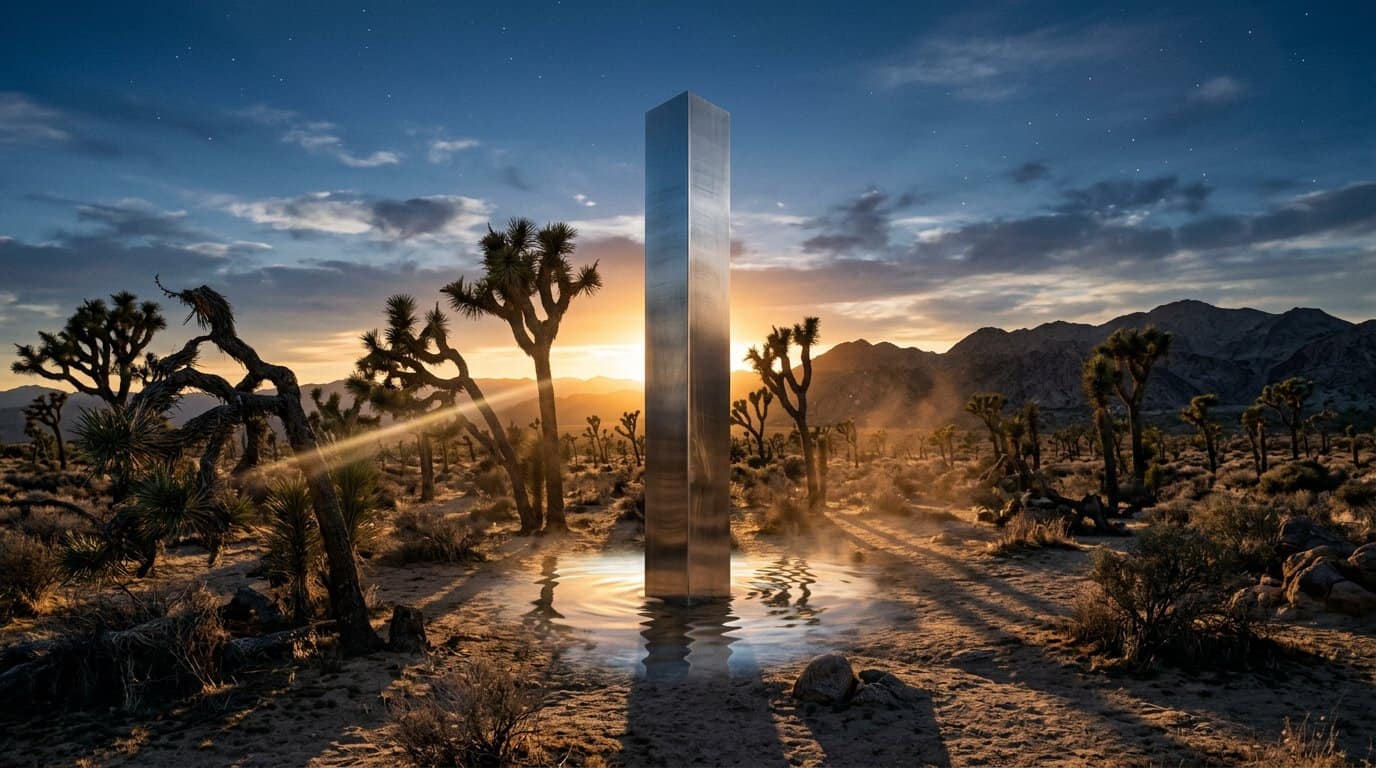
The Mystery Of The Joshua Tree Monoliths And Desert Mirages
The high desert of the Mojave is no stranger to secrets, but few have captured the public imagination quite like the metallic monoliths. In the winter of 2020, hikers stumbled upon a towering, three-sided metallic prism gleaming against the rugged terrain, seemingly appearing out of thin air. This strange installation sparked a global frenzy, blurring the line between modern art and a genuine mystery. While some dismissed it as a passing trend, these silent sentinels of the desert have proven they are not finished with us yet.
Just as the world began to look away, the phenomenon surged back into the headlines with a fresh discovery at Gass Peak in June 2024. These gleaming structures continue to bypass security and logic, standing as silver mirrors that reflect both the desert sun and deep human curiosity. Whether they are the work of a clandestine artist collective or something far more profound, the persistence of these monoliths suggests a story that is still being written. The desert keeps its secrets well, but these metallic giants are daring us to find the answers.
Key Takeaways
- The Mojave Desert monoliths represent a persistent global mystery that blends professional-grade art installations with the logistical impossibility of remote, secret placement.
- While an artist collective has claimed responsibility for some structures to critique the art market, the lack of physical evidence at sites like Gass Peak keeps the debate between human prank and unexplained phenomenon alive.
- The 2024 discovery at Gass Peak confirms the monolith phenomenon is an evolving narrative rather than a one-time viral trend from 2020.
- These metallic prisms function as modern-day folklore, using the desert landscape to challenge public perception of space and the thrill of discovery in a fully mapped world.
The Arrival Of The Joshua Tree Prism
The high desert of Southern California became the next stage for a global mystery in December 2020 when a shimmering metallic prism appeared near Joshua Tree National Park. Standing roughly ten feet tall, the stainless steel structure seemed to grow directly out of the rugged earth, mirroring a famous discovery made in Utah just weeks prior. Hikers and curious locals flocked to the site to witness the object, which featured a three-sided design that caught the golden hour light of the Mojave. This sudden arrival transformed a quiet patch of desert into a sensation overnight, as people scrambled to pin down its exact coordinates. The structure appeared to be professionally crafted, yet it lacked any obvious signs of heavy machinery or installation tracks in the surrounding sand.
This strange installation fueled a wave of speculation that bridged the gap between modern art and unexplained phenomena. While some observers pointed to the possibility of a coordinated prank or a tribute to science fiction, others wondered if something more profound was at play. Local law enforcement later noted similar occurrences in the Mojave region, highlighting how these objects often appear in remote, difficult-to-reach locations without warning. These monoliths seem to challenge our understanding of public space and the limits of human effort in the wilderness. Even as skeptics looked for logical explanations, the sheer precision of the prism left many wondering who, or what, had the motivation to plant such a striking marker in the middle of nowhere.
The timing of the discovery suggests a deliberate pattern that captured the collective imagination. Similar structures began popping up across the globe, yet the Mojave installations felt particularly atmospheric given the area’s history with strange sightings and desert lore. While many of these objects are eventually removed or claimed by anonymous creators, the initial moment of discovery always carries a sense of genuine wonder. It forces us to look closer at our surroundings and question the stories we tell about the hidden corners of our planet. Do you believe these metallic towers are merely the work of dedicated artists, or could they be part of a larger, more mysterious message waiting to be decoded?
Artistic Intent And The Creative Claims
The mystery of the metallic prisms took a turn toward the intentional when an artist known for founding creative collectives claimed credit for the installations. This artist collective is known for pushing the boundaries of public space and social media virality through unauthorized works. By taking responsibility for the desert structures, they shifted the narrative from an unknown visitation to a calculated commentary on how information spreads online. The collective even began offering similar structures for sale, suggesting that the artistic intent was rooted in both spectacle and a critique of the art market. This revelation provided a grounded explanation, yet it did not entirely strip the desert of its newfound sense of wonder.
While these creators provided photos and documents to support their claims, some observers remain skeptical of the timeline regarding the sightings. The group has been known to use provocative marketing to gain attention, which leads some to wonder if they were simply capitalizing on a phenomenon they did not actually start. This creates a fascinating layer of mystery where the line between a genuine art installation and a viral hoax becomes blurred. Even if a collective is responsible for the physical objects, the way these monoliths interact with the harsh, silent environment of the Mojave Desert feels like something more profound than a simple prank. The unauthorized nature of the work ensures that even with a named creator, the sculptures maintain an air of rebellion and enigma.
The artistic philosophy behind these monoliths seems to focus on the power of the unexplained and the thrill of discovery in an age where everything is mapped and tracked. By placing these shiny, geometric shapes in the middle of nowhere, the artists forced people to look at the natural world through a different lens. Whether the structures were meant as a tribute to science fiction or as a test of human curiosity, they successfully turned the desert into a global stage for a modern scavenger hunt. Even as more monoliths appear in places like Gass Peak, the question remains whether they are the work of the same collective or inspired copycats. This ongoing cycle of appearance and disappearance keeps the conversation alive, proving that the desert still holds plenty of secrets for those willing to look for them.
The 2024 Resurgence At Gass Peak
The desert mystery took a dramatic turn in June 2024 when a search and rescue team spotted a shimmering object at Gass Peak. Located just north of Las Vegas within the vast Mojave, this towering metallic prism stood out against the rugged limestone terrain. Much like the original installations found in 2020, this structure featured a three-sided design made of reflective stainless steel. Its sudden appearance caught authorities off guard, as there were no records of anyone transporting heavy materials into such a remote and difficult location. This discovery immediately went viral, reminding the world that the enigma of the desert monoliths is far from over.
Public curiosity surged as hikers and researchers began comparing the Gass Peak structure to the famous 2020 sightings. While some skeptics suggest these are merely unauthorized art installations, the sheer logistics of placing a heavy ten-foot-tall pillar on a steep mountain peak remain unexplained. The polished surface of the object reflected the harsh desert sun, acting as a silent beacon that draws people back into the search for answers. Many wonder if the same anonymous group is responsible for this recent addition or if a new creator has taken up the mantle. This event has reignited a sense of wonder about what else might be hidden in the quiet corners of the Mojave.
The persistence of these metallic giants suggests a deeper narrative that blends modern art with a touch of the unknown. Even without a clear explanation from the creators, the impact of the Gass Peak monolith shows how much we crave a good mystery. It serves as a physical puzzle that invites us to step away from our screens and look toward the horizon with renewed interest. Whether these are clever pranks or something more profound, they continue to challenge our understanding of the desert. What do you think is the true purpose behind these shimmering pillars appearing in our most secluded wilderness areas?
Where Desert Art Meets Mystery
The monoliths represent a fascinating intersection between physical art and digital folklore, turning the quiet Mojave into a stage for a global mystery. These metallic prisms challenge our understanding of public space and the power of shared stories to turn a remote location into a center of worldwide intrigue. While many view them as clever homages to science fiction or elaborate stunts by anonymous artists, their silent presence suggests a deeper desire to reconnect with the unknown. By blending high-tech materials with the ancient, rugged terrain, these structures force us to look closer at the world around us. They serve as a reminder that even in an age of total connectivity, a well-placed object can still spark a sense of genuine wonder.
The resurgence of these structures, including the recent discovery at Gass Peak, proves that the allure of the desert mystery is far from over. Whether they are the work of a dedicated collective or a series of independent copycats, the monoliths have successfully tapped into a collective curiosity about what lies just beyond the horizon. Some see them as simple pranks designed to generate attention, while others find a more profound meaning in their sleek appearance against the natural earth. This ongoing saga leaves us with a lingering question about the nature of these installations. Do you believe these monoliths are merely lighthearted desert pranks, or could they be part of a more profound, intentional movement meant to shift our perspective on reality?
Frequently Asked Questions
1. When did the first monolith appear in the desert?
The first shimmering metallic prism appeared in the high desert of Southern California in December 2020. This arrival happened just weeks after a similar structure was discovered in Utah, sparking a global wave of curiosity.
2. What do these desert structures look like up close?
These structures are typically three-sided prisms standing roughly ten feet tall and crafted from gleaming stainless steel. They are designed to mirror the rugged environment and catch the golden light of the desert sun.
3. How are the monoliths installed in such remote locations?
The installations remain a puzzle because they appear in rugged terrain without any obvious signs of heavy machinery or tracks left in the sand. While they look professionally crafted, the method of transporting and securing them in secret remains unknown.
4. Have there been any recent sightings of these metallic prisms?
A fresh discovery at Gass Peak in June 2024 proves that this phenomenon is still active. These newer sightings suggest that the story of the desert secrets is continuing to evolve.
5. Who is responsible for creating and placing the monoliths?
Speculation ranges from secretive artist collectives to more profound, unexplained origins. While some creators have claimed credit for certain structures, the lack of definitive proof for every installation keeps the mystery alive. This area has long been a magnet for the unusual, much like Giant Rock which draws seekers of both geological and cosmic truths. Some even link these occurrences to the desert rifts that locals have whispered for generations.
6. Are these monoliths considered a permanent attraction?
These structures often vanish as quickly as they appear, sometimes removed by unknown parties or local authorities. Their fleeting nature is part of the allure, daring hikers to find them before they disappear back into the desert silence.