The Mystery Of The Piri Reis Source Maps
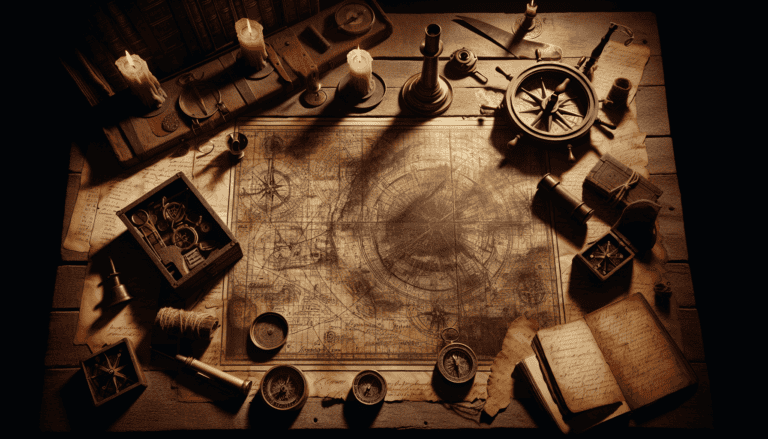
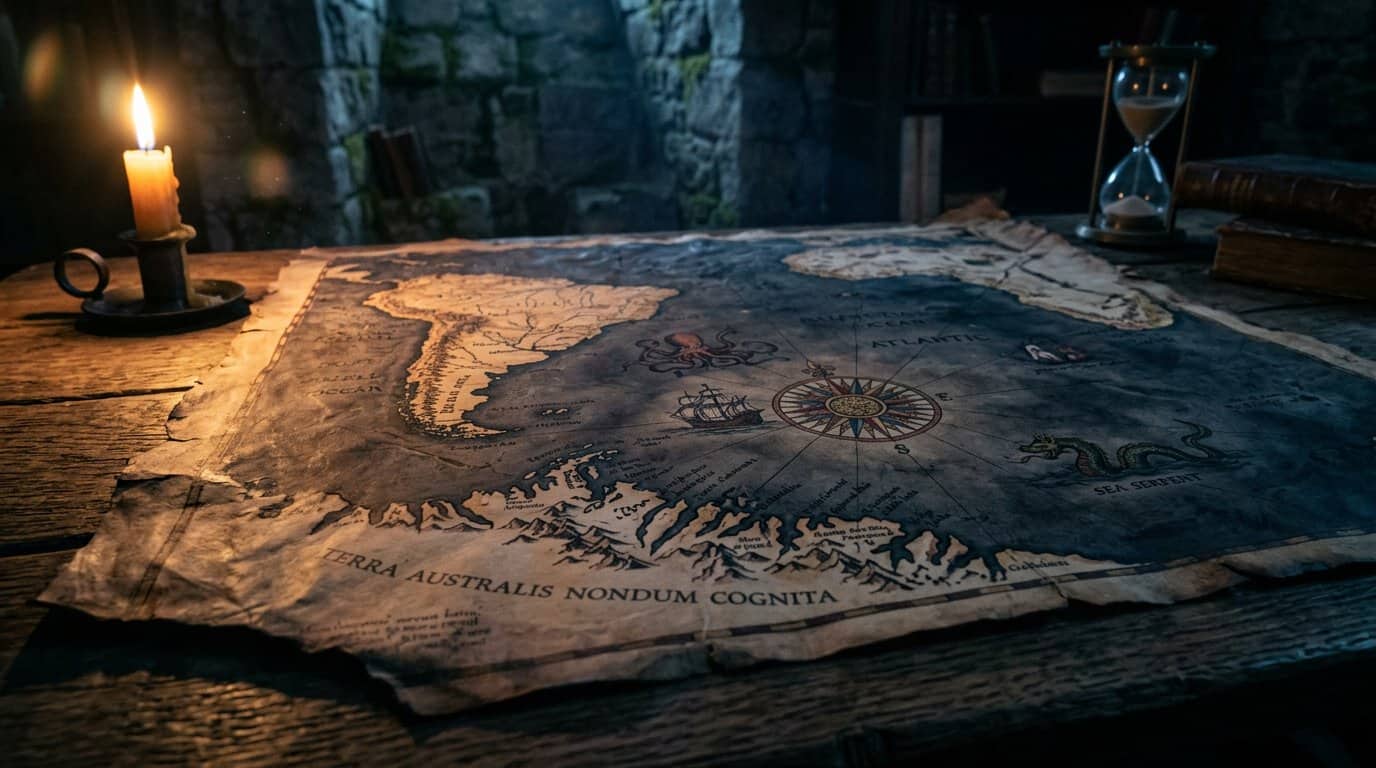
In 1513, an Ottoman admiral named Piri Reis sat down to sketch the world, but he did not do it from memory alone. He meticulously gathered a collection of piri reis source maps, blending ancient knowledge with the cutting-edge discoveries of his time. This vibrant parchment was more than a map; it was a complex puzzle that combined twenty different charts into a single, breathtaking view of the globe.
Among these mysterious documents was a legendary lost chart drawn by Christopher Columbus himself, showing a world that most Europeans had never seen. By stitching together Portuguese naval charts and secret maps of the East, Piri Reis created a masterwork that still puzzles historians today. It offers a rare, tantalizing glimpse into a time when the edges of the world were still being drawn and many secrets were yet to be revealed.
Key Takeaways
- The Piri Reis map of 1513 is a sophisticated synthesis of twenty diverse source charts, including lost maps by Christopher Columbus and eight documents dating back to the era of Alexander the Great.
- The map’s inclusion of precise longitudinal data and subglacial Antarctic topography suggests the existence of an advanced, prehistoric seafaring civilization that mapped the globe during the last Ice Age.
- Evidence of accurate geographical details from thousands of years ago indicates that ancient cultures possessed a level of navigational and mathematical knowledge far beyond what is currently recognized in mainstream history.
- By preserving ancient charting knowledge potentially sourced from the Great Library of Alexandria, Piri Reis created a bridge between the Renaissance and a forgotten era of global exploration.
A Lost Library Of Ancient Charting Knowledge
The genius of Piri Reis lay in his ability to act as a historical detective, piecing together a global puzzle from fragments of the ancient world. While he utilized contemporary Portuguese charts and the lost maps of Christopher Columbus, his most intriguing sources were eight maps he described as dating back to the time of Alexander the Great. These specific charts suggest that a sophisticated understanding of world geography existed long before the modern era, potentially preserved in the Great Library of Alexandria before its destruction. If these claims are accurate, it means the Ottoman admiral was looking through a window into a forgotten age of exploration that has since vanished from history books.
Among these mysterious references are the Islamic Jaferiye maps, which provided Piri Reis with a surprisingly advanced perspective on the world. Some researchers, such as Professor Charles Hapgood, have argued that these ancient source maps contain details of coastlines that were supposedly undiscovered or covered by ice for thousands of years. This raises the startling possibility that a lost seafaring civilization mapped the globe during the last ice age, leaving behind a legacy of ancient charting knowledge passed down through the centuries. These documents acted as a bridge between the deep past and the Renaissance, hinting at a golden age of navigation that modern science is only beginning to reconsider.
The presence of such detailed geographical data in 1513 forces us to ask whether our ancestors knew more about the Earth than we currently give them credit for. Piri Reis did not claim to have traveled to these distant shores himself, but instead credited his success to the careful study of these twenty diverse sources. By blending the newest discoveries of his time with the mappa mundi of antiquity, he created a document that remains a masterpiece of mystery. Was there truly a global culture of explorers who mastered the seas ten thousand years ago, or is there another explanation for how these ancient charts could be so accurate?
The Enigma Of Ice Age Antarctica

The most startling feature of the Piri Reis map is not what it shows of the Americas, but what it appears to reveal about the frozen continent of Antarctica. When the map was examined in the mid twentieth century, researchers like Professor Charles Hapgood noticed a striking resemblance between the coastline shown at the bottom of the map and the subglacial topography of Queen Maud Land. This specific region is currently buried under miles of ice, yet the map depicts it as a land of flowing rivers and rugged mountains. Hapgood suggested that the Ottoman admiral must have relied on incredibly ancient source charts that predated the formation of the Antarctic ice cap. This theory implies that a highly advanced civilization possessed the tools to measure longitude and map the entire globe long before recorded history began.
If these source maps truly date back to a time when Antarctica was ice-free, it suggests the existence of a lost seafaring culture that thrived during the last Ice Age. These prehistoric explorers would have navigated the oceans with a level of precision that was not matched again until the late eighteenth century. Mainstream geological evidence suggests that the Antarctic ice has been in place for millions of years, which creates a fascinating paradox when compared to the details on the 1513 chart. Some researchers propose that a sudden crustal shift or a dramatic change in climate might have allowed for a window of exploration that history has simply forgotten. This leaves us wondering if the Piri Reis map is a final, fading echo of a global maritime empire that disappeared beneath the rising tides of antiquity.
What do you think about the possibility that a forgotten civilization mapped the world thousands of years ago? Could the source charts used by Piri Reis be the smoking gun that proves our ancestors were far more advanced than we give them credit for? We invite you to share your thoughts on whether this is a case of remarkable coincidence or a genuine evidence of Atlantis or another lost world. Exploring these ancient mysteries helps us piece together the puzzle of our own origins and the secret remains of our planet. Join the conversation below and let us know if you believe the history books need a major rewrite.
Distant Echoes Of A Forgotten Global Culture
The Piri Reis map presents a profound challenge to our understanding of history because it contains geographic details that should not have been known in 1513. While Piri Reis credited Portuguese charts and lost maps from Christopher Columbus, the sheer accuracy of the longitudes suggests a high level of scientific knowledge that was supposedly unavailable to explorers of that era. Scholars like Professor Charles Hapgood have argued that the source charts used to compile this map might actually be remnants of a much older tradition. This theory proposes that the Ottoman admiral was unknowingly preserving the work of a forgotten seafaring culture that possessed advanced technological capabilities long before the rise of modern civilization.
The possibility of a lost global culture becomes even more intriguing when examining the coastal details of the Americas and even the Antarctic shoreline. These source maps appear to reflect a world as it looked thousands of years ago, potentially during the end of the last ice age when sea levels and coastlines were vastly different. If these ancient charts were indeed passed down through centuries of librarians and sailors, it would mean a sophisticated society was mapping the entire globe while most of humanity was still in its infancy. This hidden lineage of knowledge suggests that our ancestors were far more connected and technologically capable than standard history books currently acknowledge.
Exploring these distant echoes requires a balance between respecting historical records and staying open to the mysteries they leave behind. If the Piri Reis map is a puzzle made of much older pieces, we must ask ourselves who the original architects of those pieces were and what other knowledge they might have left for us to find. This investigation invites us to look past the 16th century and into a much deeper, unrecorded chapter of human achievement. Do you think it is possible that a global civilization mapped the earth during the ice age, or are these geographic coincidences simply a matter of lucky guesswork by early explorers?
The Enigma of the Ancient Source Maps
The Piri Reis map remains one of history’s most captivating puzzles because it points toward a legacy of knowledge that should not have existed in 1513. While the Ottoman admiral credited Portuguese explorers and even Christopher Columbus for his data, the sheer accuracy of certain geographical features suggests he had access to much older, high-precision charts. These mysterious source maps seem to depict coastlines with a level of mathematical detail that was not standard for the Renaissance era. This discrepancy has led many researchers to wonder if an advanced maritime culture was navigating the globe long before our recorded history began.
The possibility of a lost seafaring civilization mapping the world during the last ice age offers a radical new perspective on the human story. If the source maps used by Piri Reis truly showed landmasses as they appeared thousands of years ago, it implies that sophisticated cartography is far older than the ancient Greeks or Egyptians. This theory suggests that a globe-spanning culture possessed the tools and knowledge to measure longitude and latitude during a time when most humans were thought to be simple hunter-gatherers. Such a discovery would bridge the gap between myth and reality, turning legends of lost empires into a tangible historical record.
As we look at the intricate lines of this centuries-old parchment, we are forced to decide if these similarities are mere coincidences or the footprints of a forgotten era. The Mystery of the Piri Reis Map remains a central focus for those who believe a sophisticated, pre-ice age civilization is the only logical explanation for such advanced geographical knowledge, or is there a simpler answer hidden in the lost archives of the Ottoman Empire? We want to hear your thoughts on this enduring mystery and whether you believe our ancestors were more advanced than we ever imagined. Do you think the Piri Reis source maps are the final pieces of a puzzle that proves a lost golden age once existed? Much like the Voynich Manuscript, these documents challenge our modern understanding of historical literacy and scientific achievement. Just as the discovery of the Baghdad Battery hints at early experiments with electricity, these maps suggest that ancient technology was far more complex than we once assumed.
Frequently Asked Questions
1. What exactly are the Piri Reis source maps?
These source maps are a collection of twenty different charts that Admiral Piri Reis used to construct his 1513 world map. They represent a blend of secret Portuguese naval records, Islamic Jaferiye maps, and ancient documents that date back thousands of years.
2. Did Piri Reis really use a map drawn by Christopher Columbus?
Piri Reis explicitly stated that he incorporated a legendary lost chart created by Columbus himself. This rare document provided a unique view of the New World that was largely unknown to European cartographers at the time.
3. How old were the oldest maps used in this collection?
The Ottoman admiral claimed that eight of his source maps originated during the era of Alexander the Great. These ancient charts suggest that a sophisticated understanding of global geography existed long before modern exploration began.
4. What is the connection to the Great Library of Alexandria?
Historians believe these ancient maps may have been preserved in the Great Library of Alexandria before its destruction. Piri Reis acted as a historical detective, rescuing this forgotten knowledge to create his masterwork.
5. Why do these source maps interest modern researchers like Charles Hapgood?
Professor Charles Hapgood argued that these source maps show coastlines as they appeared thousands of years ago, potentially before they were covered by ice. This raises the possibility that an advanced, prehistoric civilization mapped the globe during a different climatic era.
6. What are the Islamic Jaferiye maps mentioned in the text?
The Jaferiye maps are specialized Islamic charts that provided Piri Reis with an advanced perspective on the world. These documents helped him stitch together a more accurate and comprehensive view of the globe than most of his contemporaries possessed.