
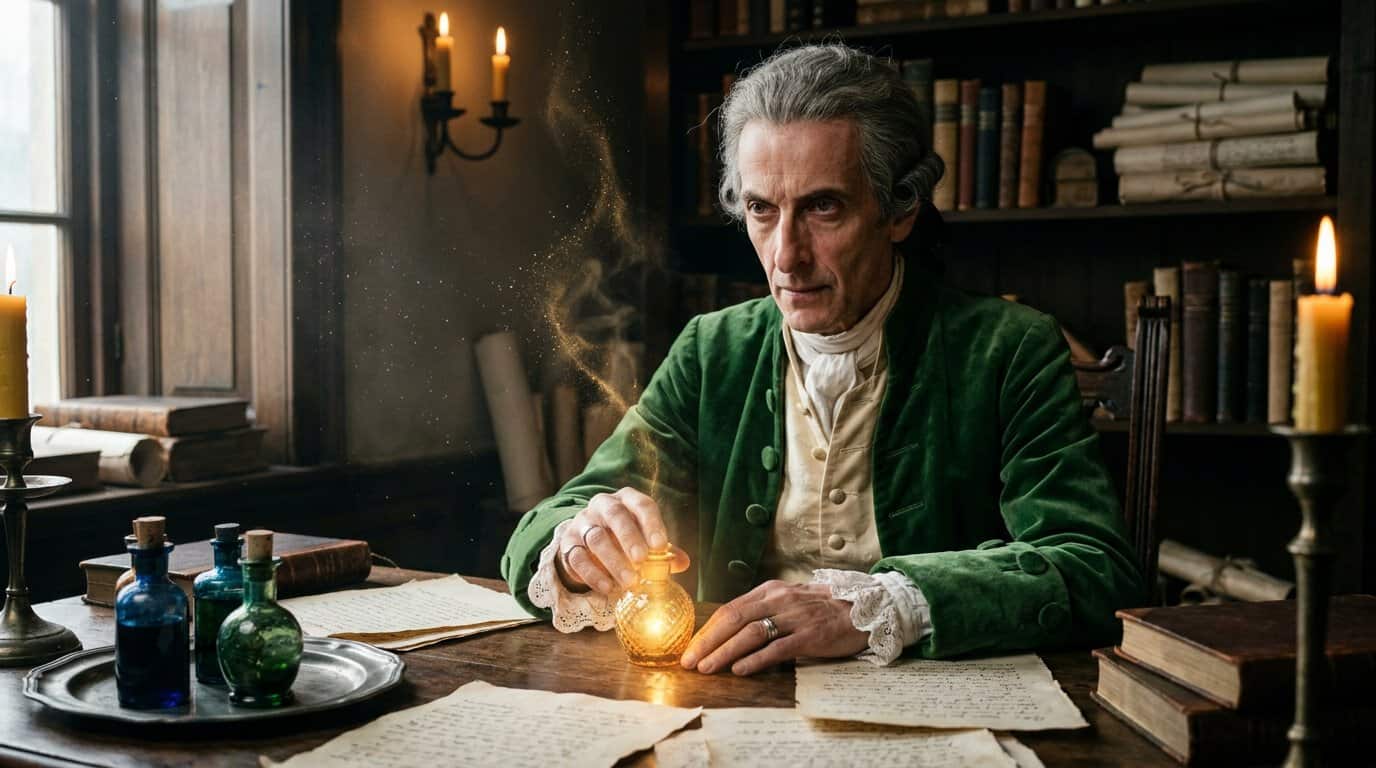
The Mystery Of The Immortal Count Of Saint Germain
Imagine a man who never seems to age, moving through the royal courts of 18th-century Europe with the grace of a seasoned traveler. This mysterious figure, often whispered about as the Saint Germain count, captivated high society with his vast wealth and claims of being centuries old. He was a master of many languages and a chemist who purportedly knew the secret to turning lead into gold. While history records him as a brilliant adventurer, many believe he was something far more extraordinary: a true immortal.
The legend of the Count of Saint Germain suggests he was present at major historical events across thousands of years, from ancient Rome to the French Revolution. His contemporaries were baffled by his refusal to eat in public and his uncanny knowledge of the distant past. Whether he was a clever charlatan or a man who truly conquered time, his story remains one of the greatest puzzles of the occult world. Exploring his life requires a balance between documented historical facts and the supernatural theories that have kept his name alive for generations.
Key Takeaways
- The Count of Saint Germain was a documented 18th-century figure whose mastery of alchemy, linguistics, and chemistry allowed him to maintain a youthful appearance and immense wealth across decades.
- Historical evidence and eyewitness accounts suggest the Count possessed an uncanny, firsthand knowledge of ancient history, leading many to believe he had discovered the secret to biological immortality.
- While official records mark his death in 1784, persistent sightings and his role in occult traditions suggest he may have faked his passing to continue influencing global events from the shadows.
- The mystery of his true origins, potentially as a displaced Transylvanian prince, serves as a bridge between verifiable historical facts and the supernatural legend of the timeless traveler.
The Mysterious Origins Of The Count Of Saint Germain
The Count of Saint Germain first emerged in the high circles of 18th-century Europe as a man of immense wealth and zero traceable history. While he dazzled the French court with his fluency in multiple languages and his skill with a violin, he remained tight-lipped about his true birthplace. Many historians and curious contemporaries noted that the Count possessed a strange ability to appear youthful over many decades. This sparked early rumors that he had discovered the secret to eternal life through alchemy. His presence at the court of King Louis XV only fueled these fires, as he often spoke of historical events from centuries prior with the vivid detail of an eyewitness.
One of the most persistent theories regarding his lineage suggests he was the secret son of Prince Francis II Rákóczi of Transylvania. According to this narrative, the Count was spirited away and raised in hiding to protect him from the political turmoil surrounding his royal family. This connection to the Rákóczi bloodline provided a plausible explanation for his vast fortunes and his high level of education. However, even this royal explanation feels incomplete when one considers the supernatural claims attached to his name. If he truly was a displaced prince, he managed to transform his exile into a legendary journey that spanned generations and continents.
The mystery of his origin is further complicated by accounts that place him in different parts of the world long after his reported death in 1784. Some occult traditions suggest he never actually passed away but instead moved into the shadows to continue his work as a hidden master of wisdom. These stories often blend historical documentation with folkloric wonder, leaving us to wonder if he was a clever fraud or a genuine anomaly of nature. Whether he was a Transylvanian royal or a timeless traveler, his story invites us to question the limits of human longevity. Do you believe the Count was a master of disguise, or is it possible he truly unlocked a true secret that allowed him to walk through history?
Alchemical Secrets And Claims Of Eternal Youth
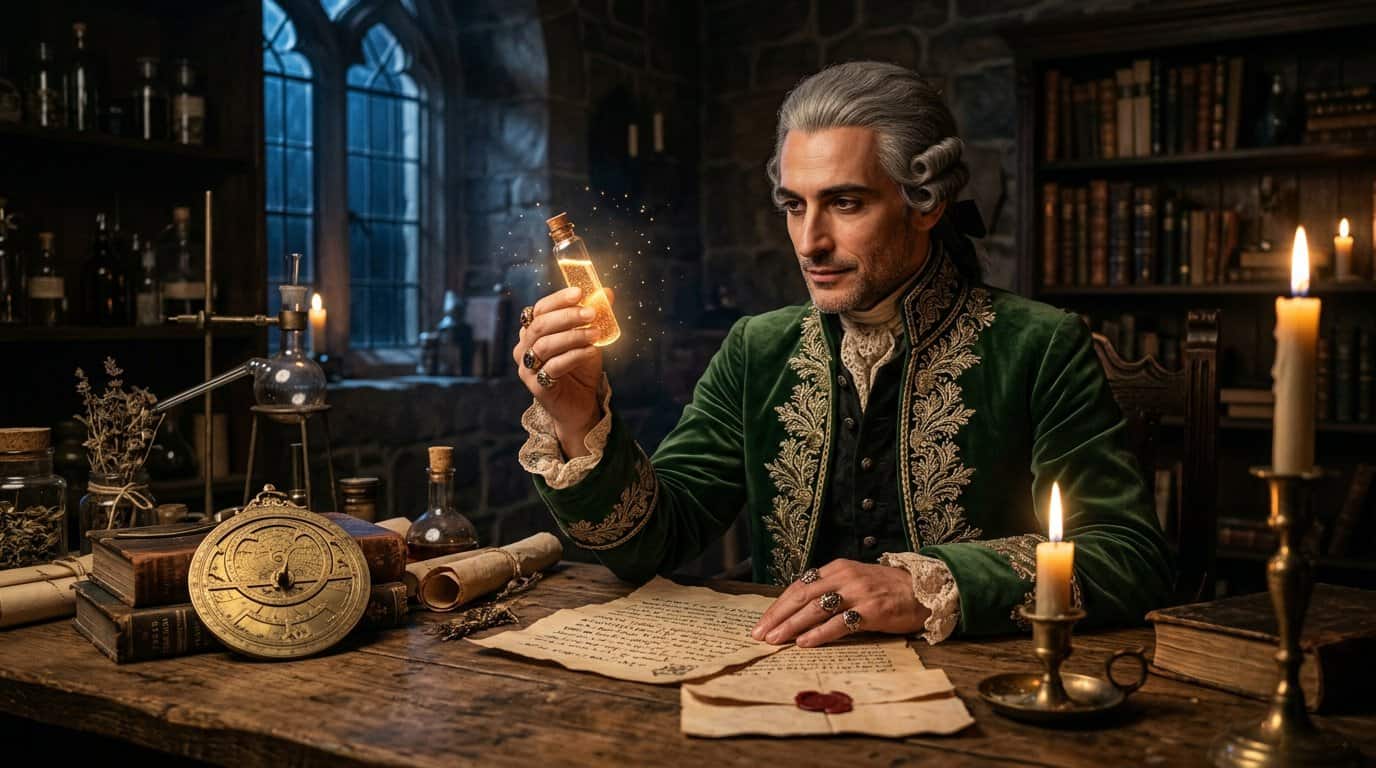
The Count of Saint Germain moved through the royal courts of the 18th century as a man who seemed to have conquered the very essence of time. While his peers aged and withered, the Count appeared to remain a vibrant man in his mid-forties for over forty years, a feat that left contemporaries in a state of utter disbelief. He was famously known for his mastery of chemistry, claiming he could remove flaws from diamonds and turn lead into gold. This alchemical prowess was not just for show, as he often gifted friends with precious stones that appeared far more perfect than anything found in nature. Many believed his secret lay in a mysterious elixir of life that he consumed instead of traditional food, allowing him to maintain a youthful glow that defied the natural laws of biology.
Beyond his skill with gemstones, the Count frequently dropped hints that his lifespan stretched back thousands of years. He would speak of ancient historical events with such vivid, firsthand detail that listeners felt as though they were hearing an eyewitness account rather than a history lesson. Voltaire, the famous philosopher, once described him as the man who never dies and who knows everything. Even when official records suggested his passing in 1784, rumors circulated for decades that he had been spotted in various cities looking exactly as he did during the reign of Louis XV. This enduring presence suggests that the Count may have truly unlocked a chemical or spiritual secret to longevity that remains hidden from modern science.
Was the Count of Saint Germain a brilliant chemist who discovered a genuine way to slow the aging process, or was he simply the greatest illusionist in European history? His ability to maintain a consistent physical appearance across generations continues to challenge our understanding of human limits and historical fact. Some theorists believe his knowledge of alchemy allowed him to purify his body at a cellular level, while others think he used his wealth to fund a legendary persona that lived on through carefully chosen successors. Regardless of the truth, his story invites us to wonder if the secrets to eternal youth are buried somewhere in the dusty laboratories of the past. Do you think it is possible for a person to hide their true age for an entire century, or was the Count simply a master of public relations?
Modern Sightings And The Legend Of Immortality
The legend of the Count of Saint Germain did not end with his reported death in 1784, as sightings of the mysterious alchemist began to surface almost immediately across Europe. Many people claimed to have seen him during the French Revolution, where he allegedly appeared to warn Marie Antoinette of the coming chaos. These accounts often highlight his unchanging, youthful appearance, suggesting that he had successfully discovered the elixir of life. Witnesses like the Comtesse d’Adhémar wrote in their memoirs about meeting him decades after he should have passed away, describing a man who looked no older than forty. This persistent belief in his survival transformed him from a mere historical figure into a symbol of eternal life.
In the modern era, the Count has evolved into a cornerstone of occult folklore and spiritual study. Various historical groups have positioned him as a Master of the Ancient Wisdom who continues to guide humanity from the shadows. Modern sightings have been reported from Paris to San Francisco, with some followers believing he now exists on a higher spiritual plane. His influence is also visible in popular culture, where he frequently appears in novels, films, and television shows as the ultimate immortal traveler. This cultural staying power proves that the mystery of his longevity resonates deeply with our universal quest for immortality and the desire to conquer time.
While skeptics might dismiss these reports as cases of mistaken identity or elaborate hoaxes, the consistency of the legend invites a more curious perspective. Historians find it fascinating that a single man could leave such a distinct mark on the collective imagination for over two hundred years. Whether he was a master of disguise or a true practitioner of secret longevity remains a subject of intense debate among mystery enthusiasts. The story of the Count reminds us that some historical figures refuse to stay in the past, continuing to spark wonder in the minds of those who seek the unexplained. Do you think it is possible for a human to unlock the secrets of biological immortality, or is the Count simply a masterpiece of historical fiction?
The Eternal Enigma of Saint Germain
The legend of the Count of Saint Germain remains one of history’s most enduring puzzles, serving as a powerful symbol of the human desire to transcend the limits of time. While skeptics may view his claims of immortality as clever social engineering or elaborate performance art, his presence in the historical record suggests a man who was far ahead of his era. He represents the eternal enigma of a figure who bridged the known world of European royalty and the hidden realms of alchemical secrets. By blending vast scientific knowledge with an aura of mystery, he captured the imaginations of kings and commoners alike. His legacy reminds us that there are still corners of history that refuse to be neatly tucked away into textbooks.
Whether he was a master of longevity or simply a brilliant storyteller, the Count continues to inspire those who look for magic in the mundane. Modern sightings and the persistent reappearance of his name in occult circles keep the flame of his mystery alive for new generations of seekers. He stands as a testament to the idea that some truths might exist just beyond the reach of conventional science. This enduring fascination suggests that society is not quite ready to let go of the possibility that someone, somewhere, discovered the key to eternal life. The story of Saint Germain encourages us to keep our minds open to the unexplained wonders of the world.
What do you believe happened to this mysterious figure after he vanished from the public eye? Some think he transitioned into a quiet life of solitude, while others are convinced he still walks among us under a different name today. His life invites us to question our understanding of aging and the potential hidden within the ancient arts. We would love to hear your perspective on whether a man could truly survive through the centuries. Please share your thoughts and theories in the comments below to help us unravel the mystery of the immortal Count.
Frequently Asked Questions
1. Who was the Count of Saint Germain?
The Count was a mysterious 18th century figure who dazzled the royal courts of Europe with his immense wealth and vast knowledge. He was a master of many languages, a talented violinist, and a skilled chemist who claimed to possess the secret of eternal life.
2. Did the Count of Saint Germain really never age?
Many of his contemporaries noted that the Count appeared to stay exactly the same age over several decades. This strange youthful appearance led many in high society to believe he had successfully discovered an alchemical elixir of immortality.
3. What were the Count’s most famous talents?
Beyond his social grace, he was an expert linguist and a brilliant chemist who claimed he could remove flaws from diamonds and turn lead into gold. He also possessed an uncanny ability to describe historical events from hundreds of years prior with the vivid detail of someone who had actually been there.
4. What are the theories regarding his true origins?
While his past remained a closely guarded secret, one popular theory suggests he was the hidden son of Prince Francis Leopold Rakoczi of Transylvania. This royal connection would explain his vast fortune and his high level of education, though he never officially confirmed his lineage.
5. Why did people believe he was an immortal time traveler?
The rumors of his immortality grew because he refused to eat in public and spoke of ancient Rome and the French Revolution as if he were an eyewitness. Supporters of the supernatural believe he moved through time, appearing at major historical turning points across thousands of years.
6. Was the Count of Saint Germain a real historical person?
Yes, historical records confirm his presence at the court of King Louis XV and his various diplomatic missions across Europe. While his supernatural claims remain a mystery, his status as a brilliant adventurer and confidant to kings is well documented in the annals of history. Some even question the timeline of his era, much like the Phantom Time Hypothesis suggests entire centuries could be fabricated.
7. What happened to the Count at the end of his life?
Official records state that he passed away in 1784 while living in the castle of Prince Charles of Hesse-Kassel. However, many occultists claim he was spotted decades later, fueling the enduring legend that he simply faked his death to continue his journey through time.