
Polybius Arcade Legend: Tracing a Mind-Altering Game Through the Internet
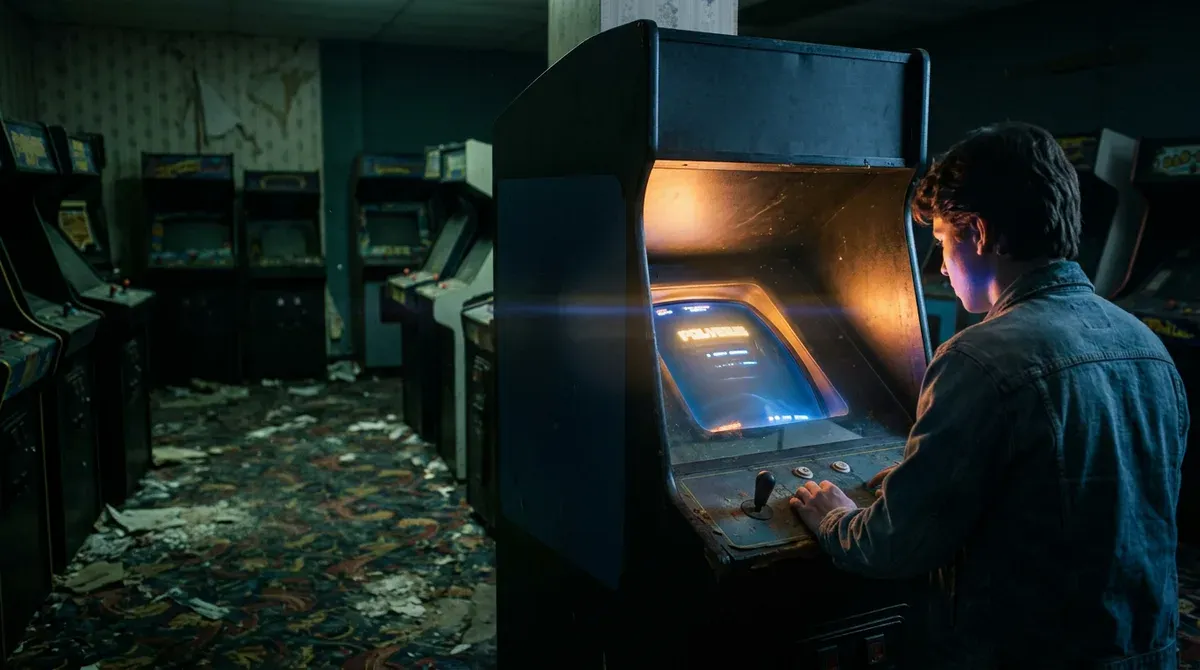
The Polybius arcade legend claims a mind-altering game appeared in one or two suburban Portland, Oregon, arcades in 1981, leaving players with amnesia and night terrors. The story has a surprisingly thin paper trail. Its earliest online entry carries a 1998 date, but archived web records do not support that date, and the first traceable descriptions appear around 2000. No contemporary record of the cabinet has surfaced since.
Even so, the tale has grown into something many people remember as fact. It borrows from real arcade-era fears and a chain of online claims that later fell apart. Its trail begins on the internet, not in the arcade.
Key Takeaways
- Steven Roach’s claim that seven Polybius cabinets were pulled lost credibility after Coinop.org’s 2009 update said he knows nothing about the game.
- Brian Mauro’s real 28-hour Asteroids marathon in Beaverton in 1981 belongs to the arcade era, not the Polybius story.
- Local Portland recollections of Polybius conflict sharply, so memories alone cannot confirm that the cabinet ever existed.
- Steam sold the Windows version of the modern Polybius game for $6.99 in the US, while the PlayStation Store charged $15.49.
Did Polybius Really Appear in Portland in 1981?
No. The Portland arcade story is a legend, and no cabinet or arcade record has been found to confirm it. The tale usually goes like this: in 1981, a strange new game appeared in one or two suburban arcades near Portland, and the people who played it walked away with amnesia and night terrors.
The Hannah Barton’s research at Birkbeck follows how that single description became the foundation for everything that came after.
It is worth noticing what the claim does not include. A detailed description reads like a record, but it is not the same as a cabinet, a receipt, a maintenance log or a newspaper notice. Readers are left to take the entry’s word for it.
Why Does the Online Timeline Start Around 2000?
The online trail starts around 2000 because the earliest dated traces of Polybius appear nearly two decades after the arcade year the legend claims. The Coinop.org listing that anchors the story carries a 1998 date, but the Wayback Machine, the web archive that stores snapshots of pages over time, holds no records that support it. In a 2025 review of the game’s history, the earliest description identified from the page’s record dates to early 2000.
The first footprint outside that entry is also digital. The first Usenet mention appeared on February 27, 2000, in rec.games.video.arcade.collecting, a newsgroup for arcade collectors, where the game was discussed as if readers already knew it.
An older rumor shows how easily such tales spread. On February 28, 1995, a “Made Mad by Computer Game” post circulated on Usenet about a game called Alternate Reality, the City, three years before the 1998 date now attached to Polybius. It followed the same pattern: a strange game, a vague setting and a troubling effect on the player.
Dates help determine which account came first. If a 1981 cabinet had really drawn crowds, some trace should exist from that year. Instead, the oldest trail is online, posted years later, and it describes the game without showing it.
Which Real Arcade Incidents Fed the Myth?
Real arcade-era incidents and fears gave the Polybius story much of its raw material, even though the best-known example never involved the game. On November 27, 1981, 12-year-old Brian Mauro played Asteroids for 28 hours at a Beaverton arcade while chasing a high-score record. He eventually stopped, and his marathon session became a memorable episode of the arcade age. Willamette Week, which revisited the Polybius myth in an October 2026 feature, places Mauro’s ordeal in the Asteroids era, not in the story of a mysterious cabinet.
The period also carried a broader worry. Video games were new, loud and visually intense, and many parents and observers wondered whether long hours in front of a flashing screen could trigger seizures, headaches or other health problems. That anxiety was real, and it made stories about games harming players feel plausible to people who had never seen the evidence themselves.
Put a child, a record-breaking marathon and a fear of harm together, and the leap to a mind-altering machine is short. A real 28-hour session already sounds hard to believe, so a rarer and stranger game can seem like the next logical chapter. Later storytellers did not have to invent the fear. They only had to attach it to a cabinet that nobody could find.
Men in Black, a German Company and Other Add-Ons
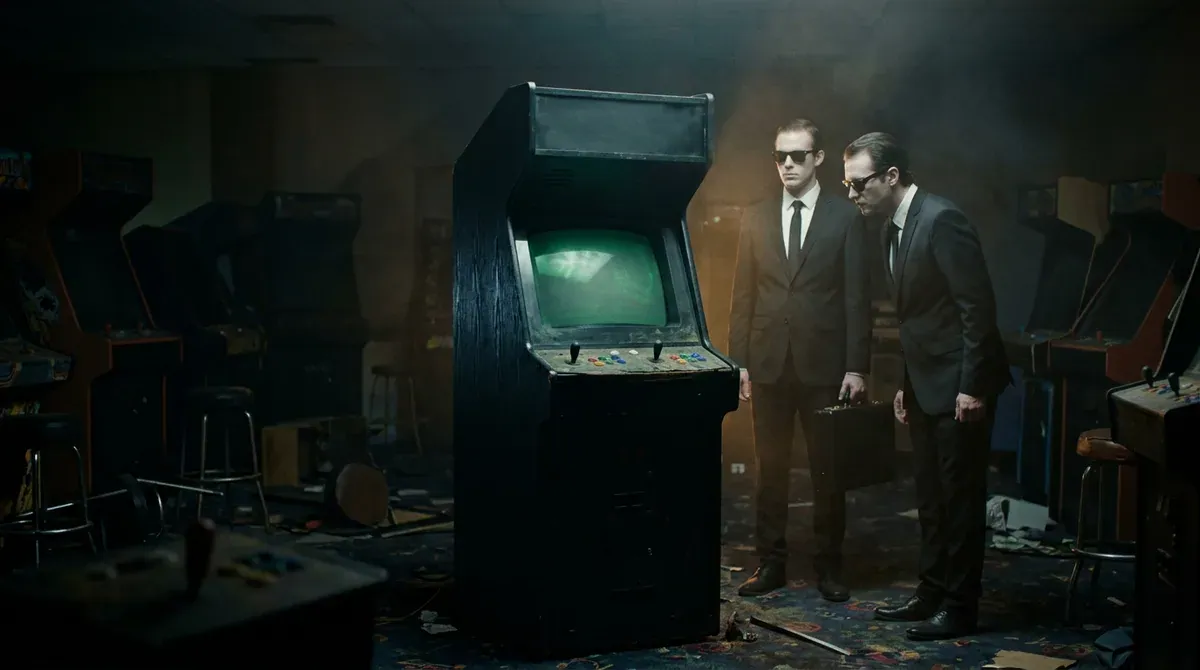
Later retellings added details that make the tale feel like a thriller. Some tellers describe men in black suits who arrived to service the machines and then quietly hauled them away. No named witness, arcade or date stands behind these visitors, yet the image stuck.
The title screen became another clue. One claim said it listed Sinneslöschen Inc. as the copyright holder. The name is German and roughly means “sense erasure,” and that detail made the story seem deliberate to many readers.
Other tellers said the game came from Germany, which gave a faraway origin to a mystery with no local paper trail.
Government plots came next. Some accounts describe FBI seizures of cabinets and CIA mind-control experiments, often linked to MK-Ultra, a real Cold War CIA program that studied ways to influence the human mind. The link between that program and a video game is only a storyteller’s leap.
Finally, some tellers connected Polybius to Atari’s Bradley Trainer, presenting the pairing as a hidden clue. The connection appears in retellings rather than in any record of the game itself.
Fake Evidence That Kept the Story Alive
Message boards gave the legend its first real momentum. The first Polybius Usenet reference dates to February 27, 2000, in the arcade collectors’ group rec.games.video.arcade.collecting. By July 2003 the game was circulating on the Snopes message board, and AboveTopSecret.com picked it up the following month.
Wider attention arrived in 2003, when GamePro ran a feature called “Secrets and Lies: Greatest Gaming Urban Legends.” A magazine feature gave the tale a sense of legitimacy, and readers who had never heard of the cabinet now had a name to search for.
Then came the claims that looked like proof. Each one later lost its footing:
- March 20, 2006: a user named Steven Roach said seven cabinets were pulled after a 13-year-old had a seizure six days after release.
- 2007: a YouTube upload titled “Polybius found” showed a simulated cabinet discovery.
- May 2009: the Coinop.org entry said Roach “knows nothing about this game.”
Roach’s account was persuasive because it had a date, a number of cabinets and a child’s seizure. The 2007 video offered something to look at. Yet the 2009 update quietly undermined the credibility of the one person who had supplied the story’s most specific details, and the legend kept moving anyway.
Is There Any Physical Proof the Cabinet Existed?
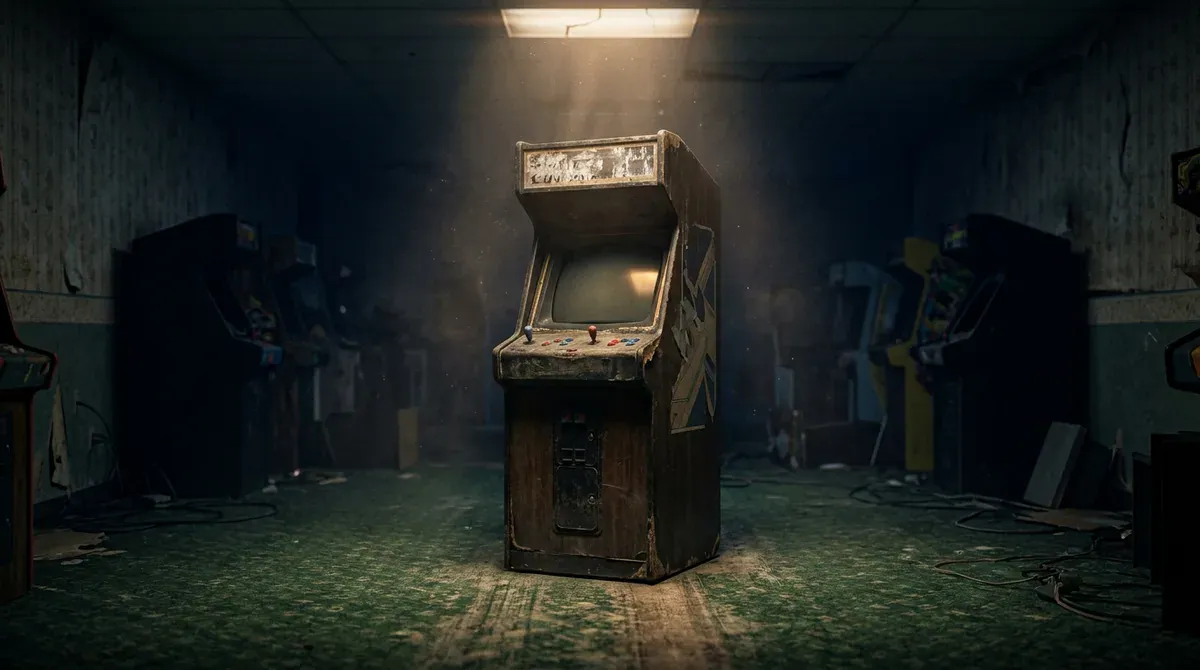
So far, no physical proof of the Polybius cabinet has surfaced. The sources reviewed have identified no contemporary evidence of the alleged original machine, such as a shipping record, a repair log or a photograph taken in a Portland arcade. Nor are any writings about the game from its supposed 1981 heyday known to exist. No magazine review, newspaper notice or letter from that year has been found.
What remains is memory, and memory does not agree. A feature published on October 20, 2026, gathered local recollections of the game and found that they conflict sharply. Some people speak with confidence about a particular arcade, while others remember only hearing a rumor. The details rarely line up.
Weigh those accounts for yourself. Ask which memories could be checked against a record, and which ones have been shaped by years of retelling.
How the Legend Lives On in Games and Folklore
In 2017, Llamasoft released a commercial Polybius for PlayStation 4 on May 9. The game supports PlayStation VR and includes 50 levels. It is a modern title built around the famous name, not a surviving cabinet from the arcade era, but it gave the legend a fresh place to live.
The Windows version reached Steam on December 21, 2018, listed at $6.99 in the US. The same game on the US PlayStation Store was priced at $15.49, more than twice the Steam figure. Shoppers can end up paying very different amounts for one title, depending on where they look.
Other commercial games have since borrowed the name, so a search for Polybius now turns up products as well as rumors. Each new product turns an old tale into a brand, and that makes it easy to mistake the brand for history.
Urban legends feel true partly because they are shared. When a friend, a forum or a video passes a story along, it seems as though many people have already checked it. Specific details such as a city, a year and a symptom make the tale easy to picture, and memory tends to fill any gaps with what fits.
Documentaries and podcasts keep that process running. Each retelling usually repeats the most vivid details and rarely pauses over the missing records, so a first-time listener meets a story that already sounds settled.
Weighing the Evidence for Yourself
Start with the oldest trace you can check yourself. Open the Wayback Machine, the web archive that stores past snapshots of pages, and look up the Coinop.org Polybius entry. See whether any capture exists from 1998, then note the earliest capture you can find and its date. Next, search Usenet archives for rec.games.video.arcade.collecting in early 2000 and read the first post that mentions the game. Compare what that post says with the details in later retellings, such as the 1981 date and the Portland setting.
Then ask the question every legend should face: what paper trail exists? A receipt, a repair log or a 1981 newspaper notice would count. If none turns up, file the story under legend and keep reading with a skeptical eye.
Finally, look at the modern product. Compare the $6.99 Steam listing with the $15.49 PlayStation Store price, and notice how a famous name can keep selling long after its history has faded.
Frequently Asked Questions
1. What was Alternate Reality, the City, the game behind the 1995 rumor?
Alternate Reality: The City was a role-playing game for home computers, not an arcade cabinet, so it could never have been played in a Portland arcade. Its appearance in a 1995 Usenet post shows how a story about a strange game could circulate years before Polybius was attached to the legend. The rumor followed a familiar pattern of a vague setting, a troubling effect on the player and no verifiable source.
2. How can I tell whether a video like the 2007 ‘Polybius found’ upload is real footage?
Start by checking who uploaded the video and whether that account has posted other material about arcades or games. Look for any original location, news coverage or named witnesses that could back up the discovery, since a staged cabinet find usually has none. If the only evidence is the video itself, treat it as a demonstration rather than a recovered machine.
3. Why do so many Polybius stories mention a specific number of cabinets or a named insider?
Specific numbers and named sources make a rumor feel checkable, even when nobody has actually checked it. A claim such as seven removed cabinets or a particular user’s account gives readers something to repeat and remember. When the source later disowns the claim, the details often keep circulating anyway, which is why it helps to ask who said it and when.