La Llorona Legend: Regional Versions, Roots and Family Warnings
The La Llorona legend tells of a grieving woman whose wailing echoes through the night. Her name translates from Spanish as “the weeping woman,” and folklorists at the Library of Congress note that weeping is the one feature nearly every telling shares, while her appearance and backstory change from town to town. The image reaches back centuries. A 1570s Florentine Codex illustration shows a woman lamenting in Tenochtitlan, and the earliest written account that Library of Congress folklorist Stephen Winick has found is an 1849 poem by Manuel Carpio.
Families have kept the legend alive. A 2012 study of family storytelling in Guadalajara, built on two years of interviews with 30 case-study families, found that children often heard La Llorona presented as something that had happened to a relative or acquaintance, and they frequently asked whether it was true. That question sits at the heart of the legend: Is she only a warning, or did someone once meet her on a dark road?
Key Takeaways
- Anyone curious about La Llorona can start by asking a grandparent or neighbor where they first heard the weeping.
- Historians have not settled where the La Llorona story began, leaving her roots open to debate.
- A 2023 study of four Indigenous Mexican localities found that storytellers reshape the legend’s setting while keeping its core intact.
- In Guatemala, one telling places a crime at the heart of the weeping, with a mother drowning her son to hide an affair.
- Children in 63% of the Guadalajara homes studied heard legends or stories, showing how ordinary such warnings were.
What Is the La Llorona Legend?
La Llorona is a grieving ghost woman of Mexican and Latin American folklore, and her weeping is the sound that tells listeners she is near. Her name translates from Spanish as “the weeping woman,” and that title fits the one detail nearly every telling keeps. Her cry is her signature, even when everything else about her changes.
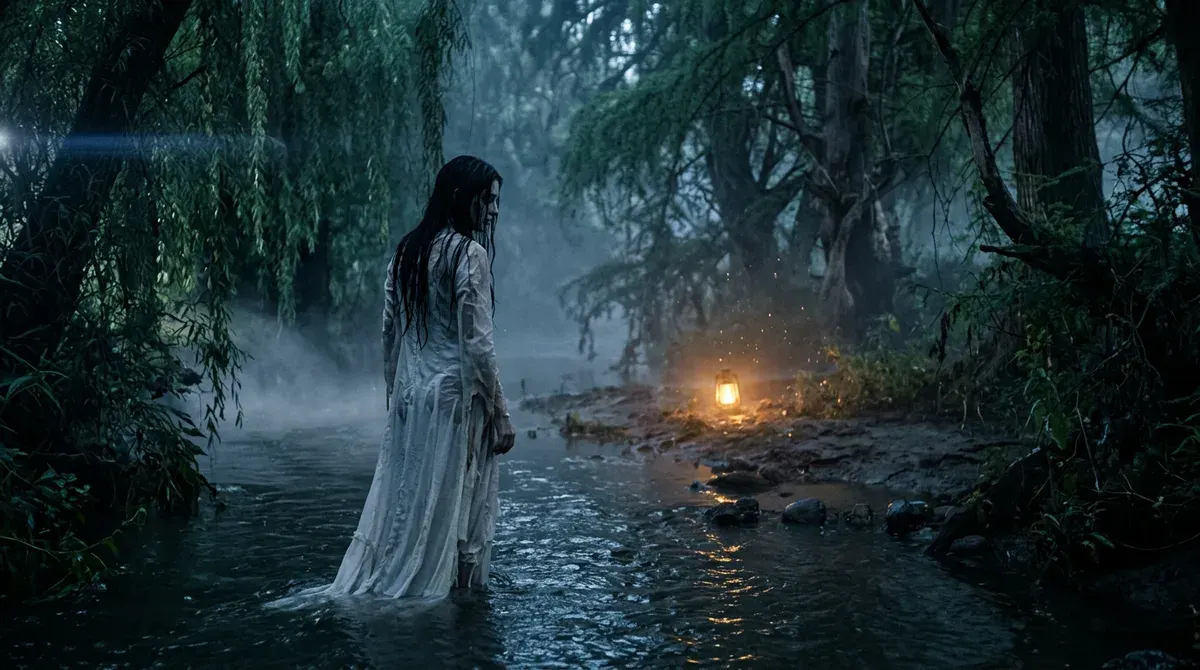
Picture a village after dark. The streets are empty, the dogs have fallen silent, and then a wail rises from somewhere near the water. In many tellings, the woman who makes that sound has lost her children and now roams riverbanks, canals, or lakeshores at night, calling for them. She is searching, and she never stops.
Beyond the weeping, almost everything shifts. In one town she is a beautiful woman in a white gown with long dark hair. In another she is a pale figure with a hollow face, or a shape glimpsed only at the edge of the road. Her backstory changes too. Some tellers cast her as a jealous lover, others as a mother driven to despair by poverty or betrayal. Each version adjusts the details to fit the people telling it.
The cry, though, travels intact. A child who hears it at night in one household learns the same lesson as a child in another: stay inside, close the door, and do not follow the sound. The wail works less as a story element than as a signal, a warning that the woman is close enough to be heard. Listeners carry that signal with them, whether they first heard it from a grandmother, a schoolmate, or a book. It is why the legend remains recognizable even when its characters are not.
Where Do the Roots of the Weeping Woman Lie?
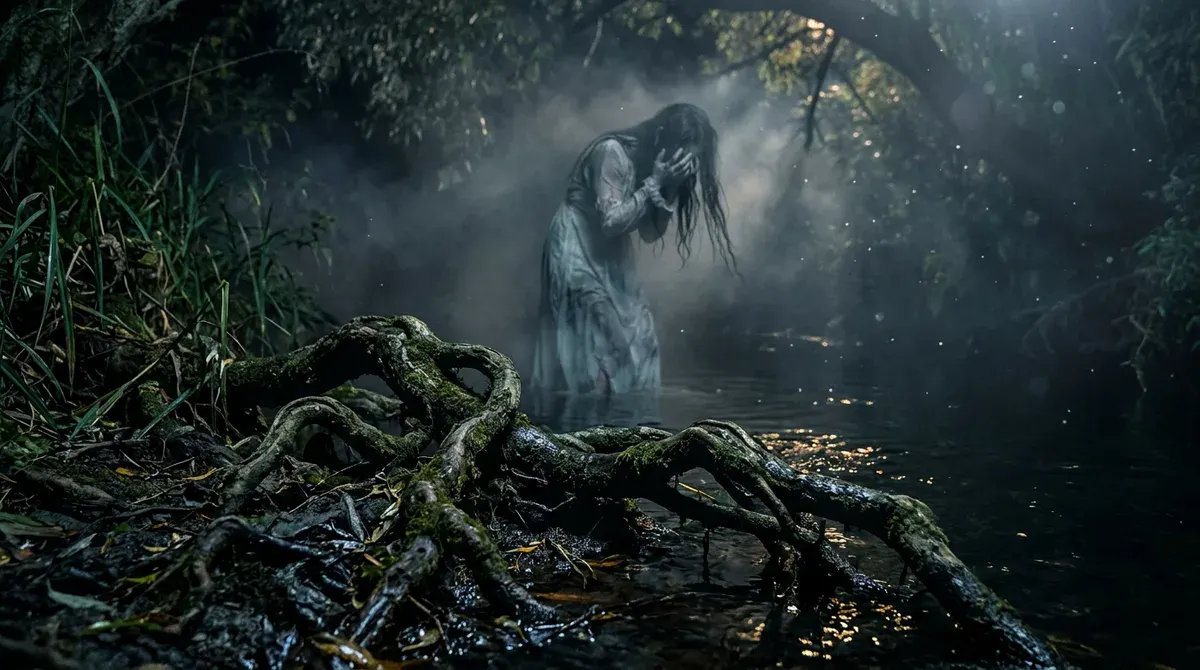
The roots of La Llorona reach into Indigenous imagery from the Spanish colonial era, but no single origin has been pinned down, and historians still debate how the story took its shape. Some of the oldest traces come from the moment when Indigenous and European worlds collided in central Mexico.
The clearest early image appears in the Florentine Codex, a set of illustrated manuscripts from the 1570s that recorded Nahua life and beliefs with the help of Indigenous informants. Its account describes a woman lamenting in Tenochtitlan, the capital that Spanish forces would soon destroy. In a Library of Congress essay, folklorist Stephen Winick treats this material as an early related tradition, but he keeps it separate from the legend as later generations told it.
That separation matters. A grieving woman in a sixteenth-century text is not the same character as the ghost who haunts riverbanks today. Scholars see a family resemblance, a shared sorrow and a voice carried through the night, but they do not assume a straight line from one to the other.
Some interpreters look to Cihuacóatl, a powerful goddess of pre-Hispanic Mexico. She is linked to childbirth and to the spirits of women who died in labor, and some readers see in her a source for the woman whose cries echo at night. Others find this connection stretched, pointing out that the goddess and the legendary weeping woman share little beyond a dark, feminine power.
The earliest written account that Winick has found is an 1849 poem titled “La Llorona” by Manuel Carpio. It is an important marker in the timeline, since it shows the story already circulating in print by the mid-nineteenth century. Many oral tellings were never written down, so how far back the story’s spoken life reaches remains uncertain.
European parallels complicate the picture further. Tales across Spain and elsewhere in Europe feature women who wander and mourn, and some scholars argue these tales helped shape the Mexican figure after the conquest. Others argue that similar grief stories arose independently in both places, because mothers mourning lost children appear in many cultures. Historians have not settled this question, and the debate continues.
So the trail leads in several directions at once. Indigenous imagery, colonial writing, and European storytelling may all have fed into the legend, and each claim depends on how closely readers are willing to connect fragments that are centuries apart.
How Does the Legend Change Across Mexico and the Southwest?
As the legend travels north, La Llorona takes on the landscape and the worries of the people who tell her story. Her setting, her motive, and her punishment shift from one region to the next, while the weeping stays the same.
A 2023 study of oral accounts from four Indigenous Mexican localities, published in Contribuciones desde Coatepec, found that storytellers re-create the legend to fit their own surroundings. Yet each re-creation keeps a recognizable narrative core. In other words, the teller changes the scenery, but the listener still knows exactly who is crying.
In Mexico, the woman usually haunts water. Tellers place her on riverbanks, canal edges, and the shores of lakes, where mothers once washed clothes and children played. Her motive is often grief turned to rage, a woman who lost her children or was betrayed by the man she loved. In Baja California, the emphasis moves toward the coast and the open desert. Many tellers there picture her near the sea or along lonely roads, and the reasons for her wandering tend to center on abandonment and a life that ended far from home.
New Mexico and the wider Southwest carry the mix of cultures that defines the region. Spanish colonial memory, Pueblo landscapes, and Anglo settlers all left marks on the stories told there. Irrigation ditches, known as acequias, run through many communities, and in some tellings La Llorona waits beside the slow water of these ditches. The ditch becomes a place where a child could slip away at dusk, and the warning carries the weight of both family life and the dangers of the land.
Kansas City and the Missouri River area bring her closer to a working river. Here she is placed on muddy bends and sandbars, where currents have claimed people over the years. The river gives the legend a sense of real danger, and listeners who grew up near the water often describe her as someone who might be drawn to the same current that ended a life. Her backstory tends to focus on a mother’s sorrow, with the river serving as the place where that sorrow becomes permanent.
Texas tellings add a punishment that sets them apart. In many versions, La Llorona must carry a horse’s head as part of her penance, walking through the night with the burden on her shoulders and finding no rest. The image is startling, and it gives the story a physical sense of endless duty. Why this detail took hold in Texas is a question listeners can weigh for themselves, since the horse’s head appears in the tale without a clear origin.
What Do Central and South American Versions Add?
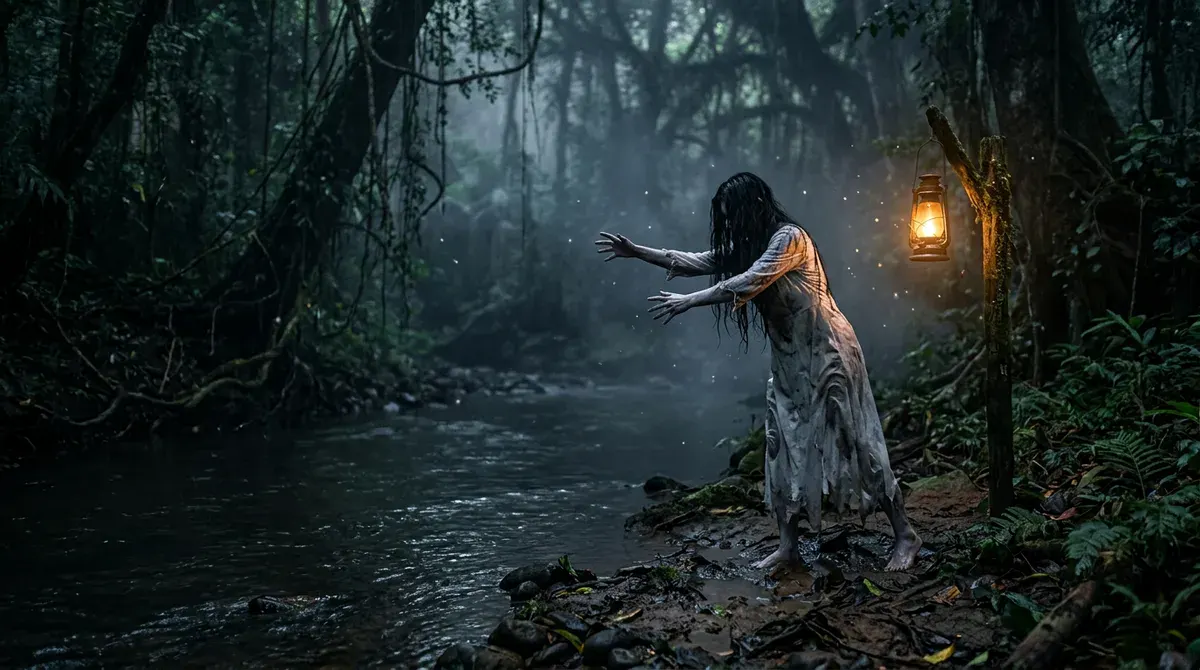
Central and South American versions push the legend toward darker plots and sharper social edges, and they show how easily the weeping woman can be bent to carry local grief and anger. In some tellings, her cry stops being only a warning and becomes a record of crime, conquest, or injustice.
In Guatemala, one version tells of a woman who drowns her own son to hide an affair. The Los Angeles Times has documented this telling, in which concealing an affair is the motive behind the crime. The weeping now has a crime at its center, and listeners are left to wonder whether the woman mourns her child or the life she ruined to protect a secret.
A Venezuelan version takes a different path. It ties the woman’s grief to colonialism and to murdered children, so her sorrow stands for a much larger wound than one family’s loss. Here the wail carries the memory of conquest, and the legend becomes a way of speaking about who was harmed and who was never named.
Comparative scholarship also reaches beyond Mexico. A 2021 comparative study in the Revista Chilena de Literatura examines oral accounts across Hispanic American and U.S. traditions. It separates the motifs La Llorona shares with other figures from the features that belong to her alone.
Those neighboring figures help explain the boundaries. The Ciguanaba, a woman tied to rivers and night travelers in Central American folklore, shares the water and the lonely hour with La Llorona, yet she is not the same spirit. The woman in white is a figure of roadsides and dark houses, appearing in many cultures with a pale gown and a sad purpose. The phantom hitchhiker, a stranger who climbs into a car and vanishes, shares the isolated road but offers little of the mourning that defines the weeping woman.
Comparing these figures reveals what makes La Llorona distinct. She is defined less by her appearance than by the sound she makes and the children she is said to have lost. Where would you draw the line between a neighboring ghost and the weeping woman herself?
Why Is Her Weeping So Unsettling?
The weeping unsettles listeners because it turns the most protective figure in a family into someone who has lost the children she was meant to keep safe. A mother’s grief is usually a sound that calls people in. In La Llorona’s case, it calls them out into the dark.
That reversal gives the legend its sting. In a Library of Congress account of Esperanza Sernas’s 1977 interview, La Llorona is invoked to warn children that she might take them if they skipped school or misbehaved. The same woman who once cradled children now threatens to carry them off, so a parent’s love becomes a source of fear.
Psychological readings often focus on guilt and loss. A mother who has lost her children and cannot stop searching may stand for the terror every parent quietly feels, the fear of failing to keep a child safe. Some listeners may also hear in her wailing a warning about the guilt that follows a family’s worst mistake, whether that mistake was a moment of carelessness or something far harder to face.
Folklore adds a more practical lesson. Many tellings place her at rivers, canals, and lakeshores, and the warning is about where children may not go. In the Guadalajara households studied, children heard stories or legends in 63% of homes, and the water’s edge was often the boundary those stories guarded. Could a ghost that lives at the edge of the water be less about the dead than about the line a child must not cross?
How Did Families Use Her as a Warning?
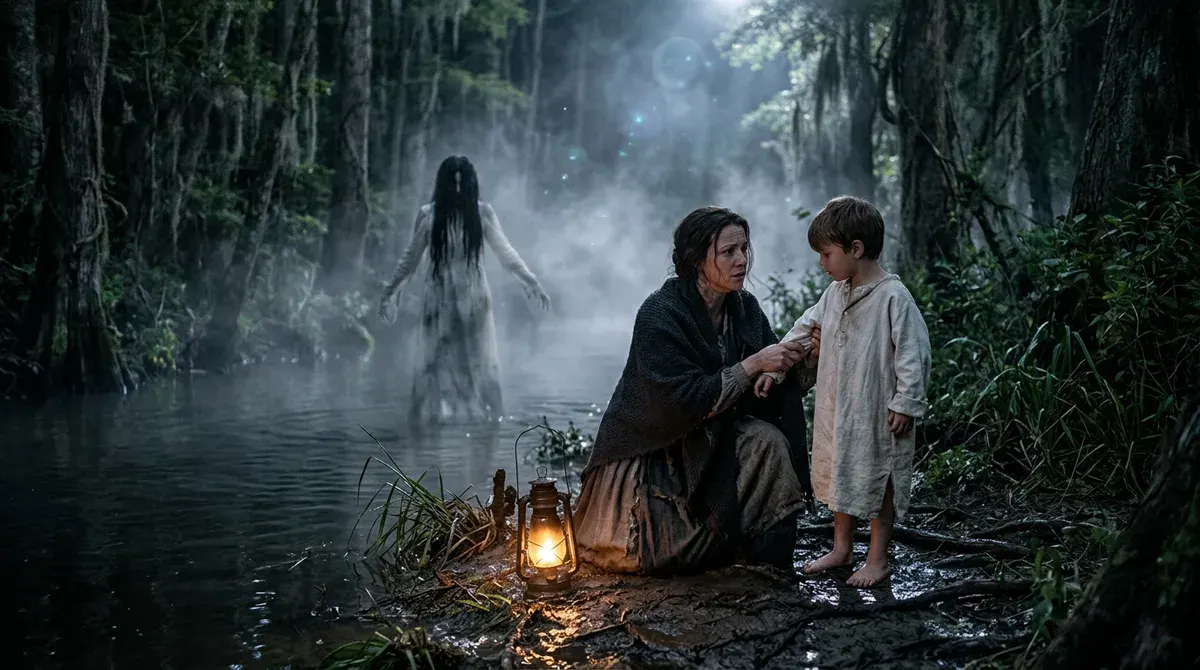
Parents and grandparents often used La Llorona as a practical tool. A story about a wailing woman near the water gave adults a way to keep children home after dark and away from rivers, canals, and lakeshores. The Guadalajara study shows how ordinary this was. Its researchers spent two years, from 2006 to 2008, interviewing and observing 30 case-study families, chosen from a larger group of 344 children at four public schools. Storytelling was part of home life for many of them. Children in 63% of the homes were reported to hear legends or stories, on average about once a month, and 37% of the families who told stories had passed on the classic tale of La Llorona.
The way the story was told mattered as much as the story itself. In the Guadalajara households, La Llorona was usually presented as something that had already happened to a relative or acquaintance, not as a distant legend from a book. A cousin’s neighbor or a family friend had heard the cry, or had come close to the water at the wrong hour. That closeness made the warning personal.
Children responded in a telling way. They often asked whether the story was true, and that question carried real weight. A child who asks “Did it really happen?” is measuring how near the danger sits, and an adult’s answer shapes what the child will do the next time dusk falls.
The legend also fit neatly into everyday discipline. Esperanza Sernas’s 1977 interview, as recorded in a Library of Congress account, shows the threat reaching into ordinary routines, tied to skipping school or misbehaving. A parent cannot watch a child every minute, but a woman who roams the night can be invoked at any hour, and that gave the warning a reach no scolding could match.
Scholars can read these stories as lessons in safety and obedience, and that reading holds up well. Yet families who told them did not always treat the figure as only a metaphor. For a child lying awake after a story, the wail outside the window could feel entirely real, and that uncertainty may be exactly what made the warning last.
Is La Llorona Still Being Seen and Retold?
Yes, La Llorona is still being seen and retold, in whispered family conversations, in horror films, and in new books and artworks that give her a different meaning. Her sightings rarely come with dates or official reports. They travel between neighbors, cousins, and friends, who say that someone they know heard the wail near a canal or glimpsed a pale figure at the edge of a river after dark.
These eyewitness accounts often follow a familiar shape. The witness is someone the listener knows, the place is one everyone in town recognizes, and the hour is late enough that the streets have emptied. The details matter less than the nearness. A story about a friend’s brother who heard the cry from the bridge feels closer to home than a story from a distant village, and that closeness keeps the legend alive from one generation to the next.
The legend has also crossed into cinema. The Curse of La Llorona, a horror film set in the same universe as The Conjuring films, brought the weeping woman to audiences far beyond Mexico and the Southwest. The film casts her as a vengeful spirit who stalks children near water, which keeps the old warning intact while making her a jump-scare figure for mainstream viewers.
Alongside these adaptations, a growing group of writers, artists, and scholars has turned her into something more complicated. Some read her as a figure of resistance, a woman whose grief speaks for communities that were colonized, silenced, or ignored. Her story is explored through indigeneity, where her roots in Indigenous imagery become a way of reclaiming a past that colonial writing tried to bury.
Other reinterpretations focus on gender. In these works, the weeping woman often stands in for women who are blamed for losses they did not cause. Sexuality enters the picture as well, with artists asking who is allowed to be a lover or a mother, and who is punished when those roles fall outside what society expects. Trauma offers yet another lens, reading her endless searching as a portrait of grief that never settles.
Seen this way, the cry that once sent children inside now sounds different to many listeners. It can still be a warning, but it can also be heard as a voice for those who were never given one.
Weighing the Weeping Woman for Yourself
Start closer to home. Ask a grandparent, aunt, or longtime neighbor where they first heard the weeping, and write down the answer as close to word for word as you can. Note the river, canal, or road they named, why the woman was crying, and whether the story was told as something that happened to someone the teller knew. Those details show how one family shaped the legend.
Then set your notes beside the Library of Congress introduction to La Llorona, which explains why the weeping stays constant while everything else shifts. Check whether your family’s version keeps the cry and changes the setting, or whether it changes the backstory instead.
For a sharper test, compare two regional tellings from this article, such as the Texas horse’s head penance and the Venezuelan version tied to colonialism. Make two columns: what each keeps, and what each changes. Ask which details feel rooted in local memory and which seem to have traveled from somewhere else.
Finally, ask the question the Guadalajara children asked: did it really happen? Write your own answer, then note what evidence would change your mind. Revisit those notes after your next family story. You may find that your answer, like the legend, shifts with each telling.
Frequently Asked Questions
1. How can I tell the La Llorona story to children without frightening them too much?
Keep the core warning, which is to stay away from rivers, canals, and lakeshores after dark, and leave out grisly details such as drowning or violence. Presenting the story as a cautionary tale about a safe walk home or a safe bedtime lets children take away the lesson without lingering on the terror. Answering their questions calmly afterward helps them separate the legend from the everyday safety rules they need to follow.
2. How many children has La Llorona supposedly taken?
No total exists, because La Llorona is a legend and its tellings do not keep a count of the children she has taken. Most stories describe her wailing near water or searching for her own lost children rather than listing victims. Families who pass the story down usually treat the warning itself as the point, not a tally of casualties.
3. Is La Llorona considered an urban legend or folklore?
La Llorona is generally classed as folklore rather than an urban legend, because her story draws on imagery that reaches back to the colonial era and has been told across many regions for generations. Urban legends usually circulate as modern stories tied to a specific place or recent event. Her spread through films and modern sightings gives her some urban-legend qualities, which is why the label is still debated.