The Hidden Secrets Of The Gedi Ruins
Deep within the lush Arabuko-Sokoke Forest of Kenya, the crumbling coral walls of a once-thriving metropolis rise like ghosts from the earth. For centuries, the gedi ruins secrets have been guarded by local legends of “Old Ones” and spectral protectors, leaving historians to wonder why such a sophisticated city was suddenly abandoned and scrubbed from the map. While the site was recently honored as a UNESCO World Heritage Site in 2024, the prestige only deepens the mystery of how a community with advanced plumbing and global trade links could vanish without a single written record.
Today, cutting-edge technology is finally peeling back the layers of overgrowth to reveal what the forest has hidden for generations. 3D laser scans are mapping hidden chambers and intricate mosques, blending modern science with the whispered oral traditions of the Swahili coast. As the salt air from the Indian Ocean slowly weathers these ancient stones, a race against time has begun to decode the architectural puzzles and silent corridors of Gedi. Every unearthed artifact offers a new clue into a civilization that lived in luxury before disappearing into the shadows of history.
Key Takeaways
- The Gedi Ruins represent an architectural anomaly, featuring advanced 13th-century urban planning, indoor plumbing, and flushing toilets that predated similar technologies in much of Europe.
- Despite its sophisticated infrastructure and clear evidence of global trade—including Ming Dynasty porcelain and Venetian glass—the city remains entirely absent from all historical maps and written records of its era.
- The sudden 17th-century abandonment of the city leaves a significant historical void, as there is no archaeological evidence of war, plague, or natural disaster to explain why the population vanished.
- Modern 3D laser scanning and its 2024 UNESCO World Heritage designation are now essential tools in a race against time to map hidden chambers and preserve the site’s coral-stone structures from environmental decay.
The Silent City That History Forgot
Deep within the lush Arabuko Sokoke Forest lies a sprawling urban center that seems to have materialized out of thin air. Although the Gedi Ruins feature advanced coral stone houses, complex drainage systems, and a magnificent Great Mosque, this wealthy city is missing from every historical map and written record from its era. While neighboring coastal towns were well documented by explorers and traders, Gedi remained a ghost in the archives for over five hundred years. This total silence from the outside world suggests a level of isolation or intentional secrecy that contradicts the city’s obvious global connections, such as the Ming Dynasty porcelain and Venetian glass found on site.
The architectural sophistication found at Gedi raises startling questions about the official timeline of East African history. Researchers have used high tech 3D laser scanning to document structures that feature indoor plumbing and flushing toilets, technologies that were rare even in Europe at the time. These features appear so suddenly and with such precision that they almost seem out of place for the medieval period in this region. Local oral traditions hint at a community that was highly spiritual and protective, perhaps explaining why such a massive stone city was never mentioned by the travelers who frequented the nearby coastline.
Despite being officially recognized as a UNESCO World Heritage Site in 2024, the true reason for the city’s sudden abandonment in the seventeenth century remains a mystery. There are no signs of war, plague, or natural disaster, leaving experts to wonder if the residents simply walked away from their advanced paradise. Some theorists suggest the city was a hidden sanctuary for an elite class that wished to remain off the grid of the growing colonial world. If a city this large and technologically advanced could be completely erased from the history books, what other chapters of our past are currently sitting in plain sight, waiting to be rediscovered?
Advanced Architecture Of An Unknown Era
Deep within the lush coastal forests of Kenya, the stone walls of Gedi reveal a level of engineering that seems to belong to a much later era. While many contemporary medieval cities struggled with basic sanitation, the architects of Gedi were busy installing complex plumbing systems that included sunken basins and indoor flushing toilets. These features were not just functional but were built with a precision that suggests a deep understanding of hydraulics and urban planning. Visitors often find it difficult to reconcile these advanced comforts with the traditional historical timeline of the region, leading many to wonder if the site represents a lost peak of technological achievement.
The craftsmanship found in the Great Mosque and the surrounding palaces further deepens the mystery of this silent city. Builders utilized coral rag and lime mortar to create structures with perfectly aligned corners and smooth finishes that have withstood centuries of tropical weathering. According to research using 3D laser scanning to document the site, the geometric accuracy of these buildings is remarkably consistent. This level of masonry suggests that the inhabitants possessed specialized tools and mathematical knowledge that were uncommon for the period, prompting questions about where this expertise originated.
Despite the recent recognition of Gedi as a UNESCO World Heritage Site, many of its most sophisticated architectural secrets remain unexplained. The presence of high-end drainage systems and private bathrooms in a 13th-century settlement challenges the standard narrative of global development. Some researchers suggest that these innovations point toward a highly organized society that may have been far ahead of its neighbors in terms of public health and civil engineering. As we look at these ancient stones, we are forced to ask whether our current understanding of history has overlooked a significant chapter of African innovation. Do you think these ruins prove that ancient engineering was much more advanced than we have been taught to believe?
Global Treasures In A Ghost Town
Deep within the lush forests of Kenya, the Gedi Ruins hold secrets that challenge our understanding of medieval African history. When archaeologists first began excavating the site, they were stunned to find luxury items that originated thousands of miles away across the ocean. Among the coral stone walls, researchers discovered delicate Ming Dynasty porcelain vases from China and intricate Venetian glass beads from Italy. These artifacts suggest that this invisible city was once a bustling hub of global commerce, connected to a sophisticated trade network that spanned the known world. The presence of such high end goods in a remote forest setting raises fascinating questions about how this community maintained its wealth and influence.
The architectural sophistication found at Gedi is equally puzzling, as it features advanced urban planning that seemed to appear out of nowhere. Many of the stone houses were equipped with indoor plumbing and complex flushing toilets, a level of sanitation that was rare even in many European cities at the time. Historical records indicate that the city was never mentioned in maps or local written chronicles during its peak. This silence in the official record creates a mysterious gap, leading some researchers to wonder if Gedi served a specific purpose that required it to remain hidden. The precision of the masonry and the layout of the Great Mosque suggest a society with deep mathematical knowledge and architectural skill.
These out of place artifacts and advanced features invite us to look closer at the true timeline of human achievement. While traditional history often portrays medieval East Africa as a series of isolated villages, Gedi proves that a highly organized and wealthy civilization thrived here. The sudden abandonment of the city in the 17th century only adds to the intrigue, leaving behind a ghost town filled with treasures but no explanation for its collapse. Does the existence of such a modern city in the deep past suggest that our ancestors were far more connected than we are taught in school? We would love to hear your thoughts on whether Gedi was a secret trade capital or something even more mysterious.
UNESCO Recognition And Modern Digital Mysteries
The 2024 inclusion of the Gedi Ruins as a UNESCO World Heritage Site has finally brought global attention to a location that seems to defy the known history of East Africa. While the official designation celebrates the site as a masterpiece of Swahili civilization, the sheer complexity of the architecture raises questions that traditional timelines struggle to answer. Visitors find a ghost town equipped with indoor plumbing, flush toilets, and sophisticated water management systems that were far ahead of their time. These advanced features suggest the inhabitants possessed technical knowledge that appeared out of nowhere, leaving many to wonder if the site’s true origins have been overlooked. Because the city was mysteriously abandoned in the 17th century without any written record, the stone walls remain silent witnesses to a culture that may have been much more advanced than we previously believed.
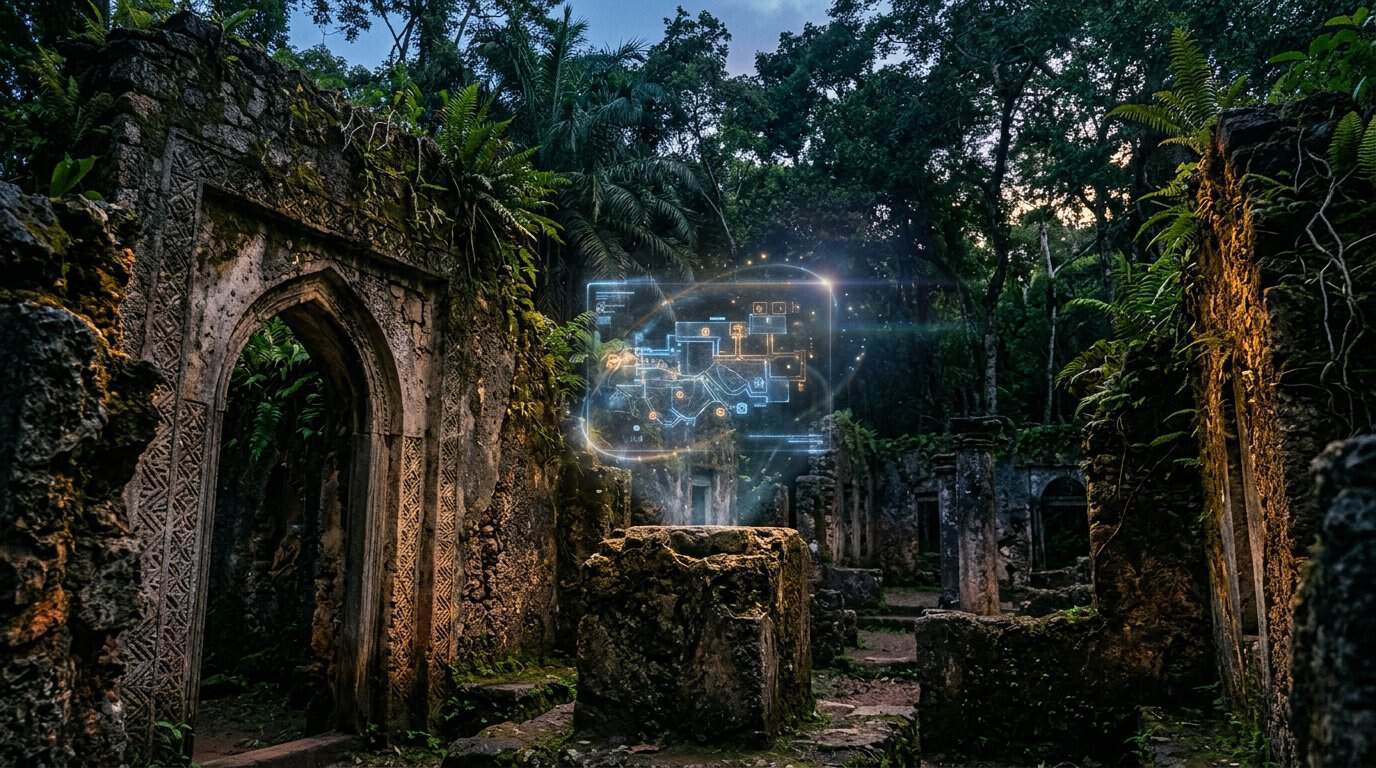
Modern technology is now helping to peel back the layers of this architectural enigma before the humid coastal climate erodes the evidence forever. Digital preservation projects are currently using 3D laser scanning to create a high definition map of every corridor and courtyard. These digital scans have already begun to reveal tucked away chambers and structural details that are invisible to the naked eye. By capturing these intricate layouts, researchers are finding clues that suggest the city was built with a level of precision that challenges our understanding of medieval engineering in the region. This digital preservation effort is a race against time, as rising sea levels and shifting weather patterns threaten to crumble the coral stone structures.
As these hidden rooms and sophisticated drainage tunnels come to light, they invite us to reconsider what we think we know about the past. If the people of Gedi were using technology that wouldn’t become common in other parts of the world for centuries, where did that knowledge come from? Some believe the ruins are proof of a lost chapter in human history, while others look for more conventional explanations within local trade networks. These discoveries remind us that the earth still holds secrets that can shift our entire perspective on human achievement. What do you think the 3D scans will reveal next in these silent stone halls, and could there be other out of place cities still waiting to be found in the dense Kenyan forest?
The Advanced Engineering of a Lost Era
The Gedi Ruins remain a beautiful puzzle that invites us to look closer at the untold stories of the Swahili coast and its many remaining mysteries. While historians attribute the city to the 12th century, the advanced architectural features found on-site suggest a level of technology that seems out of place for its era. The presence of indoor plumbing, complex flushing toilets, and sophisticated water management systems challenges the standard timeline of regional development. These features suggest that the inhabitants possessed knowledge that was far ahead of their global contemporaries. Walking through the coral-stone arches, it becomes clear that Gedi was not just a remote settlement, but a pinnacle of ancient engineering.
The sudden and total abandonment of this thriving city in the 17th century adds another layer to its enduring secrets. No evidence of war, plague, or natural disaster has been found to explain why an entire population would leave behind such a comfortable and advanced home. This silence from the historical record leaves room to wonder if we are missing a critical piece of the human story. Some researchers suggest that the ruins serve as a case study for artifacts and structures that simply do not fit the official narrative of the past. Gedi stands as a silent witness to a lost chapter of history that continues to defy modern explanation.
As we look toward the future of archaeological discovery, the newly granted UNESCO World Heritage status ensures that these stone walls will be protected for generations to come. Digital preservation efforts are now capturing every detail of the site, yet the core questions about who these people were and where they went remain unanswered. The blend of high-tech ruins and unexplained disappearance makes Gedi a unique destination for anyone curious about the gaps in our history books. We are left to wonder what other secrets might be hidden beneath the roots of the baobab trees. What do you think happened to the people of Gedi, and why do you believe their advanced technology was eventually forgotten?
Frequently Asked Questions
1. What makes the Gedi Ruins so mysterious compared to other ancient cities?
Gedi is a ghost in the historical record because it appears on no maps and in no written accounts from its era. Despite having advanced technology and global trade goods like Ming Dynasty porcelain, the city remained completely invisible to the outside world for centuries.
2. How did the people of Gedi manage such advanced plumbing and infrastructure?
The city featured a sophisticated system of coral stone houses equipped with indoor bathrooms and complex drainage systems. These architectural marvels suggest a high level of engineering knowledge that provided residents with luxury and sanitation far ahead of many contemporary civilizations.
3. Are there any local legends about the spirits guarding the ruins?
Local traditions speak of the ‘Old Ones’ and spectral protectors who watch over the crumbling coral walls. These oral histories have kept many people away from the site for generations, adding a layer of supernatural intrigue to the scientific mystery of the city’s abandonment.
4. Why did such a wealthy and successful city suddenly disappear?
The sudden abandonment of Gedi remains one of history’s greatest puzzles since there are no signs of war or natural disaster. Researchers are currently exploring theories ranging from a failing water table to a sudden plague that forced the entire population to vanish into the forest.
5. What is the significance of Gedi being named a UNESCO World Heritage Site?
The 2024 UNESCO designation recognizes Gedi as a site of universal value and provides new resources for its protection. This status helps experts use 3D laser scanning and modern technology to map hidden chambers before the salt air and forest growth reclaim the stones.
6. What kind of artifacts have been discovered within the forest ruins?
Archeologists have unearthed global treasures including Venetian glass and scissors from Spain alongside beautiful Ming Dynasty porcelain. These items prove that while Gedi was hidden in the Arabuko-Sokoke Forest, its trade reached the furthest corners of the known world.
Just as Gedi challenges our understanding of African urbanism, other sites like Göbekli Tepe have forced historians to rewrite the very beginnings of human civilization.