Banshee Folklore Origins: Tracing the Wailing Woman
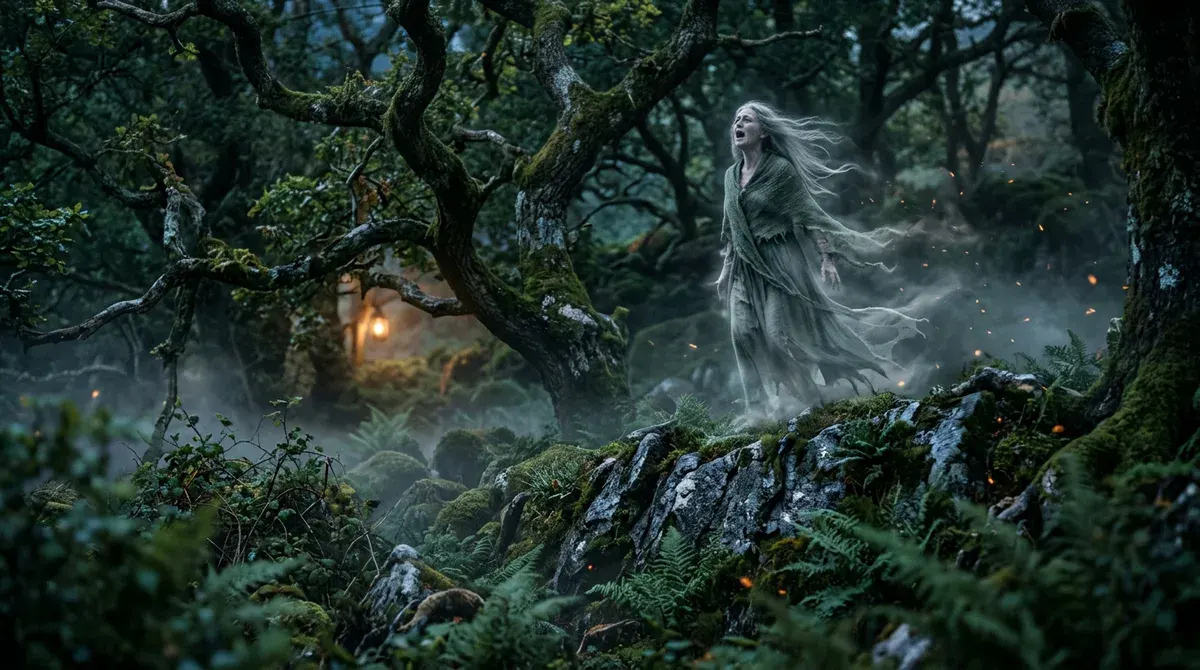
Banshee folklore leads back to the Irish phrase bean sí, usually translated as “fairy woman” or “woman of the fairy mound,” a name that ties her to the fairy mounds and the realm of the dead. In Irish tradition, her wail was heard as a sign that a death in the household or family was near, and the cry was closely tied to keening, the ritual wailing for the dead. The banshee is a death messenger whose true beginnings remain uncertain, and no single moment marks her first appearance in storytelling.
Yet the trail is richer than the mist suggests. The National Folklore Collection at University College Dublin holds hundreds of banshee encounter stories, including one account dated 1939 from Kerry and Limerick. Medieval Irish tales feature supernatural women who foretell death, and keening, the ritual wailing for the dead, gave her voice its unforgettable sound. Her story begins in the oral tradition, and the old tales still hold clues to what people once feared and remembered.
Key Takeaways
- The banshee’s name, bean sí, is usually translated as “fairy woman” or “woman of the fairy mound,” linking her to fairy mounds and the realm of the dead, while her true origins remain uncertain with no single moment of first appearance.
- The National Folklore Collection at University College Dublin holds hundreds of banshee encounter stories, including an account titled “The Banshee Hunt” that was dated 27 January 1939 and recorded in County Kerry and County Limerick.
- Keening, the ritual wailing for the dead known in Irish as caoineadh, shaped the banshee’s unforgettable voice, and seventh and eighth century penitential handbooks are among the oldest surviving traces of that practice according to Alexandra Bergholm’s 2021 study in the journal Religions.
- In Irish folklore the banshee was a messenger rather than a cause of death, and her cry warned that a death in the household or family was near.
- Local sources at Clare Libraries link the banshee’s wail with families whose surnames begin with O’ or Mac, so the omen was tied to a family line rather than to one house.
What Does Bean Sí Really Mean?
Bean sí is usually translated as “fairy woman” or “woman of the fairy mound,” and that short phrase holds much of the banshee’s story. The word sí points to the fairy mounds scattered across the Irish countryside, the grassy hills that local people long believed were homes of the otherworld folk.
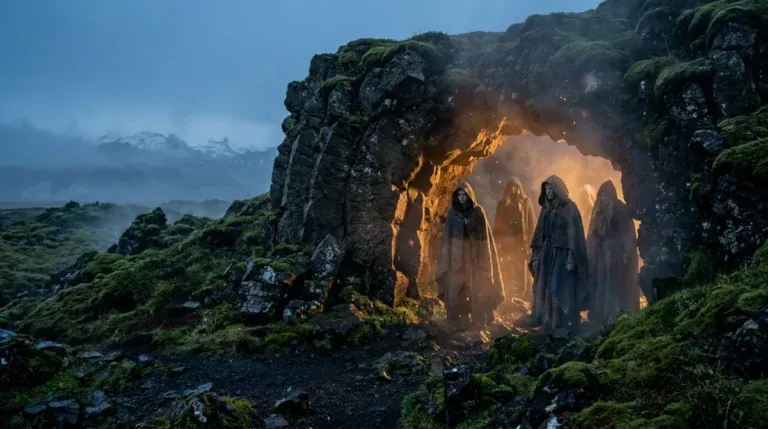
Those mounds were not ordinary hills. Many were ancient burial sites, earthen tumuli raised over the dead long before anyone recorded a story about them. Over the centuries, people who walked past these green swells came to see them as doorways between the living world and a hidden realm beyond. The woman tied to such a place was naturally thought to belong there too, somewhere between the land of the living and the land of the dead.
Regional traditions tie the figure to both fairy mounds and burial grounds. Wherever her cry was heard, it was taken as a sign that a death in the household or family was near. In some places she was known by other names, such as bean chaointe, which means “keening woman,” linking her voice to the mourning songs sung over the dead.
Within this belief, the banshee was a messenger rather than a cause of death. She carried word from the otherworld to the families she visited, and her cry gave warning that the end was coming.
The name is the clearest clue we have, but it does not give a full map. Sources describe the banshee’s origins as uncertain, with no single moment that marks her first appearance. Generations of people passed her story down by word of mouth and shaped its meaning as they went, so the trail leads back into the shadows of memory rather than to one clear starting point.
Keening, Wailing and the Sound of Grief
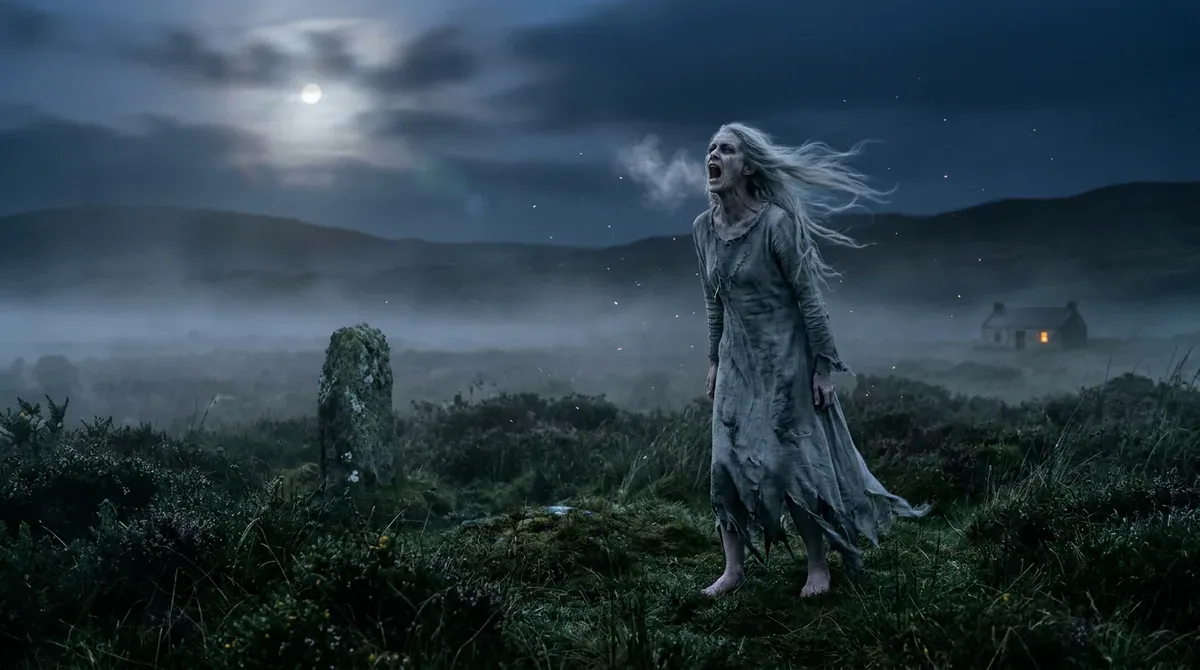
Keening, known in Irish as caoineadh, was the ritual wailing that filled a house when someone died. Mourners raised long, rising cries, often shaped on the spot, and the sound carried out across the fields. The woman who led this lament was called the bean chaointe, or “keening woman,” and her voice became a model for the banshee’s cry.
Some of the earliest Irish-source references to ritual lamentation appear in penitential handbooks from the seventh and eighth centuries. These church guides described what people actually did around the dead, offering a window onto mourning customs long before any written banshee story. Alexandra Bergholm’s 2021 study in the journal Religions points to these texts as among the oldest surviving traces of the practice.
Regional stories add another layer. In some places the wailing woman was linked with Badb, a war goddess associated with a crow. Crows gathered over battlefields, so the crow link suggests that the keening voice may once have belonged to war as well as to the deathbed. In early Ireland, death came in many forms, and the old stories seem to remember them all.
The singing itself is what listeners remember most. In many tales the banshee’s cry is eerily beautiful rather than simply harsh, and that quality invites comparison with the sirens of Greek legend, who sang sailors toward the rocks. Europe’s shore tales are full of mermaids who sing from the water, and their songs draw people closer while carrying a warning.
Why would a grieving sound feel so dangerous? Keening broke the silence, pulled the whole household into sorrow, and announced loudly that a life had ended. When you imagine a cry drifting through the dark with no visible source, do you hear mourning, a warning, or something much older?
Why Did the Washerwoman Wash Bloody Clothes?
The washerwoman washes bloodstained clothes because, in Irish legend, her task is a warning that someone nearby is about to die. Anyone who came upon her at a stream or river ford could expect bad news soon after.
Picture a traveller walking a lonely road at dusk. Beside the water, a woman kneels over a heap of linen, scrubbing cloth that runs red in the current. She does not look up. Storytellers called her the Little Washerwoman, and the people who heard of each sighting took it seriously.
Tellers often described her in three forms, each matching a stage of life. The maiden is young and lovely, the matron is a grown woman with the weight of years on her, and the crone is old and bent. The forms seem to move through a whole lifetime, as if death could take anyone at any age.
Common visual traits tie the forms together. Many accounts dress her in a grey cloak that blends with the mist over the water, and her eyes are often described as red from weeping. Those details made her easy to recognise and hard to forget.
Regional stories keep returning to water. The figure is tied to the washing place, and the act of scrubbing stained cloth is treated as the sign itself. Why did an image of a woman at the river stick so firmly? Rivers and streams were where households did their laundry, and they were also places where people met the unknown in the dark. Perhaps every stream carried a little of that fear, and the washerwoman gave it a face.
Why Did the Banshee Follow Certain Families?
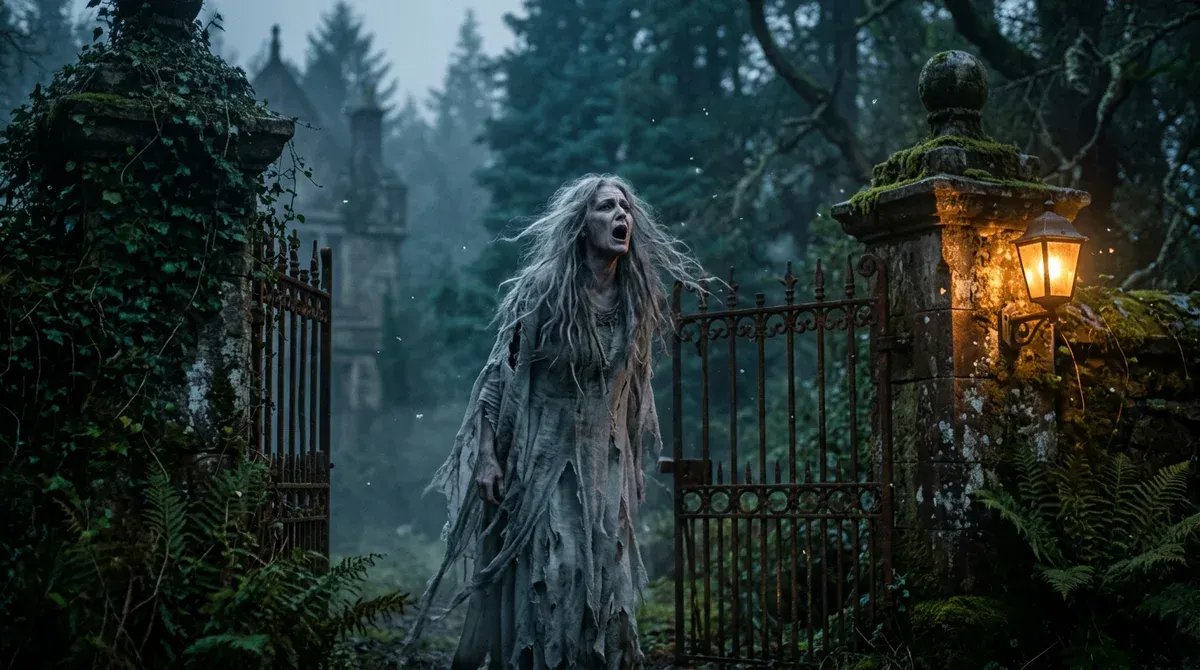
The banshee was tied to certain Irish families because folklore treated her cry as a sign that a particular bloodline was about to lose someone. She was not thought to wander at random from house to house. Her wail belonged to a family name, and the name carried the warning.
In County Clare, the local studies collection at Clare Libraries describes the wail as a death omen linked especially with families whose names begin with O’ or Mac. Both prefixes mark Irish surnames that show descent, with O’ meaning “grandson of” or “descendant of” and Mac meaning “son of.” Hearing the cry meant that the line itself was being called.
That connection to lineage made the story a kind of family record. A grandmother who described a wail heard before a relative’s death kept alive the memory of who had died and when. Each retelling passed on a sense of belonging, along with the knowledge that the family had its own place in the unseen world.
Places such as fairy mounds and river fords marked where the banshee could be met. A family name, however, travelled with its people. A child born into an O’ or Mac household inherited the omen along with the surname, and the story reminded the whole community who was bound to it.
What does it mean for a voice to know your name? Would you want to hear it in the dark, or would you rather not know that it was listening for your family?
Battlefields, Deserters and Brian Boru’s Warning
Some of the oldest banshee stories are set on the battlefield. The most famous tradition names Aoibheall, a woman linked with the fairy hills of Munster, who is said to have appeared to Brian Boru on the eve of the Battle of Clontarf. She brought a warning that the king would die in the fight. Whether or not it happened, the tale lets listeners imagine a ruler hearing the truth about his fate before he rode out to face it.
Other stories follow ordinary soldiers rather than kings. In some tellings, a warrior who heard a wail before a battle turned and fled the field, convinced that the cry marked his own death. These tales tie the figure to fear as much as to grief, since a warning could weaken a fighter’s nerve as easily as it could prepare him.
Medieval Irish narratives include supernatural women who forewarn of death, and the banshee’s warning fits neatly into that older pattern. A woman who knows the future and speaks it aloud appears again and again in the stories of the period.
The figure also crossed the Irish Sea. Gerald of Wales, a churchman of Welsh birth with Norman family ties, wrote about Irish marvels and customs, showing how local beliefs reached writers far from the bogs and hills where they began. The banshee’s kin appear beyond Ireland too. In Scotland, the bean-nighe is a washing woman at the river who scrubs the clothes of people about to die. In Wales, the gwrach y rhibyn is a twilight hag whose cry foretells a death in the house.
Did a warning from the otherworld feel like a comfort to those who heard it, or like a curse they could never escape?
Folklore or History? Tracing the Written Trail
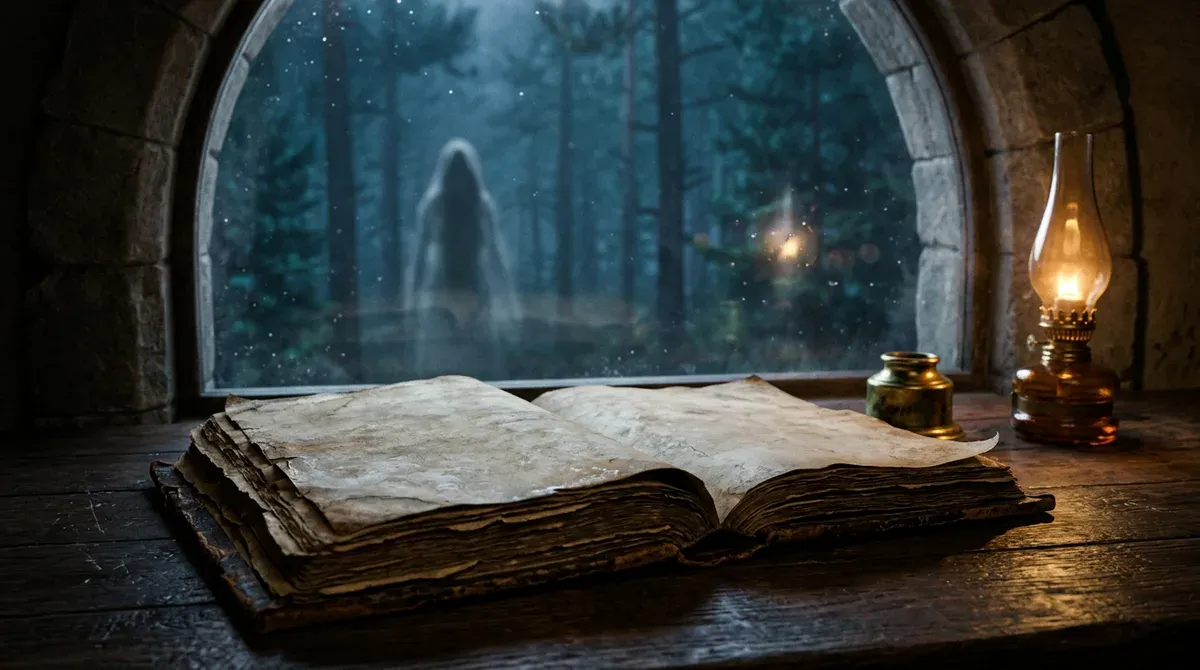
Written evidence for the banshee arrives late and in scattered pieces. Medieval Irish narratives include supernatural women who forewarn of death, and they show what people believed and passed along during those centuries.
The earliest written trail for keening runs through church texts. Penitential handbooks from the seventh and eighth centuries describe ritual lamentation, which shows that mourning was a formal custom long before anyone wrote down a banshee by name.
The largest body of later evidence comes from the 1930s. Between 1937 and 1939, the Irish Folklore Commission gathered local stories and customs, and a manuscript volume from 1938 to 1939 holds an account called “The Banshee Hunt”. It is dated 27 January 1939 and was recorded in locations in County Kerry and County Limerick.
Decades later, the wider collection gained lasting recognition. The Irish Folklore Commission Collection, covering 1935 to 1970, was inscribed in UNESCO’s Memory of the World Register for its world significance and outstanding universal cultural value.
The figure is still changing. In late October 2026, a new anthology titled Banshee offered a feminist reinterpretation of the apparition, showing how the wailing woman can be retold to speak to modern readers.
Which carries more weight for you: a 1939 recording of a local story, or a seventh-century text that mentions mourning without naming her? Where would you draw the line between a record of belief and the legend itself?
Listening for the Banshee in Modern Tales
Modern storytellers have kept the wailing woman alive by giving her new reasons to speak. Writers and songwriters often use her cry to say what families find hard to put into words. Some retellings lean into dread and the chill of a dark house, while others hear in her voice a demand that grief be heard in public.
The archives keep a quieter conversation going. The National Folklore Collection holds hundreds of banshee encounter stories, many written down from the words of ordinary people who believed they had heard her. Read a few of them beside a modern retelling, and the gap between record and reinvention becomes easy to see.
So weigh the evidence for yourself. Is the banshee best understood as a memory of grief, a cultural way of managing death, or something more that no archive can fully hold? Her enduring voice may reveal how people have always faced loss, by giving sorrow a sound and refusing to let the dead pass in silence. What would you ask her if she came calling?
Turning the Story Toward Your Own Family
Start with the one archive that belongs to your own family. Ask an older relative whether anyone in your household ever heard a wail, saw a figure at the water, or remembered a death that someone seemed to know was coming. Write the story down word for word, along with the date, the place, and the name of the person who told it.
Those details matter. Between 1937 and 1939, children were asked to record what their grandparents remembered, and that effort turned scattered memories into a lasting collection. Your notes can preserve the same kind of record for your own family.
Next, check your surname. If it begins with O’ or Mac, compare your family’s version with the old belief that the cry was tied to those names. Did your relatives describe the omen the way older tellers did, or has the tale shifted as it passed from voice to voice?
Finally, read one historical account and one modern retelling side by side. Notice what each version fears, what it mourns, and what it asks of the listener. Then decide for yourself whether the banshee is a memory of grief, a warning, or a story that people keep telling because they cannot quite let go of it.
Frequently Asked Questions
1. Is the banshee the same as the Scottish or Welsh death-omen figures, or only similar?
The banshee is a distinct Irish figure, but she shares a family resemblance with the bean-nighe of Scotland and the gwrach y rhibyn of Wales. Each one is a death omen linked to crying, washing, or twilight, yet each belongs to its own local tradition with its own name and details. Folklorists usually treat them as cousins that grew from similar fears about death rather than as one single figure.
2. Can a banshee be male, or do male banshee traditions exist in Irish folklore?
The banshee is traditionally a woman in Irish folklore, and her name, bean sí, literally means “fairy woman.” The older tales that describe her, from the medieval narratives to the 1930s recordings, do not present a male banshee. Her role as a female voice of mourning is central to how the tradition describes her.
3. Why do some accounts describe the banshee as beautiful while others describe her as frightening?
Folk tellers often pictured her in more than one way, and the difference usually follows the story being told. The maiden form is young and lovely, while the crone form is old, bent, and harder to look at, so the same figure can feel tender or terrifying. Her cry can also be eerily beautiful, which makes the warning she carries feel even more unsettling.
4. How can readers listen to or read the 1930s folklore recordings for themselves?
Readers can search the Dúchas.ie archive, which holds material from the National Folklore Collection at University College Dublin. Typing “Banshee” into the search box brings up accounts such as “The Banshee Hunt,” recorded in County Kerry and County Limerick and dated 27 January 1939. The collection’s written pages and records are meant for reading and study, so they give readers a direct look at the words of ordinary tellers.
5. Who is the most powerful banshee?
Irish folklore does not rank banshees by power, and no source names one as the strongest of all. The best-known named banshee is Aoibheall, a woman linked with the fairy hills of Munster and famous for warning Brian Boru before the Battle of Clontarf. Her story is memorable because it places a banshee at the center of a king’s fate, not because it measures her strength.
6. Is La Llorona a banshee?
La Llorona is not a banshee, although the two figures share a striking image of a woman whose wail is heard near water. La Llorona comes from Mexican and wider Latin American legend, where she is a weeping woman tied to the loss of her children. The banshee belongs to Irish tradition and works as a death messenger tied to fairy mounds, keening, and families.