Huldufólk: The Hidden Folk of Iceland’s Living Landscape
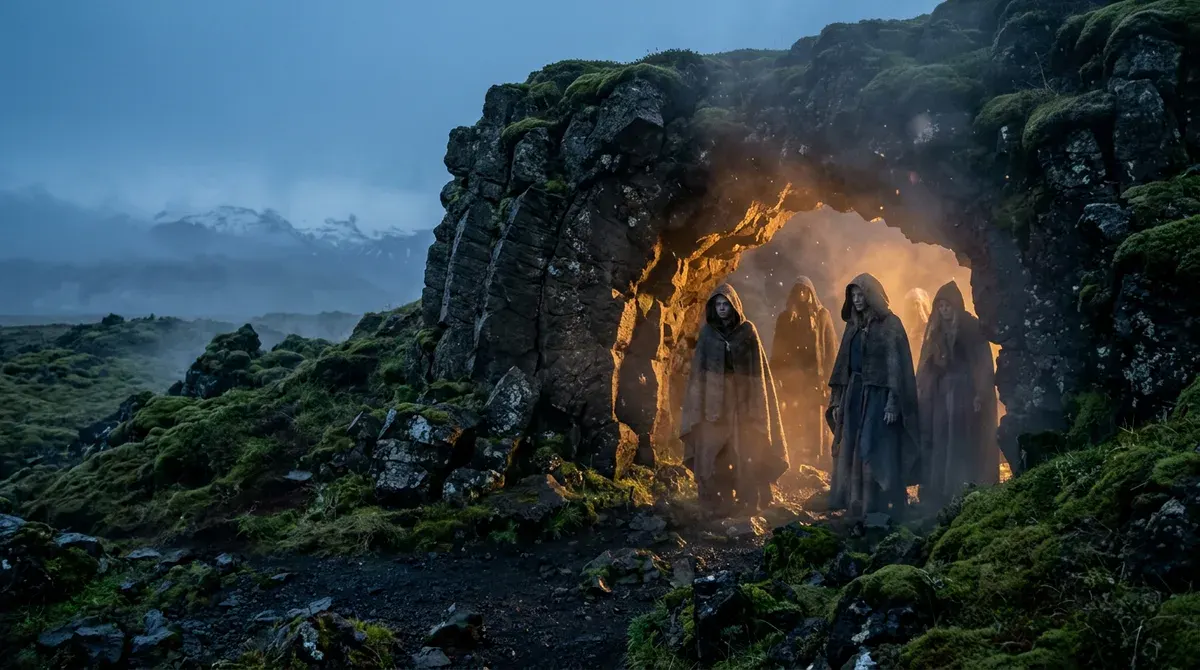
Huldufólk, the hidden folk of Icelandic folklore, are invisible, humanlike beings said to live inside hills and rocks across the island. The Árni Magnússon Institute for Icelandic Studies describes them as “invisible human beings” who dwell in these stony places. This bond with the land ties Icelandic folklore about the hidden folk so closely to the countryside.
Belief is more complicated than the legends suggest. In a 2023 University of Iceland survey of 2,792 people, 54.6% rated the existence of huldufólk and álfar as impossible or unlikely, yet 5.9% said they thought they had seen them. These mixed answers sit alongside folk tales that Jón Árnason published between 1862 and 1864, which keep the hidden folk very much part of modern Icelandic life.
Key Takeaways
- The huldufólk, or hidden folk of Icelandic folklore, are said to be invisible, humanlike beings who live inside hills, cliffs, and boulders across the island.
- A 2023 University of Iceland survey of 2,792 people found that 54.6% rated the existence of huldufólk and álfar as impossible or unlikely, while 5.9% said they had personally seen them.
- Visitors who want to explore the hidden folk stories in Hafnarfjörður can start with the Hidden World Map from the town hall service centre and the Hellisgerði park exhibition, which opened on March 30, 2026.
- Anyone who wants to take a rock out of Iceland needs a permit under the Nature Conservation Act, according to the Environment Agency of Iceland.
- Whether a stone is legally protected depends on whether it lies within a designated protected area, not on whether folklore places hidden people inside it.
Who Are the Huldufólk in Icelandic Folklore?
Huldufólk are the hidden people of Icelandic folklore, invisible beings who look much like humans and are said to live inside hills, cliffs, and boulders. The name means “hidden people,” and it captures the idea that they share the island with everyone else while staying out of sight.
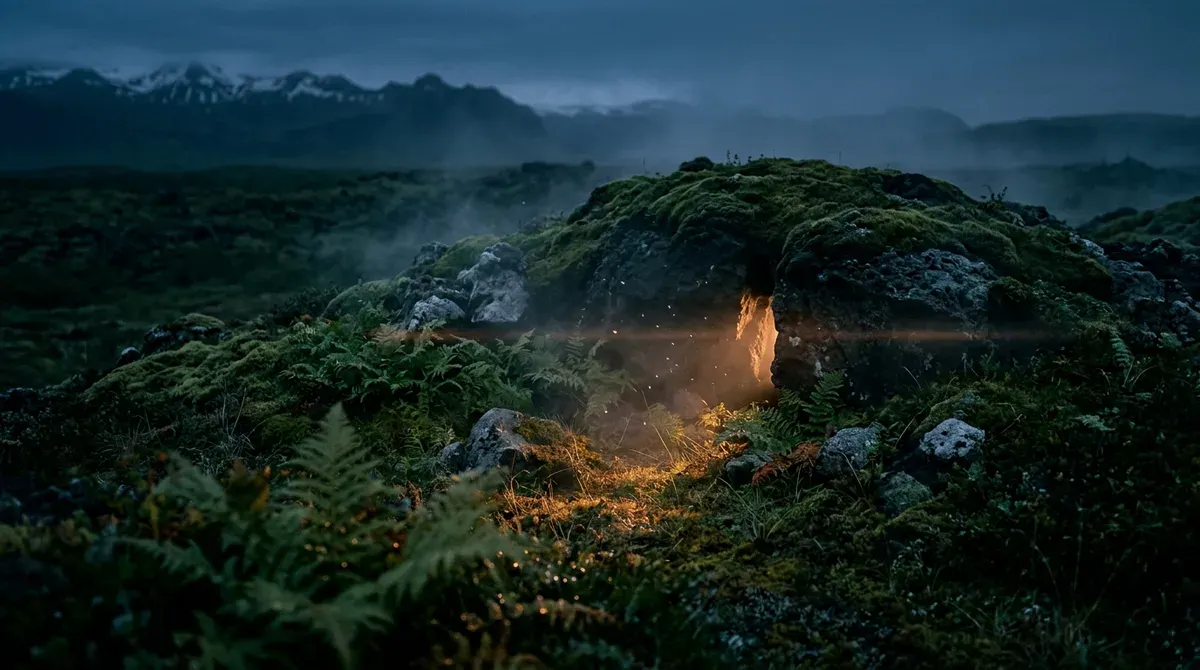
The landscape is central to who they are. Many stories place them in particular rocky outcrops, grassy knolls, and lava fields, so a traveler crossing the countryside might pass a boulder that locals treat with care. In these tales, the beings and their homes are hard to separate, because the hidden folk are bound to the stones themselves.
Álfar are a related but separate category in folk belief. They are often translated as elves, but people tend to imagine them differently. When the University of Iceland’s 2023 folk-belief survey asked respondents to compare the two, the answers leaned in a clear direction. Of those who answered the comparison question, 62% said huldufólk are bigger than álfar, and 83.3% said huldufólk are more like humans.
That result suggests a picture of the hidden folk as people who have simply moved out of view, living in households and routines much like our own. Álfar, by contrast, seem to occupy a more distant place in the imagination, closer to spirits than to neighbors.
Why would storytellers place such familiar figures inside solid rock? Some readers see a practical answer. A boulder that never moves and a hill that stands for centuries make a fitting home for beings meant to endure beyond the lives of ordinary people. Others find something more intriguing: a belief that the land itself is alive with company, and that a walk through the hills might bring you closer to it than you expect.
How Were the Hidden Folk Tales Saved for Future Readers?
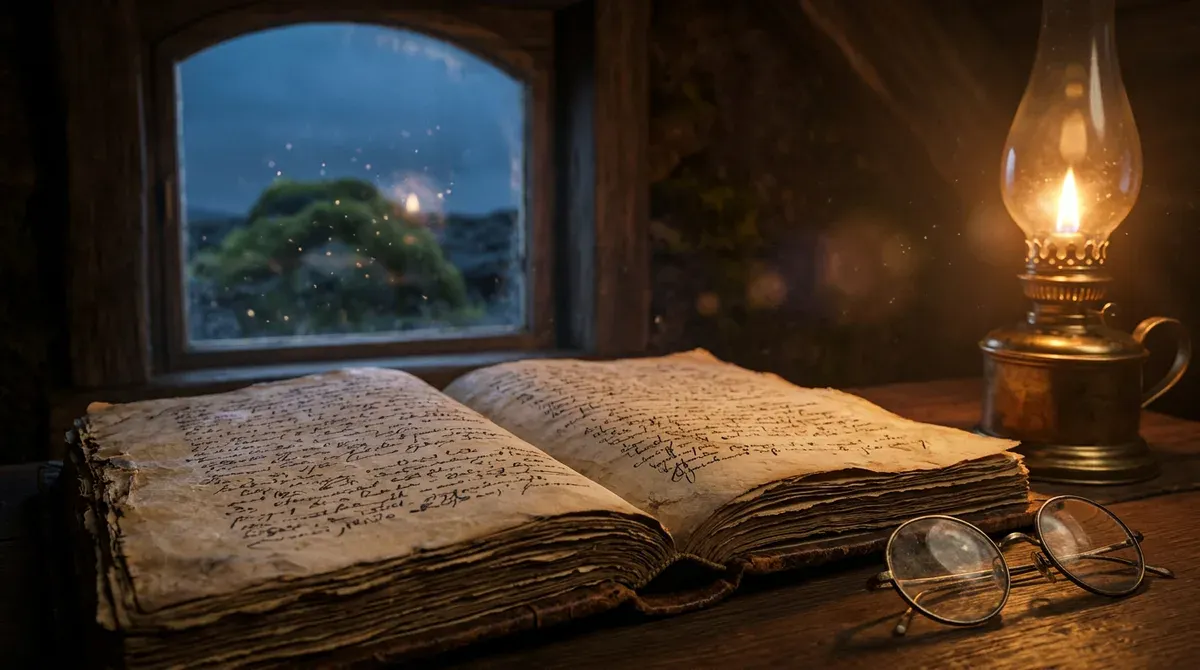
Icelanders preserved the hidden folk tales mainly by writing them down in the 1800s, when collectors gathered stories from farms and villages and turned them into printed books. Jón Árnason’s collection, Íslenzkar þjóðsögur og æfintýri, became the best-known result of this work and carried the legends of hidden people far beyond the valleys where they were first told.
The collecting was not the work of one man alone. A study of folktale collecting in eastern Iceland describes how Reverend Sigurður Gunnarsson depended on a network of 12 people. Eight of them were men and four were women, and the study notes that all four women contributed stories, some spoken aloud and others written down.
That detail matters because the women’s part is easy to miss. Their names seldom appear beside the tales that later readers enjoy, even though they were among the people who kept the stories in circulation. Folk tales of this kind were often told during long evenings of household work, and the women who shared them knew the rocks, hills, and hidden households of their own districts by heart.
Writing changed the stories in subtle ways. A tale that once lived in one family’s memory could suddenly appear in a book read by strangers in Reykjavík or abroad. The collector decided which versions to record, how to phrase them, and which details to keep, so each printed page reflects choices as well as memories.
Some readers see these collections as a faithful window into rural life, a snapshot of beliefs that might otherwise have faded. Others wonder what was left out, especially the voices of people whose names never made it into print. Reading the old collections with that question in mind can change how a familiar elf rock looks, because behind the printed words stands a person who once chose to share it.
Why Do Hidden Folk Stories Cling to Rocks and Hills?
Hidden folk stories cling to rocks and hills because the beings and their homes are told as one thing, so a specific stone can keep a story alive for generations. Few places show this better than Hafnarfjörður, a harbor town just south of Reykjavík, where the municipality’s heritage pages connect elf stories directly to local rocks.
Take Merkurgata, a street where the road narrows at an elf rock that juts into the roadway. A driver approaching it must slow and steer around the stone, and that small act of caution turns a piece of geology into a daily reminder of an old tale. The town names the street as a local example where a rock has become part of the story.
The municipality goes further. It says that road layouts in Iceland have been altered in some cases attributed to hidden folk, meaning that builders chose to bend a path rather than move a rock that locals believed was inhabited. Whether the story began with the rock or with the road, the outcome is the same: the landscape keeps the tale in view.
Hafnarfjörður has also mapped the stories. Its Hidden World Map records locations linked to hidden beings, and residents or visitors can pick up a copy from the town hall service centre. Walking with the map in hand turns an ordinary afternoon into a kind of treasure hunt, with each marked boulder raising a quiet question about who might be watching.
The stories have stayed visible in other ways too. A new elf-and-hidden-folk exhibition opened in Hellisgerði park on March 30, 2026, where QR codes link each story to the place in town where it is said to happen.
Why would a modern town take such care with a rock? Some see it as respect for local memory, a way of honoring the people who first told these tales. Others sense something stranger, a feeling that the stone was never simply stone. Standing beside one of these rocks, which would you choose: the map, the story, or your own hunch?
What Do Icelanders Really Believe About the Hidden Folk Today?
More than half of those who answered a survey doubt that the hidden folk exist, but a small group says it has seen them. The University of Iceland’s Social Science Institute ran an online folk-belief survey from June 30 to September 8, 2023. It received 2,792 replies from 6,109 invitations, a response rate of 45.7%, and the results show how wide the range of opinion really is. Respondents were asked how likely they thought the existence of huldufólk and álfar was, and their answers were spread out like this:
- 26.7% called it impossible
- 27.9% called it unlikely
- 24.6% called it possible
- 12.3% called it probable
- 8.4% called it certain
Put together, 54.6% of respondents placed the hidden folk in the impossible or unlikely camp. Yet the survey also found that 5.9% of people thought they had personally seen álfar or huldufólk, a small share that still represents a meaningful number of people with a story to tell. The other 94.1% said they had never had such an experience.
The survey also asked people to compare the two kinds of beings, and the answers painted a clear picture. Of those who answered that question, 62% said huldufólk are bigger than álfar. An even larger majority, 83.3%, said huldufólk are more like humans. Many people, then, imagine the hidden folk as neighbors who happen to live inside a hill, while álfar feel more like distant spirits.
Why would so many skeptics still hold onto the tales? Some point to the stories themselves, which are told as ordinary local history rather than as religious doctrine. Others see the survey as a snapshot of a culture that is comfortable holding two ideas at once: that the beings are unlikely, and that a careful driver should still slow down for the rock on the corner.
Can Hidden Folk Sites Be Legally Protected?
Only partly. Icelandic nature rules can protect certain rocks, but protection depends on where a rock sits, not on the stories told about it.
The protection depends on where a rock sits. Rules for individual protected areas vary across Iceland, so what is allowed at one site may differ from the next. The Environment Agency of Iceland says geological disturbance is commonly prohibited in these protected areas, which usually rules out digging, breaking, or reshaping a rock inside their borders.
Taking stones away is regulated as well. Exporting rocks and minerals requires a permit under the Nature Conservation Act. A visitor who pockets a pretty pebble from a famous elf outcrop would therefore face a legal question, not just a question of folklore.
The rules attached to nature protection focus on geological features and nature, not on the stories attached to them. A rock believed to be a home for hidden folk may lie outside any designated area, in which case the stone keeps its story without any special legal status. Local councils can still honor such places through maps, signs, and exhibitions, but that care comes from local choice rather than from a rule written into national law.
Where Can Visitors Experience the Hidden Folk Stories Now?
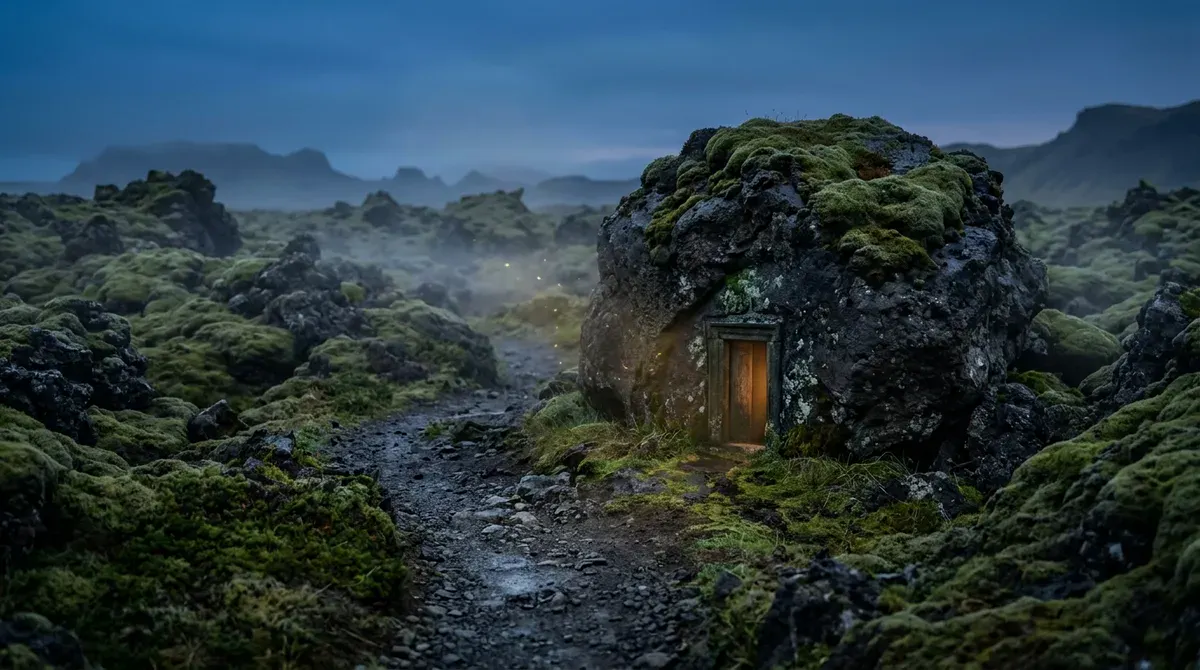
Visitors can meet the hidden folk stories today in Hafnarfjörður, where a town map, a park exhibition, and a set of QR codes turn the legends into a walk through the streets. The newest stop is the elf-and-hidden-folk exhibition in Hellisgerði park, which opened on March 30, 2026. Its codes do what a printed panel cannot: each one opens a tale tied to the spot in town where people say it happened, so the story and the stone can be read together.
Hellisgerði makes a natural starting point for a longer outing. The exhibition works best when visited first, because the stories it introduces send a reader back out into the town with a question in mind.
A visit can be planned in a few stages, and the order matters because the map is easiest to collect before you set out.
- Stop at the town hall service centre and ask for the Hidden World Map, which marks the locations linked to hidden beings.
- Walk to Hellisgerði park and scan a QR code with your phone to read the first tale on the exhibition trail.
- Find the matching spot on your map and compare the printed location with the place the story describes.
- Continue on the public streets toward the next marked site, watching for stones that shape the road as the elf rock on Merkurgata does.
- Keep to the paths, look without touching, and leave each stone exactly where you found it so the next visitor can meet it too.
Some visitors come only for the stories, while others arrive with a hunch that one particular boulder is more than it seems. Either way, the map and the codes leave room for each reader to decide what to make of the rock standing in front of them.
Listening for the Hidden Folk on Your Own Walk
Start your own walk by choosing one stone on your route that you would hesitate to move. Before you set out, write down where it sits, the time of day, and whether it stands alone in a field or leans against a garden wall in town.
Next, compare your notes with the Hidden World Map from the Hafnarfjörður town hall service centre. If your stone is marked, read the story attached to it and note whether the local account matches what you see. If it is not marked, write that down too, since the map only records places that local people have reported.
Then slow down and look at the street itself. Notice whether the road bends, narrows, or steps around a rock, and ask yourself who first decided that the path should go that way. Stay on the paths, keep your hands off the stone, and leave every pebble where you found it, because removing rock can raise legal questions.
Finally, bring your observations home and put them into words. A short note about one rock, its shape, and the story you heard can be a useful record for the next curious walker. Which stone on your walk would you most want the next visitor to notice?
Frequently Asked Questions
1. Are the huldufólk the same as elves in other European folklore traditions?
Not exactly, although the two traditions share some ideas. In Icelandic belief, huldufólk are a separate category from álfar, and the hidden folk are tied to specific hills, cliffs, and boulders rather than to a general fairy realm. Many European stories about fairies living under hills overlap with this image, but the Icelandic link to particular rocks and households gives the hidden folk their own character.
2. How can someone tell an ordinary rock from one with hidden folk stories attached?
A hidden folk rock usually looks like any other stone, so local records are the best guide. Hafnarfjörður’s Hidden World Map marks locations linked to hidden beings and can be picked up from the town hall service centre. A rock missing from the map may still carry a local story, because the map only records places that people have reported.
3. Do I need a permit to take a rock out of Iceland as a souvenir?
Yes, exporting rocks and minerals from Iceland requires a permit under the Nature Conservation Act, according to the Environment Agency of Iceland. This applies to a pretty pebble from a famous elf outcrop just as much as to any other stone. Visitors who want to keep a stone should check the rules before packing it.