Desert Whispers And Hidden Saguaro Cactus Symbols
Standing tall against the harsh desert sun, the saguaro cactus is often viewed as a simple backdrop for Western movies. Yet, beneath its prickly exterior lies a world of hidden sahuaro cactus symbols that connect the physical world to the spiritual realm. For those who know how to look, these giants are not just plants, but silent sentinels carrying the history and secrets of the Sonoran Desert.
To the Tohono O’odham people, these towering figures are respected as living ancestors rather than mere vegetation. Every arm and scar tells a story of survival, strength, and a deep connection to the summer rains that sustain life in the arid heat. Understanding these symbols reveals a world where nature and human spirit are woven together in a mysterious, enduring bond.
Key Takeaways
- The saguaro cactus serves as a living cultural monument for the Tohono O’odham people, who revere these giants as ancestors rather than mere vegetation.
- Ancient carvings and precise arm placements on saguaros function as a sophisticated navigation system, marking migration paths and the locations of rare water sources.
- Modern geometric markings and numeric coordinates found on cactus ribs suggest the desert continues to be used as a clandestine communication network for off-grid groups.
- Anomalies like the ‘Orion Saguaro’ demonstrate how the cactus’s physical form can align with celestial patterns, bridging the gap between natural growth and spiritual or occult symbolism.
Ancient Petroglyphs And Ancestral Saguaro Markings
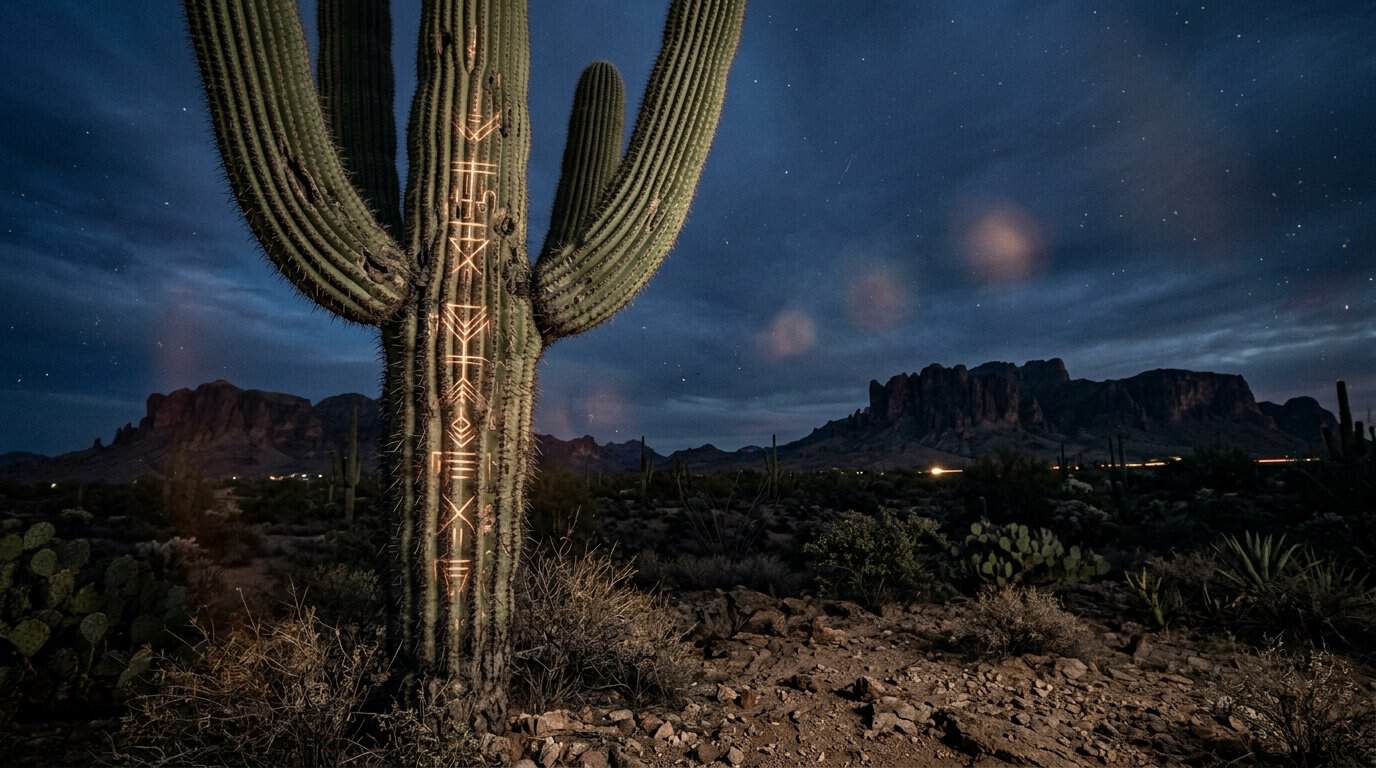
Deep within the sun-scorched valleys of the Sonoran Desert, the towering saguaro cacti hide secrets that go far beyond their thorny exterior. For centuries, the Tohono O’odham and other ancestral groups have viewed these giants as living ancestors, sometimes marking their thick skins with symbols that transform them into organic monuments. These hidden markings often serve as a sophisticated map system, pointing the way to rare water tinajas or marking the boundaries of sacred tribal lands. By observing the specific placement of these ancient carvings, ancient travelers could navigate the harsh environment using the cacti as silent, rooted sentinels.
While many of these symbols are rooted in historical survival, local folklore suggests some markings may point to even deeper mysteries. Some researchers and desert explorers believe that clandestine groups or ancient travelers used specific saguaro patterns to signal migration paths that are now lost to time. These living maps are frequently found near archaeological sites, suggesting they acted as spiritual markers to protect the area from outsiders. Whether these symbols were meant for navigation or as messages to the spirit world, they offer a fascinating glimpse into a time when the desert was a shared language between nature and humanity.
The enduring presence of these markings invites us to look closer at the natural world and wonder what other messages might be hiding in plain sight. While science often categorizes these anomalies as simple scarring or natural growth patterns, the precise geometry found on certain ancient saguaros is difficult to ignore. These markings challenge our understanding of how ancient cultures interacted with their environment, turning the desert into a massive, living library. What do you think these symbols represent, and have you ever spotted a strange marking on a cactus that felt like it was meant to tell a story?
Geographic Coordinates And Clandestine Desert Codes
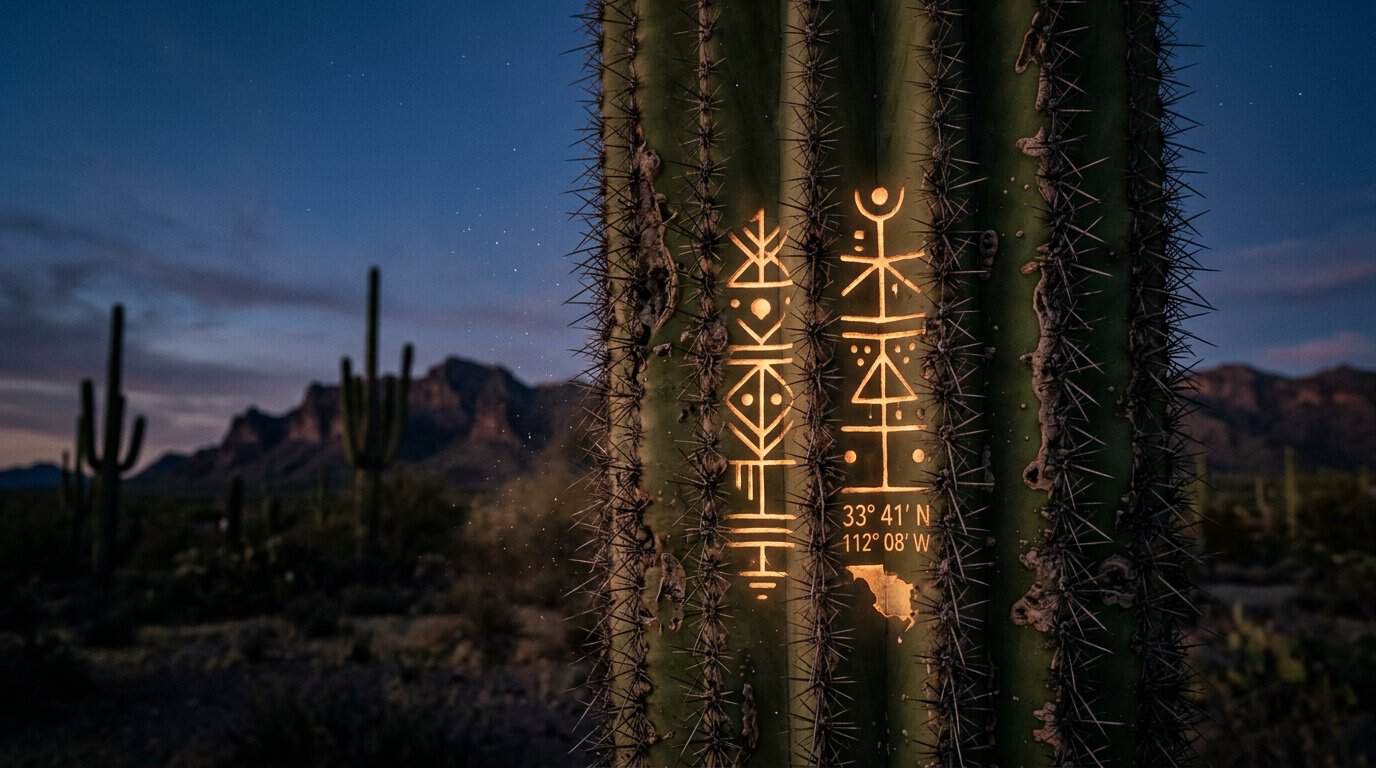
Deep within the sun-scorched valleys of the Sonoran Desert, hikers have begun reporting a series of baffling anomalies carved directly into the woody ribs of fallen or dead saguaros. These markings often take the form of precise geometric markings, strange tally marks, or even strings of numeric coordinates that seem to point toward specific, remote locations. While some researchers suggest these are merely modern trail blazes for off-grid navigation, the sheer complexity of the patterns has sparked theories about more clandestine activities. Some local investigators believe these symbols serve as a silent language for groups operating outside the public eye, using the desert’s natural sentinels as a cryptic bulletin board.
The mystery deepens when examining the placement of these codes, which often align with specific astronomical events or hidden topographical features. Certain symbols found on saguaro skeletons appear to mirror ancient petroglyphs found nearby, leading some to wonder if modern groups are co-opting ancestral sites for secret communication. These clandestine codes have caught the attention of geocaching enthusiasts and amateur sleuths who track the markings across different wilderness areas. While official land management agencies emphasize that defacing any part of a saguaro is illegal and harmful to the ecosystem, the frequency of these discoveries suggests a widespread and organized effort.
Beyond simple vandalism, the possibility remains that these etchings represent a sophisticated system of desert drops or meeting points for those who wish to remain undetected. Some theorists argue that the coordinates lead to hidden caches of supplies or documents buried deep in the backcountry, far from cellular service and surveillance. Whether these markings are the work of high-stakes treasure hunters or more mysterious organizations, they add a layer of modern intrigue to the ancient surroundings. Readers are encouraged to look closely at the weathered ribs of the desert’s giants, but always remember to respect the land and its history while searching for the truth.
What do you think these strange desert markings represent? Have you ever stumbled upon a pattern in the wilderness that felt like a deliberate message?
Folklore Of The Haunted Saguaro Silhouettes
Deep within the sun-scorched stretches of the Sonoran Desert, some observers have discovered saguaros that seem to defy the laws of natural growth. These haunted silhouettes feature arms twisted into precise geometric patterns or strange markings that some researchers believe align with specific celestial constellations. Local legends suggest these anomalies are not accidents of nature but are instead intentional markers left by clandestine groups or ancient travelers. While botanists often attribute unusual shapes to frost damage or bird nesting, the sheer mathematical precision of certain specimens keeps the mystery alive. These cacti stand as silent sentinels, potentially guarding hidden desert secrets or marking paths used by those who wish to remain unseen.
Conspiracy theorists and desert explorers often point to the Orion Saguaro as a primary example of these hidden messages. This famous cactus possesses limbs that purportedly mirror the belt of Orion with startling accuracy, leading some to speculate about its role in occult rituals or extraterrestrial navigation. Others believe these marked giants serve as a cryptic map for modern underground groups operating far from the public eye. Stories passed down through generations suggest that certain carvings on the tough green skin are not graffiti but are actually symbols of protection or warning. Whether these shapes are the result of rare genetic mutations or deliberate human intervention, they continue to fuel a sense of wonder and unease among those who wander the Arizona wilderness.
Finding a marked saguaro often feels like stumbling upon a living monument that bridges the gap between the physical world and the supernatural. Scholars of southwestern folklore often reference the work of local historians who have documented these spirit trees and their connection to regional myths. Much like desert enigmas found in other arid landscapes, some believe the silhouettes are meant to represent specific figures from ancient lore, acting as physical anchors for stories that have otherwise been lost to time. While scientific analysis offers a grounded perspective on how stress affects plant growth, it cannot fully explain the eerie timing and placement of these desert icons. These towering giants invite us to look closer at the surroundings and consider if the desert is trying to tell us something through its most famous residents.
Decoding the Desert’s Living Puzzles
These enigmatic markings and man-made anomalies bridge the gap between Arizona’s ancient past and its modern-day mysteries. While the Tohono O’odham honor the saguaro as a living ancestor, others look at the strange symbols etched into the desert as evidence of clandestine operations or hidden messages left for those in the know. Whether these signs are remnants of long-lost civilizations or markers for modern fringe groups, they transform the Sonoran Desert into a vast, living puzzle. The desert does not give up its secrets easily, requiring a keen eye and an open mind to spot the patterns hidden in plain sight among the spines and shadows.
The saguaro stands as a silent guardian of these enduring secrets, watching over the arid plains as history and conspiracy intertwine. Its towering presence serves as a reminder that there is often more to the surroundings than meets the eye, blending biological resilience with deep, unexplained lore. Much like exploring the mysteries of the Mapimi Silent Zone, every notched arm or strangely placed stone may hold a story that challenges our understanding of the Southwest. These desert sentinels have witnessed centuries of change, yet they remain the keepers of truths that continue to baffle researchers and enthusiasts alike.
Have you ever stumbled upon a strange marking or an unusual object while hiking through the Arizona backcountry? Perhaps you have seen a saguaro with a symbol that seemed too deliberate to be a natural scar. We invite you to share your own sightings and theories about the desert secrets found within the desert. Your experiences help piece together the larger mystery of what might be happening beneath the vast, open skies of the Sonoran. By sharing these stories, we keep the spirit of desert exploration alive and continue the search for what lies hidden in the shadows of the cacti. Some even wonder if these desert rifts locations are linked to similar phenomena found in the Mojave.
Frequently Asked Questions
1. What do the hidden symbols on saguaro cacti actually mean?
These markings often function as a sophisticated map system used by ancestral groups to locate rare water sources known as tinajas. They also serve as spiritual boundaries or markers for sacred tribal lands, acting as silent sentinels that protect the history of the desert.
2. How did ancient people use these cacti for navigation?
Travelers observed specific carvings and the placement of saguaro arms to navigate the vast, sun-scorched valleys. By reading these organic monuments, they could follow migration paths and locate essential resources in a region that appeared featureless to outsiders.
3. Why are saguaros considered living ancestors by the Tohono O’odham?
The Tohono O’odham people view these giants as respected beings that possess a human-like spirit and history. Every scar and growth pattern on the cactus tells a story of survival and strength, representing a deep connection between the physical world and the spiritual realm.
4. Are the symbols on the cacti permanent?
Because the saguaro is a living organism, any markings made on its thick skin become a permanent part of its structure as it grows. These carvings transform the plant into a lasting record of human presence that can endure for nearly two centuries.
5. Is there a connection between these symbols and lost treasures?
Local folklore and some researchers suggest that specific patterns might signal hidden migration paths or significant archaeological sites. While some view them as simple markers, others believe they act as spiritual protectors for areas containing ancient secrets yet to be uncovered.
6. How can a visitor identify a genuine ancestral marking?
Authentic markings are typically found near known archaeological sites or historic water sources and show significant weathering that matches the age of the cactus. These symbols are often subtle and integrated into the natural form of the plant, requiring a keen eye and respect for the surrounding desert environment.