The Vanishing Passenger And The Mystery Of Phantom Hitchhiker Legends
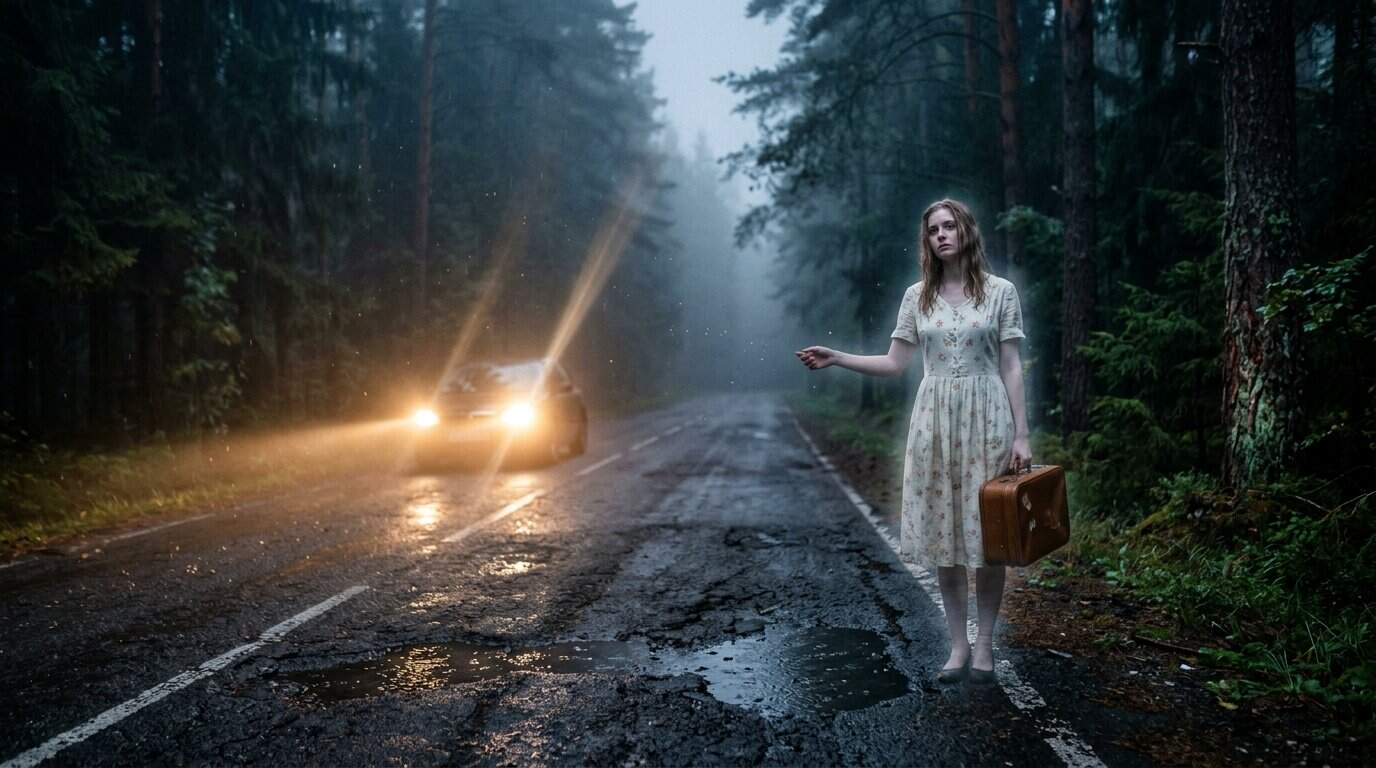
The headlights cut through a thick midnight fog as a lone driver spots a figure standing on the shoulder of a desolate highway. This scene marks the beginning of countless phantom hitchhiker legends that have chilled travelers for generations. It usually starts with a kind gesture and a shared conversation, only for the passenger to vanish from a locked car before reaching their destination. These stories suggest that some travelers never truly finish their journey, remaining tethered to the asphalt long after they have passed away.
While these tales often feel like simple campfire stories, they appear with startling consistency across different cultures and eras. From the elegant Resurrection Mary on a Chicago street to nameless figures on rural backroads, the details remain eerily similar. Whether these encounters are tricks of the mind or genuine brushes with the supernatural, they tap into a deep-seated curiosity about what lingers in the rearview mirror. Exploring these accounts offers a window into a world where the line between the living and the dead becomes thin.
Key Takeaways
- Phantom hitchhiker legends have evolved alongside human transportation, transitioning seamlessly from horse-drawn carriage encounters to modern automobile sightings.
- The consistency of these reports across diverse cultures suggests that these stories serve as a universal psychological tool for processing grief and collective trauma related to roadside tragedies.
- Physical evidence, such as cold touch, lingering scents, or items left behind on graves, transforms these encounters from simple folklore into documented mysteries that challenge conventional reality.
- The enduring appeal of the roadside ghost stems from a deep-seated human desire for connection and the belief that the soul remains tethered to the world through acts of kindness from strangers.
From Horse Carriages To Modern Highways
Long before the roar of engines filled the air, travelers shared stories of spectral figures appearing on dark, winding paths. In the era of horse-drawn carriages, these legends often featured a weary wanderer asking for a seat on a coach or a lone rider on horseback who would suddenly vanish into the mist. These early accounts, documented by folklorists, suggest that the human fascination with ghostly travelers is rooted in our ancient history of hospitality and the inherent dangers of the road. As society transitioned from wooden wheels to rubber tires, the spirit world seemed to adapt right along with us.
The mid-twentieth century marked a significant turning point as the automobile became a central part of cultural identity. With the rise of the highway system, the old stories of phantom riders evolved into the classic urban legend of the hitchhiker in the backseat. This modern version often involves a young woman in a white dress who provides a specific home address before disappearing from a locked vehicle. These accounts, such as the famous tales surrounding Blue Bell Hill in England or various stretches of Route 66, highlight how cultural fears and curiosities shift to fit the technology of the time.
While the mode of human transportation has changed, the emotional core of these encounters remains remarkably consistent across different generations. Psychologists often point to these stories as a psychological tool for communities to process grief or the collective trauma of roadside accidents. By placing a ghost in a modern car, the legend bridges the gap between the mundane act of driving and the profound mystery of what lies beyond. This evolution shows that no matter how fast we travel or how advanced our machines become, the idea of a lingering spirit waiting by the roadside continues to capture the human imagination.
Iconic Encounters Like Resurrection Mary
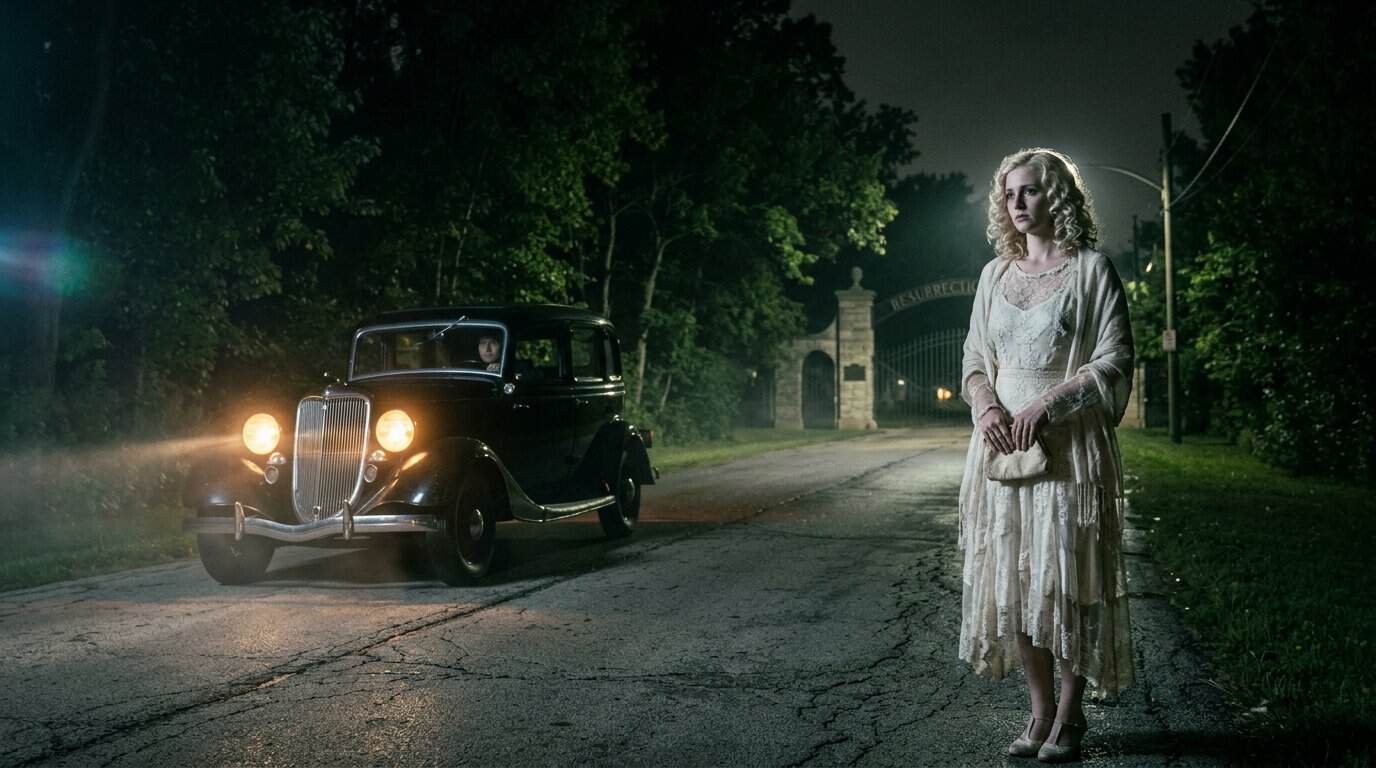
Chicago serves as the epicenter for one of the most compelling hitchhiker stories through the legend of Resurrection Mary. Since the 1930s, dozens of motorists traveling down Archer Avenue have reported picking up a soft spoken young woman in a white party dress who asks for a ride toward Resurrection Cemetery. Drivers often describe her skin as being unnaturally cold to the touch, adding a chilling physical dimension to the encounter. Just as the car nears the cemetery gates, Mary vanishes from the locked vehicle without leaving a trace. This recurring event has been documented by local historians and researchers who note the remarkable consistency in eyewitness descriptions over many decades.
The intrigue of these encounters often deepens when spirits leave behind tangible evidence of their presence. In the case of the Lavender Lady in New York, stories frequently mention a distinct scent of flowers or a physical garment left on a headstone. One famous variation involves a driver lending a shivering hitchhiker a jacket or a shawl, only to find the item draped over a grave the following morning. These physical clues bridge the gap between a simple scary story and a documented mystery, suggesting that the phantom has a lingering connection to the material world. Such details transform a fleeting roadside sighting into a haunting puzzle that challenges our understanding of reality.
While skeptics might dismiss these tales as mere folklore, the sheer volume of reports from unrelated witnesses suggests a deeper cultural phenomenon. These stories appear in nearly every region, adapted to fit local landmarks and historical tragedies, which highlights our universal fascination with the afterlife. Whether it is a scorched handprint on a cemetery fence or a discarded piece of clothing, the persistence of these legends points to a shared human need to make sense of the unexplained. The mystery of the phantom hitchhiker remains a staple of modern mythology because it places the supernatural directly into our everyday lives. Do you believe these physical clues are proof of a haunting, or are they just clever additions to an evolving urban legend?
Psychological Roots And Cultural Impact
The enduring nature of these stories often stems from a deep human desire for connection that transcends the boundary of death. By imagining a spirit that still hitches a ride or seeks a way home, we find a strange sense of comfort in the idea that the soul remains tethered to our world. These legends suggest that the departed are not truly gone, but are instead waiting for a kind stranger to help them complete a final journey. This narrative transforms a lonely road into a space of potential reunion, softening the harsh reality of loss with a touch of the supernatural. It allows us to believe that even in the afterlife, the need for human interaction and kindness persists.
Cultural historians and folklorists often point out that these tales serve as a modern bridge between ancient mythology and our high speed world. While the setting has shifted from horse drawn carriages to motor vehicles, the underlying theme of the lonely traveler remains a constant in human storytelling. These accounts often surface during times of rapid social change, acting as a way for communities to process grief and shared trauma through a common narrative. By sharing these stories, people create a collective memory that honors those who died suddenly or tragically. It turns a statistical accident into a legendary figure, ensuring that the person is remembered by generations of drivers.
The psychological impact of the phantom hitchhiker also relies on the universal experience of the kindness of strangers. There is a powerful emotional resonance in the act of offering a seat to a weary soul, making the driver an active participant in a spiritual drama. This interaction highlights our innate empathy and the hope that someone would do the same for us if we were lost or alone. Even when faced with scientific skepticism, many people choose to lean into the mystery because it adds a layer of wonder to an otherwise mundane commute. Ultimately, these legends thrive because they remind us that the world is still full of unexplained wonders and that our connections to one another may never truly end.
The Enduring Mystery of the Roadside Ghost
The phantom hitchhiker remains one of the most resilient figures in modern folklore because it taps into a universal human experience. Whether the story is told on a dusty backroad in the American Midwest or a winding mountain pass in Europe, the core elements of the lonely traveler and the helpful stranger resonate across every culture. These tales have successfully migrated from the era of horse-drawn carriages to the age of the automobile, proving that our fascination with the thin veil between life and death is not tied to a specific time. By examining these recurring narratives, we gain insight into how urban legends act as a bridge between historical tragedies and our contemporary fears of the unknown.
While skeptics may point to psychological factors like highway hypnosis or the power of suggestion, the consistency of these reports suggests a phenomenon that defies easy explanation. Many witnesses are ordinary people with no prior interest in the supernatural who find themselves forever changed by a brief encounter on a dark road. These stories remind us that the world still holds mysteries that science has yet to fully catalog or understand. Even in our highly connected digital age, the image of a silent passenger vanishing from a locked car continues to haunt our collective imagination. The enduring legacy of the roadside ghost suggests that some travelers may never truly reach their final destination.
Every region seems to have its own version of the vanishing traveler waiting just beyond the glow of the headlights. We want to hear about the legends that haunt your local highways or any strange encounters you might have had while driving late at night. Does your hometown have a famous spirit like Resurrection Mary, or perhaps the eerie mystery of a lesser known figure that only locals whisper about? Sharing these stories helps keep the tradition of oral storytelling alive while allowing us to piece together the global map of the unexplained. Please join the conversation in the comments below and tell us about the phantom hitchhikers that roam the roads in your corner of the world.
Frequently Asked Questions
1. What exactly is a phantom hitchhiker?
A phantom hitchhiker is a spectral figure that appears as a living person needing a ride along a desolate stretch of road. These entities typically interact with drivers and share conversations, only to vanish instantly from a moving or locked vehicle before reaching their destination.
2. How long have these stories been around?
These legends stretch back much further than the invention of the automobile. In the era of horse-drawn carriages, travelers frequently reported weary wanderers who would request a seat on a coach and then disappear into the mist, showing that the spirit world adapts to our modern modes of transport.
3. Who is Resurrection Mary?
Resurrection Mary is one of the most famous examples of this phenomenon, often spotted outside a ballroom on a busy Chicago street. She is described as an elegant woman in a white dress who hitches rides toward a local cemetery, only to vanish as the car passes the gates.
4. Why do these spirits appear on highways?
The road represents a transition between places, and folklorists suggest these stories tap into our ancient traditions of hospitality toward strangers. These spirits seem tethered to the asphalt, perhaps because their own journeys were cut short by tragedy, leaving them to repeat their final moments forever.
5. Is there any evidence that these encounters are real?
While many dismiss these sightings as tricks of light or tired minds, the consistency of the details across different cultures and eras is startling. Many witnesses provide incredibly specific descriptions of their passengers, only to find that the person they described matches someone who passed away years prior at that exact location. Similar to The Glowing Enigma Of The Paulding Light Mystery, these accounts often blend local folklore with physical observations that challenge simple explanations.
6. Can these legends be found outside of the United States?
These stories are a global phenomenon and appear in various forms across many different cultures. Whether it is a lone rider on a rural backroad in Europe or a modern traveler on a high speed highway in Asia, the core elements of the helpful driver and the vanishing passenger remain eerily similar. Many of these accounts share similarities with the haunting legends found in other notorious locations where the veil between worlds is said to be thin.