The Wild Men Of Vietnam: Tracking The Mysterious Batutut
Deep within the emerald canopy of Southeast Asia, a mystery has lingered for generations, whispered by locals and soldiers alike. These accounts of batutut sightings vietnam describe a creature that defies easy classification, a bipedal hominid known to the indigenous people as the Người Rừng or “Forest People.” Standing roughly five feet tall with a coat of reddish-brown hair, these elusive beings are said to haunt the most remote limestone crags and dense jungles, far from the reach of modern civilization.
The legend gained global attention during the 20th century when military patrols reported startling encounters with what they called “Rock Apes.” These witnesses described muscular, pot-bellied figures that moved with a frightening agility through the rugged terrain, often reacting with territorial aggression. While some dismiss these stories as encounters with known primates, the consistent descriptions of human-like faces and upright gaits suggest that something much more unusual may be hiding in the shadows of the Vietnamese wilderness.
Key Takeaways
- The Batutut, or ‘Rock Ape,’ is a distinct bipedal hominid in Vietnam characterized by its five-foot stature, reddish-brown hair, and human-like facial features.
- Extensive military records from the Vietnam War document aggressive encounters with these creatures, including reports of them throwing stones to defend their territory.
- Indigenous Vietnamese cultures recognize the Người Rừng as a biological reality rather than a myth, integrating the creature’s existence into their long-standing local history and forest lore.
- The Annamite Mountains remain a high-probability site for undiscovered species due to their extreme verticality and history of yielding late-century biological discoveries like the Saola.
Physical Traits Of The Vietnamese Rock Apes
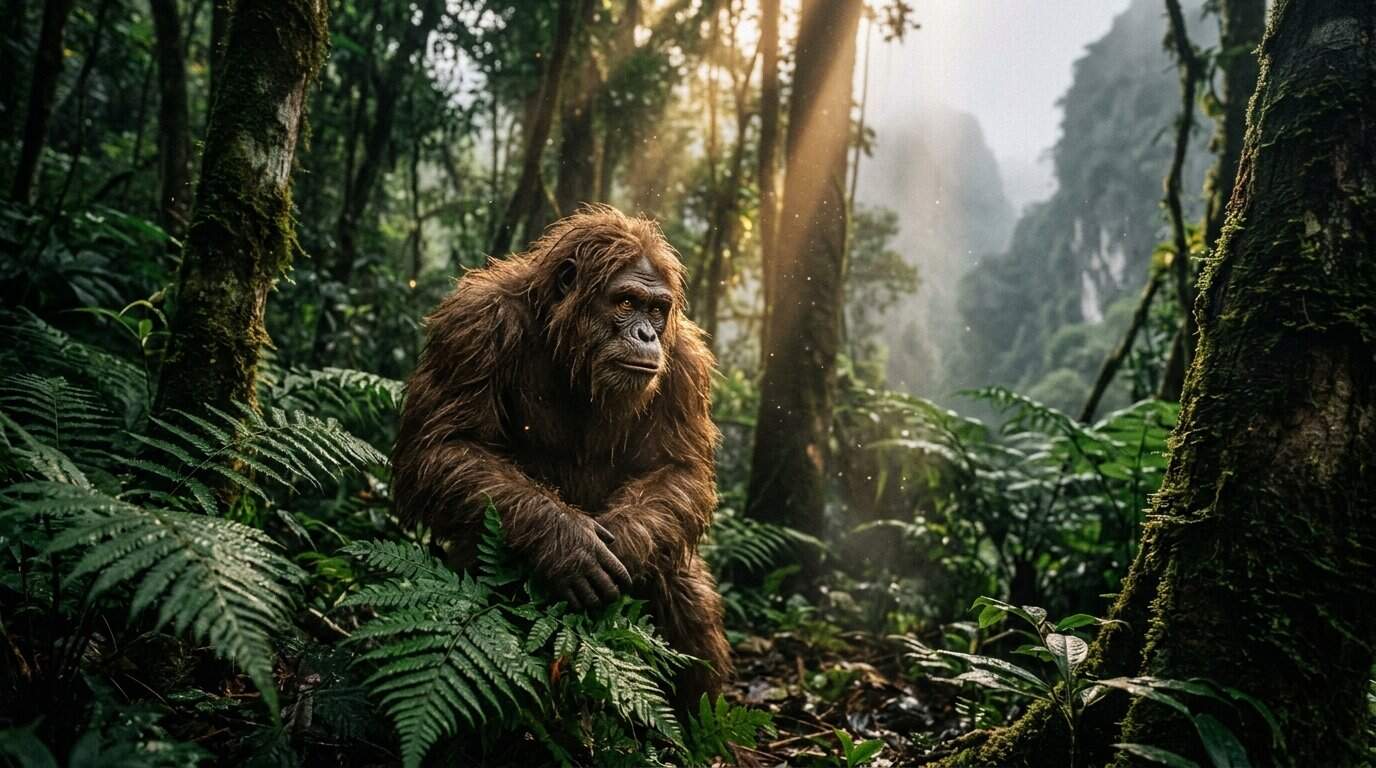
The Batutut possesses a physical profile that is remarkably distinct from the towering giants often described in Western folklore. Standing between four and six feet tall, these creatures are characterized by a compact and powerful build that allows them to navigate the dense, rocky terrain of Vietnam with ease. Witnesses, including soldiers who encountered them during the Vietnam War, frequently describe a thick coat of reddish-brown hair or black hair covering most of the body. Interestingly, the face, palms, and knees are said to be hairless, revealing a complexion that looks startlingly human. This mixture of primate and human traits creates an appearance that is both familiar and deeply mysterious to those who catch a glimpse of them in the wild.
One of the most recognizable features of the Batutut is its unique silhouette, which often includes a protruding, pot-bellied stomach. This physical trait, combined with an oblong head and deep-set eyes, separates the Rock Ape from the more muscular, flat-stomached descriptions of other global hominids. Their long, powerful arms provide the leverage needed for climbing steep limestone cliffs, a behavior that earned them their common nickname among locals and military personnel. Reports suggest that their gait is fully bipedal, yet they retain a rugged agility that is perfectly suited for the unforgiving jungle environment. These specific physical details suggest a creature that has evolved specifically for the unique ecological niche found within the Southeast Asian rainforests.
The combination of their smaller stature and muscular frame makes the Batutut a fascinating subject for researchers looking beyond the typical Bigfoot evidence debate. Their reddish hair often blends into the shadows of the forest floor, making them difficult to spot until they are standing directly in front of a traveler. Historical accounts from wartime encounters often mention the creatures throwing rocks when provoked, showcasing a level of physical coordination and strength that matches their sturdy appearance. While they share some traits with known primates, the specific combination of the pot-bellied frame and human-like facial features keeps the legend of the Người Rừng alive. Could these distinct physical traits point to an unclassified species of great ape hiding in plain sight?
Military Encounters During The Vietnam War
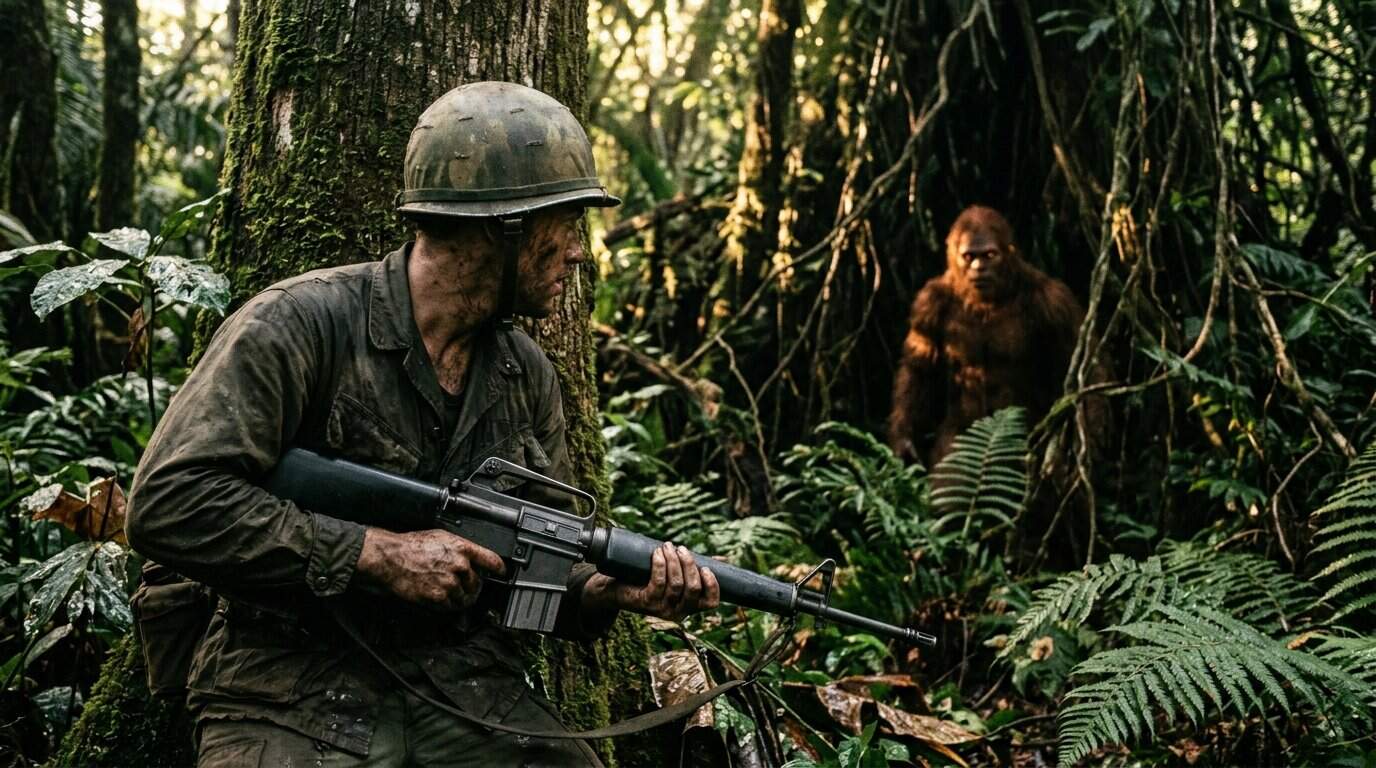
During the height of the Vietnam War, many soldiers encountered strange, bipedal creatures that they nicknamed Rock Apes. These hairy beings were frequently spotted in the dense jungles of the Central Highlands, often appearing in groups near rocky outcroppings or hidden caves. Soldiers reported that these creatures stood between five and six feet tall with muscular frames and deep reddish-brown fur. Unlike most local wildlife, the Batutut did not seem afraid of human presence and often stared back at patrols with an eerie, intelligent curiosity. These sightings were so common that they became a regular part of military lore, shared between units during long nights at remote outposts.
The interactions between military personnel and the Batutut often took a more aggressive turn when the creatures felt their territory was being invaded. According to historical accounts and veteran testimonies, these Forest People were known to hurl large stones at soldiers with surprising accuracy and strength. In one famous incident near Hill 868, a platoon reported being surrounded by dozens of these beings who shouted and threw rocks until the men retreated. These confrontations were documented in various military logs, as commanders initially suspected the noise and movement were caused by opposing forces. However, the lack of weapons and the distinct appearance of the creatures left many convinced they had met something entirely unknown to science.
While some skeptics suggest these soldiers were simply seeing macaques or gibbons under the stress of combat, many witnesses remain firm in their descriptions. They describe the Batutut as having human-like faces and a bipedal gait that is completely different from any known ape in the region. The sheer volume of reports from various troops suggests a shared experience that transcends wartime propaganda. These historical accounts provide a fascinating layer of evidence for the existence of a relict hominid living in the deep mountains. Do you think the intense environment of the war made these creatures more defensive, or were they simply protecting their ancient homes from the chaos of modern conflict?
Cultural Roots Of The Nguoi Rung Legend
Long before modern researchers arrived in Southeast Asia, the indigenous peoples of Vietnam’s central highlands had already woven the Người Rừng into their cultural tapestry. These local communities do not view the Forest People as monsters or myths, but rather as a natural, albeit rare, part of the jungle landscape. Stories passed down through generations describe a creature that lives in the shadows of the Annamite Mountains, existing on the fringes of human society. By treating these beings as biological realities rather than supernatural spirits, the local tribes provide a unique perspective that differs from the typical monster hunter narrative. Their knowledge suggests a creature that is deeply integrated into the ecosystem, moving with a quiet confidence that only a native of the dense canopy could possess.
The cultural identity of the Batutut is further solidified by the specific names and roles assigned to it by different ethnic groups. For many villagers, sightings are not cause for alarm but are instead noted as significant events that reinforce their connection to the wild earth. These accounts often highlight the creature’s human-like behaviors, such as its bipedal gait and its tendency to forage for fruit or shellfish. Unlike the aggressive portrayals sometimes found in modern media, the local legends often depict a shy, reclusive being that prefers to avoid contact with the modern world. This deep-seated respect from the people who share its habitat offers a compelling argument for the creature’s existence, rooted in centuries of observation rather than fleeting glimpses.
Historical documentation from local sources often aligns with the physical descriptions provided by those living near the Vu Quang Nature Reserve. Elders in these remote regions describe the Forest People as having reddish hair and a distinctive, muscular build that allows them to navigate the rugged terrain with ease. This indigenous testimony provides a vital foundation for understanding the Batutut, moving the conversation away from global tropes and back to the specific geography of Vietnam. By listening to the people who have called these forests home for millennia, we gain a clearer picture of a primate that may have simply mastered the art of staying hidden. Do you think these local traditions hold the key to finally locating a living specimen, or is the legend a way to respect the mysteries of the deep jungle?
Scientific Expeditions Into The Annamite Mountains
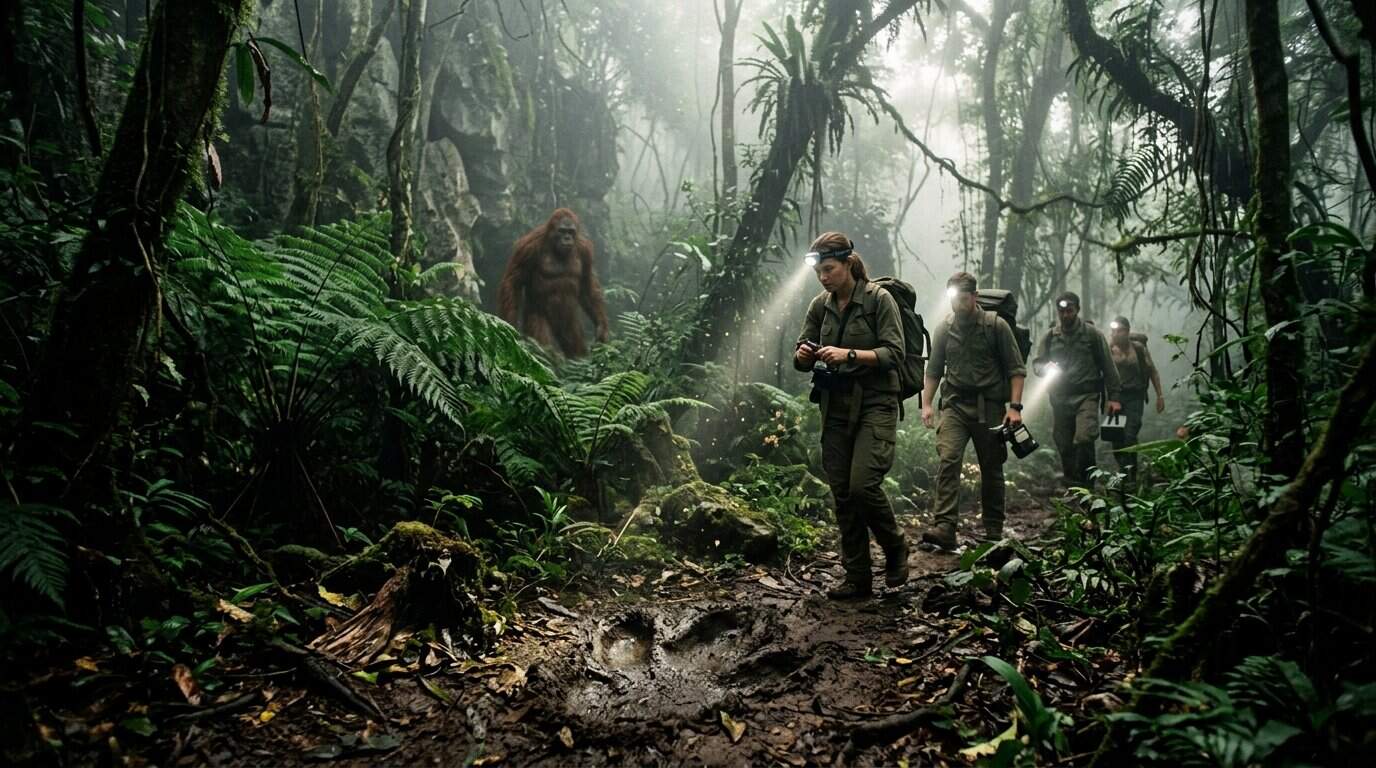
The Annamite Mountains form a rugged natural border between Vietnam and Laos, creating a landscape so dense and unexplored that it remains one of the last great frontiers for biological discovery. Researchers are drawn to this region because it has a proven track record of hiding large mammals from the modern world, such as the Saola, which was only identified by science in the 1990s. This history of late discoveries provides a compelling foundation for those searching for the Batutut, or Người Rừng. While mainstream biology has yet to produce a specimen, the sheer verticality and thick canopy of the jungle make it entirely possible for a small population of bipedal primates to remain undetected. Scientific curiosity persists because the environment is perfectly suited for a relict species to thrive far away from human interference.
Field expeditions into these remote peaks often rely on a combination of traditional tracking and modern technology like motion-activated camera traps. Biologists who have discovered several new species in Southeast Asia once investigated mysterious footprints in the region that did not match any known apes or humans. These tracks, featuring distinct toe alignments, suggest a creature that is perfectly adapted for navigating the slippery, mountainous terrain of the rainforest. While some skeptics suggest these could be misidentified sun bears or macaques, the consistent descriptions from local hunters and forest rangers keep the investigation alive. Every new biological survey in the Annamites brings the hope of finding clear evidence that could bridge the gap between local folklore and documented zoology.
The challenge of finding the Batutut is intensified by the fact that the Annamite range contains thousands of square miles of limestone karst and deep valleys that are nearly inaccessible to humans. Modern researchers must weigh the high cost of these expeditions against the fleeting nature of the evidence, which often consists of hair samples or blurred photographs. Despite these hurdles, the possibility of an undiscovered hominid remains a serious topic for those who understand how little of the world’s deep jungles have actually been mapped. By blending historical sightings with systematic field research, explorers are slowly piecing together a map of where this elusive forest man might still reside. Do you believe the dense jungles of Vietnam are still hiding a large primate species that has managed to evade modern technology?
Where Folklore Meets Military History
The evidence for the Batutut presents a fascinating puzzle that bridges the gap between ancient folklore and modern military history. While many cryptid legends rely solely on grainy photos or local myths, the accounts of the Vietnamese Forest People are bolstered by consistent reports from soldiers who encountered them in the heat of conflict. These witnesses described a creature that was remarkably human-like, possessing a muscular build and reddish hair that set it apart from any known primate in the region. Whether these beings are surviving members of a primitive human ancestor or a species of escaped circus ape yet to be classified, the sheer volume of sightings in the Vu Quang nature reserve suggests that something substantial stalks the shadows of the Annamite Mountains.
The mystery of the Batutut offers a refreshing perspective on the global phenomenon of wild man sightings by focusing on a creature with its own unique biological profile. Rather than being a mere copy of other famous hominids, the Người Rừng stands out due to its smaller stature and the specific anatomical details noted by those who have seen it up close. Science continues to discover new species in the dense, unexplored jungles of Southeast Asia, leaving the door wide open for the possibility that a relict population of hominids has managed to evade capture. These stories remind us that the natural world still holds secrets that challenge our understanding of human evolution and the hidden corners of our planet.
What do you believe is hiding in the thick canopy of the Vietnamese wilderness? Is the Batutut a living piece of our own ancestral history that managed to survive into the modern era, or is it a powerful cultural myth born from the stress of war and the isolation of the jungle? The debate between skeptics and believers remains one of the most intriguing conversations in the world of the unexplained. Much like the Florida Skunk Ape encounters reported in the United States, we invite you to share your theories and join the discussion about whether these forest dwellers are flesh and blood or simply shadows in the mist. Your insights could be the key to understanding one of the most compelling yowie encounters in Southeast Asia.
Frequently Asked Questions
1. What exactly is a Batutut?
The Batutut is a bipedal homid that lives deep within the remote jungles and limestone crags of Vietnam. Known locally as the Nguoi Rung or Forest People, these creatures stand about five feet tall and are covered in reddish-brown hair.
2. Why did soldiers call them Rock Apes during the Vietnam War?
Troops gave them this nickname because the creatures were often seen in rugged, rocky terrain. These military patrols reported that the beings would sometimes throw rocks to defend their territory, leading to many startling encounters in the heat of the conflict.
3. What do these creatures look like up close?
Witnesses describe a muscular being with a pot-belly and a coat of thick hair, though the face, palms, and knees remain bare. Their faces look remarkably human, and they walk upright on two legs just like a person would.
4. Is there any scientific evidence that the Batutut exists?
While a living specimen has not been captured, footprints and consistent eyewitness accounts from both locals and soldiers provide a compelling case. Some researchers suggest they could be a surviving population of an ancient human ancestor that found refuge in the dense Vietnamese wilderness.
5. Are Batutut sightings still happening today?
Yes, sightings continue to occur in the more isolated and untouched regions of the country. These remote areas are so difficult to access that they provide the perfect hiding spot for a small population of elusive hominids to avoid modern civilization.
6. How does the Batutut differ from the famous Bigfoot?
The Batutut is significantly smaller than the North American Bigfoot, usually reaching heights between four and six feet. They are also specifically known for their agility in rocky environments and their distinct reddish-brown fur, which helps them blend into the dappled light of the jungle floor.