
The Black Forest Woodwose: Europe’s Ancient Wild Man
Deep within the emerald shadows of Germany’s Schwarzwald, a legend stirs that predates modern science. Known as the black forest woodwose, this shaggy, bipedal figure has haunted the periphery of European civilization for centuries. Clad in thick fur and wielding a massive wooden club, the Wilder Mann represents a bridge between our world and the untamed wilderness. He is more than just a ghost story told by a campfire, he is a guardian of the ancient trees.
While many dismiss these accounts as mere medieval heraldry or simple folklore, others see a striking connection to global sightings of unidentified hominids. The woodwose challenges our understanding of the natural world, appearing as a more human-like cousin to the famous American Bigfoot. Whether he is a relic of our primal past or a creature that still roams the dense thickets today, the mystery of the wild man remains as thick as the forest fog. History and modern curiosity collide in the search for this elusive forest-dweller.
Key Takeaways
- The Woodwose, or Wilder Mann, serves as a historical and cultural bridge between human civilization and the untamed wilderness of the German Black Forest.
- Medieval heraldry and art consistently documented the Woodwose as a bipedal, muscular humanoid covered in thick fur, suggesting these records may be based on real encounters rather than mere allegory.
- Distinguished from the ape-like American Bigfoot, the European Woodwose is characterized by human-like facial features and the use of primitive tools like massive wooden clubs.
- Early scientific taxonomy, specifically Carl Linnaeus’s classification of ‘Homo ferus,’ formally recognized the wild man as a distinct biological entity within the human family tree.
Medieval Origins Of The Wilder Mann
The 14th century marked a period where the Black Forest Woodwose, or Wilder Mann, moved from the shadows of oral tradition into the vibrant world of European art. During this time, the creature was frequently depicted in intricate tapestries and church carvings as a muscular humanoid covered in thick, mossy hair. These artists often portrayed the Woodwose carrying a heavy wooden club or an uprooted tree, symbolizing a raw power that existed outside the laws of the village. By placing these images in public spaces, medieval society acknowledged a mysterious neighbor that lived just beyond the edge of the cleared fields. This enduring presence in visual culture suggests that the Woodwose was more than just a scary story told to children.
Heraldry and noble crests soon adopted the Woodwose as a powerful symbol of the untamed wilderness and ancestral strength. Many prominent families across Germany and Central Europe featured the hairy Wild Man as a shield supporter, representing a cultural bridge between the civilized world and the chaotic energy of nature. This cultural fixation highlights how people of the Middle Ages viewed the forest as a magical, albeit dangerous, realm where creatures like the Woodwose stood guard. Historians often note that these depictions were remarkably consistent, showing a bipedal being that looked strikingly human yet remained fundamentally wild. The widespread use of this image across different regions hints at a shared experience or observation that transcended simple local myths.
The Woodwose served as a constant reminder of the thin line that separated human settlements from the deep, dark woods of the Schwarzwald. In medieval philosophy, this figure represented the natural man who lived without the comforts or constraints of society, possessing a freedom that was both envied and feared. While some scholars view these historical accounts as purely allegorical, others wonder if they were based on early encounters with a reclusive, flesh and blood species. These ancient artistic records provide a fascinating baseline for modern researchers who look for patterns in sightings across Europe today. It raises the intriguing question of whether the knights and peasants of the 1300s were documenting a legendary spirit or a very real inhabitant of the forest.
Physical Characteristics Of The Forest Dweller
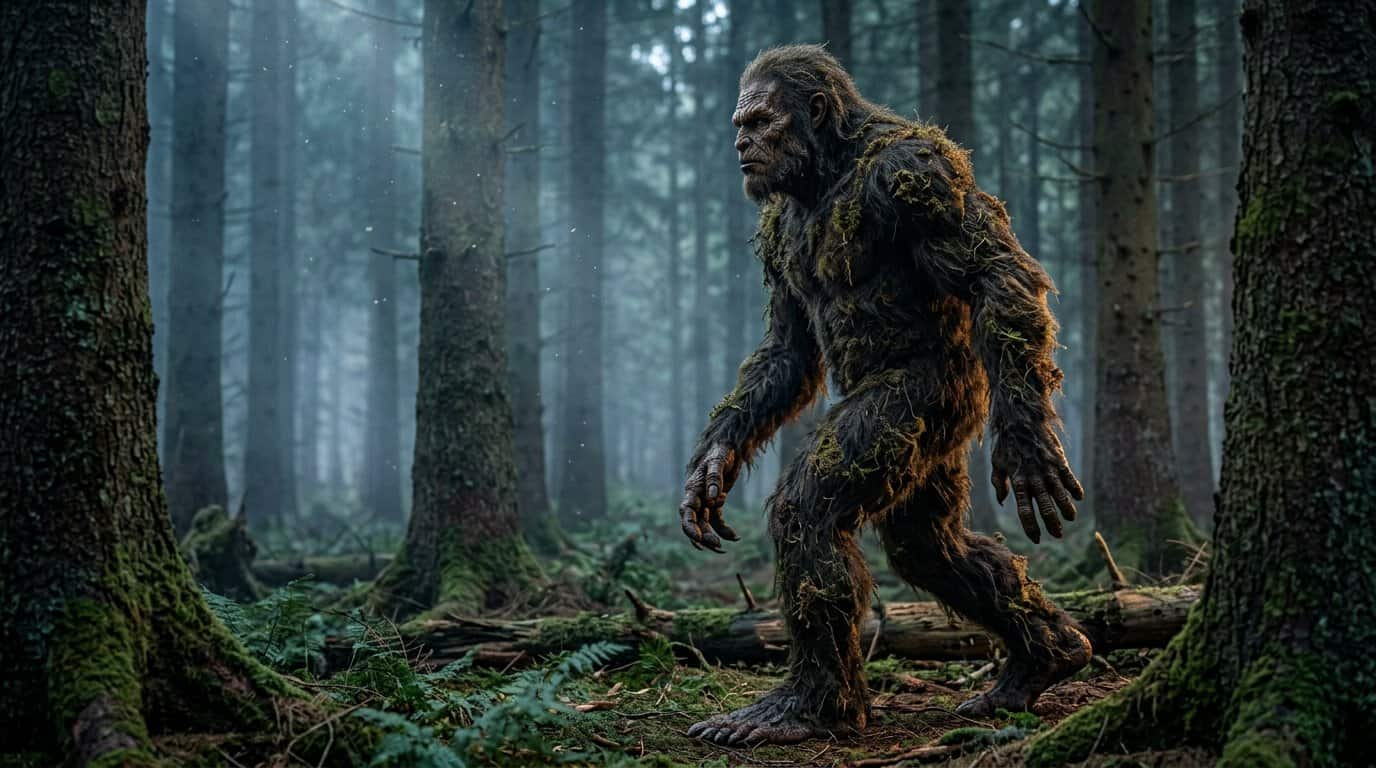
The Black Forest woodwose is most famously recognized by its thick coating of shaggy hair that covers nearly every inch of its bipedal frame. Unlike the North American Bigfoot, which many describe as having ape-like features, the European woodwose often retains a surprisingly human-like cousin cast to its face. Traditional German folklore and medieval heraldry depict these creatures with hair ranging from deep earthy browns to striking shades of mossy green or reddish-orange. This natural camouflage allows the dweller to blend seamlessly into the dense canopy of the Schwarzwald, making it nearly invisible to the untrained eye. Many historical accounts suggest that while they appear wild, their eyes possess an intelligent, soulful quality that distinguishes them from mere animals.
A defining characteristic of this forest guardian is its immense physical strength and the primitive tools it carries through the brush. Witnesses and ancient woodcuts frequently portray the woodwose wielding a massive wooden club or even a whole uprooted tree as a walking staff. These heavy implements serve as both a deterrent to intruders and a tool for navigating the rugged, mountainous terrain of central Europe. The sheer size of these clubs suggests a level of muscular power far beyond that of an average human. This iconic imagery has been preserved for centuries in heraldry and local festivals, reinforcing the image of a powerful protector tied to the raw energy of the wilderness.
While the thick fur provides protection against the biting cold of the German winters, it also serves as a symbol of the creature’s connection to the untamed world. Medieval scholars often described the woodwose as a bridge between civilization and the deep forest, noting that their hair resembled the texture of the very moss and lichen found on ancient oaks. This shaggy exterior is not just a physical trait but a functional adaptation for a life spent entirely outdoors in the shadows. Despite their intimidating appearance, many local legends suggest they are shy beings that prefer to observe from a distance rather than engage in conflict. Their presence serves as a constant reminder of the mysteries that still linger within the dark, wooded heart of the continent.
Scientific Curiosity And Linnaeus’s Homo Ferus
Long before modern researchers began searching the Black Forest for signs of a European Bigfoot, the legendary Carl Linnaeus was already trying to find a place for such creatures in the natural world. In his foundational work, Systema Naturae, the famous Swedish botanist did not simply dismiss the Woodwose as a myth or a fairy tale. Instead, he proposed a specific category called Homo ferus, or wild man, to describe these mysterious forest dwellers. Linnaeus viewed these beings as a distinct variety of human that was mute, covered in hair, and lived entirely apart from civilization. By giving the Woodwose a scientific name, he suggested that the wild man of the woods was a real biological entity waiting to be properly documented by science.
This classification reflected a time when the boundaries between known animals and legendary monsters were still being drawn by early explorers. Linnaeus relied on numerous historical accounts and sightings from across Europe to justify including the Woodwose alongside more familiar species. He described these individuals as four-footed, hairy, and unable to speak, which aligns closely with the modern image of a reclusive forest cryptid. While many later scientists viewed his inclusion of Homo ferus as a mistake based on folklore, it shows that the idea of a wild man was taken very seriously by the brightest minds of the eighteenth century. This historical curiosity invites us to wonder if these early taxonomists were actually observing a reclusive species that has since faded into the shadows of the Black Forest.
What do you think about Linnaeus including the Woodwose in his official records of the human family tree? Do you believe these early scientific descriptions were based on real encounters with an undiscovered primate, or was it simply a case of folklore influencing the father of modern taxonomy?
Modern Sightings And The European Bigfoot
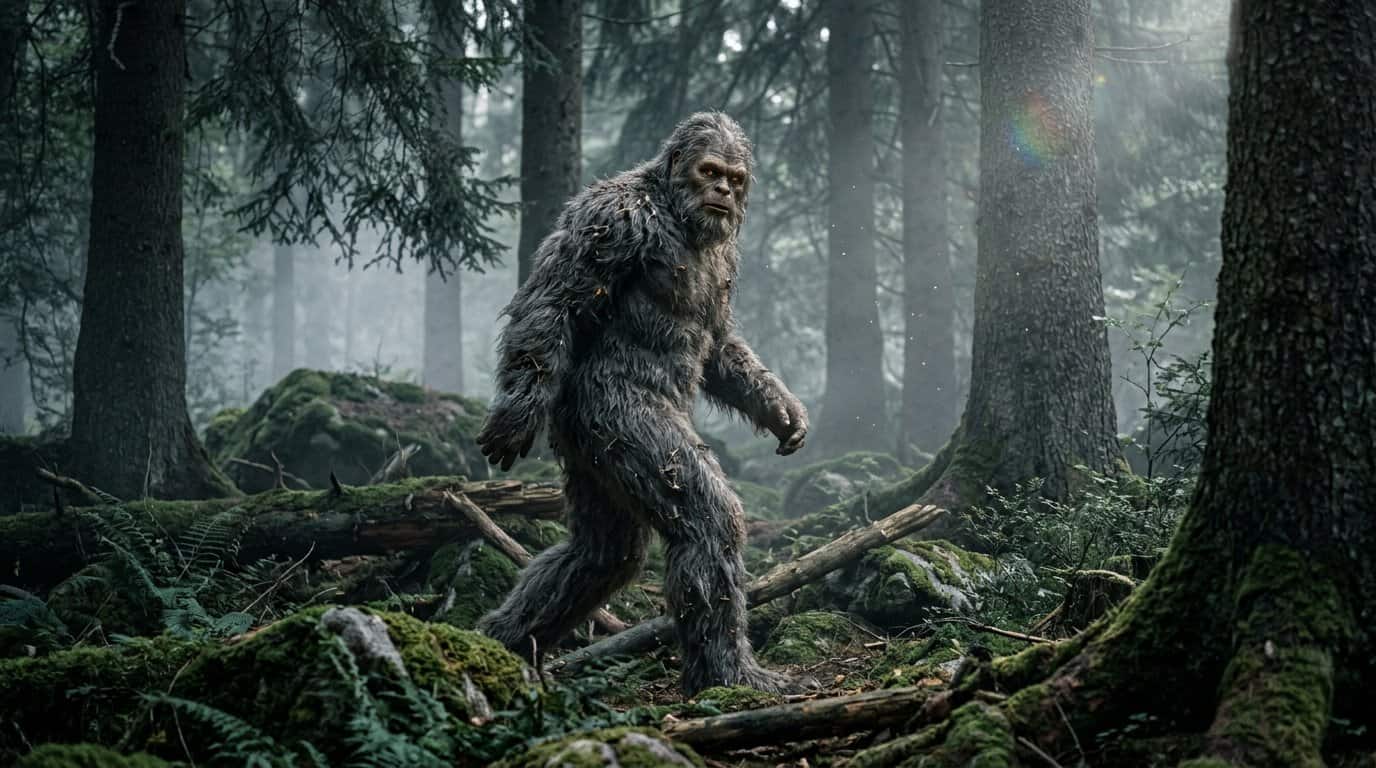
Modern accounts of the Woodwose in the German Black Forest often mirror the famous Sasquatch reports found across North America. While the medieval Wilder Mann was once a staple of heraldry and cathedral carvings, contemporary hikers occasionally report glimpses of shaggy, bipedal figures moving through the dense pine thickets. These witnesses describe a creature that appears more human in its facial structure than the typical Bigfoot, yet it remains covered in thick, dark fur. Such sightings suggest that the ancient legends might be based on a persistent, biological reality hidden within Europe’s most shadowed landscapes.
Comparing these European accounts to the American Sasquatch reveals fascinating parallels in behavior and habitat. Both entities are described as elusive forest guardians that avoid human contact and possess an uncanny ability to vanish into the undergrowth. Cryptozoologists point to the deep cultural roots of the Woodwose as evidence that these sightings are not merely a modern trend but a continuation of a long historical record. By analyzing these stories through a lens of open minded skepticism, researchers can bridge the gap between old world mythology and the Bigfoot evidence debate. Much like the Florida Skunk Ape encounters reported in the swamps of the United States, the Woodwose represents a localized version of a global phenomenon.
The enduring mystery of the Black Forest beckons those who wonder if a primitive branch of humanity still survives in the wild. Historical documentation from the Middle Ages often treated these beings as a known part of the natural world rather than mere campfire stories. Today, the lack of physical evidence keeps the phenomenon firmly in the realm of the unexplained, though the consistency of descriptions across centuries is hard to ignore. Do you believe the Woodwose is a misunderstood relic of our ancient past, or is it simply a shadow cast by the deep folklore of the German woods?
The Wild Man of the Schwarzwald
The Black Forest Woodwose stands as a powerful symbol of the untamed wilderness that once dominated the European landscape. From the intricate Black Forest carvings of medieval cathedrals to the vibrant heraldry of noble families, this hairy wild man has represented the thin line between civilization and the primal forces of nature for centuries. Much like the terrifying Krampus origins rooted in ancient pagan rituals, the Woodwose is deeply woven into the local history and cultural identity of the Schwarzwald region. It serves as a reminder that the forests were once viewed with a mix of reverence and fear, housing guardians that protected the ancient trees.
Modern interest in these beings bridges the gap between historical folklore and the persistent mysteries of cryptozoology. While skeptics may view the Woodwose as a mere relic of the past, contemporary sightings and local whispers suggest that something strange may still inhabit the dense German timberland. These stories keep the spirit of the Wild Man alive, blending ancient tradition with a modern sense of wonder about the unknown. The enduring legacy of the shaggy forest dweller ensures that the woods remain a place of mystery and deep cultural significance.
As the sun sets behind the jagged peaks of the Black Forest, the long shadows seem to take on a life of their own. Could a reclusive, hair-covered being still find refuge within the deepest thickets of this ancient woodland? Many locals and researchers wonder if the medieval Woodwose was based on a flesh and blood creature that managed to evade discovery through the ages. Do you believe the legendary Wild Man still roams the hidden corners of the Schwarzwald today, or is he simply a ghost of our collective imagination?
Frequently Asked Questions
1. What exactly is the Black Forest Woodwose?
The Woodwose, also known as the Wilder Mann, is a legendary bipedal creature covered in thick fur that inhabits the dense forests of Germany. It acts as a guardian of the ancient trees and represents the untamed power of the natural world.
2. How does the Woodwose differ from the American Bigfoot?
While both are elusive hominids, the Woodwose is often described as having more human-like features and a stronger connection to medieval European history. It is frequently depicted carrying a massive wooden club or an uprooted tree as a symbol of its primal strength.
3. Why was the Woodwose featured in medieval art and heraldry?
Medieval society used the image of the Woodwose in tapestries and family crests to represent ancestral strength and the boundary between civilization and the wild. These depictions served as a public acknowledgement of a mysterious presence living just beyond the village fields.
4. Is there any evidence that the Woodwose is a real biological creature?
Many researchers view the Woodwose as a possible relic of a primitive human ancestor that survived in the remote thickets of the Black Forest. While science often classifies it as folklore, the consistency of sightings across centuries suggests a physical reality behind the legend.
5. What does the Woodwose symbolize in German culture?
The creature symbolizes the raw and lawless power of nature that exists outside of human control. It serves as a reminder of our primal past and the enduring mysteries that still hide within the deep emerald shadows of the Schwarzwald.
6. Where can the Woodwose be found today?
Modern sightings typically occur in the most isolated and fog-covered regions of the Black Forest where the wilderness remains undisturbed. Those who go searching for the wild man must look in the densest thickets far from the common hiking trails.