The Dybbuk Box History: How a Haunted Cabinet Became a Legend
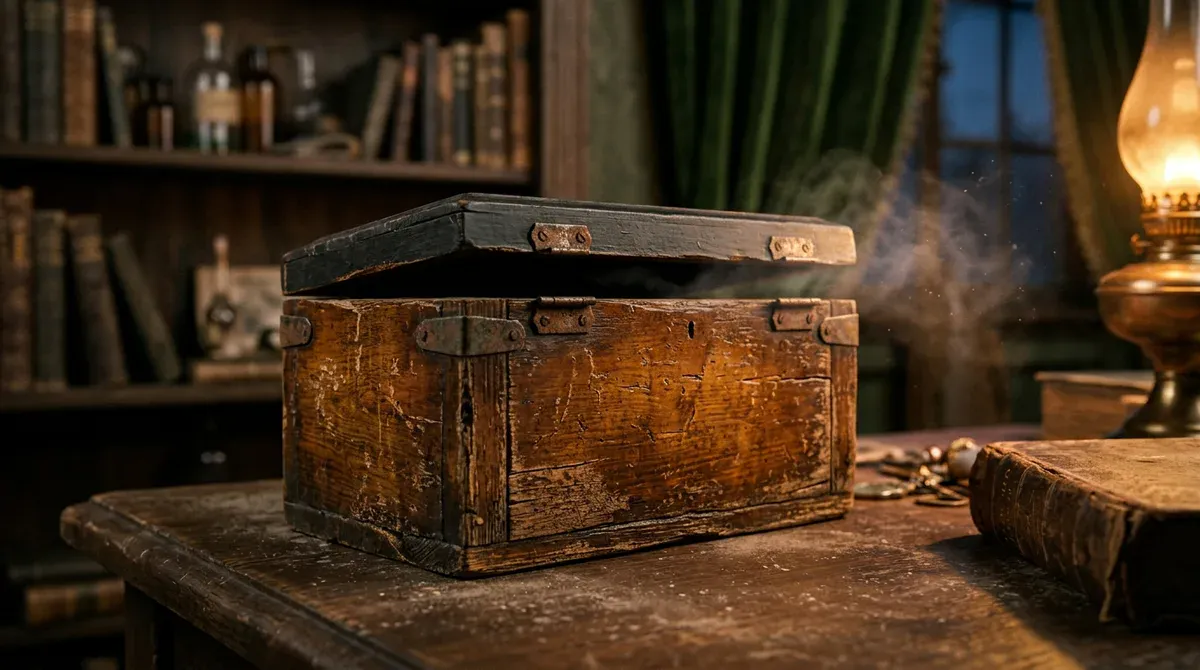
The dybbuk story begins in 2003, when Kevin Mannis listed a small wooden cabinet on eBay with a tale about a spirit trapped inside. The auction claimed the box came from the estate of a 103-year-old Polish Holocaust survivor and tied it to a dybbuk, a restless spirit from Jewish folklore. In 2004, the cabinet sold to Jason Haxton for $280, and the listing had already drawn more than 140,000 hits by late July.
The story did not hold up under later scrutiny. A 2019 investigation in Skeptical Inquirer identified the cabinet as a mid-century minibar, not an old Jewish wine cabinet, and Mannis later described the backstory as an invented horror tale. Still, the legend spread into films and paranormal television, raising a compelling question: how does a sales pitch become something people treat as history?
Key Takeaways
- In 2003, Kevin Mannis listed a small wooden cabinet on eBay with a story claiming it held a dybbuk and came from the estate of a 103-year-old Polish Holocaust survivor, but Mannis later described the listing as an “interactive horror story in real-time.”
- A 2019 Skeptical Inquirer investigation identified the Dybbuk Box cabinet as a mid-century minibar rather than an old Jewish wine cabinet, which removed the foundation of its paranormal backstory.
- Jason Haxton bought the Dybbuk Box cabinet for $280 on February 9, 2004, and the eBay page had already drawn more than 140,000 hits by July 25, 2004.
- Anyone checking a haunted object’s history should trace its owners, its origin, and any documented evidence, because the Dybbuk Box legend spread through repetition rather than verifiable records.
Where Did the Dybbuk Idea Come From?
In Jewish folklore, a dybbuk is a restless spirit that attaches itself to a living person, usually entering the body and speaking or acting through it. The idea is far older than any eBay listing, and for many believers it remains a serious part of religious life rather than a campfire tale.
Traditional accounts often describe the dybbuk as the soul of someone who died with unfinished business, a serious sin, or a broken promise. Such a soul could not rest until the matter was resolved. Healing usually meant an exorcism, performed by a learned rabbi or a trained healer who spoke prayers and commands to draw the spirit out of the afflicted person.
These stories reach back much further than modern pop culture. In his 2024 book, Morris M. Faierstein identifies 1571 as the date of the earliest recorded case of dybbuk possession in Safed, a city in northern Israel that was a major center of Jewish mystical study in the sixteenth century. These cases were about real people in distress, their families, and the question of how a troubled soul could find peace.
That is what makes the dybbuk so different from the haunted object of the 2003 listing. In the older tradition, the spirit’s drama plays out in a human body and among the people who love it. A house, a piece of furniture, or a box was never the target. The cabinet story borrowed the name and the eerie atmosphere of the dybbuk, but it changed the rules, moving the spirit into wood so it could be bought, shipped, and passed from owner to owner.
That shift is worth noticing. Readers who know the older belief may feel the gap between the two ideas right away, and that gap helps explain why the legend felt both familiar and strange to so many people.
How Did S. An-sky’s Play Bring the Dybbuk to Life?
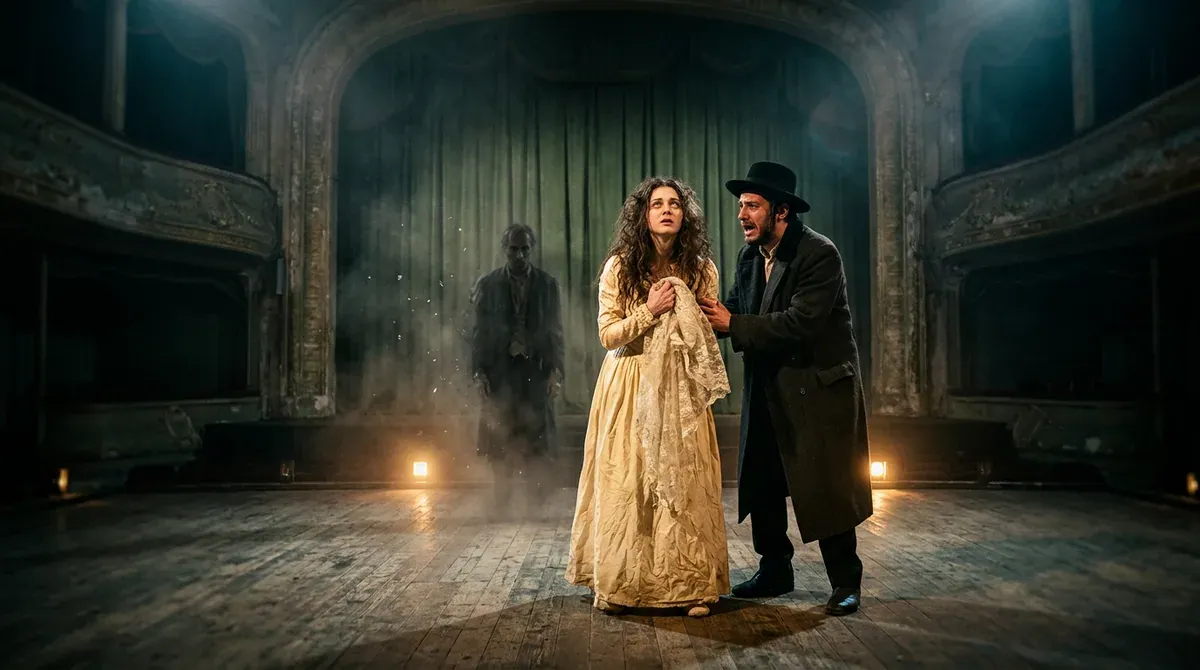
S. An-sky’s play carried the dybbuk from village belief onto the modern stage, and the fieldwork behind it gave the story its roots. From 1912 through 1914, An-sky led an ethnographic expedition through Volhynia and Podolia, regions in present-day Ukraine. The team gathered songs, tales, and customs from Jewish communities, writing down what ordinary people said about the spirits that troubled their families.
Those notes became the raw material for The Dybbuk, which grew into one of the best-known Yiddish dramas of its era. In the play, a young bride is possessed by the spirit of a man who died loving her, and the story builds toward a dramatic exorcism. Audiences saw more than a ghost story. They saw a soul trapped by unfinished love and a broken promise.
The play also gave the public a clear picture of what a dybbuk was: a wandering spirit that entered a living body and spoke with a voice that did not belong to it. Once that image spread, the word itself carried a shiver, and later writers and filmmakers could use the name and expect audiences to fill in the rest.
Legends often borrow their authority this way. A story feels weightier when it points back to a real tradition, a recorded folk practice, or a respected creative work. The dybbuk had all three, so a claim that a cabinet held one seemed to belong to an old and documented world, even though the object had no real connection to that world. Readers might ask how much of the legend’s power came from that borrowed history.
What Was the 2003 eBay Listing That Started It All?
Kevin Mannis started the legend in 2003, when he posted a small wooden cabinet on eBay with a story that many shoppers found hard to ignore. The listing presented the box as a home for a restless spirit and tied it to the estate of an elderly Polish Holocaust survivor.
The description did more than tell a story. It also listed what was inside: two wheat pennies, two locks of hair, a granite slab, a dried rosebud, a goblet, and a candlestick. Each object worked like a clue. Old coins hinted at a family that had lived through hard times, the hair suggested a real person who had suffered, and the rosebud pointed toward memory and loss. Together, the items made the cabinet feel like a sealed record of someone’s life.
That is where the listing borrowed its emotional weight. The Holocaust is one of the most thoroughly documented tragedies of the modern era, and the phrase “Holocaust survivor” carries a respect that readers feel before they reach the next line. By placing a supernatural object inside that memory, the seller let a sense of history travel alongside the spooky claims, even though the two had little to do with each other.
The story spread quickly. When the Los Angeles Times wrote about the box in the summer of 2004, the tale had already grown far beyond a single auction page.
Mannis later offered a very different account. In a 2021 interview with Inverse, he described the listing as an “interactive horror story in real-time” and said the cabinet came from an attorney’s yard sale, not a survivor’s family. Readers can weigh that admission against the power of the original pitch and consider why a borrowed piece of real history made the fiction feel so believable.
Why Did an Ordinary Cabinet Become a Haunted Relic?
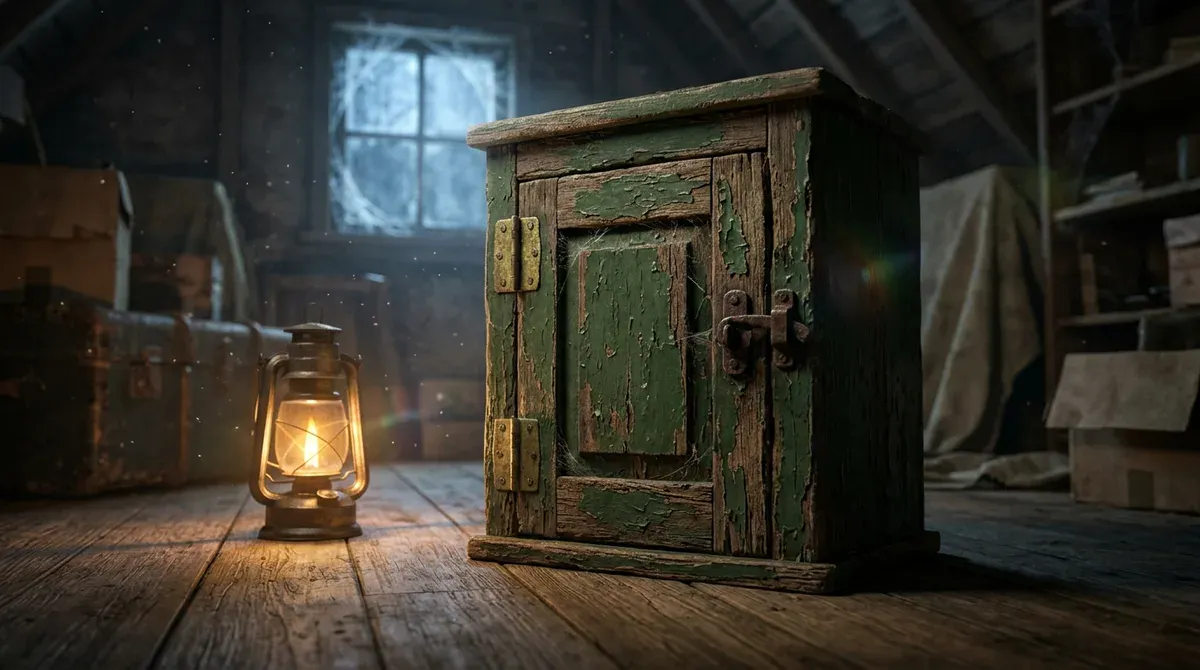
A plain wooden cabinet became a haunted relic because its story kept being repeated, and each retelling made it feel more settled than the evidence allowed. The sale moved quickly. On February 9, 2004, Jason Haxton bought the box for $280, and the eBay page soon drew attention far beyond a typical small auction. By July 25, 2004, it had logged more than 140,000 hits, a sign of how eager readers were for a story that mixed a ghost, a grieving family, and a wartime past.
Repetition does quiet but powerful work. When a claim appears on a listing, then in a news story, then in a forum thread, it starts to look as if several independent people have checked it. Often, though, every copy traces back to the same original pitch. Online, a sales pitch can take on the look of documented history without anyone ever examining the object itself.
Verification asks a different question. Instead of counting how many people repeated a claim, it asks what evidence supports it. Where was the object made? Who owned it, and can that ownership be traced? When investigators asked those questions, the answer changed. A 2019 investigation identified the cabinet as a mid-century minibar rather than an old Jewish wine cabinet, and the paranormal backstory lost its footing.
The legend did not stop there. By 2016, the box had passed to Zak Bagans, whose paranormal television work carried the object to an even wider audience. The creator’s later admissions did not shrink the tale either. Mannis also spoke of ten boxes hidden around the world, a detail that shows how a legend can keep expanding even after its origins are questioned.
Why do people trust a story more when it comes with a price tag, a crowd of visitors, and a famous owner attached? Try asking yourself which parts of the cabinet’s story you have heard repeated, and which parts you could check on your own.
Did Hollywood Turn the Cabinet Into a Movie Ghost?
Yes. Hollywood gave the cabinet its first big leap from auction page to popular culture. The screenwriters of the 2012 film The Possession said the movie was inspired by a 2004 Los Angeles Times article about the box, so a newspaper story about an odd auction item became the seed for a horror film. A movie does something a listing cannot. It gives the object a face, a plot, and a clear set of rules for how the haunting works. Viewers who had never read the original eBay description now met the cabinet on a theater screen, and the film’s invented drama began to sit alongside the original claims as if both belonged to the same record. Television took the story further. In 2016, Jason Haxton sold the box to Zak Bagans, whose paranormal programs and The Haunted Museum reached audiences far larger than any auction could. Each new owner and each new medium added another layer of polish. A buyer, then a famous host, then a camera crew filming the box in dim light made the object look more official with every step. The price stayed quiet throughout. When the 2021 report revisited the sale, neither Haxton nor Bagans had disclosed the amount, so one of the most important details in the cabinet’s history remained a blank. Does a movie or a television episode make a story more true, or only more vivid? Consider how much of your own sense of the cabinet came from a screen rather than from anything you could examine yourself.
What Changed When the Creator Came Forward?
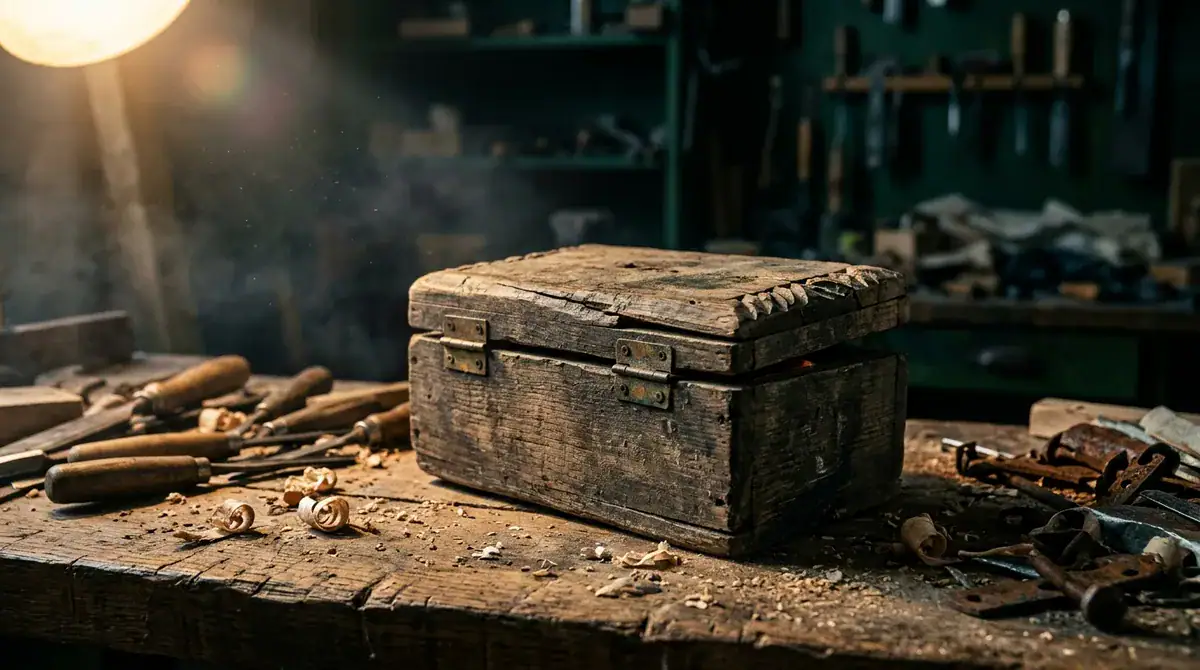
Once Mannis spoke for himself, the cabinet’s story shifted from a haunted object to a case study in invention. In an October 24, 2015 Facebook post, he claimed he had created the Dibbuk Box story for an eBay post in 2003. In a 2021 interview, he went further, calling the listing an “interactive horror story in real-time” and saying the cabinet came from an attorney’s yard sale rather than a Holocaust survivor’s family. He also added a new twist: ten boxes were supposedly hidden around the world.
Each admission rewrote the record without erasing the older versions. The table below shows how the story changed over time.
| Date | What the story claimed |
|---|---|
| 2003 | eBay listing says the cabinet holds a dybbuk and came from a Polish Holocaust survivor’s estate |
| February 9, 2004 | Jason Haxton buys the box for $280 |
| July 2004 | Los Angeles Times coverage; the auction page passes 140,000 hits |
| 2012 | The Possession film is inspired by the 2004 newspaper story |
| 2015 | Mannis says he invented the story for the 2003 eBay post |
| 2016 | Zak Bagans acquires the box; the price is never disclosed |
| 2019 | Skeptical Inquirer identifies the cabinet as a mid-century minibar |
| 2021 | Mannis calls the backstory fiction and says the box came from an attorney’s yard sale |
| Later | Mannis says ten boxes are hidden around the world |
The confession did not end the legend. Part of the appeal is the puzzle itself: a sealed cabinet, a strange list of contents, and a price nobody will name. Many readers enjoy hunting for clues, and an admitted hoax can feel more intriguing than a plain fact. The ten-box claim gave curious people a fresh trail to follow, and it showed how easily a story can grow new branches.
Believers also had a choice. They could treat Mannis’s words as the final answer, or they could see them as one more chapter in a tale that refuses to sit still. Many chose the second path. Even so, a reader can notice how the most dramatic claims arrived at the same moments the object changed hands or reached a new audience. Which version of the story feels most convincing to you, and what would it take to change your mind?
Weighing the Dybbuk Box Story for Yourself
Start with the claim at the center of the legend: that the cabinet came from the estate of a Polish Holocaust survivor. Write down every detail you can find about who owned the box and where it came from. Then mark which details name a specific person, carry a date, or point to a document, and which ones appear only in retellings.
Next, compare the listed contents with what the story says they prove. The 2003 pitch named two wheat pennies, two locks of hair, a granite slab, a dried rosebud, a goblet, and a candlestick. Ask which of those items could link the box to one particular family, and which would fit almost any old keepsake box in an attic.
Then run the same test on the next haunted object you find online. Look for the first post that told its story, check whether the seller or owner can be identified, and notice whether a price was ever disclosed. If those answers are missing, the story may still be entertaining, but it has not earned a place in the historical record.
Finally, choose one question to carry with you. You might wonder why a made-up tale can feel so convincing, or what the older dybbuk tradition would make of a box that can be bought and sold. Share your answer in the comments, and tell us what kind of evidence would change your mind.
Frequently Asked Questions
1. What is a dybbuk box?
A dybbuk box is the name given to the small wooden cabinet from Kevin Mannis’s 2003 eBay listing, which was said to trap a restless spirit. The name borrows from the traditional dybbuk, a spirit that attaches itself to a living person in Jewish folklore. The cabinet itself is a haunted object rather than part of that older belief, and Mannis later described its backstory as invented.
2. Are the 10 hidden boxes Mannis described connected to any documented sale or location?
No documented sale or location has been tied to Mannis’s claim that ten boxes are hidden around the world. The claim appears in the 2021 Inverse account of the legend’s changing versions, where it is reported as one of the story’s later expansions. Readers who want to test it would need to find a specific owner, sale date, or place for one of those boxes.