The Hidden Worlds Beyond Our Reach
In 2006, the cosmic neighborhood changed forever when a small group of scientists decided that some of our favorite worlds no longer made the cut. This decision left several snubbed solar system planets drifting in the cold shadows of space, stripped of their titles despite their fascinating landscapes and mysterious origins. From the icy peaks of Pluto to the distant reaches of Eris, these forgotten worlds are finally stepping back into the spotlight as new evidence challenges everything we thought we knew about our celestial map.
The debate over what truly makes a planet has reached a fever pitch as of May 2026, fueled by discoveries of complex geology and hidden oceans on these tiny giants. While official lists remain small, the sheer diversity of these dwarf planets suggests that our solar system is far more crowded and exciting than the textbooks claim. Exploring these outcasts reveals a hidden history of our universe that is much larger than eight simple spheres.
Key Takeaways
- The current definition of a planet is increasingly viewed as narrow and incomplete, as snubbed worlds like Pluto and Eris exhibit complex geology and hidden oceans that rival major planets.
- Mathematical models and gravitational anomalies strongly suggest the existence of Planet Nine, a massive phantom world ten times the mass of Earth lurking in the outer reaches of the solar system.
- The historical pursuit of the hypothetical planet Vulcan serves as a vital reminder that scientific consensus must constantly evolve to account for orbital anomalies and new discoveries.
- The sheer diversity of the Kuiper Belt, including unique worlds like Haumea and Sedna, indicates that the solar system is a crowded, active neighborhood rather than a collection of just eight spheres.
The Hunt For The Elusive Planet Nine
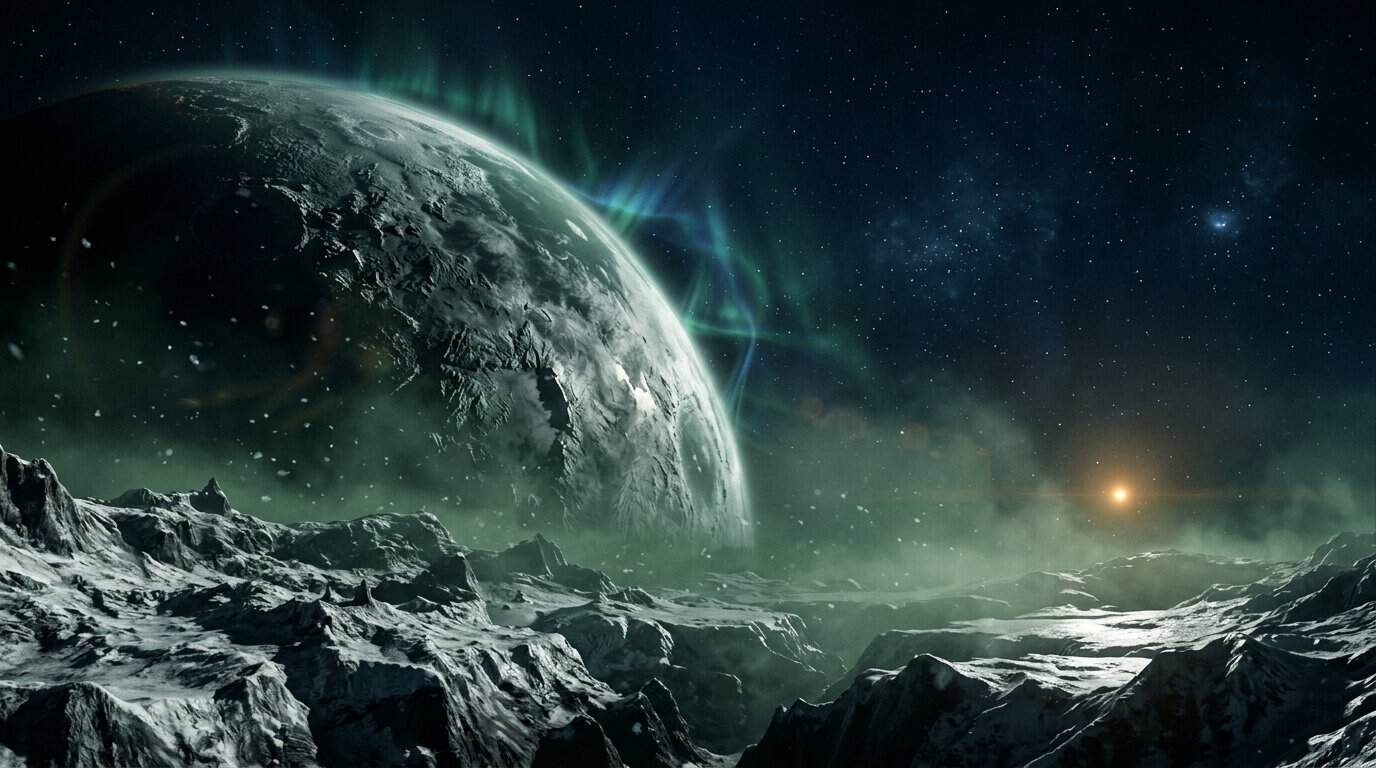
Deep in the frozen darkness beyond the Kuiper Belt, a massive phantom world may be tugging at the orbits of smaller icy bodies. Astronomers have pointed to mathematical models suggesting this unseen giant is roughly ten times the mass of Earth. While some scientists remain skeptical of anything that cannot be seen through a lens, the strange clustering of distant space rocks suggests a powerful gravitational force is acting as a cosmic shepherd. This hidden world represents a modern mystery that challenges the current map of our solar system, reminding us that our celestial neighborhood might be much larger than the textbooks claim.
The quest for missing planets is not a new obsession for those who look at the stars with a questioning eye. History tells us of Vulcan, a hypothetical planet once believed to exist between Mercury and the Sun to explain orbital wobbles that puzzled the greatest minds of the nineteenth century. While Einstein eventually provided a different explanation for those movements, the spirit of that search lives on in the hunt for Planet Nine. It highlights a fascinating cycle in astronomy where the scientific consensus is often forced to catch up with anomalies that were initially dismissed as errors or fantasies.
Despite years of scanning the skies with the world’s most powerful telescopes, this elusive giant continues to evade direct detection. Its extreme distance means it reflects very little sunlight, making it nearly invisible against the backdrop of a billion stars. Some researchers even suggest that we might be looking for the wrong thing, proposing that the gravitational pull could come from a tiny, ancient black hole or a disc of dark matter. This uncertainty keeps the debate alive and invites us to wonder what else might be hiding in the shadows of our own backyard. If you could name a newly discovered ninth planet, what would you choose to reflect its mysterious and lonely nature?
Vulcan And The Ghost Of Mercury
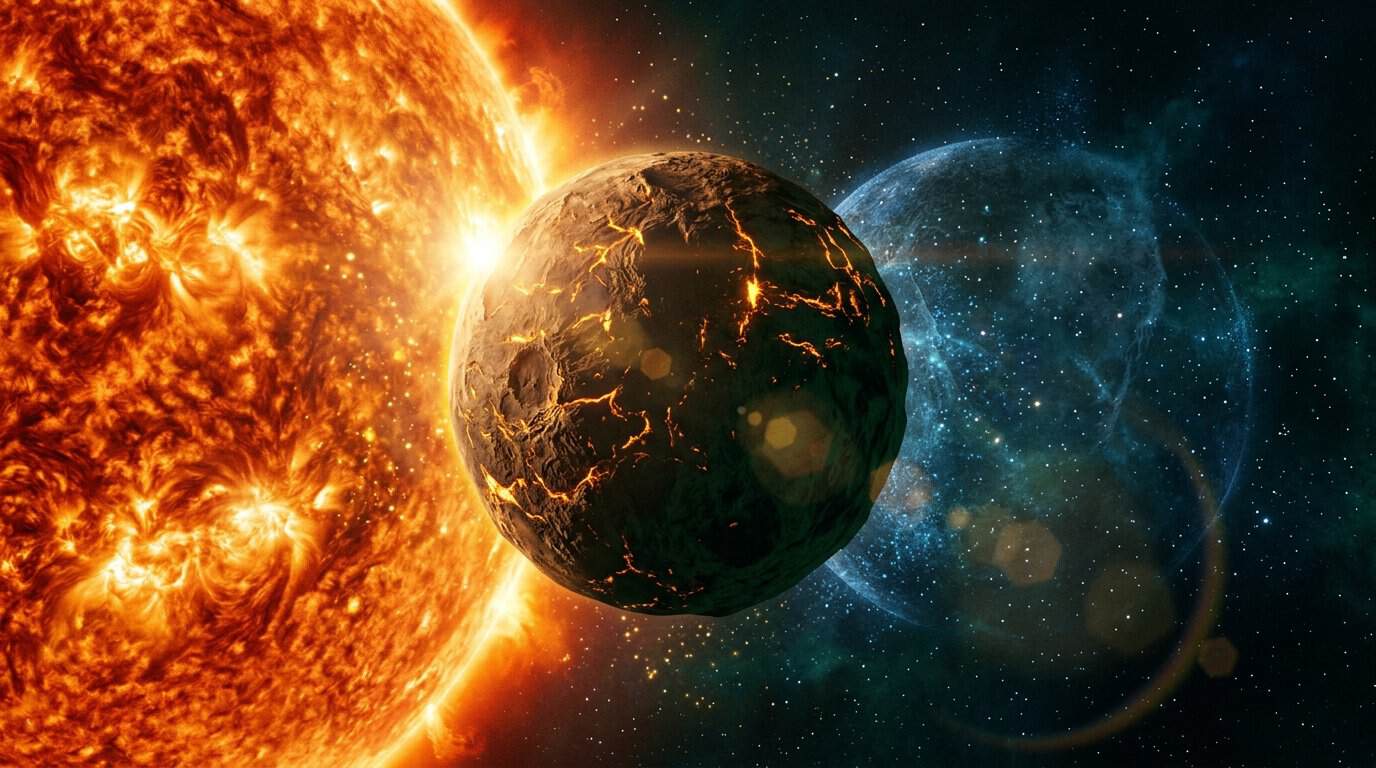
In the mid-nineteenth century, the world of astronomy was buzzing with the search for a phantom world hidden in the Sun’s glare. Famed mathematicians noticed that Mercury was not following its predicted path, showing a strange wobble in its orbit. They proposed that a small, undetected planet must be tugging on Mercury with its gravity. This hypothetical world was named Vulcan, and for decades, professional and amateur stargazers alike claimed to catch glimpses of it crossing the face of the Sun. The scientific consensus of the time firmly believed that this inner neighbor was the missing piece of our solar system’s puzzle.
The hunt for Vulcan represents a fascinating era where the boundaries between observation and imagination became blurred. While Albert Einstein eventually used his theory of general relativity to explain Mercury’s movement without the need for an extra planet, the legacy of Vulcan lingers as a reminder that our maps are often incomplete. This historical snubbing of a world that never truly was mirrors our modern search for the mysterious Planet Nine. Just as researchers once looked at gravitational anomalies to predict Vulcan, today’s experts look at the strange behavior of distant icy rocks to suggest a massive, unseen presence lurking in the dark.
If a world as close as Vulcan could capture the minds of the world’s greatest scientists, it raises the question of what else we might be missing today. The ghost of Vulcan teaches us that even when the math seems certain, the universe often holds secrets that challenge our current understanding. Whether it is a tiny world lost in the light of the Sun or a giant hiding in the outer reaches, the history of snubbed planets proves that the solar system is a crowded, mysterious place. Do you think modern science is overlooking another hidden neighbor, or are we simply chasing space age folklore like the astronomers of the past?
Forgotten Neighbors In The Kuiper Belt
The outer reaches of our solar system are far more crowded than traditional textbooks suggest, playing host to a collection of significant worlds that refuse to fit into neat categories. Eris, for instance, is a frozen powerhouse that packs more mass than Pluto, yet it remains sidelined as a mere dwarf planet despite its massive influence. Its discovery forced astronomers to reconsider what truly makes a world a planet, sparking a debate that still burns today. Haumea adds to this mystery with its strange, egg like shape and rapid spin, while the distant Sedna follows an orbit so elongated that it hints at unseen forces tugging from the deep dark. These forgotten neighbors are not just icy debris, but complex worlds with their own geological stories and moons.
The existence of these snubbed worlds suggests that our current map of the solar system is incomplete and perhaps intentionally narrow. By focusing only on the eight major planets, we might be ignoring the breadcrumbs that lead to a much larger discovery, such as the elusive Planet Nine. Many researchers believe the strange gravitational clustering of these Kuiper Belt objects is the smoking gun for a massive, hidden world lurking far beyond Neptune. This echoes historical searches for Vulcan, a planet once thought to exist between Mercury and the Sun to explain orbital wobbles. While Vulcan turned out to be a mathematical misunderstanding, the modern evidence for a hidden giant in the outer rim is far more grounded in the observed behavior of our snubbed neighbors.
As we look toward these distant frontiers, we must ask if our definitions of the cosmos are limiting our ability to see the truth. The ongoing advocacy for Pluto and its peers highlights a growing movement to embrace a more inclusive view of our celestial neighborhood. If a world has its own atmosphere, complex weather, and active geology, does it really matter if it has not cleared its orbital path of other debris? These significant worlds challenge the scientific consensus and invite us to remain curious about what else might be hiding in the shadows. We want to hear your thoughts on this cosmic hierarchy, so do you believe these distant worlds deserve to be restored to full planetary status, or should we keep the current list as it is?
Redefining the Map of Our Cosmic Neighborhood
The ongoing debate over what qualifies as a planet reminds us that our cosmic map is far from settled. While the 2006 reclassification left worlds like Pluto and Eris in a secondary category, these distant spheres continue to challenge the boundaries of our celestial knowledge. Modern researchers are increasingly looking beyond the traditional eight planets, suggesting that the dark reaches of the Kuiper Belt may hold secrets that textbooks have yet to capture. The history of astronomy is filled with objects that were once dismissed or overlooked, only to later reshape our entire understanding of the solar system.
A sense of mystery still lingers in the outer edges of our neighborhood, particularly with the compelling evidence for the elusive Planet Nine. This theoretical giant, along with the historical pursuit of the planet Vulcan, proves that humanity has always felt there is more to discover than what meets the eye. Even the Sirius star system has been the subject of ancient fascination, suggesting that our ancestors may have possessed their own unique insights into the heavens. If these hidden worlds truly exist, the current list of major planets is merely a small chapter in a much larger story. We are standing on the edge of a new era where the definition of a planet may need to expand once again to include the giants and dwarfs waiting in the shadows.
Do you believe our solar system is much more crowded than we were taught in school, or should we stick to the strict definitions set by modern science? The possibility that a massive ninth planet is tugging at the orbits of distant objects suggests that our cosmic backyard is still full of surprises. As technology advances, we may soon find that the snubbed worlds of today are the scientific breakthroughs of tomorrow. We invite you to share your thoughts on whether it is time to rewrite the maps and embrace a more inclusive view of the stars that surround us.
Frequently Asked Questions
1. Why was Pluto removed from the official list of planets?
In 2006, a small group of scientists established new rules for what qualifies as a planet, and Pluto failed to meet the requirement of clearing its own orbital path. This decision reclassified the icy world as a dwarf planet, though its complex mountains and frozen plains continue to fascinate researchers. Many experts now argue that Pluto’s active geology proves it is just as significant as its larger neighbors.
2. What is the mystery behind the hidden world known as Planet Nine?
Astronomers have used mathematical models to predict a massive world hiding far beyond the Kuiper Belt. This phantom planet is estimated to be ten times the mass of Earth and exerts a powerful gravitational pull on distant space rocks. While no one has seen it through a telescope yet, its presence would explain why many small objects in the outer solar system move in such strange clusters.
3. Are there other snubbed worlds besides Pluto and Eris?
Our solar system is filled with forgotten worlds like Ceres, Haumea, and Makemake that share many characteristics with the major planets. These distant bodies often feature hidden oceans or unique shapes that challenge our traditional understanding of space. As technology improves, we are discovering that the cosmic neighborhood is much more crowded and diverse than the eight spheres found in old textbooks.
4. Could there be a planet hiding closer to the Sun than Mercury?
In the past, many astronomers believed in a hypothetical planet called Vulcan that was thought to orbit between Mercury and the Sun. This theory was created to explain strange wobbles in Mercury’s orbit before Albert Einstein’s work provided a different explanation. While Vulcan is no longer considered a reality, it serves as a reminder that our maps of the stars are constantly evolving as we learn more.
5. What evidence suggests these dwarf planets are more than just space rocks?
Recent discoveries in 2026 have revealed that many of these snubbed worlds possess complex geology and even the possibility of underground liquid oceans. These features suggest that size does not determine how active or interesting a world can be. By studying these outcasts, we gain a better understanding of the history of our universe and the ingredients required for life.
6. Will the official number of planets in our solar system ever change again?
The debate over what makes a planet is far from over, as many scientists continue to push for a more inclusive definition. As we find more massive objects in the deep darkness of space, the pressure to update our celestial maps grows. It is very likely that our list of neighbors will expand as we uncover the secrets of the hidden giants lurking on the edge of our system. Sometimes, even a mysterious orbiting object can provide the data needed to rethink our place in the galaxy.