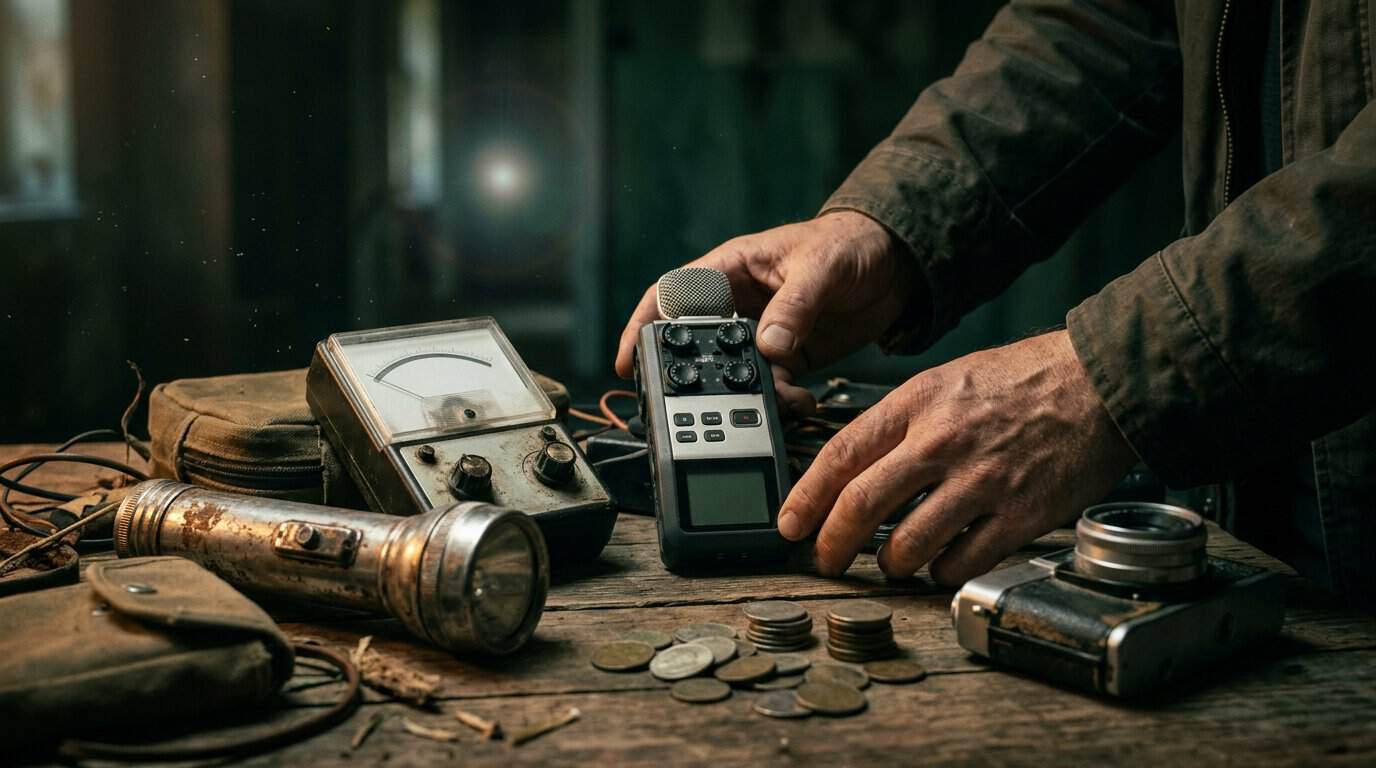
Paranormal Investigation Kit Cost: What Buyers Should Expect
In the sampled U.S. listings, paranormal investigation kits range from $85.95 for GhostStop’s Ghost Hunting Go-Kit to $595.95 for its Pro Ghost Hunting Kit. The price gap reflects different bundles, not a standard set of tools. One kit may focus on basic equipment, while another includes more specialized gear.
Buying items separately offers another way to compare costs. Pro Measure lists a P-SB7 Spirit Box at $94.90 and a meter that combines EMF, temperature, and REM-field detection at $199.00. A bundle may save effort, but its headline price tells only part of the story. The key questions are which tools are included, whether optional accessories cost extra, and whether the price and stock status are current. A clear comparison starts with the equipment an investigation needs.
Key Takeaways
- Sampled U.S. listings price ready-made paranormal investigation kits from $85.95 for GhostStop’s Ghost Hunting Go-Kit to $595.95 for its Pro Ghost Hunting Kit, and the difference reflects bundle contents rather than a standard set of tools.
- Buyers should compare each kit’s confirmed equipment and optional extras, since GhostStop’s $139.95 Beginner Ghost Hunting Kit includes an EMF meter, wrist EVP recorder, and flashlight, while its protective case costs extra.
- Pro Measure’s P-SB7 Spirit Box and Mel-8704R-REM-ATDD meter cost $293.90 when purchased separately, compared with $235.00 for the paired kit, a $58.90 difference for those two items.
- Buyers should recheck prices and stock before setting a budget because listed discounts can change and products such as Sony’s $74.99 ICD-PX370 recorder were marked out of stock.
What Does A Paranormal Kit Cost?
In the sampled U.S. vendor listings, ready-made paranormal kits range from $85.95 for GhostStop’s Ghost Hunting Go-Kit to $595.95 for its Pro Ghost Hunting Kit. These are examples, not a market-wide average. The difference comes down to the equipment in each bundle, since there is no single standard kit.
Bundles may include an EMF meter, an audio recorder, a flashlight, a spirit box, or video gear. GhostStop’s Beginner Ghost Hunting Kit, listed at $139.95, includes an EMF meter, a wrist EVP recorder, and a flashlight. A protective case is an optional add-on, so the listed price does not cover every possible extra.
Other listings show how bundles can focus on specific tools. GhostStop listed an EMF & Laser Grid Kit at $89.95 and a Spirit Box Ghost Hunting Kit at $219.95. Its Intermediate Ghost Hunting Kit was listed at $165.95, while the Pro Ghost Hunting Kit includes eight items.
The listed prices may include discounts. GhostStop showed the Beginner kit reduced from $162.85 and the Pro kit reduced from $699.70. Sale prices can change, and stock status can vary. GhostStop marked its DIY EMF Meter Kit and Laser Grid and Tripod package out of stock. A useful price comparison considers each bundle’s contents and any add-ons, not just the number displayed beside the product.
Which Ready-Made Kits Fit Each Budget?
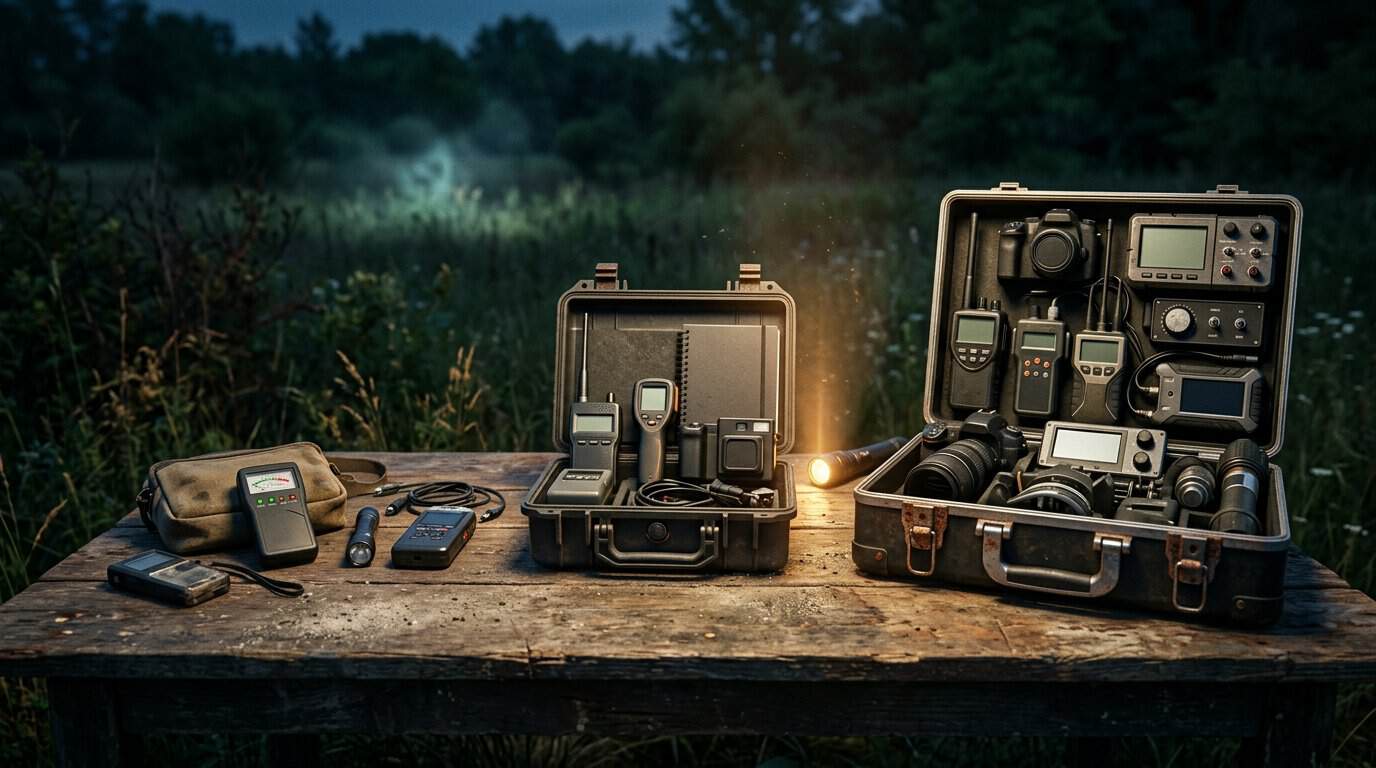
GhostStop’s listed kits range from $85.95 to $595.95. The options include lower-priced kits, bundles built around specific gear, and a higher-priced Pro package.
| Kit | Listed price | Reduced from | Identified contents |
|---|---|---|---|
| Ghost Hunting Go-Kit | $85.95 | $110.85 | Not specified here |
| EMF & Laser Grid Kit | $89.95 | $110.85 | EMF and laser grid, as named in the kit |
| Beginner Ghost Hunting Kit | $139.95 | $162.85 | EMF meter, wrist EVP recorder, and flashlight; protective case is optional |
| Intermediate Ghost Hunting Kit | $165.95 | $184.95 | Not specified here |
| Spirit Box Ghost Hunting Kit | $219.95 | $262.80 | Spirit box, as named in the kit |
| Pro Ghost Hunting Kit | $595.95 | $699.70 | Eight items |
At the lower end, the Go-Kit and EMF & Laser Grid Kit are listed for less than the Beginner kit. Their prices alone do not show whether the bundles suit the same type of investigation. The EMF & Laser Grid Kit names two types of gear, while the Go-Kit’s name does not specify its contents.
The Beginner and Intermediate listings sit in the middle of this price range, with the Spirit Box Ghost Hunting Kit priced higher. The Beginner listing names three included tools, while GhostStop says the Pro kit contains eight items. These details make some bundles easier to assess than others. Kit names and prices do not show that every package contains the same equipment.
The listed reductions also vary by kit. The Spirit Box Ghost Hunting Kit is shown at $219.95, down from $262.80, while the Pro kit is listed at $595.95, down from $699.70. The range offers several bundle options, but the confirmed contents matter as much as the listed price.
What Does Buying Gear Separately Cost?
Buying the P-SB7 Spirit Box and Mel-8704R-REM-ATDD separately costs $293.90 at their listed prices, compared with $235.00 for the paired kit. That is a $58.90 difference, based on the listed prices for those specific items.
The P-SB7 Spirit Box (Rev 8) is listed at $94.90, and the Mel-8704R-REM-ATDD meter is listed at $199.00. The meter combines EMF, temperature, REM-field, and hot/cold-spot detection. Together, the two prices add up to $94.90 + $199.00 = $293.90.
The $235.00 paired-kit listing says Pro Measure’s paired kits cost less than buying the pieces separately. In this example, the prices support that claim for the spirit box and meter together. The difference between the separate total and the kit price is not a general estimate of savings on paranormal gear. It applies to this listed pair.
A separate audio recorder adds another possible cost. Sony Electronics lists the ICD-PX370 mono digital voice recorder at $74.99, but marks it out of stock. Adding that listed price to the two separate Pro Measure item prices brings the three-item total to $368.89, although Sony’s listing shows that the recorder is currently unavailable.
The comparison depends on which tools are included. The $235.00 kit pairs a spirit box with a multi-function meter, while the recorder is a separate product with its own price and stock status. Buyers comparing the kit with a piece-by-piece setup can keep the calculation clear by separating the paired equipment from any additional recording gear.
What Is Included In The Price?
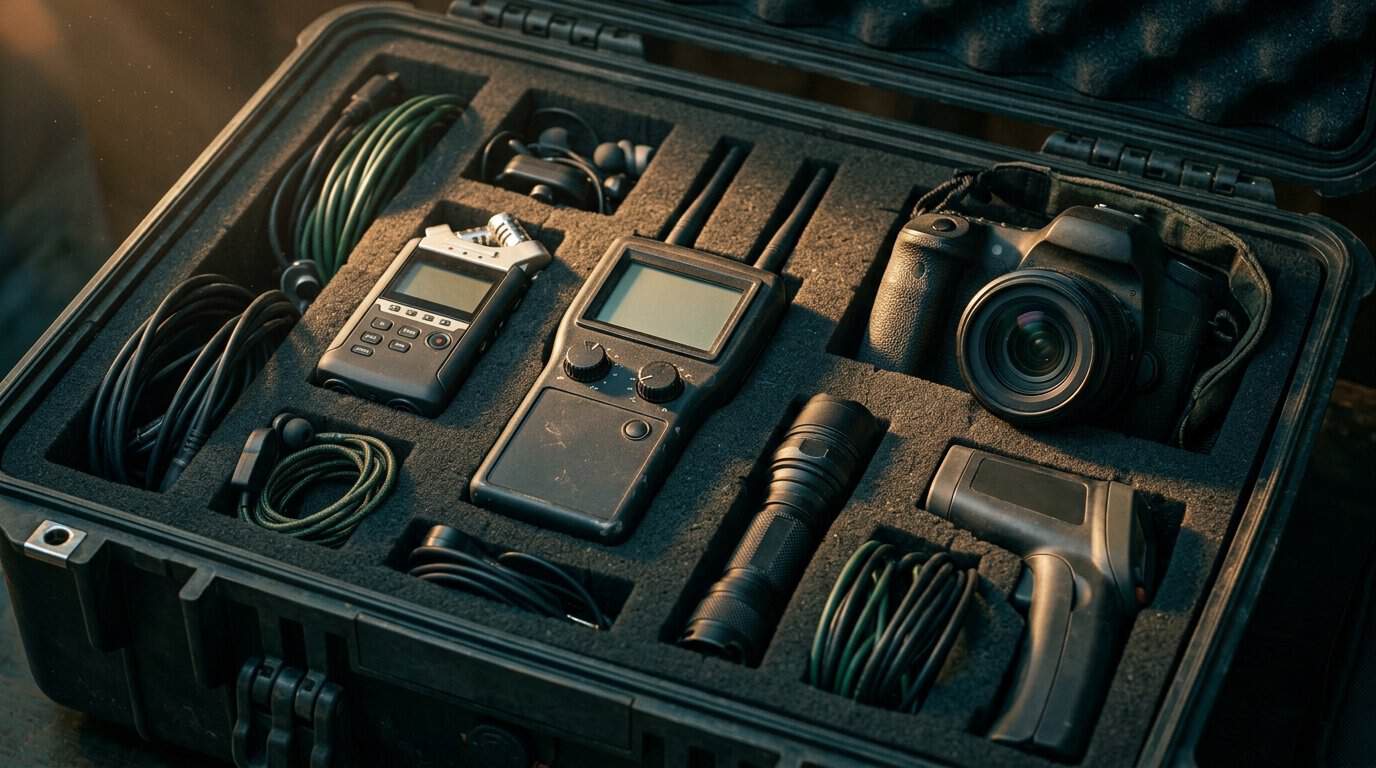
The price covers the equipment listed as included, while optional accessories can raise the final cost. Each tool has a different role: an EMF meter tracks electromagnetic-field readings, a wrist EVP recorder captures audio for later listening, and a flashlight helps investigators see and document dark spaces.
The Beginner Ghost Hunting Kit is a clear example of a bundle built around those basics. It includes an EMF meter, a wrist EVP recorder, and a flashlight. The meter gathers readings, the recorder preserves sounds for review, and the flashlight provides visibility. The protective case is optional, so it may add to the kit’s final cost.
The Pro Ghost Hunting Kit is described as including eight items. That item count suggests a broader bundle, but it does not explain what each tool does or whether it suits a particular investigation. A higher item count also does not make two kits equivalent. One bundle might emphasize recording, while another may focus on environmental readings or visibility.
Bundle names alone do not establish that two kits contain equivalent gear. “Beginner” and “Pro” are labels, not item-by-item comparisons. Before comparing bundles, readers should check the included-equipment list and distinguish included tools from optional accessories. Confirming whether the Beginner kit’s protective case is included or listed as an add-on, for example, helps clarify the full cost. A useful comparison matches the actual tools and extras, not just the package names.
How Do Sales And Stock Change Comparisons?
Sales and stock changes complicate paranormal kit comparisons. A discounted price may not last, and an unavailable product cannot be bought at its displayed price. Several GhostStop listings show a reduced price beside a former price: the Ghost Hunting Go-Kit was $85.95, reduced from $110.85; the Intermediate Ghost Hunting Kit was $165.95, reduced from $184.95; and the Spirit Box Ghost Hunting Kit was $219.95, reduced from $262.80.
A sale price is a snapshot, not a reliable long-term budget figure. GhostStop marked its DIY EMF Meter Kit at $59.95–$64.95 and out of stock. Its Laser Grid and Tripod package was listed at $49.95 and also marked out of stock.
The same issue applies to standalone equipment. Sony marked the ICD-PX370 recorder at $74.99 and out of stock, so the listed price does not guarantee availability. A budget based on that recorder would need to account for whether it returns to stock or another option is needed.
Before publication or purchase, recheck each listing’s price and stock status. Compare the current displayed price with any former price, and do not treat a discount as permanent. Availability affects the practical cost of a kit: a bundle or accessory price matters only if the item is in stock when needed.
How Should Buyers Choose A Kit?
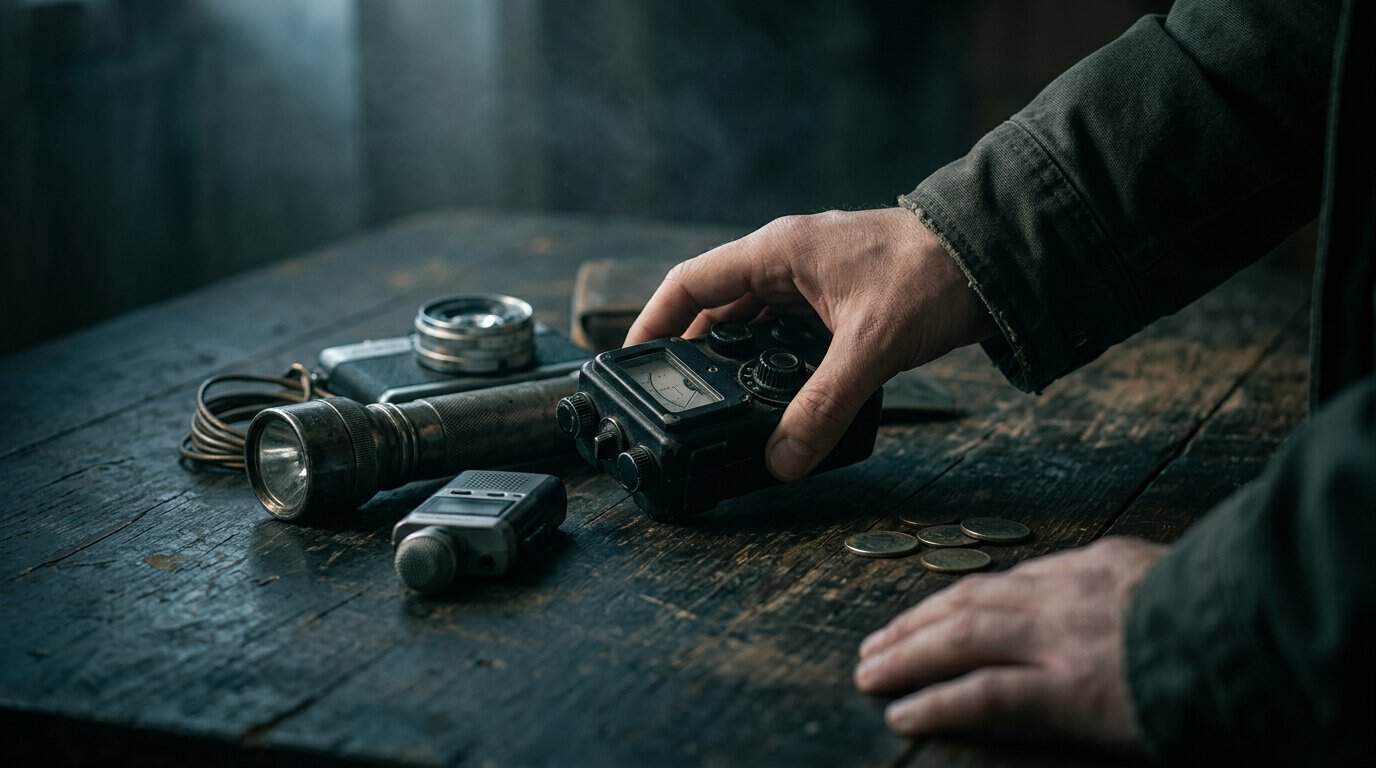
Buyers can choose a kit by matching its included equipment to their needs, comparing its price with the cost of the same items separately, and checking which accessories cost extra. This short checklist can make bundle prices easier to judge:
- Compare the equipment in each bundle. GhostStop’s Beginner Ghost Hunting Kit includes an EMF meter, a wrist EVP recorder, and a flashlight. Its protective case is optional, so buyers should separate included tools from add-ons when comparing it with another kit.
- Compare the bundle price with the separate-item total. Pro Measure listed its P-SB7 Spirit Box (Rev 8) and Mel-8704R-REM-ATDD meter separately for $94.90 and $199.00, or $293.90 together. The paired kit was listed at $235.00, a direct comparison for those two pieces.
- Check the listing before setting a budget. Prices and availability can change, and an accessory shown alongside a kit may be optional rather than included. A listed price is an example, not a guarantee that the same deal or stock status will remain.
A bigger bundle is not automatically a better fit. The right choice supports the investigation’s goals, not just the one with the largest item count.
Choose Gear For The Questions That Matter
Before choosing a listing, write one sentence naming the question the investigation will try to answer: whether a sound repeats, whether readings change, or whether movement appears on camera. That question can narrow the gear list before a bundle’s item count or sale price drives the decision.
For a question about sound, prioritize an audio recorder and keep it in one place during a session. Note when a sound occurs and compare it with the room’s ordinary background noise. A recording captures sound for review, but does not identify its cause by itself.
For changing environmental readings, check whether the meter measures the specific conditions of interest. The Mel-8704R-REM-ATDD combines EMF, temperature, REM-field, and hot/cold-spot detection, making its listed functions more relevant to that question than a tool chosen only for its name.
For a visual question, look for video gear named in the included-items list. Set aside bundles whose contents do not match the question.
The next step is to compare the short list with the written question, then mark each desired tool as included, optional, or unconfirmed. Which observation would shape the first kit on the list?
Frequently Asked Questions
1. Do paranormal investigation kits usually include batteries?
Check the included-items list for batteries. If the listing does not mention them, account for batteries separately.
2. Can a smartphone replace a dedicated EVP recorder?
A smartphone can record audio and may work as a basic alternative to a dedicated EVP recorder. During a session, keep the phone in one place, make sure it has enough storage, and remember that a recording captures a sound without identifying its cause.
3. What should someone do if an investigation recording captures an unexplained sound?
Keep the original recording and note when and where the sound occurred. Listen again alongside notes about activity in the room, and consider ordinary sources such as background noise before drawing conclusions.