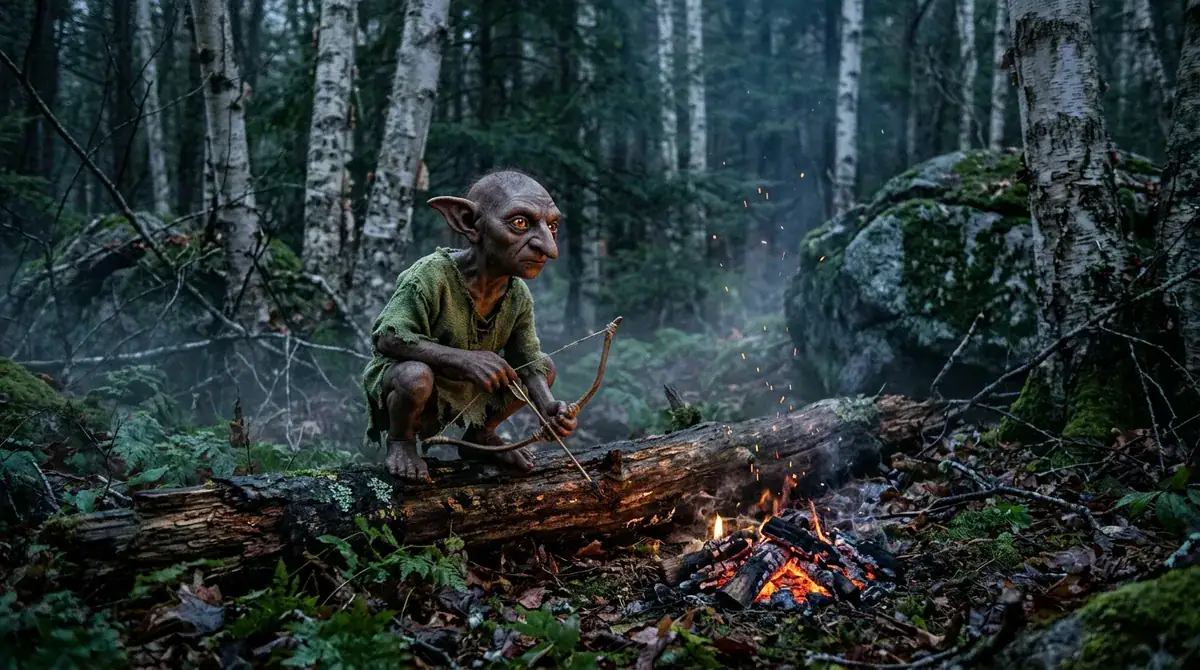
Pukwudgie Legends: Tracing the Little People of New England
Pukwudgie legends are stories of small, elusive forest beings. The name first surfaces in print in Ojibwe material gathered by Henry Rowe Schoolcraft, whose collection Algic Researches was published in New York in 1839. Folklore references describe these figures as usually two to three feet tall in human form, and their reputations vary widely. Some tellers portray them as playful tricksters, others as helpers, and a few as dangerous beings to be avoided.
Within two decades, the little people had traveled far beyond the scholar’s study. In 1855, Henry Wadsworth Longfellow’s The Song of Hiawatha pictured the Puk-Wudjies plotting against the warrior Kwasind with pine and fir cones, and the poem helped fix the name in the popular imagination. The story does not end with a single book, however. New England writers later tied the beings to Wampanoag figures such as Maushop, and modern Bridgewater Triangle stories gave the legend a fresh local setting. Here the trail grows tangled, and the real puzzle is where the old tradition ends and the newer retelling begins.
Key Takeaways
- The name Pukwudgie first appears in print in Ojibwe material gathered by Henry Rowe Schoolcraft, whose collection Algic Researches was published in New York in 1839.
- Henry Wadsworth Longfellow’s 1855 poem The Song of Hiawatha pictured the Puk-Wudjies plotting against the warrior Kwasind with pine and fir cones, which helped fix the name in popular imagination.
- William S. Simmons argues that Wampanoag figures Chief Red Shell and Chief Wild Horse probably borrowed the Pukwudgie name and story from published sources, so the Cape Cod Pukwudgie stories blend Wampanoag oral tradition with printed material rather than preserving one unbroken ancient source.
- Pukwudgie characters vary widely across traditions, appearing as playful tricksters, helpful guardians, or dangerous beings to be avoided, so no single moral picture applies to every telling.
- Striking Pukwudgie details such as grey skin, glowing eyes, and unusual claws do not appear in the older printed sources, so readers should trace any such detail back to its first printed appearance before accepting it as tradition.
Where Did the Pukwudgie Name Come From?
The name Pukwudgie first appears in print in Ojibwe material gathered by Henry Rowe Schoolcraft, and it spread beyond scholarly circles only after poets and popular writers picked it up. Schoolcraft’s Ojibwe-based collection came out in New York in 1839, published by Harper, and it drew on tales from Indigenous storytellers rather than on the oral traditions of southern New England.
Some of that Ojibwe material came to Schoolcraft through Jane Johnston, an Ojibwe writer, and her mother. Their contributions show that the printed tradition was shaped by collaboration between Indigenous families and a non-Indigenous editor, a fact that matters when readers ask who controlled the story as it went into print.
The spelling wobbles from the start. Early printed versions used forms such as Puk-Wudjies, while later writers offered Pukwudjininee and other variants. Each spelling records how one person heard a word and wrote it down, so the variations reveal a name that traveled through many hands before it settled into English.
Henry Wadsworth Longfellow’s 1855 poem carried the name much further. Its chapter titled “The Death of Kwasind” turned the little people into a band of schemers, and the poem’s popularity made the name familiar to readers who had never opened a folklore collection. Longfellow’s version is a literary work, and it reshaped the beings to suit its own drama.
The scholar William S. Simmons, in his study Spirit of the New England Tribes, makes a careful point about origins. He notes that the name Pukwudjininee appears in Central Algonquian folklore but not in early New England sources. That gap matters, because it suggests the figure did not arrive in the region as an old, local belief waiting to be written down.
Other peoples had their own forest beings with comparable traits. An encyclopedia of American folklore lists the Mohegan figures Mukheahweesug or Makiawisug, the Mi’kmaq Mikumwess, and the Miami Paissa or Pia-sa-ki, each tied to a different language and region. Together they show how many nations told stories about small woodland figures, and how each told them in its own way.
Were Wampanoag Stories Behind the Legend?
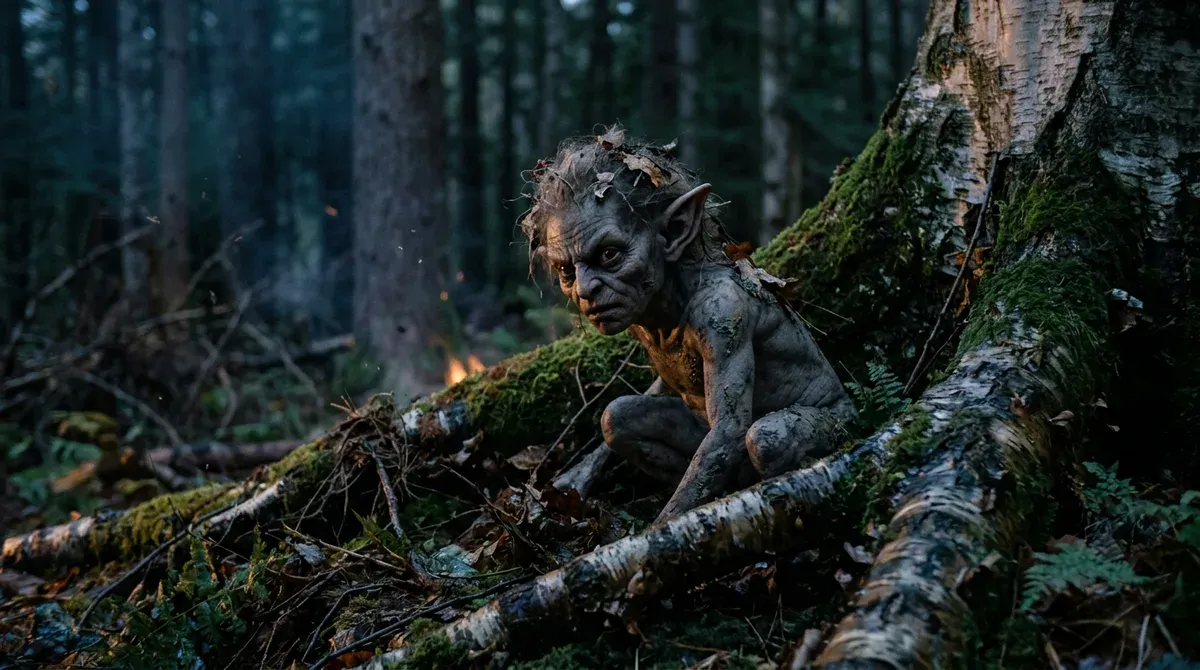
Only partly. The evidence points to a blend of Wampanoag storytelling and printed material rather than one unbroken ancient source. Wampanoag and Cape Cod tradition includes a giant named Maushop, and later writers placed the little people in his world, which is why the two often appear together in modern retellings.
Maushop is a giant in Wampanoag and Cape Cod storytelling, a figure large enough to shape the land itself. The little people entered his story only later, when writers began linking the two in print. Granny Squannit is another figure from Wampanoag tradition, and she is often discussed alongside Maushop by readers exploring the wider cast of Cape stories.
The twentieth-century picture took much of its shape from a 1934 Cape Cod folklore collection by Elizabeth Reynard. She credited Maushup-related narratives to two Mashpee Wampanoag figures, Chief Red Shell, known as Clarence Wixon, and Chief Wild Horse, known as Clinton Haynes. Their names gave the stories a Wampanoag voice on the printed page.
Historian William S. Simmons, in his study Spirit of the New England Tribes, argues that Red Shell and Wild Horse probably borrowed the Pukwudgie name and story from published sources. He also describes the Reynard stories as blending Wampanoag oral and historical traditions with Ojibwa and Delaware motifs and vocabulary.
That does not mean the tellers invented everything from nothing. Real Wampanoag materials sit underneath these accounts. But the stories were reshaped as they moved from speech into books, and the printed versions carried words and motifs from far beyond Cape Cod.
Thomas Weston’s 1906 History of the Town of Middleboro offers a similar case. Its little-people account is set on an island in Assawampsett Pond, and Simmons identifies it as a local adaptation of an Ojibwe legend. A story that began among Great Lakes peoples appears, in this version, on a Massachusetts pond.
Such examples show why careful readers keep track of sources. A tale can carry a Wampanoag name, a Cape Cod setting, and an Ojibwe plot all at once. Looking at who told the story, when it was printed, and which earlier books the collector used helps separate the strands. It also shows how a legend can be rooted in one place while borrowing its details from another.
Are Pukwudgies Tricksters, Guardians, or Killers?
Pukwudgies are, depending on who tells the story, tricksters who play cruel jokes, helpers who guard travelers, or dangerous beings to be avoided. No single moral picture holds across every tradition.
The mischievous side is the most familiar. In many tellings, the little people tangle paths, set snares for travelers, and make fools of the proud. This trickery often works as a test. A person who keeps their temper, shares food, or resists greed may pass, while the careless one ends up lost in the woods.
Other stories show a gentler face. Some tellers describe beings who warn hunters of danger or reward kindness with small gifts. In these accounts, the forest feels less like an enemy and more like a place with its own rules.
Supernatural powers run through much of the lore as well. Storytellers describe the beings as able to change their shape, vanish from sight, and appear where no one expects them. These abilities serve the narrative, and they are what make the little people such memorable characters.
The darkest episodes belong to a smaller group of retellings. In some versions, the beings lure people toward cliffs, and in others they strike with poisoned arrows. These scenes cast the beings as enemies rather than teachers.
An encyclopedia of American folklore notes that portrayal varies by culture and region, and that pattern helps explain why one name carries so many moral faces. A Wampanoag-linked tale, an Ojibwe story, and a Massachusetts local legend each had different listeners and different lessons. Jean Fritz’s 1982 children’s book, The Good Giants and the Bad Pukwudgies, shows how the split between good and evil could be sharpened for young readers, with the giants on one side and the little people on the other.
That leaves a question without a settled answer. Did the darker stories preserve an older teaching about the dangers of the forest, a warning passed from elders to children? Or did later writers, eager for drama, sharpen the villainy to make a better tale? Readers can weigh both possibilities. Which version would you have heard as a child, and what would it have taught you about the woods?
What Did the Little People Look Like?
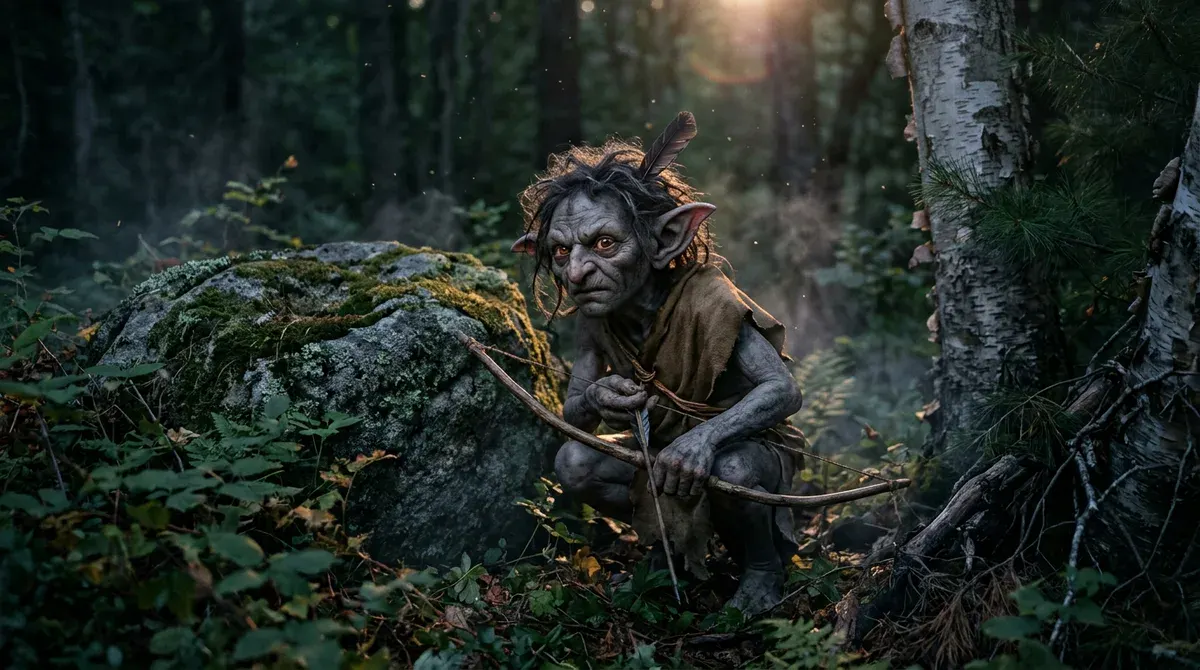
Reference works describe the little people as small forest beings, usually two to three feet tall in human form. That modest height is about the only physical detail that holds steady across most sources. Beyond size, the older printed material says little about how they looked. Their interest lies in what they did, not in their faces, clothing, or skin.
Popular art filled that silence. Illustrators and later writers gave the beings pointed features, bright clothing, and sharp expressions, turning a loose oral idea into a figure that children could picture at once. Longfellow’s 1855 poem, by contrast, concentrates on the little people’s scheming against Kwasind, leaving readers to imagine their bodies for themselves.
Modern cryptid sites and social posts go further. Some describe grey skin, glowing eyes, or unusual claws, and details like these do not appear in the older print sources. They often read as settled facts, yet they are usually later additions.
Why do such details look so solid online? Many posts repeat one another, and each copy looks like independent confirmation. Often the chain leads back to a single later book or magazine article, and a vivid detail added once can travel across many websites without anyone checking where it first appeared. The original writer may have been describing a costume, a stage performance, or simply their own imagination.
Readers who want to test a striking description can ask a few plain questions. Which book or article first printed it? Did the author name a source, a teller, or a community? Does the detail appear in the Ojibwe material from the 1839 collection, or only in a modern post? If the answers point to one recent retelling, the detail may be a good story rather than an old tradition.
How Did Christianity Reshape the Pukwudgie Stories?
Christian ideas may have reshaped the Pukwudgie stories by adding a moral split between good and evil, a frame that writers in New England would have known well from sermons and Bible lessons. Many older accounts do not sort the little people so neatly, and their moods can shift from one telling to the next.
Missionaries and the writers who followed them often believed the world divided cleanly into saints and sinners. When they heard tales of forest beings, they may have heard them through that lens and written them down as warnings against wrongdoing. Even a sincere listener can change a story this way, simply by deciding which characters deserve sympathy.
Thomas Weston’s 1906 History of the Town of Middleboro shows how a local writer could take a distant legend and make it his own. The Middleboro account moved an Ojibwe story onto Massachusetts ground, and a reader can ask what other changes came along with the move.
William S. Simmons warns that some published accounts mixed Wampanoag, Ojibwe, Delaware, and other printed material into one smooth narrative. That blending can make a story look more ancient and unified than it really is. A tidy moral frame is one of the easiest threads to pull into such a blend.
By the time the tale reached a 1982 children’s book, the moral sorting was built into the title. Jean Fritz’s The Good Giants and the Bad Pukwudgies presented the Maushup story as a clear contest between heroes and villains, a shape that suited young readers and classroom lessons.
Did the good-versus-evil frame come from missionary teaching, from printers who wanted clear heroes, or from Indigenous tellers responding to newcomers? The question remains open. Readers who compare the Ojibwe material, the Middleboro account, and the children’s book side by side may find the answer shifting with each page they turn.
Bridgewater Triangle Tales and the Freetown Sign Prank
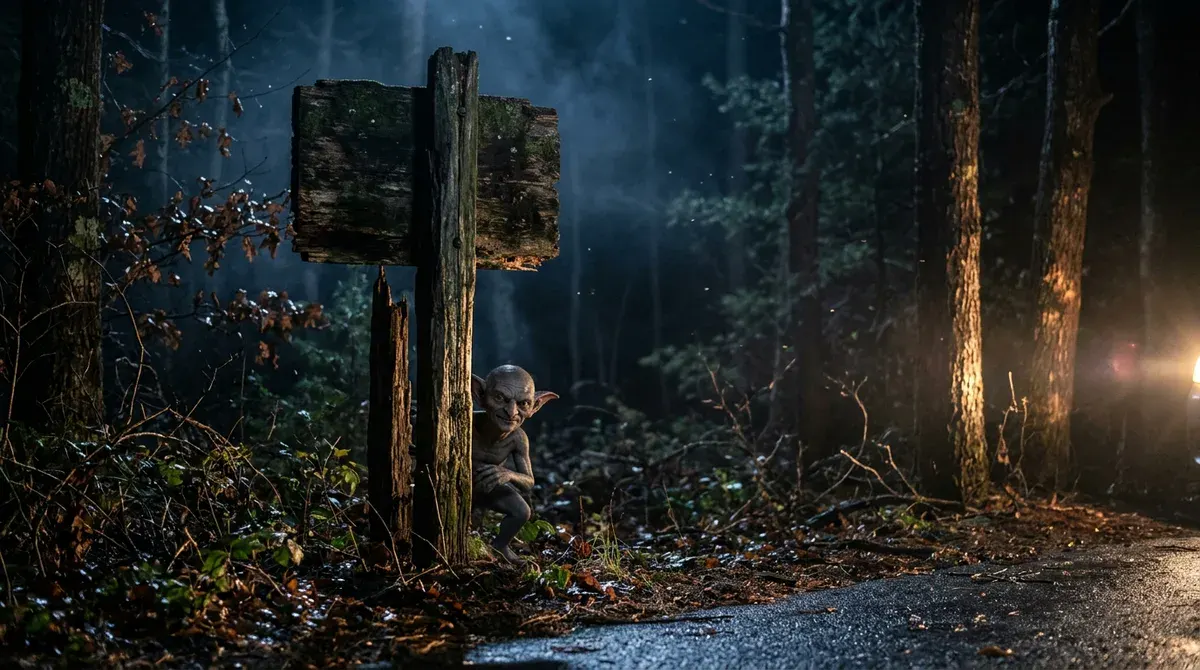
The Bridgewater Triangle is a popular label, not an official boundary, for a stretch of southeastern Massachusetts where people have reported strange lights, odd creatures, and other unexplained events. Within that region, Pukwudgie stories sit alongside many other local tales, so the little people became one more thread in a larger web of regional lore.
Twentieth-century books did much of the spreading. Writers who gathered regional stories carried the Maushop and little-people tales from Cape Cod into print for readers far beyond the cape. Later authors repeated and reshaped them, and modern Bridgewater Triangle stories placed the beings in quiet woods and along country roads, where a legend could feel close to home.
Then came April 1, 2017. Freetown Police announced a “Pukwudgie” crossing sign near Freetown State Forest, and the notice claimed the creatures’ mating season had begun. Because it came from a police department, it looked official enough to be shared widely. The catch was in the dates: the purported mating season began and ended on April Fools’ Day. WBSM reported the announcement as a joke. The police had created a prank that worked because many readers already knew the legend.
The episode offers a useful lesson for anyone who reads local warnings online. Before trusting a notice, check whether it appears on the agency’s own website or social accounts, or whether it has only been reposted by others. Look at the date, too. A sign or alert that arrives on April 1 deserves an extra pause.
Local legends make good material for pranks because they already feel familiar. A creature with a folklore past can slip into a news post more easily than an invented monster, and that familiarity is part of the fun. It is also why the old stories and the new jokes are so hard to pull apart.
Why Do Pukwudgie Legends Still Capture the Imagination?
Pukwudgie legends keep their pull because three forces meet in them: an old tradition, a particular stretch of land, and an online culture that never stops retelling the story. Longfellow’s poem gave generations a vivid scene of schemers, and children’s books gave the little people a place in classroom reading lists and bedtime collections. Young readers often meet the beings through pictures and simple moral lessons long before they encounter any older source.
The folklore also offers a few warnings that still feel vivid. In some traditional tellings, listeners were cautioned to keep away from high cliffs, where the little people were said to lure travelers toward the edge. Other tellings warned that a stranger met alone in the deep woods deserved a second look, since the beings could wear a friendly face. Storytellers presented such lines as lessons in attention and respect for the land, not as rules for a hike.
Modern cryptid pages and discussion forums carry the legend in a different way. Members post their own supposed encounters, compare notes on sightings near the state forest, and ask whether a rustle in the brush might be one of the little people. These threads turn a story into a personal experience, and they invite readers to add their own chapter. Reading them with a critical eye means asking which posts describe a real experience, which repeat a detail from an earlier article, and which simply spin a good tale.
Above all, these stories belong to living communities. Wampanoag people, including the Mashpee Wampanoag, and Ojibwe people continue to tell their own histories, and their voices carry knowledge that no outside retelling can fully match. Readers who want the deepest understanding should seek out those voices first, through tribal histories, cultural programs, and writing by Indigenous authors, before trusting the version found on a forum.
Which thread pulls hardest: the old teaching, the local woods, or the online chatter?
Weighing the Pukwudgie Evidence for Yourself
Start with one retelling you have already read or heard. Write down the detail that stood out, then trace it backward. Ask who first printed it, whether the author named a teller or community, and whether the detail appears in the older printed material at all. A library or university archive can help you find early editions of Thomas Weston’s 1906 History of the Town of Middleboro and Elizabeth Reynard’s 1934 Cape Cod collection, so you can compare the wording yourself.
Before sharing a striking local warning, check where it came from. Visit the police department’s own website or social accounts, and look for the notice there rather than in a repost. Then check the date. The 2017 Freetown “Pukwudgie” crossing sign was an April Fools’ Day joke, and a notice that appears on April 1 deserves a second look.
For the deepest understanding, go to the communities that carry these stories. Contact the Mashpee Wampanoag Tribe’s cultural or education office and ask which histories, programs, or books they recommend. Then read writing by Ojibwe authors, including Jane Johnston, whose contributions shaped the printed tradition from the start.
Keep a simple notebook as you go. For each claim, note the source, the year, and whether the detail appears before or after the 1982 children’s book. Which claim will you trace first?
Frequently Asked Questions
1. Are Pukwudgies the same creatures as leprechauns or other little-people figures from Europe?
No. Pukwudgies come from Algonquian-speaking peoples of the Great Lakes and New England, while leprechauns belong to Irish folklore. Both are small beings tied to the land, which is why people often compare them, but their origins and roles in stories differ. Pukwudgies are usually described as forest dwellers whose moods range from playful to dangerous, while leprechauns are best known for guarding hidden gold and tricking those who catch them.
2. Do Delaware traditions include a pukwudgie, and how do their versions differ?
The clearest Delaware link runs through the twentieth-century Cape Cod stories. Historian William S. Simmons, in Spirit of the New England Tribes, describes those tales as mixing Wampanoag traditions with Ojibwa and Delaware motifs and vocabulary. Delaware influence therefore appears inside the blended retellings rather than as a separate, well-documented Delaware version of the figure.
3. Where can readers find Schoolcraft’s Algic Researches or Longfellow’s poem to read the original text?
Longfellow’s The Song of Hiawatha can be read online, and its full text, including Chapter XVIII, “The Death of Kwasind,” is available through Project Gutenberg. Schoolcraft’s Algic Researches, published by Harper in New York in 1839, is available as digitized copies through the Source Library, which draws on University of California Libraries holdings. Reading those original pages lets you see the Ojibwe material in its earliest printed form.
4. Are Pukwudgies a verified creature that scientists have studied?
No. The Pukwudgie is a figure of folklore, and no verified specimen or scientific study of such a creature exists. What researchers can examine is the printed record, from Schoolcraft’s 1839 collection to twentieth-century books, along with how the story changed in each telling. Reports of encounters come from storytellers, writers, and online posters rather than from controlled observation, which leaves plenty of room for curious readers to weigh the evidence themselves.