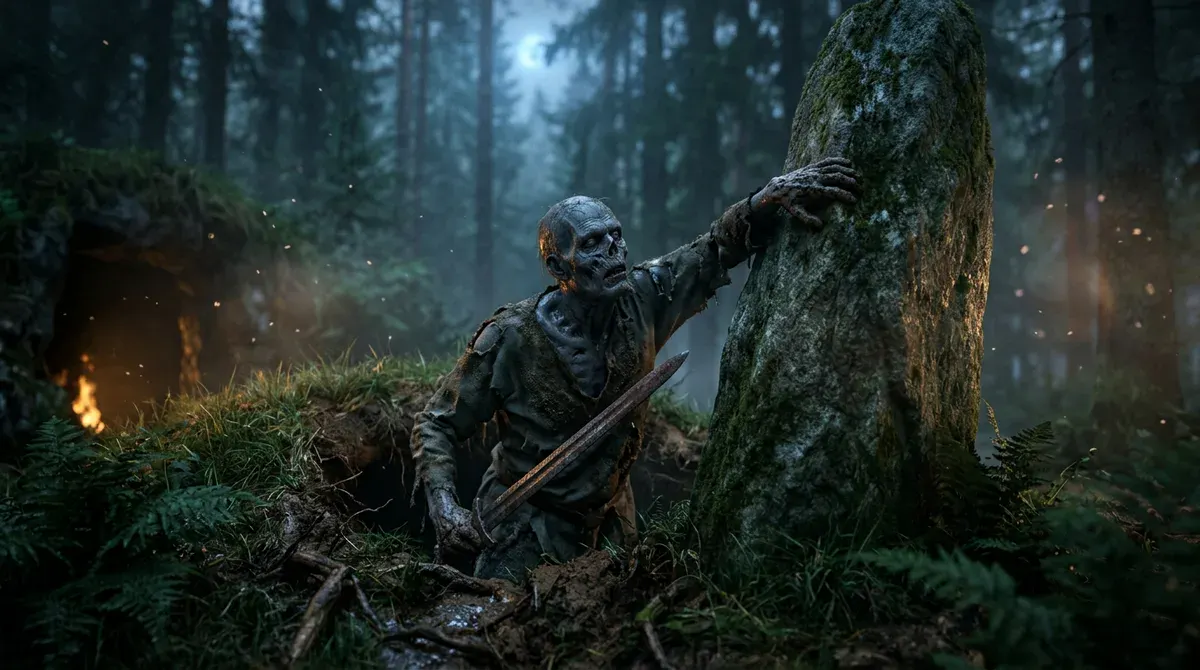
Draugr in Norse Mythology: The Restless Dead of the Sagas
A draugr in Norse mythology is a restless corpse, a living dead figure that refuses to stay in its grave and lingers among the farms and burial mounds of the medieval North. A 2025 University of Rochester dissertation describes the draugr as a “living dead corpse that becomes restless after death,” and notes that the word appears in Icelandic sagas without a clear Latin equivalent. That gap in translation hints at how distinctly the North imagined its returning dead.
Few scenes capture this fear better than one from chapter 18 of Grettir’s Saga. There, the mound-dweller Kárr the Old haunts a large barrow on Haramsey and drives away the farmers who owned the land after his death. Stories like this one raise a question that the rest of this article will explore: what made the dead feel so dangerous to the living?
Key Takeaways
- A draugr in Norse mythology is a restless corpse that refuses to stay in its grave, which a 2025 University of Rochester dissertation describes as a “living dead corpse that becomes restless after death.”
- The Sagnagrunnur database holds about 10,000 Icelandic legends, and almost 1,500 of those legends concern ghosts described with terms that include draugar and afturgöngur, showing the returning dead lived in everyday storytelling.
- A 2017 study in the European Journal of Archaeology found that grave reopening and reworking were widespread across Scandinavia from the first millennium AD into the Middle Ages, giving saga audiences a setting they would recognize.
- Medieval Norse beliefs linked a draugr to a “bad death” that left the person unable to rest, and customs such as closing the eyes of the dead were meant to prevent that restless return.
- Chapter 18 of Grettir’s Saga, which the Viking Society for Northern Research dates to around 1320 or later, shows Kárr the Old haunting a great barrow on Haramsey and driving away the farmers who owned the land after his death.
What Is a Draugr in Norse Mythology?
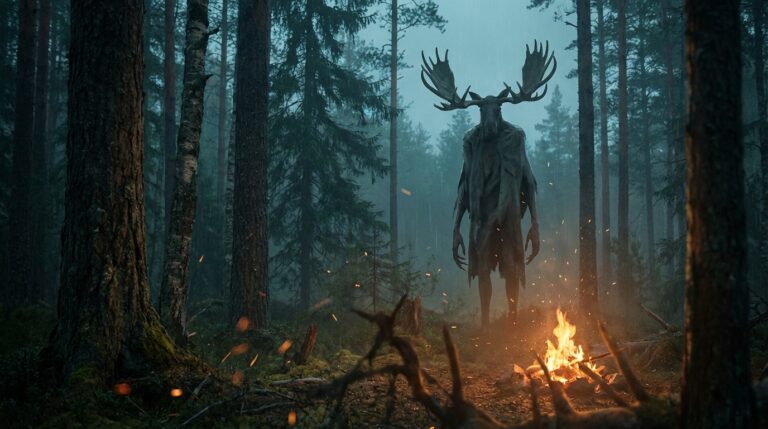
A draugr is a corpse that refuses to rest. The word, whose plural is draugar, is usually described as a revenant, a body that stays restless and active after burial. In the Icelandic sagas, the draugr walks out of its grave or mound to trouble the living.
The dead were not a single category in medieval storytelling. A 2024 study in the journal Religions reports that the Sagnagrunnur database holds about 10,000 Icelandic legends, and almost 1,500 of them concern ghosts described with terms that include draugar and afturgöngur. That scale suggests the figure lived in everyday talk and tale-telling, not only in a few famous sagas.
Scholars, however, caution against stretching the word too far. The mound-dweller in Grettir’s Saga is a vivid literary scene, shaped by a storyteller who wanted tension and drama. Not every returning corpse in the sagas fits neatly under the label.
Archaeology offers a more grounded backdrop. A 2017 study in the European Journal of Archaeology describes grave reopening and reworking as widespread practices in Scandinavia, stretching from the first millennium AD into the Middle Ages, with portable objects sometimes removed from the graves. People clearly went back to graves, and that real behavior gave the stories a setting that listeners would recognize.
So where does the draugr begin, in the grave or in the imagination? Readers may find that the answer changes depending on which saga they open.
Which Old Norse Words Describe the Returning Dead?
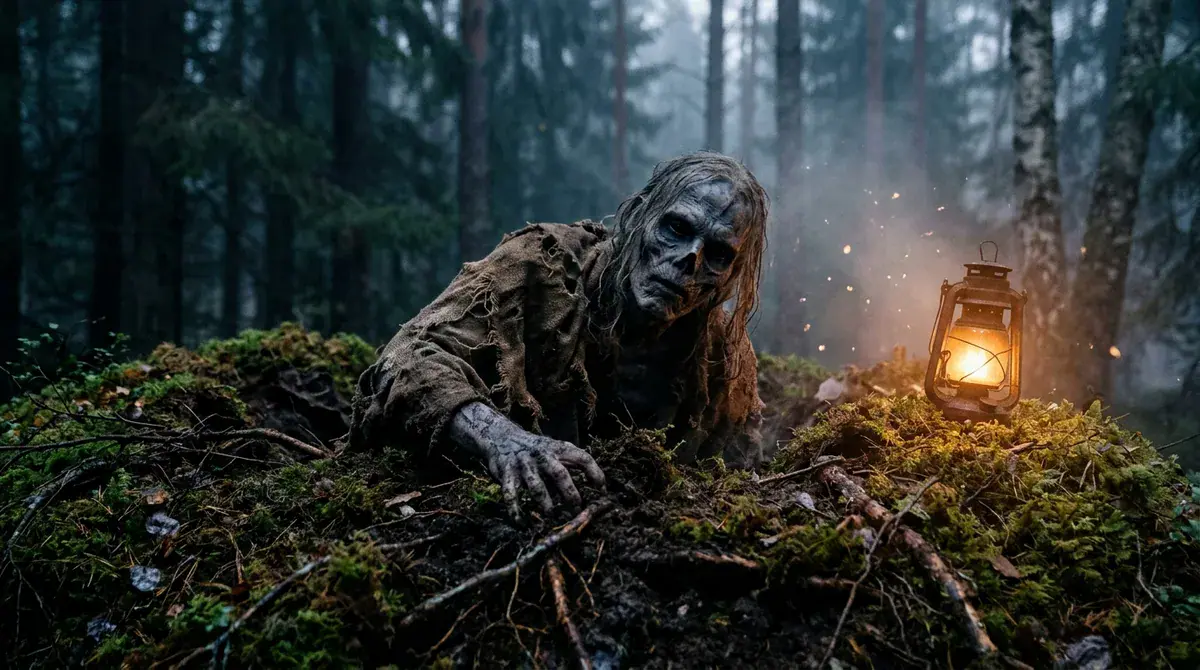
Several Old Norse words describe the returning dead, and each one hints at a different kind of haunting. Storytellers rarely relied on a single label, so one restless figure could be described by a word about its movement, its home, or the trouble it brought.
The Sagnagrunnur database holds about 10,000 Icelandic legends, and almost 1,500 of them concern ghosts. Those tales use a range of terms, and three stand out for the way they frame the dead.
- aptrgǫngur, meaning “again-walkers,” focuses on the act of returning, the dead rising to walk among the living once more.
- haugbúar, meaning “mound-dwellers,” ties the figure to its grave, where it guards bones and treasure.
- reimleiki, meaning “haunting,” names the disturbance itself, the unease that settles over a farm long before anyone sees a figure.
The first term turns the dead into travelers who keep coming back. The second keeps the corpse rooted in its burial site, which explains why a mound could become a place of danger. The third shifts the focus from the body to the atmosphere of a place.
These words overlapped. A single corpse could be a walker, a mound-dweller, and the cause of a haunting all at once, so the labels describe different angles on the same fear rather than neat categories. Which word a saga chose often reveals what the storyteller wanted the audience to feel.
Kárr the Old and the Haunted Barrow of Haramsey
Grettir was an outlaw with a price on his head, and he had learned to trust his own blade more than the goodwill of his neighbors. When he reached Haramsey, he walked straight toward the great barrow, its grassy sides pale under the night sky. Nobody else would go near it.
He dug into the side of the mound until the earth gave way. Inside the dark chamber, Grettir saw a heap of treasure glinting in the gloom. Beside it sat a body upright, as if the dead man had been waiting for company.
Then the barrow-dweller moved. The struggle was brutal and close, fought in cramped earth where no one could swing freely. Grettir wrestled the creature to the ground and cut off its head, and the haunting was over.
The story reaches us through a long line of copying and retelling. The Viking Society for Northern Research dates Grettir’s Saga to around 1320 or later, and a 1994 editor suggested it may be as late as the end of the 14th century. By then, the Viking Age was centuries in the past, which means the scene was shaped for audiences who knew the old tales of dead men guarding gold.
Did listeners shiver at the barrow, or did they simply enjoy a good fight? The scene suggests the mound could hold both treasure and fear at once, and the answer may depend on who was telling the story.
How Did Bad Deaths Shape Fears of the Undead?
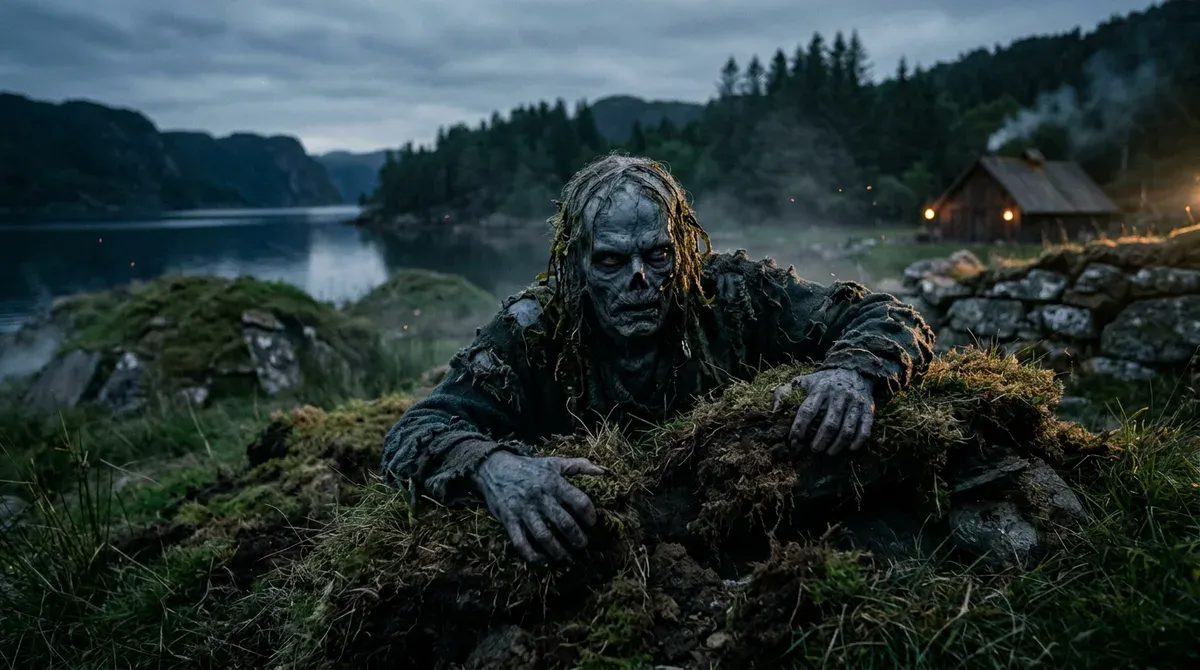
A “bad death” was a death that was believed to leave the dead person unable to rest, and the sagas suggest that medieval Norse people paid close attention to how a body was handled afterward. In a research paper on the subject, Leszek Gardeła of the University of Aberdeen examined how these ideas shaped funerary behavior and storytelling.
The care taken over the body could be practical as well as ritual. Eyrbyggja Saga and Egils Saga describe closing the deceased’s eyes and other openings, small acts that may have been meant to stop the dead from seeing, wandering, or letting something slip out of the body.
The removal of the corpse could be just as deliberate. Bodies were carried out through a hole made in a wall rather than through the door. One explanation is that the door was the everyday route of the living, so a different opening would stop the dead from finding their way back inside.
These details did more than describe funerals. Saga writers used burial details to signal danger and unrest, so a listener who heard about open eyes or a body pulled through a wall would already sense that trouble was coming. Whether every family followed these customs or some were added for drama, the details worked like warning signs in the story.
Were these rituals a real shield against the restless dead, or a way for storytellers to make the danger feel close? The answer may lie somewhere between the grave and the saga hall.
What Do Viking Age Graves Reveal About the Dead?
Viking Age graves show that the living did not always leave the dead alone. People opened, reworked, and reused burial sites, and they sometimes removed portable objects from them.
A 2017 study of burials across Scandinavia describes grave reopening as widespread, stretching from the first millennium AD into the Middle Ages. Returning to a grave was not a rare event that happened only in a few unlucky places. It was a practice many communities knew well.
A 2026 study in Current Swedish Archaeology examines evidence from more than 85 graves across 23 sites. Its authors argue that fragments of human bone were deliberately placed into new Viking Age funerary contexts, so remains from one burial could be carried into another. That careful handling suggests the dead remained part of family life and local memory.
Graves were treated in many different ways, from careful reopening to the quiet removal of objects. The digging and the storytelling may have grown from the same soil without being the same thing.
Imagine a farmer walking past a mound that had been dug into years before. Did he see a robbery, a family ritual, or the first hint of a draugr? The ground keeps its traces, but the meaning was left to the people who stood beside it.
Are Draugar Like Saints, Vampires, or Ghosts?
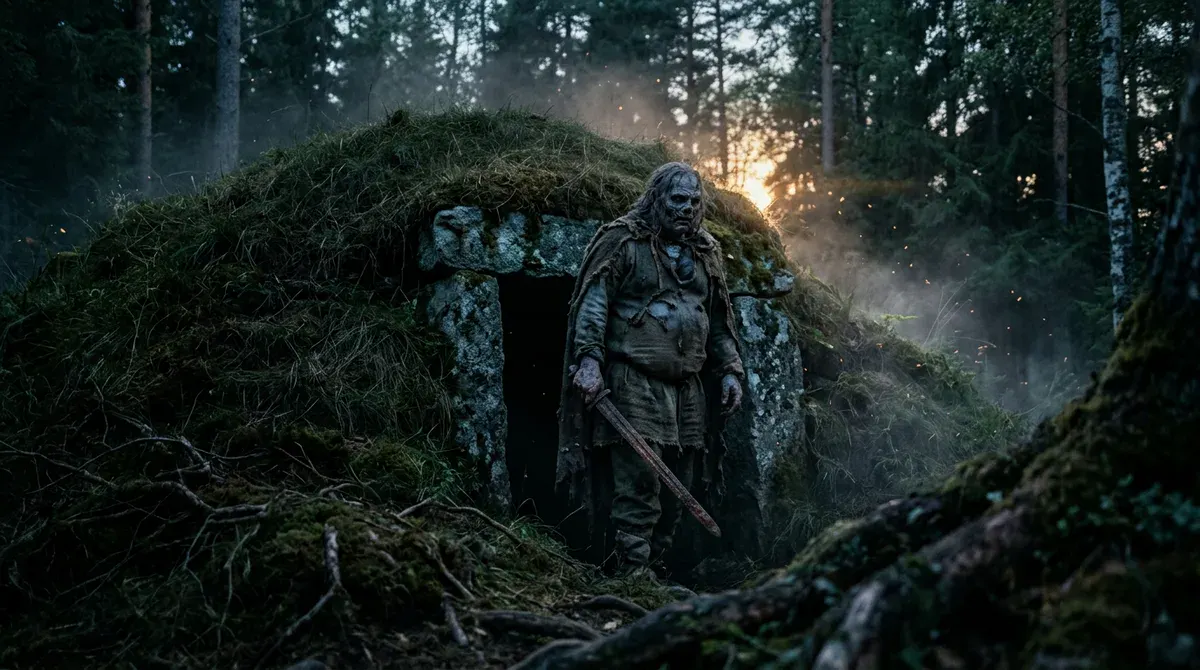
Draugar are not simply saints, vampires, or ghosts. They borrow traits from each, but they stay tied to one grave or place in a way the others rarely do. Medieval writers drew on the same storytelling patterns when they described holy people and the restless dead.
A 2020 article in Scandia: Journal of Medieval Norse Studies compares draugar with saints in Icelandic and continental Scandinavian saints’ lives, focusing on physical, behavioral, and supernatural motifs. Holy bodies in those lives could resist decay or stir with power after death. A draugr’s corpse that rises and moves can look like a holy body turned dangerous.
A ghost is usually a spirit that drifts and haunts, while a draugr is a body that moves and fights. The vampire of later folklore travels and hunts far from its grave. A draugr, by contrast, is attached to a particular mound or farm, so its danger stays close to home.
Storytellers mixed religious and folk ideas about the dead without worrying about tidy labels. Church teaching about the soul sat beside older beliefs that a body could keep its strength. Audiences likely heard both at once, and the result is a figure that feels half holy, half folk, and fully unsettling.
Where the Restless Dead Still Walk Today
Modern games and novels often reuse the draugr as a monster to fight. In The Elder Scrolls V: Skyrim, draugr guard ancient tombs, and in Assassin’s Creed Valhalla they rise from burial mounds to challenge the player. Icelandic storytellers kept the returning dead alive for centuries, and tales of them traveled across many parts of the North. Readers can start with the barrow scene in Grettir’s Saga, then set it beside the grave evidence from Scandinavia. Ask what the saga writers wanted listeners to feel, and what the archaeology can and cannot tell us. Did the dead truly frighten people, or were they simply the best characters in a good story?
Reading the Sagas for Yourself
Start with one short scene. Chapter 18 of Grettir’s Saga is brief enough to read in a single sitting. Pick a modern English translation and read it twice, the second time slowly.
Keep a notebook with three columns: the barrow, the farmers, and Grettir. Write down every detail about the dead man, especially that he sits upright beside the treasure as if he has been waiting for company.
Then turn to Eyrbyggja Saga and look for its passages on closing the eyes of the dead and carrying a body out through a hole in a wall. Compare how these texts treat the dead. Do they present the corpse as a guardian, or as someone who must be handled with great care?
Finally, explore the Sagnagrunnur database, which holds about 10,000 Icelandic legends. Choose one story about a draugr tied to a place you know or can find on a map. Ask whether it reads like a memory, an entertaining tale, or a warning.
Then share what you found in the comments. Which detail unsettled you most, and why do you think it did?
Frequently Asked Questions
1. How is draugr pronounced in English?
Draugr is usually pronounced “DROW-ger,” with the first syllable rhyming with “cow.” The plural, draugar, is often pronounced “DROW-gar.”
2. Why do games like Skyrim use draugr as enemies, and how close are they to the original?
Skyrim uses draugr as armored undead who guard ancient Nordic tombs, which echoes the saga image of a dead man guarding his mound and treasure. The game adds weapons, magic, and combat tactics that the medieval stories never describe, so it is a loose adaptation rather than a faithful copy.
3. Is there a sea draugr in older Norse texts, or is that a modern idea?
A sea draugr is mostly found in later folklore rather than in the medieval sagas, where draugar are tied to graves and mounds on land. In that later tradition, a draugr can be the restless ghost of a drowned sailor that lingers near the water and threatens boats.
4. How are draugr created in Norse mythology?
Medieval belief linked a draugr to a “bad death,” meaning a death that left the person unable to rest. People who died violently, died in disgrace, or were not handled according to custom were thought to be at risk of rising after burial. Careful treatment of the body, such as closing the eyes and carrying it out through a wall opening, was meant to prevent this.