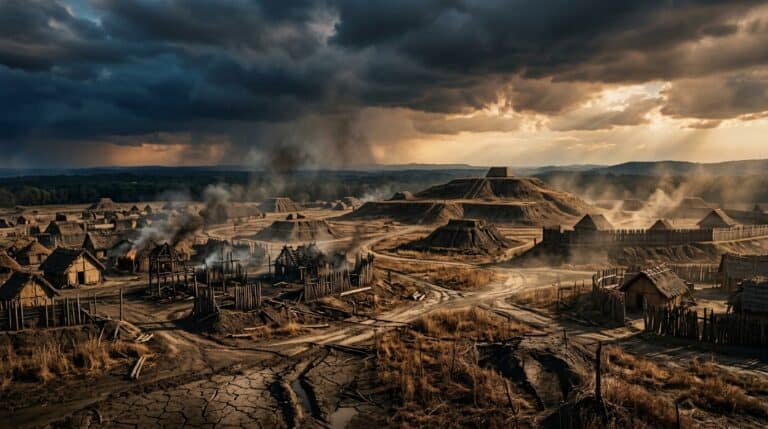
The Ghost Of The Arctic: The Mystery Of Sannikov Land
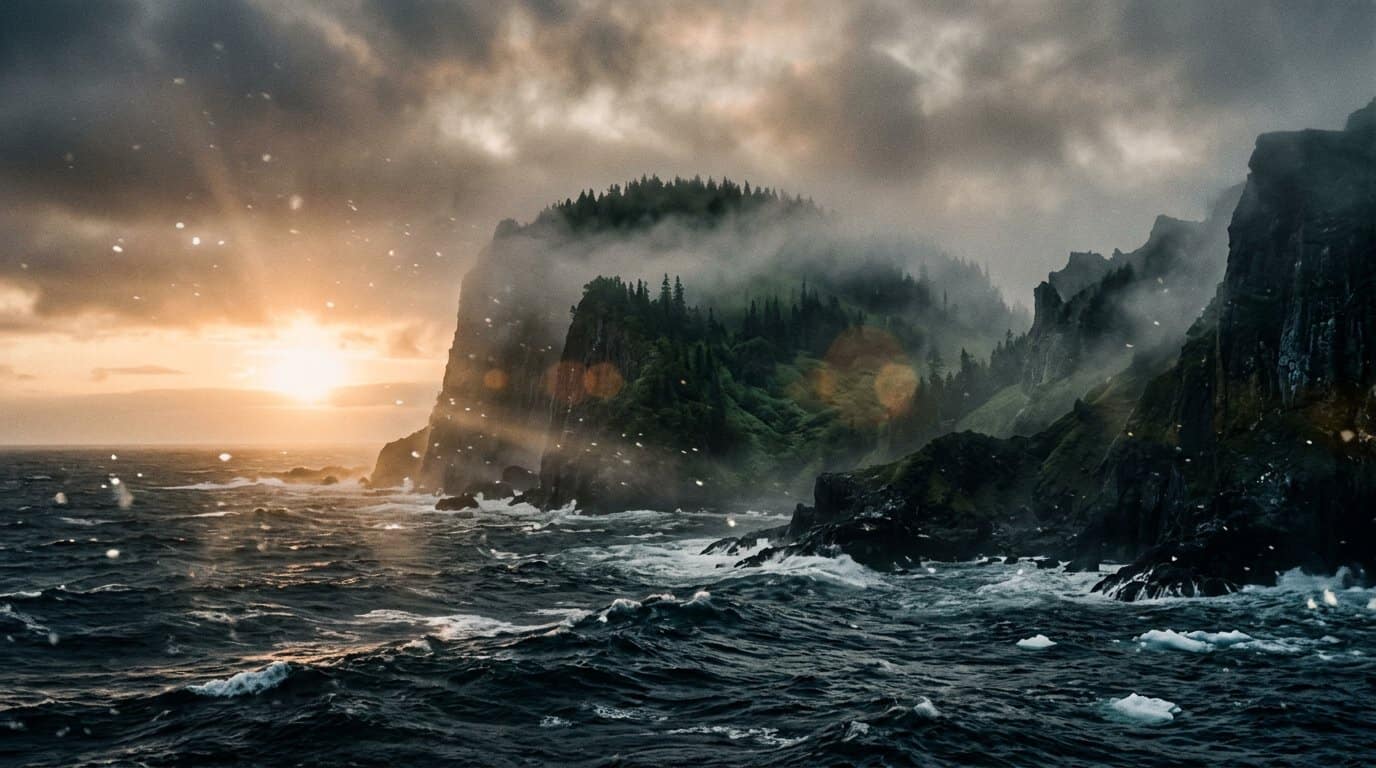
For centuries, explorers scanning the frozen horizons of the far north reported glimpses of a massive, uncharted landmass known as the Bering Sea phantom island. In 1811, a merchant named Yakov Sannikov claimed to see mountain peaks rising from the Arctic mist, sparking a century of obsession and high-stakes expeditions. This mystery, later known as Sannikov Land, sat at the edge of the known world, promising a lush paradise hidden amidst the shifting ice.
The legend grew even more compelling when Baron Eduard von Toll spotted the same four distinct peaks decades later, leading him on a final, fateful mission to claim the territory. While modern satellite imagery shows nothing but open water, the disappearance of early explorers suggests there may be more to the story than a simple optical illusion. Whether these sightings were a trick of the light or a landmass that literally crumbled into the sea, the haunting legacy of this disappearing world continues to captivate those who look toward the horizon.
Key Takeaways
- Sannikov Land remains one of history’s most enduring maritime mysteries, fueled by consistent 19th-century sightings of mountain peaks that modern surveys have proven do not exist.
- The pursuit of this phantom island led to the tragic 1902 disappearance of Baron Eduard von Toll and his crew, highlighting the high stakes and dangers of early Arctic exploration.
- Scientific explanations for the sightings include Fata Morgana mirages caused by light refraction or the existence of temporary islands made of fossil ice and permafrost that eventually melted into the sea.
- While modern satellite imagery confirms the area is now open water, the detailed accounts of experienced navigators continue to spark debate between atmospheric science and lost geological history.
The Vanishing Peaks Of Yakov Sannikov And Eduard Von Toll
The story of Sannikov Land begins in 1811 when Yakov Sannikov, a seasoned merchant and explorer, gazed across the frozen horizon from Kotelny Island. He reported seeing a massive range of mountains rising from the sea, a sight that seemed to promise a lush and hidden world beyond the ice. This sighting was more than just a passing glance, as Sannikov was convinced he had discovered a significant landmass in the high Arctic. His reports sparked decades of curiosity, leading many to wonder if a warm, volcanic oasis could exist amidst the sub arctic chill. The mystery deepened in 1886 when Baron Eduard von Toll, a respected explorer and scientist, claimed to see four distinct peaks in the exact same location.
The pursuit of this phantom island eventually took a tragic turn during the Russian Polar Expedition at the dawn of the twentieth century. Baron von Toll was so certain of the island’s existence that he led a dedicated team on the ship Zarya to claim it for the Russian Empire. While the expedition provided valuable scientific data about the region, the elusive Sannikov Land remained hidden behind blankets of fog and shifting ice. In a final, desperate attempt to find the mountains, Toll and three companions ventured out toward Bennett Island and were never seen again. Their disappearance added a layer of haunting maritime lore to the legend, transforming the search for land into a ghost story of the high seas.
While modern science offers several explanations for why these explorers saw land where there was only water, the debate remains open for those who love a good mystery. Some researchers suggest that the mountains were actually Fata Morgana, a complex superior mirage that can make distant objects or even the curvature of the earth appear as solid structures. Others believe that Sannikov Land might have been a real island made of fossil ice and soil that simply melted away over time due to changing currents.
- The first reported sighting by Yakov Sannikov in 1811 described a vast land north of the New Siberian Islands.
- Baron Eduard von Toll confirmed the sighting in 1886, identifying four specific mountain peaks on the horizon.
- The Russian Polar Expedition of 1900 to 1902 was launched specifically to map this mysterious territory.
- In 1937, Soviet icebreakers and aerial surveys officially declared the area to be open water.
Could these explorers have been chasing a literal ghost of a landmass that has since vanished into the deep? The Bering Sea and the surrounding Arctic waters are famous for playing tricks on the eyes, yet the conviction of these men suggests they saw something truly substantial. Many people still find it hard to believe that experienced navigators could be so easily fooled by a mere trick of the light. What do you think happened to the mountains that Sannikov and von Toll described with such certainty? Share your thoughts on whether this was a grand optical illusion or a lost world that the ocean reclaimed.
Tragedy And The Disappearance Of The Zarya Expedition
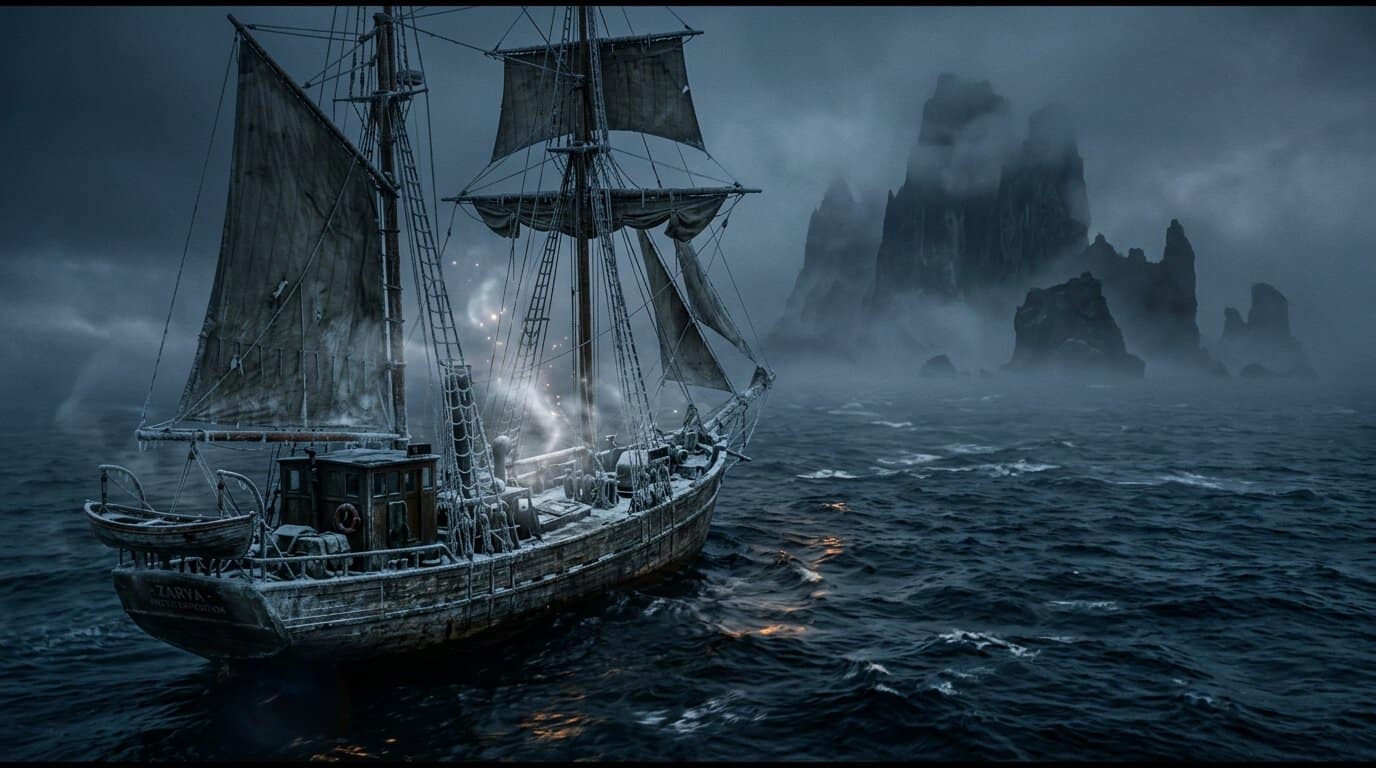
The quest to locate Sannikov Land reached a tragic peak during the Russian Polar Expedition of 1900. Led by the determined Baron Eduard von Toll on the ship Zarya, the crew ventured into the icy reaches of the Arctic near the New Siberian Islands. Von Toll was convinced that the mysterious landmass he had glimpsed years earlier was a real, habitable place hidden by the fog. He and three companions eventually left the safety of the main vessel to explore the area around Bennett Island on foot and by sled. This daring move was meant to be the final proof of the island existence, but it instead became a journey into the unknown.
The harsh environment of the sub-arctic proved to be an unforgiving host for the small scouting party. When the Zarya was unable to return for them due to thick ice conditions, the Baron and his team were left to survive on their own. Search parties later found their abandoned camps and journals, which indicated they had headed south across the moving ice. Despite these clues, no trace of the men was ever found, leaving their disappearance as one of the great maritime mysteries of the era. Much like the men who vanished into thin air at a remote lighthouse, the fate of the Zarya party remains a chilling puzzle for historians.
- The Zarya set sail in 1900 with the specific goal of mapping the northern coast and finding Sannikov Land.
- Baron von Toll based his mission on his own 1886 sighting of four mountain peaks on the horizon.
- The expedition was officially sponsored by the Russian Academy of Sciences to expand geographical knowledge.
- After years of searching, the Soviet icebreaker Sadko proved in 1937 that the island did not exist in the reported coordinates.
Some researchers suggest that the Baron might have been chasing a mirage known as a Fata Morgana, which can make distant ice or low clouds look like solid mountains. Others wonder if Sannikov Land was a real island made of fossil ice and soil that simply melted away into the sea over the decades. This theory bridges the gap between historical eyewitness accounts and the empty ocean found by later explorers. Did the Zarya expedition perish while chasing a ghost, or did the land itself vanish beneath the waves before they could claim it? What do you think happened to the Baron and his crew in those final, frozen moments?
Fata Morgana Mirages And Eroding Permafrost Islands
The sub-arctic horizon often plays tricks on the eyes, creating a phenomenon known as a Fata Morgana. These complex superior mirages occur when a layer of cold air sits beneath a layer of warmer air, acting like a lens that bends light rays over the curve of the Earth. Explorers like Yakov Sannikov and Baron Eduard von Toll likely fell victim to Fata Morgana mirages, which can make distant icebergs or low-lying fog banks appear as towering mountain peaks or solid landmasses. While these visions were convincing enough to lead expeditions into the frozen unknown, they often vanished as soon as the atmospheric conditions shifted, leaving behind nothing but open water.
Beyond the tricks of light, some researchers suggest that these phantom islands may have actually existed as fragile geological structures. Many islands in the Russian Far East are composed of fossil ice and permafrost topped with a thin layer of soil, making them highly susceptible to rapid thermal erosion. As the surrounding seas warmed or storms battered the coastlines, these islands could literally melt away into the ocean over the course of a few decades. This theory bridges the gap between historical sightings and modern satellite data, suggesting that Sannikov Land might not have been a total hallucination, but rather a temporary landmass that lost its battle with the elements.
The mystery of these disappearing lands continues to spark debate among maritime historians and scientists alike. While most experts lean toward the mirage theory, the tragic disappearance of Baron von Toll during his 1902 search serves as a somber reminder of how high the stakes were for those chasing these arctic ghosts. Today, we can categorize the likely causes of these sightings into a few distinct scientific and environmental possibilities:
- Fata Morgana mirages that project distant objects or distorted horizons into the viewer’s line of sight.
- Eroding permafrost islands made of ancient ground ice that eventually collapsed and submerged.
- Dense, stationary fog banks that mimic the jagged appearance of mountain ranges from a distance.
- Large, grounded icebergs that remained stationary long enough to be mistaken for permanent land.
Do you believe these explorers were witnessing the final days of a melting island, or were they simply chasing shadows created by the unique arctic atmosphere? Some even speculated that such lands could be entrances to a hidden world, a concept similar to the hollow earth theory that fascinated thinkers for centuries.
The Enduring Legacy of Sannikov Land
The story of Sannikov Land remains a captivating blend of maritime mystery and polar science that continues to haunt the history of the sub-arctic. While official surveys eventually replaced the jagged mountain peaks with a vast expanse of empty water, the legend refuses to fade away entirely. It sits at the unique intersection of optical illusions, such as the Fata Morgana, and the tragic reality of explorers who gave their lives to find a shore that may have never existed. This enduring tale reminds us that the edge of the world was once a place where the line between a physical discovery and a trick of the light was dangerously thin.
Whether these sightings were caused by ancient ice shelves that have since melted or were simply atmospheric ghosts, they highlight the deep human desire to find the unknown. Some still wonder if a lost piece of geography truly existed before being reclaimed by the rising tides and shifting currents of the north. The Bering Sea and the surrounding Arctic waters are famous for their unpredictable nature, leaving just enough room for a bit of wonder. Does the answer lie in a scientific explanation of light refraction, or is it possible that a hidden landmass once stood tall against the freezing winds?
We invite you to join the conversation and share your own thoughts on this icy enigma. Do you believe Yakov Sannikov and Baron von Toll were chasing a literal mirage, or could there be a grain of truth hidden in their historical accounts? Perhaps you have heard of other geographical anomalies, such as Hy-Brasil, that seem to appear and disappear like ghosts in the mist. Let us know if you think modern technology has solved the mystery for good or if the ocean still hides secrets like the Kushtaka legend that we are not yet meant to find.
Frequently Asked Questions
1. What exactly is the Bering Sea phantom island?
Known historically as Sannikov Land, this phantom island was a rumored landmass located north of the New Siberian Islands in the Arctic. Explorers believed it was a vast territory with mountain peaks and a potentially warm climate hidden behind the ice.
2. Who were the first people to report seeing this mysterious land?
The merchant Yakov Sannikov first reported seeing mountain peaks rising from the Arctic mist in 1811 while exploring Kotelny Island. His account was later supported by Baron Eduard von Toll, a respected scientist who claimed to see the same four distinct peaks in 1886.
3. Could Sannikov Land have been a real place that simply disappeared?
Some researchers suggest the island may have been composed of fossilized ice and soil that eventually melted or crumbled into the sea. This would explain why early explorers saw a physical landmass that modern satellite imagery can no longer locate.
4. What happened to the explorers who went searching for the island?
The search for Sannikov Land took a tragic turn when Baron Eduard von Toll led an expedition to find the territory in the early 1900s. He and his party disappeared into the frozen wilderness, leaving behind a mystery that remains unsolved to this day.
5. Is it possible the sightings were just a trick of the light?
Scientists often point to a phenomenon called Fata Morgana, which is a complex superior mirage that can make distant objects or even the horizon look like massive mountains. While this could explain the sightings, the consistency of the reports from different explorers keeps the debate alive.
6. Does modern technology show any evidence of the island?
Current satellite photos and sonar mapping show only open ocean and underwater shoals where the island was reported to be. However, the legend persists because of the detailed historical accounts and the physical evidence of bird migrations that seemed to head toward that specific area.