The Frozen Mystery Of The Vanishing Village Of Angikuni Lake
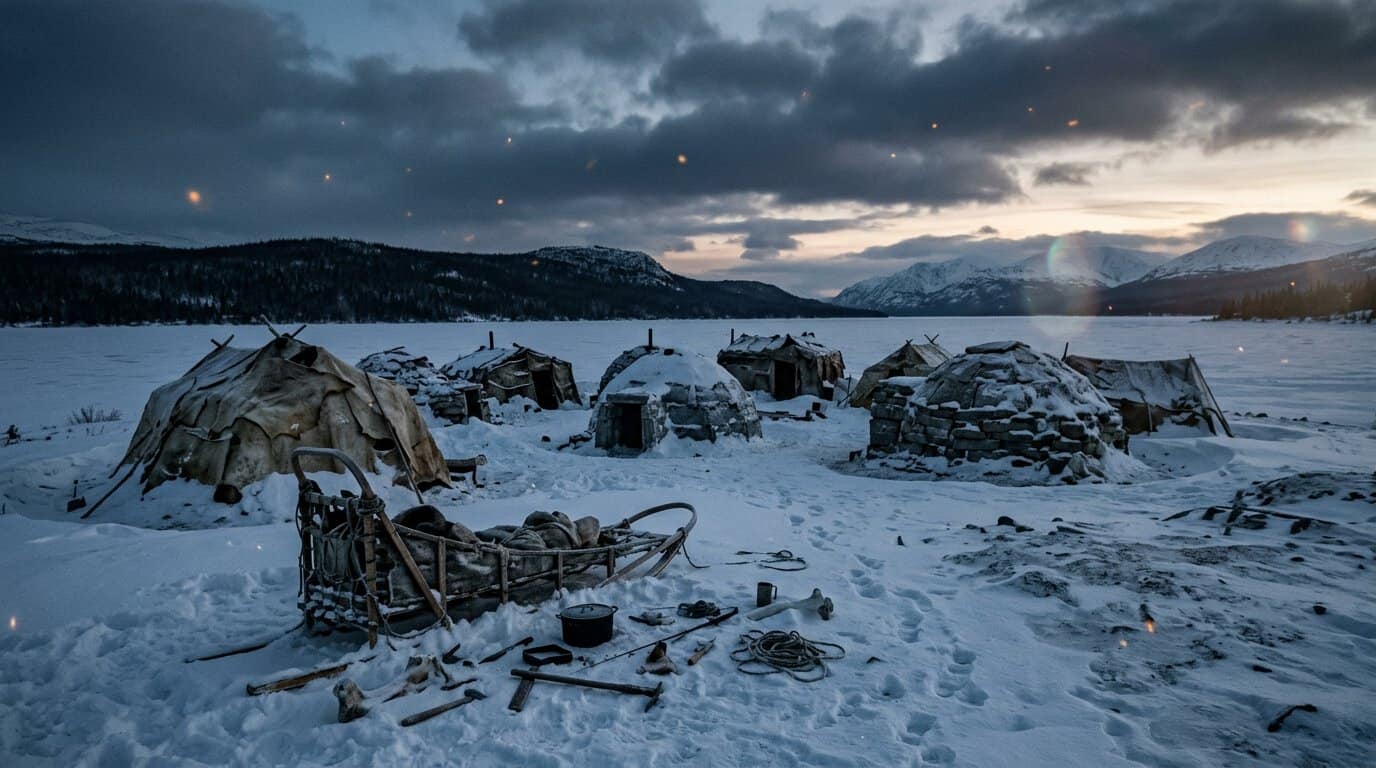
In November 1930, a fur trapper named Joe Labelle trekked through the frozen Canadian wilderness toward the shores of Lake Angikuni, seeking shelter from the biting cold. Instead of a warm welcome, he stumbled into a chilling mystery that would become known as the vanishing village of Angikuni. The settlement was eerily silent, with smoldering fires still heating pots of food and rifles leaning against tent poles, yet not a single soul remained.
The scene suggested a sudden, panicked departure, leaving behind essential survival gear that no experienced Inuit hunter would ever abandon. Adding to the dread, seven sled dogs were discovered nearby, having perished from starvation while still tethered to their posts. This unsettling event has sparked decades of debate, caught between the official reports of authorities and the lingering whispers of a supernatural mass disappearance in the Arctic.
Key Takeaways
- The 1930 disappearance of the Angikuni Lake village remains a chilling mystery due to the abandonment of essential survival gear, including rifles and sled dogs, which no experienced Arctic community would ever leave behind.
- Disturbing reports of empty ancestral graves and fires left smoldering mid-meal suggest an instantaneous and potentially supernatural event that defied logical evacuation patterns.
- Official investigations by the Royal Canadian Mounted Police dismissed the event as a journalistic hoax, citing a lack of census data and inconsistencies in the reporting by journalist Emmett Kelleher.
- The legend persists in modern folklore as a powerful symbol of the unknown, balancing between a possible mass tragedy and a sensationalized tall tale born from the isolation of the Canadian North.
Joe Labelle And The Chilling Discovery At Angikuni
In November 1930, a seasoned fur trapper named Joe Labelle trekked through the biting cold of the Canadian Arctic toward a familiar Inuit settlement on the shores of Angikuni Lake. He expected to find the usual warmth and hospitality of the community, but instead, he was met with a silence so heavy it felt unnatural. As he moved between the structures, he discovered a scene that looked as if time had simply frozen mid-motion. There were no signs of a struggle or a planned evacuation, yet not a single soul remained in the village. This chilling discovery would soon become one of the most enduring mysteries in the history of the North.
The details Joe Labelle reported to the authorities painted a picture that was both domestic and deeply disturbing. Despite the freezing temperatures, the villagers had left behind items that were absolutely essential survival gear for survival in such a harsh environment. It was as if the entire population had been plucked from their daily routines by an unseen force. Labelle described several haunting sights that suggested the disappearance was instantaneous:
- Cooking pots still hung over cold fire pits, some containing charred food that had been left to burn.
- Rifles, which were the most prized possessions for hunting and protection, remained leaning against the walls of the huts.
- Unfinished shirts were found with bone needles still tucked into the fabric, waiting for a hand that never returned.
- A pack of seven sled dogs was discovered nearby, having tragically succumbed to starvation while still tied to their posts.
When the Royal Canadian Mounted Police investigated the site, they were reportedly baffled by the lack of tracks leading away from the village. While some skeptics and later reports suggested that the story might have been exaggerated by journalists of the era, the core of the legend persists because of the sheer impossibility of the situation. If the villagers had left on their own, they never would have abandoned their dogs or their weapons in the middle of a sub-arctic winter. The mystery of Angikuni Lake remains a favorite for those who wonder if some places on Earth are subject to forces we do not yet understand. What do you think happened to the people of the lake, and could a whole village truly vanish without leaving a single footprint behind?
Starved Sled Dogs And Desecrated Ancestral Graves
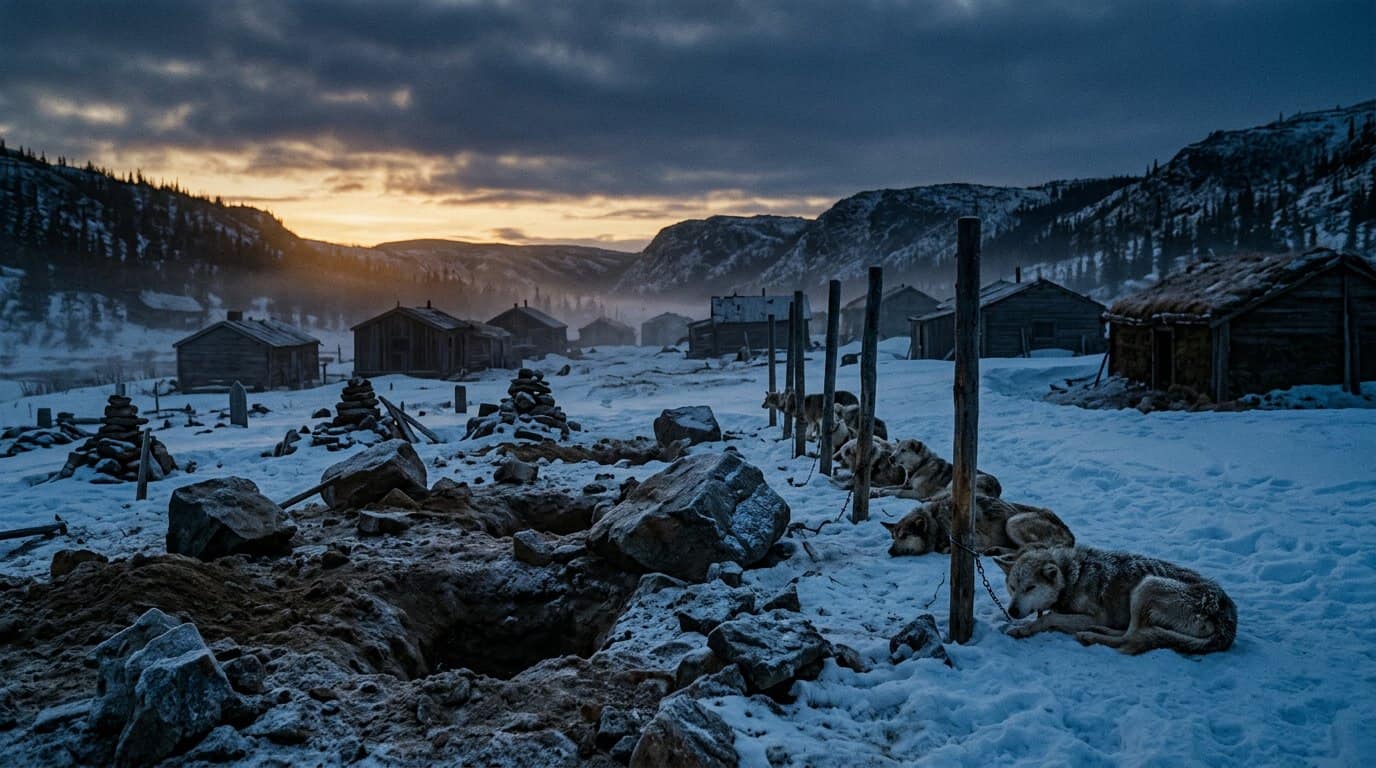
The most heartbreaking detail of Joe Labelle’s discovery involved the village’s working animals, which were essential for survival in the frozen north. According to the legend, Labelle found seven sled dogs still tethered to their posts, having tragically perished from starvation. This detail is particularly chilling because the village reportedly contained plenty of food that the dogs could have reached if they had been released. In Inuit culture, these animals were highly valued partners in the struggle against the elements, making their abandonment a sign of extreme distress or a sudden, supernatural event. The fact that they were left to die while still tied up suggests that whatever happened to the villagers occurred with terrifying speed.
The mystery takes an even darker turn when looking at the local resting grounds near the settlement. Reports from the time claimed that ancestral graves had been disturbed and the bodies removed, leaving behind empty stone cairns. This desecration defied logic, as the frozen ground would have been nearly impossible to dig through without significant effort and tools. In many indigenous traditions, disturbing the dead is a grave taboo that invites misfortune, yet the graves were found open and hollow. This unsettling discovery led many to wonder if the disappearance was not just a physical event, but something involving the spiritual or unknown realms of the Arctic.
While the Royal Canadian Mounted Police later investigated these claims, the specific details provided by Labelle continue to fuel debate among researchers and enthusiasts. The combination of abandoned tools and disturbed graves creates a picture of a community that did not just leave, but was perhaps erased. To better understand the strange state of the village, consider these reported findings:
- Essential rifles were found leaning against hut walls, which no hunter would ever leave behind.
- Iron cooking pots still contained the remains of meals that had been left to burn over long dead fires.
- Clothing made of caribou skin was found mid-repair with the bone needles still resting in the fabric.
- The silence of the village was absolute, with no tracks in the snow leading away from the site.
What do you think happened to the residents of Angikuni Lake? Do you believe a logical explanation exists for the empty graves and tethered dogs, or does this story point toward something that science cannot yet explain?
Emmett Kelleher And The Origins Of The Hoax
The haunting legend of the Angikuni Lake disappearance first gained widespread attention through the pen of Emmett Kelleher, a journalist who published the story in November 1930. Kelleher described a scene of frozen terror where Joe Labelle discovered a bustling community that had seemingly vanished into thin air, leaving their most precious survival tools behind. While the narrative captured the imagination of readers across North America, many historians now point to Kelleher as the primary architect of a tall tale. His reporting style was known for its flair and dramatic embellishments, which helped transform a potentially simple rumor into a legendary Canadian mystery.
When the story began to circulate more widely, the Royal Canadian Mounted Police (RCMP) conducted a formal investigation to determine if a mass tragedy had actually occurred in the Northwest Territories. Their official investigations were starkly different from the sensational reports found in the newspapers. The RCMP records indicated that there was no evidence of such a large settlement ever existing at Angikuni Lake, nor were there any missing persons reports that matched the scale of the story. Officials noted several inconsistencies in the original report that made the event seem highly improbable:
- The size of the village described by Labelle was far larger than any typical Inuit seasonal camp in that remote region.
- RCMP patrols in the area reported no unusual activity or abandoned sites during their regular winter rounds.
- The logistics of an entire community leaving their sled dogs to starve while abandoning their rifles contradicts basic Arctic survival instincts.
Despite the official dismissal of the event as a journalistic hoax, some mystery enthusiasts argue that the government may have overlooked subtle clues or arrived too late to the scene. They suggest that Labelle, an experienced trapper, would have little reason to invent such a specific and chilling account unless he had witnessed something truly unsettling. While the paper trail points toward Kelleher’s creative writing, the atmospheric details of the smoldering fires and abandoned needles continue to linger in the minds of those who wonder if a small, undocumented group really did encounter something unexplainable in the frozen north. Do you believe a journalist could invent such a lasting legend from nothing, or is it possible the official records missed a darker truth hidden in the snow?
Modern Legacy Of The Angikuni Lake Mystery
The enduring legacy of the Angikuni Lake mystery thrives because it taps into our deepest fears of the unknown in the vast, unforgiving wilderness. For nearly a century, the image of steam rising from abandoned cooking pots and sled dogs left to perish has served as a chilling campfire tale for paranormal enthusiasts. This story persists because it offers a perfect blend of atmospheric dread and a specific, haunting location that feels disconnected from the modern world. Even though the Royal Canadian Mounted Police officially dismissed the event as a journalistic invention sparked by writers like Frank Edwards, the legend refuses to fade from modern folklore. It continues to inspire novelists, podcasters, and researchers who are drawn to the idea that a whole community could simply step out of time and disappear.
The fascination with this Arctic cold case is fueled by a list of inexplicable details that keep the debate alive among those who lean into the fringe. These elements suggest a level of haste and terror that standard historical explanations struggle to fully address:
- The discovery of seven sled dogs that supposedly starved to death while still tied to their posts.
- Personal belongings and essential hunting rifles left behind in tents, which would be a death sentence in the tundra.
- Reports of strange lights or unidentified flying objects seen in the sky around the time of the disappearance.
- The disturbing claims that ancestral graves near the village were found empty and disturbed.
While modern skeptics point to the lack of census data for a village at Angikuni Lake, the story remains a powerful symbol of the mysteries hidden within the Canadian North. It serves as a reminder that the world is a much larger and more mysterious place than we often acknowledge, especially in regions where the environment is the ultimate master. Many believe that Joe Labelle’s original account might have contained a grain of truth that was later embellished by the press. Whether it was a mass migration, a tragic accident, or something far more supernatural, the vanishing village remains a cornerstone of Arctic folklore. What do you think happened to the people of the lake, and do you believe a story can hold such power if there wasn’t a spark of truth behind it?
The Lingering Enigma of Angikuni Lake
The mystery of Angikuni Lake remains a haunting centerpiece of Arctic folklore, balancing precariously between a chilling ghost story and a historical curiosity. While official records from the Royal Canadian Mounted Police suggest the tale may have been a sensationalized report, the imagery of smoldering fires and abandoned rifles continues to captivate the imagination. There is something deeply unsettling about the idea of an entire community vanishing into the frozen wilderness without a single witness. This blend of atmospheric dread and unanswered questions ensures that the legend survives, even as modern investigators point toward more logical explanations.
Exploring these remote legends allows us to appreciate the thin line between documented history and the enduring power of a well-told mystery. Much like the mystery of the Dyatlov Pass incident, it highlights our fascination with the unknown corners of the world. The Arctic is a vast and unforgiving landscape where the silence can feel heavy with secrets yet to be uncovered. By looking at the facts alongside the folklore, we can respect the cultural history of the region while still enjoying the shiver that comes with a good campfire story. This atmosphere of dread is similar to the Mackenzie River ghost, which also explores the eerie isolation of the Canadian North.
What do you believe happened to the residents of the village at Angikuni Lake all those years ago? Do you think there is a grain of truth hidden beneath the layers of the legend, or is this simply a classic example of a story taking on a life of its own? These tales often endure because they tap into our deepest fears about isolation and the unexplained. We would love to hear your theories on why stories of mass disappearances continue to fascinate us today.
Frequently Asked Questions
1. Who was Joe Labelle and what did he find at Lake Angikuni?
Joe Labelle was an experienced fur trapper who sought shelter at the Inuit settlement in November 1930. He discovered a silent, empty village where fires were still smoldering and food was left cooking, yet the entire population had vanished without a trace.
2. Why was the disappearance of the villagers considered so unusual?
The villagers left behind their rifles, clothing, and essential survival gear, which no experienced Arctic resident would ever do. The presence of half-finished chores and untended meals suggests they were interrupted suddenly by an unknown force rather than leaving by choice.
3. What happened to the animals left behind in the village?
A tragic discovery revealed that seven sled dogs had died of starvation while still tied to their posts. This detail is particularly haunting because it indicates the owners never returned to free them, and the dogs were unable to escape despite being surrounded by abandoned food.
4. Is there any official record of this mysterious event?
While Joe Labelle reported his findings to the Royal Canadian Mounted Police, their official records from the time do not fully support the scale of the mystery he described. This discrepancy has fueled decades of debate between those who believe in a cover-up and those who think the story was exaggerated over time.
5. What are some of the popular theories regarding the disappearance?
Theories range from a mass emergency evacuation to more fringe ideas involving extraterrestrial abductions or spiritual entities. Some researchers suggest the village was relocated due to changing hunting grounds, though this doesn’t explain why they abandoned their most valuable tools and weapons. This case is often compared to the Mary Celeste mystery, where a crew vanished from a perfectly seaworthy vessel without explanation.
6. Could the harsh Arctic weather explain why the villagers left?
While the cold is extreme, these communities were experts at surviving the Canadian winter. A simple storm would not cause a seasoned group of hunters to leave their warm tents and rifles behind to face the elements unprotected.