The Westall UFO Incident: Witnesses, Clues and Unanswered Questions
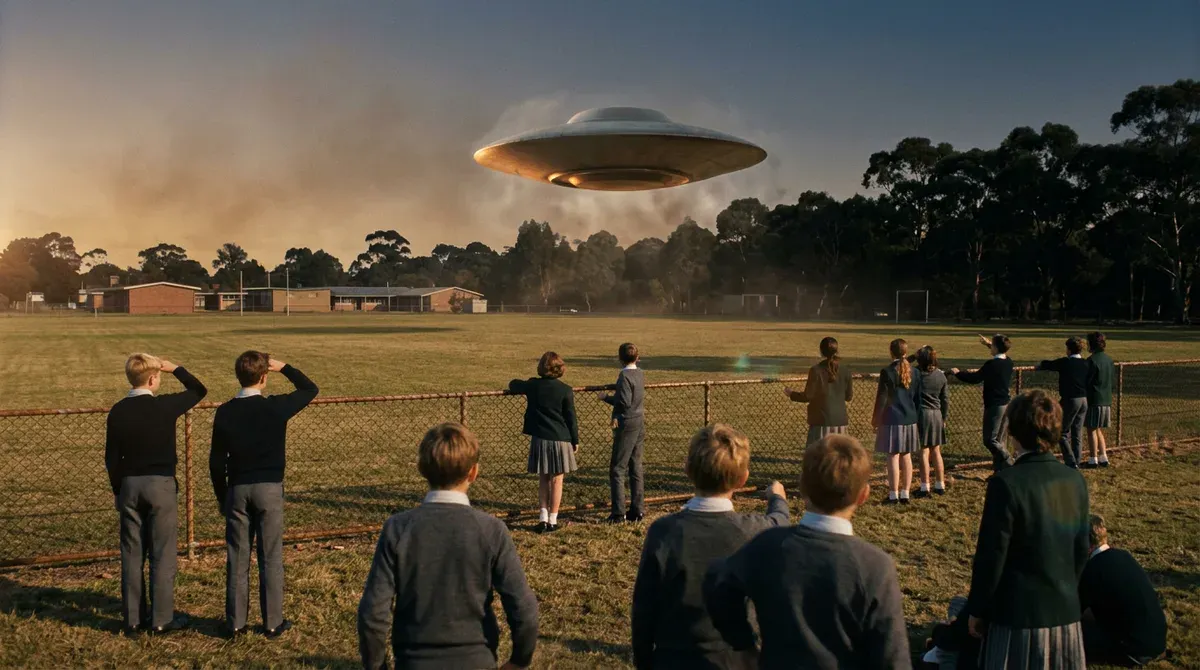
The Westall UFO incident involved reports of unusual flying objects over Westall High School and the neighbouring primary school in Clayton South, Melbourne, on 6 April 1966. A City of Kingston local-history account places the first sighting at about 10:15 a.m., when witnesses described a low-flying, silent object with a silver-white sheen moving across the sky above the schoolgrounds. Some later recalled other objects in the air and a descent near The Grange, a nearby area that became central to the story.
Six decades on, the mystery still draws people in. In its April 2026 report marking the 60th anniversary, the Australian Broadcasting Corporation reported that researcher Shane Ryan had spoken with 142 people who saw objects, 197 who saw ground marks, and 77 who saw both. Many of those people are still seeking an explanation for what they remember.
Key Takeaways
- Reports of unusual flying objects over Westall High School and its neighbouring primary school in Clayton South, Melbourne, on 6 April 1966, are where the mystery begins.
- Researcher Shane Ryan, as reported by the Australian Broadcasting Corporation in April 2026, spoke with 142 people who saw objects, 197 who saw ground marks, and 77 who saw both.
- The Westall story rests heavily on memory because the Victorian Flying Saucer Research Society’s photographs and investigation notes could not later be located.
- The Laverton weather balloon, the HIBAL silver balloons launched from Mildura, and the target drogue each explain some Westall reports, but none explains all of them.
- Early local newspapers such as the Dandenong Journal, along with any surviving Moorabbin Airport flight logs from that morning, are the records readers can use to test witness memories against the documented facts.
What Happened Over Westall High School?
On 6 April 1966, students and staff at Westall High School and the neighbouring Westall Primary School in Clayton South, Melbourne, reported unusual flying objects over their grounds. The most striking report described a low-flying, silent, silver-white object that drifted across the sky above the schoolyards. That single sighting was only the start of a morning people still discuss six decades later.
The local-history account of the day sets out a sequence that is easier to follow in order. Here is how the morning unfolded, as it is recorded:
- At about 10:15 a.m., pupils and teachers first noticed a low, silent object above the schools.
- Some witnesses then recalled other objects in the air, which they described as moving over the same area.
- Some witnesses also reported that an object came down near The Grange, the nearby area that later became the centre of the story.
- Two days later, on Good Friday, investigators from the Victorian Flying Saucer Research Society arrived in Clayton South to look into the reports.
- The society’s photographs and investigation notes could not later be located, so the investigators’ own record of their work is missing.
Picture an ordinary school morning in a suburb still known for its open paddocks and quiet streets. Classes were running, and many pupils were outdoors or near windows when the first object caught their attention. For many of them, the strangest part was how silent it seemed. Witnesses who later spoke about the day returned again and again to that lack of sound.
The missing records matter because the Westall story rests so heavily on memory. Many of the people who spoke about the morning were schoolchildren at the time, and their recollections have shifted over the decades. Some now remember ground marks, nearby aircraft and uniformed men, details that do not appear in every account. Those memories are part of the mystery, but they are not the same as the core facts that can be traced through the early records.
Why would an investigating society lose its own paperwork? Nobody has offered a complete answer, and the gap leaves a question hanging over the whole incident. Did the investigators see something they never recorded properly, or did the papers simply go astray over time? Readers can weigh the clues for themselves and decide which possibility feels more convincing.
Who Saw the Strange Object, and What Did They Describe?
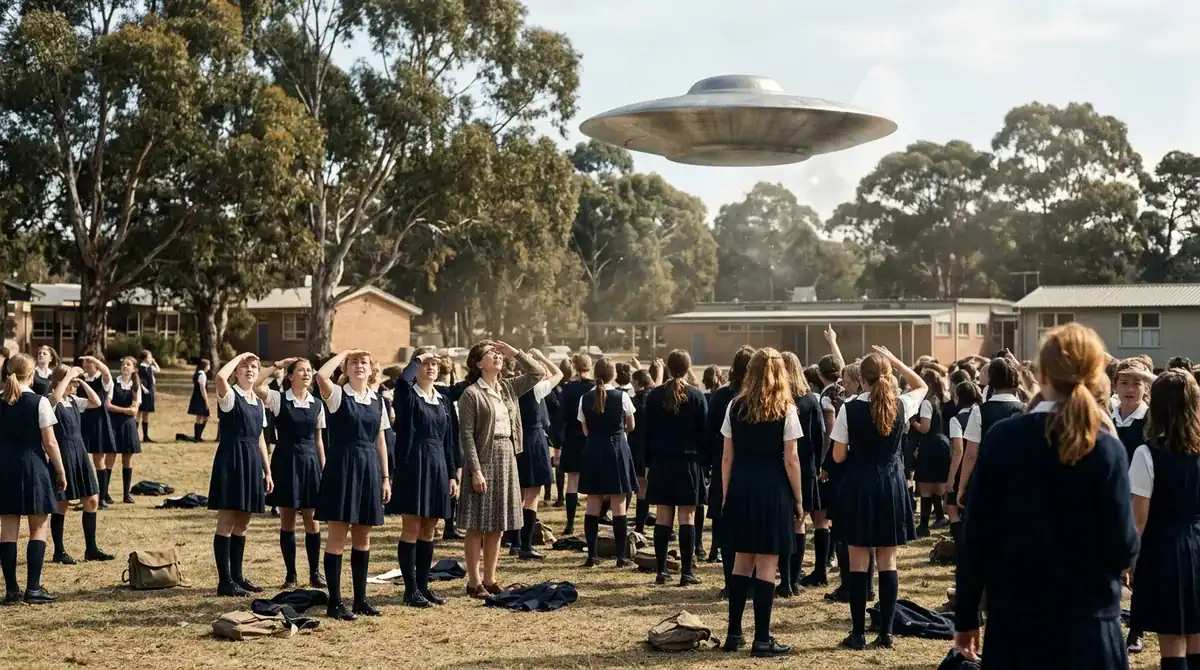
Students and teachers at Westall High School and the neighbouring primary school were the ones who saw the object, and their accounts share a core picture: a rounded, silver-white shape that moved low over the schoolgrounds without a sound. Among the adults, science teacher Andrew Greenwood stands out. His recollections became one of the most closely studied accounts of the morning, partly because he was a trained observer whose words carried weight with researchers who came later.
Most of the children who spoke about the day described the object in similar terms. To many of them it looked round, and its surface seemed to catch the light, giving it a pale, metallic gleam. What stood out most was its silence. In a school playground full of noise, pupils remembered an object that drifted across the sky without the hum or roar they expected from anything flying overhead.
The descriptions also included an aircraft. Several witnesses recalled a plane in the sky close to the object, and some said it seemed to follow it or hover nearby. Accounts of that aircraft are less consistent than accounts of the object itself. Witnesses differ on how close it was, how high it flew and whether they saw it at the same moment as the object.
Recollections also split on finer points. Some people remembered one object, while others recalled several moving in the same area. Some pupils said the object stayed above the schools, while others described it dropping toward The Grange. A few later spoke of ground marks and uniformed men, details that do not appear in most early descriptions. Memory is known to blend events over time, and a schoolchild’s view of a crowded morning can differ sharply from a teacher’s.
In 1967, a year after the sightings, physicist James McDonald travelled to Melbourne to interview Greenwood. He also spoke with F. A. Berson, a government meteorological physicist. As a meteorologist, Berson was a natural person to ask whether an ordinary atmospheric explanation could account for what the witnesses had seen. The meeting showed that the Westall reports had already reached scientists, not just local newspapers.
Decades later, the witnesses are still gathering to compare their memories. In 2011, around 50 former witnesses and others met at Westall Primary School for the 45th anniversary, returning to the same schoolyard where the object had first been noticed. Such gatherings show how strongly the morning stayed with those who were there, even as the details they remember continue to shift.
Where Did the Ground Marks and Landing Site Appear?
The ground marks and the claimed landing were reported in and around The Grange, a nearby area close enough to the two schools that pupils could see it from their yards. Some witnesses said the object dropped toward this spot, and others later described marks left on the ground there. The Grange became the link between the sky over the schools and the physical traces people said they found afterward.
Researcher Shane Ryan’s count, reported by the Australian Broadcasting Corporation, shows how the two kinds of memory differ. He spoke with 142 people who reported seeing objects, 197 who reported seeing ground marks, and 77 who said they saw both. More people in that count remembered the marks on the ground than remembered the object itself, which suggests the landing area stayed in many minds even when the object did not.
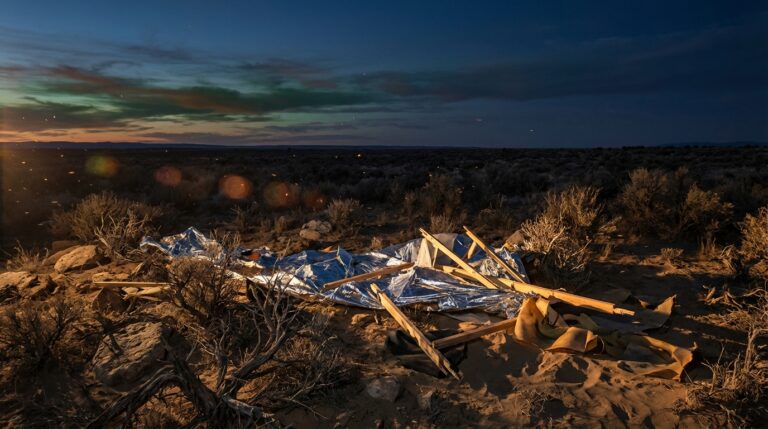
The marks themselves are harder to pin down. Witnesses described patches of flattened or discoloured grass, and some spoke of circular shapes pressed into the ground. The accounts do not agree on size, shape or exact position, and few of them describe the marks being examined at the time by anyone trained to record them properly.
Some witnesses also spoke of uniformed men near The Grange and of an aircraft flying close to the landing area. These claims appear in a smaller share of the recollections and are harder to match across accounts. A man in uniform, or a plane circling low, could be a memory from a crowded morning, or it could be a real detail that was never written down. Either way, these reports belong in a separate category from the facts that can be traced through early records.
That line is worth keeping clear. A witness who remembers a mark on the grass is giving a personal account, and that account is not the same as independently confirmed evidence. Researchers have collected many such accounts, but the records that would show who examined the ground, when, and what they found have not been located.
Today, the Grange area still draws people back. On the 60th anniversary, witnesses and local residents gathered at the Flying Saucer Playground there, standing near the spot where the story was first told. Readers who visit the area, or who read the accounts, can ask themselves what the ground itself might still reveal, and what has only survived in memory.
Could a Weather Balloon Explain the Westall Sightings?
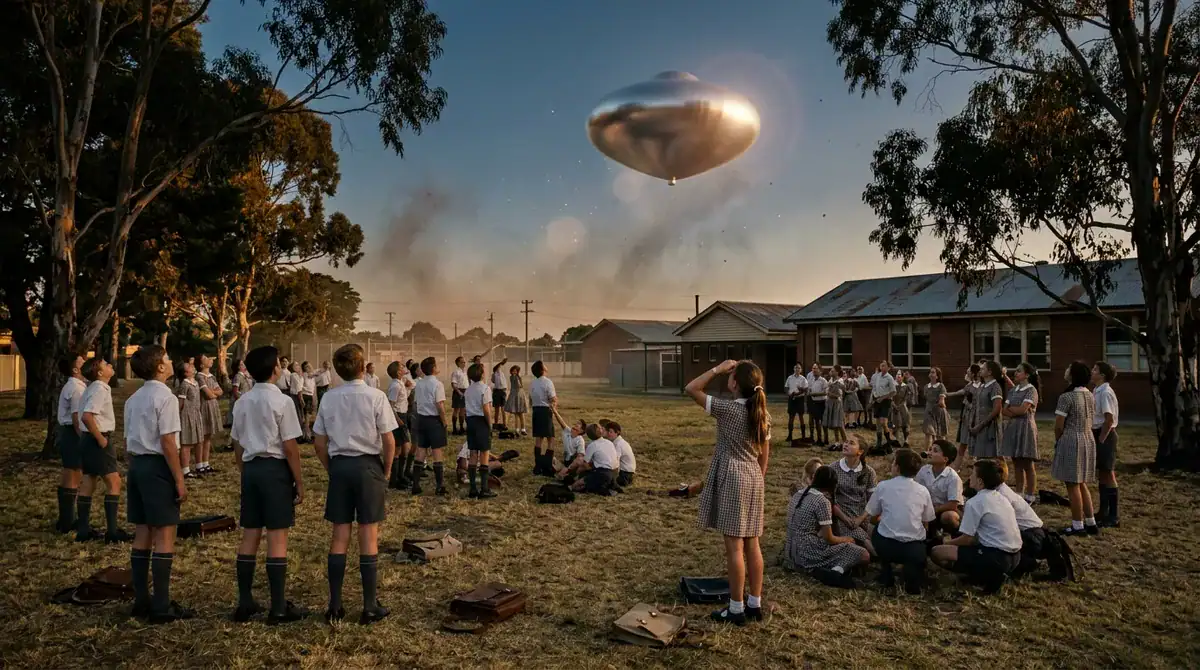
A weather balloon is the most common natural explanation offered for the Westall sightings, yet no one has firmly confirmed it. Shortly after the event, a contemporary newspaper proposed that a weather balloon released at Laverton at 8:30 a.m. could have been the object. On paper the timing looks workable, since the balloon would have been aloft over the region well before the first reports came in around 10:15 a.m.
Shane Ryan, the researcher who has spoken with so many witnesses, rejects that explanation. He reads the day’s wind data differently and argues that the winds would not have carried a balloon from Laverton to the schools. The question therefore turns on how the air actually moved that morning, and on whether anyone recorded it at the time.
A second possibility leads away from ordinary weather and toward military and scientific programs. The HIBAL program launched large, silver high-altitude balloons from Mildura, in north-western Victoria, to measure stratospheric radioactivity after nuclear tests. A silver balloon drifting high over southern Australia is a close match for a witness’s silver-white object, which is why researchers have examined HIBAL so closely.
The link remains unproven. A surviving member of the HIBAL team said he was unaware of a balloon coming down near Westall, so no balloon from the program has been tied to a landing in Clayton South.
The name Maralinga also enters the discussion. Maralinga, the remote South Australian site used for British nuclear tests, has been raised by some locals and researchers, who ask whether the high-altitude balloon work was tied to the wider testing effort. Nothing in the available sources settles that connection. It remains a question people keep asking, and it helps explain why the Westall story has never fully faded.
Skeptics offer a more down-to-earth candidate: the target drogue. A drogue is a towed aerial target, often a long, streamlined shape, used in aircraft gunnery practice. Seen in sunlight from the ground, it can flash silver, and at a distance it would make little sound. An aircraft towing one would fit several witness memories of a plane nearby. Yet a drogue does not easily explain several objects in the air at once, or the ground marks that some people describe, so it accounts for part of the story rather than all of it.
Each of the three ideas fits some of the reports and strains against others. The newspaper’s balloon raises a timing and wind question, HIBAL has no confirmed witness, and the drogue struggles with the ground marks. Readers who want to test them can set each explanation beside the same details and see which one holds together best.
Why Are There So Few Official Records?
The Westall story has few official records because the paperwork thins out within days of the sightings, and three explanations compete to account for the gap: deliberate secrecy, the ordinary loss of files over six decades, and memories that shifted each time they were retold. Each explanation would leave different traces, so readers can test them against one another.
Stories of government silence have followed the case for decades. Some witnesses and later writers describe men in suits who asked questions around the schools and told people to keep quiet. Others say the Royal Australian Air Force denied any role in the sightings. These accounts are vivid and fit a long tradition of officials guarding secrets about strange objects. Yet no document has surfaced that records such a visit, a warning or a formal denial, so the claims rest mainly on personal recollection.
The air force angle has one obvious test. Flight logs and duty records from the period would show whether any aircraft from Moorabbin Airport, in the same southern suburbs, was flying over Clayton South that morning. If those records exist, they could confirm or rule out the nearby plane that several witnesses remember.
The missing photographs and notes from the Victorian Flying Saucer Research Society point in a different direction. A small amateur group that loses its own evidence might simply have been careless with its files, which is a far more common story than a cover-up. Yet the loss still matters, because the public has never seen the investigators’ first-hand impressions, recorded close to the event.
Memory offers a third path. Psychologists have long found that memory is rebuilt each time it is recalled, so details can be added, dropped or moved without the person noticing. Memory contagion adds another layer. When children hear a story repeated at school, at home or in the newspaper, they can start to remember the same details as their friends. A pupil who heard about uniformed men on Monday might picture them clearly by Thursday, even if nobody in uniform was ever there. This says nothing about anyone’s honesty. It is simply how memory works for most people.
Early press coverage offers the most practical starting point for testing these ideas. Local newspapers of the period, such as the Dandenong Journal, are a natural place to look for accounts written while the morning was still fresh. If a memory of ground marks or men in suits appears in later interviews but never shows up in the first printed reports, that gap says something about how the story grew over time. Readers who compare the earliest words with the later recollections can mark exactly where the two begin to part ways.
How Memory and Memorials Keep the Westall Story Alive
The Westall story has never stayed in the archives. The documentary Westall ’66 returns to the schools and streets of the story, and it features former pupils who describe the morning in their own words. Watching them, viewers can hear how a memory changes as it is retold across the decades.
Gatherings have kept those memories active too. In 2011, around 50 former witnesses and others met at Westall Primary School for the 45th anniversary. A reunion like that lets people compare what they remember, and a shared memory can grow sharper or smoother once it is spoken aloud in a room full of others who were there.
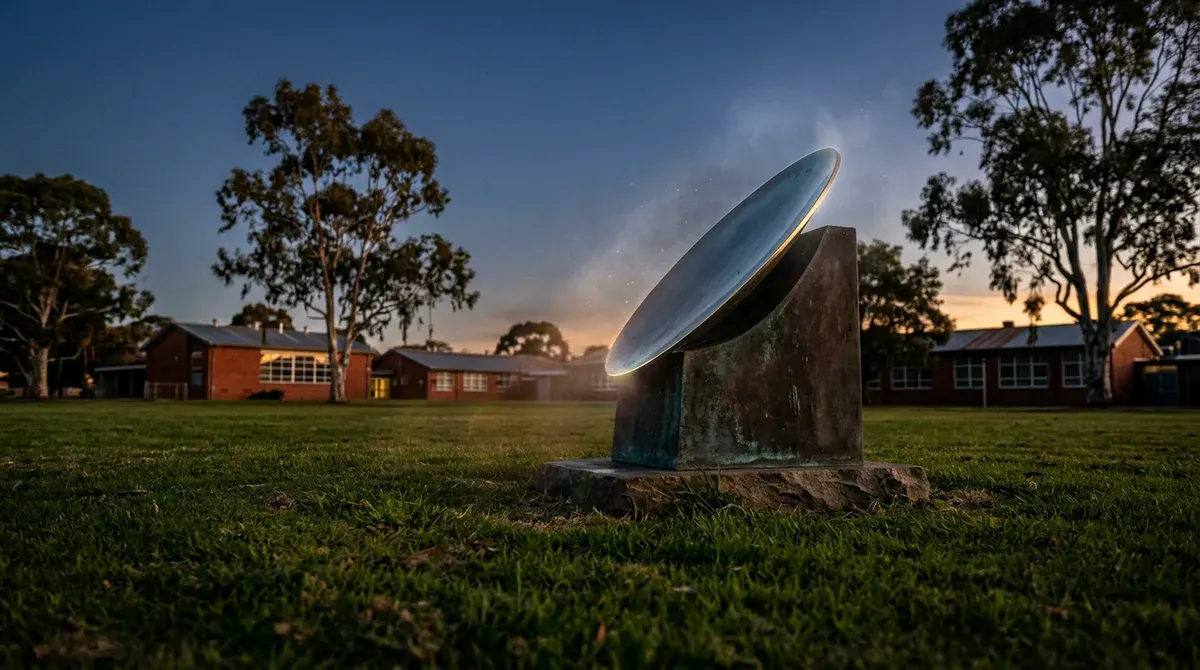
The Flying Saucer Playground at The Grange turns the sighting into an everyday place. Children climb and slide where some witnesses said an object came down, so the claimed landing site now sits inside ordinary local life. For a suburb, that is a striking choice. It means the community has chosen to carry the mystery as part of its identity rather than let it fade.
That identity was on display in April 2026. The 60th anniversary drew witnesses and local residents to the playground, and the ABC’s report on the day showed people still gathering to ask the same questions they asked in 1966. Many of them are not asking for fame or attention. They want someone to explain what they saw.
Some of those questions now point to specific records. Flight logs from Moorabbin Airport could show whether a plane was in the sky over Clayton South, and HIBAL’s archives could confirm or rule out a balloon. Others point to the drogue and the wind data, which researchers still argue over. Each new document could settle one thread, though none has yet tied the whole story together.
Commemoration keeps the Westall incident alive, but every retelling also shapes what people remember. The community’s memory is precious, and it is also fragile. When a town builds its identity around a mystery, what does it owe to the people who first claimed they saw something in the sky?
Weighing the Westall Evidence for Yourself
Start with one question: which claim matters most to you? Pick a single detail, such as the uniformed men near The Grange or the ground marks, and trace it through every version you can find. Write down the earliest account first, then each later retelling, and note what changed.
Next, set the three explanations side by side: the Laverton weather balloon, the HIBAL silver balloons launched from Mildura, and the target drogue. For each one, list the details it accounts for and the details it leaves unexplained. The several objects seen at once and the ground marks are the hardest tests, so start there.
Then choose one record to chase. Local newspapers from the weeks after 6 April 1966 are a practical place to begin, because accounts printed while the morning was still fresh are the best check on later memories. If you can reach Moorabbin Airport’s historical records, ask whether any flight logs from that morning survive.
If you visit the Flying Saucer Playground at The Grange, stand where the schoolyards can be seen and look up the way a witness might have. Decide for yourself which explanation fits what you see, and share your reasoning in the comments below. Disagreement is welcome, as long as it rests on a document or a specific detail.
Frequently Asked Questions
1. Can visitors still see the Flying Saucer Playground at The Grange today?
Yes, the Flying Saucer Playground at The Grange is still in use as a playground where children climb and slide. It was also the gathering place for witnesses and local residents during the 60th anniversary in April 2026. The playground sits close enough to the schools that pupils could once see the area from their yards.
2. Is the Westall ’66 documentary worth watching for its witness interviews?
The documentary Westall ’66 is a good choice for anyone who wants to hear from people who were there. It returns to the schools and streets of the story and features former pupils describing the morning in their own words. Listening to them makes it easy to hear how a memory can change each time it is retold.
3. Did the Westall witnesses ever agree on the size of the object?
The witnesses agree on the broad picture of a rounded, silver-white shape that moved low over the schoolgrounds without a sound. They do not give a consistent size, and the recollections also differ on whether there was one object or several. Size is one of the details that changes most from one retelling to the next.
4. Was the Westall UFO real?
No one has been able to confirm the Westall object as anything beyond what witnesses remember seeing in 1966. Weather balloons, HIBAL silver balloons from Mildura and the target drogue each explain some of the reports, but none explains all of them. The case remains open, and readers can weigh those explanations for themselves.
5. Where can readers find the original 1966 newspaper coverage of the sighting?
Local newspapers of the period, such as the Dandenong Journal, are the most practical place to start. Look at issues printed in the weeks after 6 April 1966, since those accounts were written while the morning was still fresh. Comparing them with later interviews can show where the story began to change.