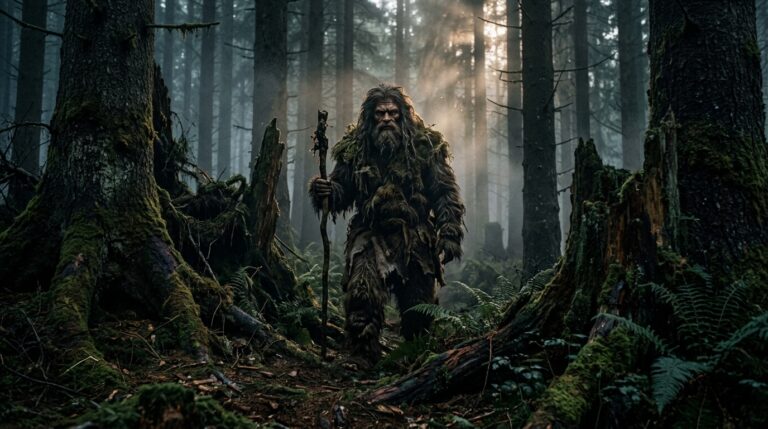
The Nuckelavee: Orkney’s Skinless Sea Monster and Its Folklore
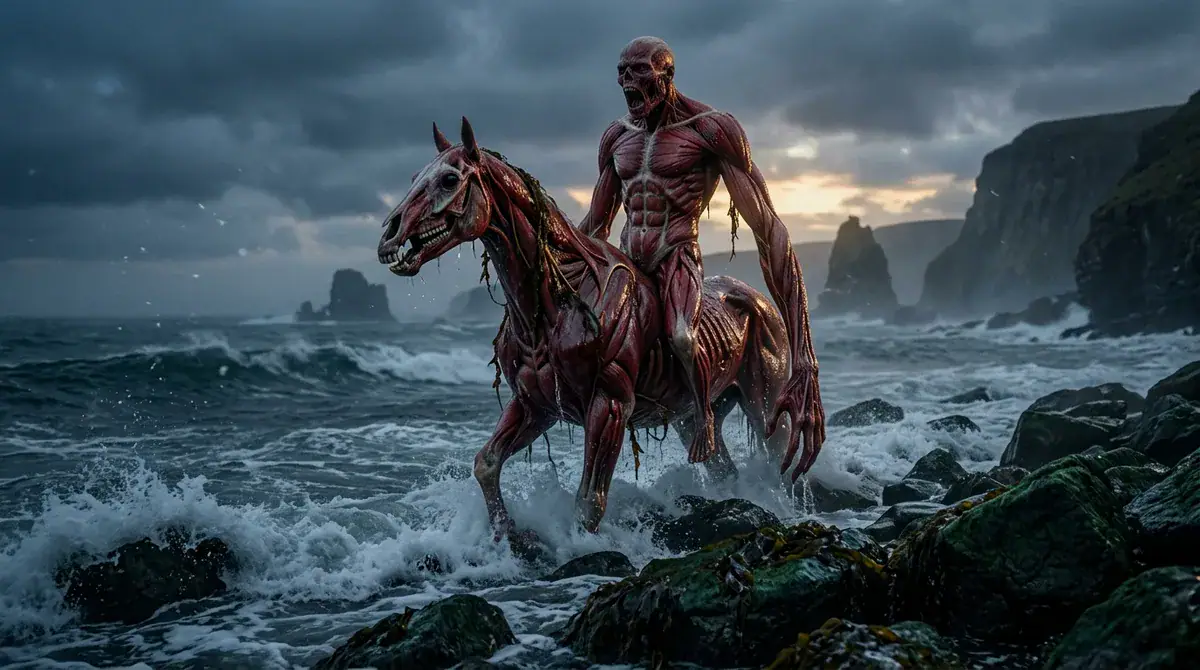
Nuckelavee folklore describes a skinless sea monster from Orkney, half horse and half man, with a head said to be ten times larger than a human’s. The most detailed early account appeared in 1891, when Sanday farmer and folklorist Walter Traill Dennison published the tale in The Scottish Antiquary, blaming the creature for crop blight, livestock deaths, and epidemics among people and animals.
Island storytellers gave the beast clear rules. It was said to fear running fresh water and was not known to come ashore during rain. Its name, Dennison wrote, was glossed as “Devil of the Sea,” and people often followed it at once with the protective words “Guid save us a’!” Each rule ties the legend to familiar places like lochs, shore roads, and streams, making the monster feel close to home.
Key Takeaways
- The Nuckelavee is a skinless sea monster from Orkney, half horse and half man, with a head said to be ten times larger than a human’s, first described in detail by Walter Traill Dennison in 1891.
- The Nuckelavee was said to fear running fresh water and to stay away from land during rain, so Orkney islanders taught that a traveler could escape it by crossing a stream.
- Islanders blamed the Nuckelavee for crop blight, livestock deaths, epidemics, and long droughts, and Dennison linked it to kelp burning and a horse disease called Mortasheen that began on Stronsay.
- The Nuckelavee grew from Orkney’s Norse and older island traditions alongside water-horse figures like Shetland’s njuggle and the Norse nøkk, according to Siobhan Cooke’s thesis from the University of Edinburgh and the University of the Highlands and Islands.
- The Nuckelavee remains part of living tradition through the Orkney Museum’s story tour on 14 October 2023, held as part of its Scottish Bestiary exhibition.
What Does the Nuckelavee Look Like?
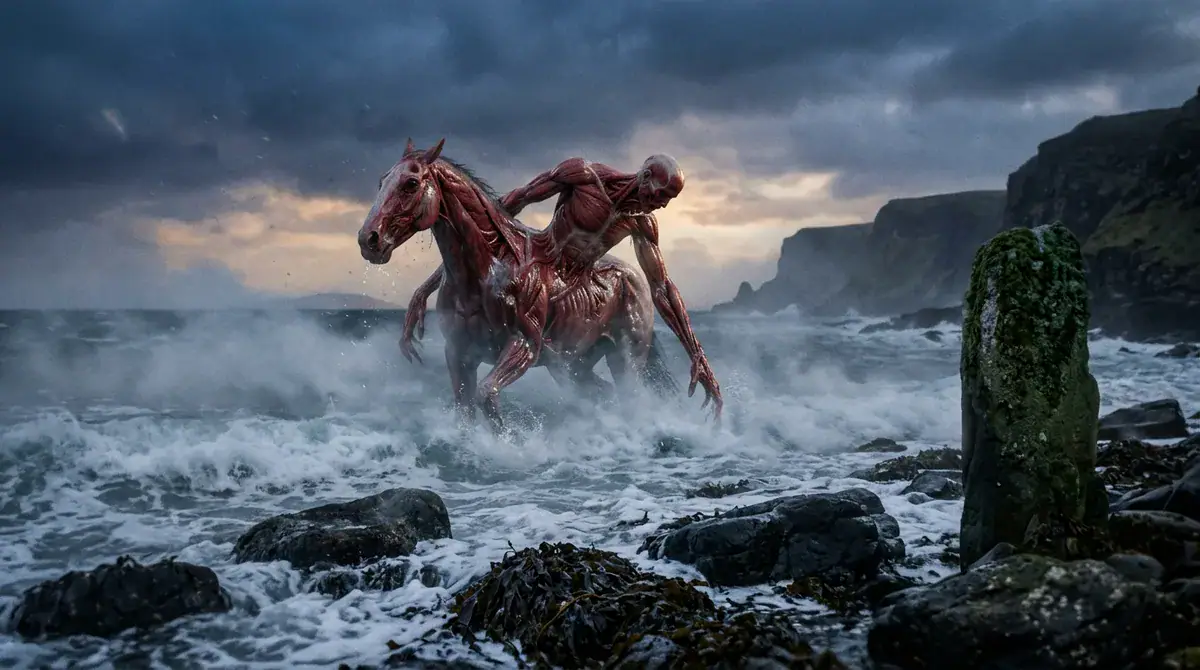
The Nuckelavee is a horse and a man fused into one monstrous body, its skin stripped away entirely. In Walter Traill Dennison’s 1891 description, raw flesh lay exposed from head to hoof, with black blood moving beneath it and white sinews showing across its frame. The head was the most unsettling part, said to be ten times larger than a man’s.
Many water horses in northern legend appear as horses alone, such as the Norse nøkk and Shetland’s njuggle. Siobhan Cooke’s doctoral thesis, produced through the University of Edinburgh and the University of the Highlands and Islands, places the Nuckelavee alongside these creatures but points out that the Orcadian figure is a horse-and-human hybrid. That combined form is what sets it apart.
The image sticks because it mixes the familiar with the wrong. Horses pulled carts and ploughs on island farms, and the human shape would have been recognizable to anyone who lived among fishing families and crofters. Seeing those two forms joined, then stripped of skin, turns the everyday into something a listener cannot shake.
Storytellers could use that image with great effect. A parent warning a child away from a dark shore road could describe a head larger than a man’s and a body of raw flesh, and the lesson about the sea’s dangers would land far harder than a simple warning.
Where Did the Nuckelavee Legend Begin?
The Nuckelavee legend has its roots in Orkney, a chain of islands off the northern coast of Scotland. Norse settlers and older Pictish and Celtic communities shaped island life there for centuries, and their stories passed from household to household long before anyone wrote them down.
The man who recorded the creature was Walter Traill Dennison, a 19th-century farmer and folklorist from Sanday, a low, sandy island where crofting and fishing set the rhythm of the year. A 2017 report in The Scotsman remembers him as a local man who gathered island tales at a time when many were slipping from memory.
Dennison’s writing is where the story stopped drifting. Before it reached print, the Nuckelavee lived in the memories of island families, and each teller may have added or dropped details along the way.
The creature did not arise alone. Orkney’s Norse past brought water-horse legends with it. Across Scandinavia, the nøkk was a spirit of lakes and rivers that often took the shape of a horse, and Shetland, north of Orkney, has its own njuggle, a close relative in the same family of waterside beings.
A University of the Highlands and Islands thesis by Siobhan Cooke traces these links carefully, showing how the Nuckelavee grew from that wider water-horse family while developing a shape of its own.
Its home was the sea, which tied it to the boats, the shore, and the waters islanders depended on for food and trade. That close bond may explain why the story stayed so strong across generations. Which parts of the legend came from Norse settlers, and which came from older island beliefs, is a question readers can still weigh for themselves.
Sea Mither, Running Water, and a Creature Afraid of Rain
The Sea Mither, a protective water spirit, held a central place in Dennison’s account. She was said to restrain the Nuckelavee during the summer, when the creature was most dangerous to the land and the people who worked it. Islanders seem to have seen her as a guardian of the water rather than a monster.
The creature’s fear of fresh water gave people a practical map of safety. A loch or running burn was a place the Nuckelavee could not follow, so a traveler who knew the land could plan a route that crossed a stream instead of keeping to the open coast.
Shore roads were the true danger zones. They ran where the sea met the land, the very places where something rising from the surf could reach a walker before he saw it. Families who used those roads at dusk would have known which stretches were exposed and which were sheltered by freshwater.
Saying the name aloud was considered risky. Islanders followed it at once with “Guid save us a’!”, a phrase that worked like a shield against misfortune. Speaking the creature’s name by accident was reason enough to say the words.
Water lore in the northern isles reaches well beyond Orkney. Shetland tradition remembers Helga Water, a watery being associated with lochs and deep pools, and the Sea Mither fits into a wider pattern in which the sea and fresh water bring both gifts and dangers. Readers can weigh whether these beliefs grew from real hazards on the coast or from the unsettling mystery of water itself.
Why Did Islanders Blame Kelp Burning for Their Troubles?
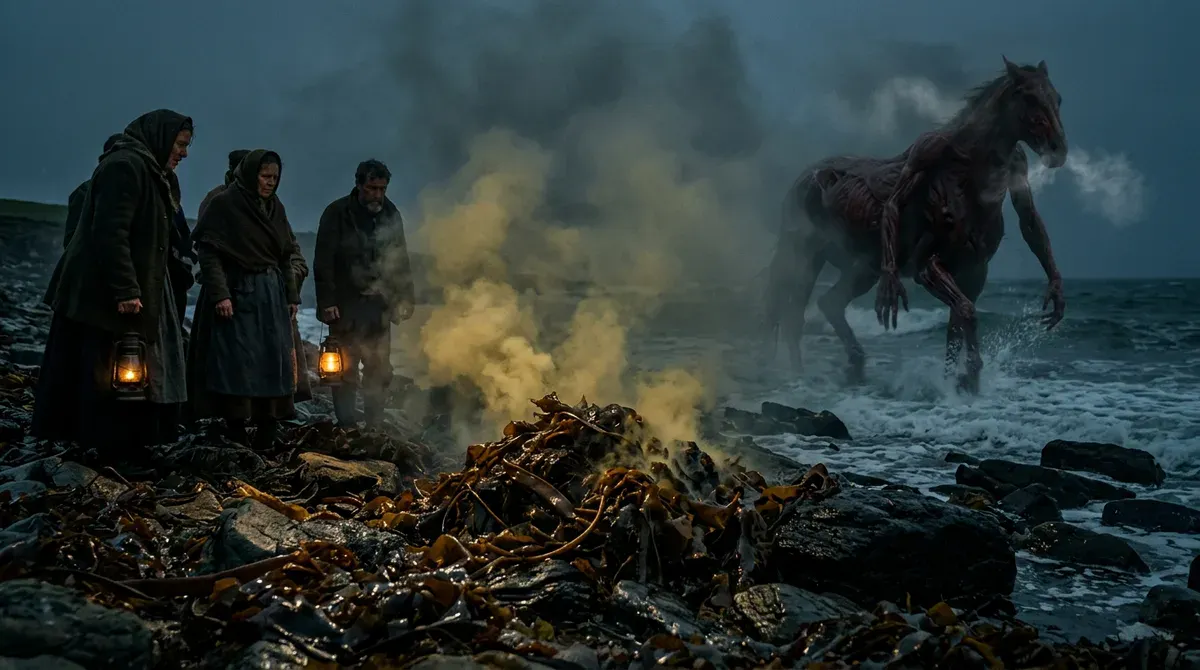
Islanders blamed kelp burning because the Nuckelavee was said to be angered by it, and that anger was believed to bring sickness and ruin onto the land. Kelp making was hard, smoky work. Seaweed was gathered from the shore, dried, and burned in pits, and the ash was valued by the glass and soap trades. For many island households, the kelp season brought in cash when money was scarce.
Dennison recorded that the burning drew the creature’s wrath and that a horse disease called Mortasheen was blamed on it. The sickness began on Stronsay and spread to other islands where kelp was made. Horses were the backbone of farm work and carting, so losing them struck at the heart of daily life.
The Nuckelavee was also blamed for crop blight, livestock deaths, epidemics among people and animals, and long droughts. These were recorded beliefs, not proven causes of illness or crop failure. Still, they show how one creature could be held responsible for nearly every hardship a community faced.
Why would an entire island pin its troubles on a sea monster? Kelp work tied people to the tides and the weather, and a poor harvest or a sick animal could arrive with little warning. A story that named a cause gave people something to do: avoid the pits in certain seasons, respect the water, and speak the protective words when the creature’s name came up.
Folklore also let a close-knit community share its grief without turning on its own neighbors. Blame fell on an unseen force in the sea rather than on a particular family, a bad season, or a quarrel over shared work. Telling the tale at a hearth or in a boat shed gave people a way to talk about fear and loss.
Did the smoke from the kelp pits and the strain of the trade truly coincide with the sickness, or did the story simply give shape to misfortune that had other roots?
What Happened When Tammas Met the Creature?
Tammas met the Nuckelavee on a lonely stretch of road, and he escaped because he knew what the creature feared. In Dennison’s telling, the monster bore down on him with its raw body and enormous head, and no ordinary man could outrun a creature that rode a horse. Tammas was near a loch, and he flung a splash of its water at the beast. The horse recoiled, shying away from the fresh water as though it had been burned.
Tammas did not stop to watch. He ran for a running stream and crossed it, leaving the creature behind on the far bank. The story turns on that moment, when a rule islanders taught their children became a way out for a man caught in the open.
The episode gives a clear picture of how folklore worked in practice. Lochs and burns were scattered across the islands, so a person walking home after dark could plan a route that passed fresh water. The tale also treats the creature’s fear of freshwater as something a sensible traveler could use.
Similar stories traveled well beyond the northern isles. Shoopiltee, a water horse from Orcadian and Shetland tradition, was said to lure people onto its back, and the Neck of German legend could rise from a river in the shape of a horse. Across these tales, the water horse appears where land meets water and often tempts or threatens a traveler who wanders too close.
These shared motifs suggest that water horses carried a common set of ideas as they moved from one shore to the next. The horse shape, the danger at the water’s edge, and the power of a name spoken aloud appear again and again. Does Tammas’s story reflect a single island’s memory, or a much older picture of the sea that many northern peoples held in common?
How Is the Nuckelavee Still Told Today?
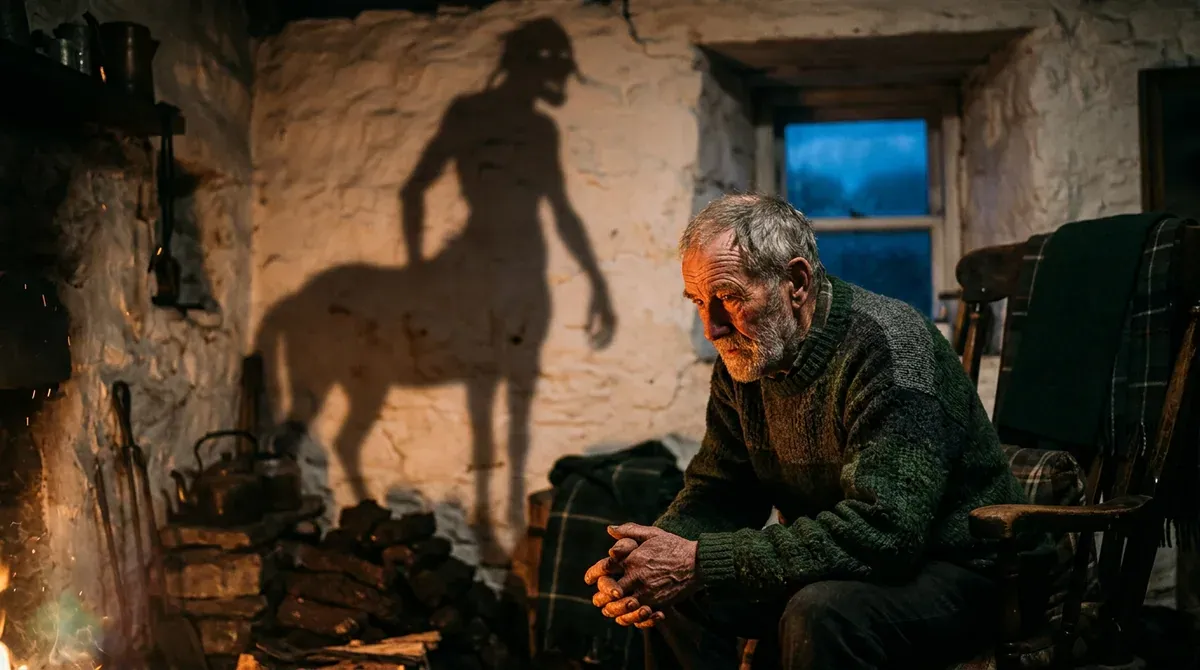
On 14 October 2023, the Orkney Museum ran a story tour on traditional tales and customs connected with creatures including the Nucklavee, as part of its Scottish Bestiary exhibition.
The Sagnagrunnur Orkney database offers another way in. It maps legends to the places they belong to, and many entries include a story summary, the source location, the collector who recorded the tale, and the storyteller who told it.
Scottish folklore collections add older voices to the picture. Collectors who wrote down island speech preserved tellings that often predate the films and books that followed.
Modern retellings have carried the creature far beyond Orkney. Documentary and screen treatments have introduced the Nuckelavee to new audiences, often sharpening its horror for dramatic effect.
Local records help readers tell the difference between oral tradition and later embellishment. When a detail appears in an early collector’s notes, it likely came from the island tellers. When a vivid image appears only in a modern version, it may have been added along the way. Which details would you keep if you were telling the story yourself?
Following the Nuckelavee Trail Through Island Archives
Readers who want to test the legend for themselves can start with Dennison’s own words. His 1891 account survives in a digitized volume, and reading his passages on the Sea Mither beside the Tammas episode shows how a single teller shaped the story. Next, set the Orcadian Nuckelavee beside Shetland’s njuggle and the Norse nøkk. Note where the horse shape, the water’s edge, and the protective words match, and where they part ways. Then ask what the tale reveals about island life: why the kelp pits, the shore roads, and the open sea felt so dangerous, and who the story was meant to protect. If your family kept a version of the Nuckelavee or another water-horse tale, share it in the discussion below.
Mapping the Legend Across Island Shores
Start with one island and one stretch of water. Pick Sanday or Stronsay, where the horse disease Mortasheen was said to begin, and find the lochs and burns on a map of its coast. Then trace the shore road a walker would have taken after dark, and mark each point where fresh water crosses the route.
Next, write down what Dennison’s 1891 wording says about the Sea Mither, the protective words, and the creature’s fear of running water. Beside those notes, list any detail that appears in later retellings but not in the older text. A vivid image that appears only in a modern film or book is worth flagging, because it shows how the story changed as it passed from teller to teller.
Finally, ask a local library or heritage group on Sanday whether they keep old island notebooks or letters from collectors. Records like these can show which families told the tale and at which hearths it was shared. Once you find a single personal voice in those pages, the Nuckelavee may feel less like a printed monster and more like a neighbor’s warning. What would you ask that storyteller first?
Frequently Asked Questions
1. How do you pronounce Nuckelavee, and why do the spellings vary?
Most readers say the name as NUCK-uh-LAH-vee. The spelling shifts because the tale lived in island speech for generations before collectors wrote it down, so each writer rendered the name by ear. The 2023 Orkney Museum event used the spelling Nucklavee, which shows the variation continues in modern listings.
2. Is the Nuckelavee the same creature as the Scottish kelpie?
No, the Nuckelavee and the kelpie are separate figures, though both belong to the wider family of water horses in Scottish tradition. The kelpie is usually pictured as a horse that lures travelers into deep water. The Nuckelavee is a horse and a man fused into one skinless body, with a head said to be ten times larger than a human’s.
3. What was Mortasheen, and why was it blamed on the Nuckelavee?
Mortasheen was a horse disease that Walter Traill Dennison linked to the Nuckelavee in his 1891 account. The illness was said to begin on Stronsay and spread to other islands where kelp was made. Horses were central to island farm work and carting, so losing them would have hit families hard, and the blame gave that loss a supernatural cause.
4. Are there Nuckelavee tales from Shetland or Ireland that differ from the Orkney version?
The Nuckelavee is rooted in Orkney, and its closest northern relatives are Shetland’s njuggle and the watery being Helga Water. The njuggle is a water horse without the human half that defines the Orcadian creature. Irish water-horse tales form a separate body of folklore, and comparing them would mean studying that tradition on its own terms.
5. What did Dennison say the Sea Mither did to the Nuckelavee?
In Dennison’s account, the Sea Mither was a protective water spirit who restrained the Nuckelavee during the summer. Summer was the season when the creature was considered most dangerous to the land and the people who worked it. Islanders seem to have regarded her as a guardian of the water rather than a monster.