Black Annis Legend: How Leicester’s Bogeywoman Took Shape
The Black Annis legend tells of a monstrous woman who supposedly lived in a cave in Leicester’s Dane Hills, a grassy rise on the edge of the city. The earliest written trace comes from William Burton’s 1622 account, which calls her Black Agnes and describes her as an anchorite, a religious recluse. A 1764 land deed later refers to “Black Anny’s Bower Close,” showing how the name kept shifting from one record to the next.
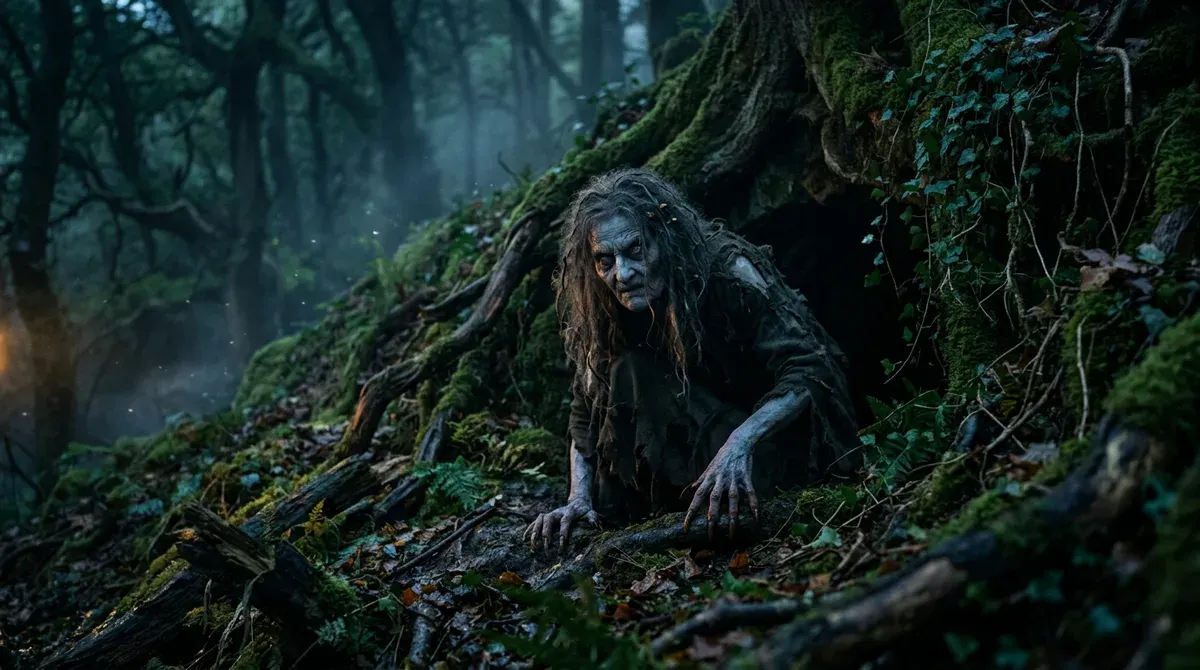
By 1797, the poet John Heyrick had turned her into something far more frightening. His poem gave her a blue face, talons foul with human flesh, and an oak tree growing over her lair. That vivid picture has shaped the legend in popular memory ever since. The cave itself was modest, roughly 7 to 8 feet long, so the tale grew far larger than the hollow it claimed to describe. Was she a real person, a warning for children, or something older still?
Key Takeaways
- Black Annis first appears in William Burton’s 1622 account, which calls her Black Agnes and describes her as an anchorite, a religious recluse.
- John Heyrick’s 1797 poem gave Black Annis a blue face, claws described as vast talons foul with human flesh, and an oak tree growing over her lair, shaping the monstrous image most people still picture today.
- The cave associated with Black Annis in the Dane Hills near Leicester was roughly 7 to 8 feet long and 4 to 5 feet wide, according to William Kelly’s 1874 recollection, and its entrance had been closed by the time of his later visit.
- The 2006 folklore study cited in the article describes the claimed links between Black Annis and ancient goddesses as speculative rather than established history.
- The legend survives mainly through oral memory and local newspaper reports, such as the Leicester Chronicle account dated 5 September 1874, which says children playing on the hills were warned that Black Anna would snatch them.
Who Was Black Annis, and Where Did the Legend Begin?
Black Annis is a bogeywoman tied to a cave in the Dane Hills near Leicester, but the earliest surviving trace of her is far quieter than the legend that later grew around it. The first written reference is William Burton’s account from 1622. In it, she appears as Black Agnes, and Burton describes her as an anchorite. Folklorist Bob Trubshaw identifies this as the earliest written link to the figure, and reading it closely shows how little of the later picture is present.
Some have connected her to the anchoresses of the Reformation era. That remains an idea rather than a documented fact.
The name itself keeps moving. Burton wrote Agnes, but by 1764 a land deed refers to “Black Anny’s Bower Close,” attaching the name to a plot of local ground. The deed shows that people used the name to describe a place, yet it says nothing about what they believed about the figure who gave it that name. A Leicester Chronicle report from 1874 later uses “Black Anna,” so the spelling kept drifting from one kind of record to the next.
Seen together, these records look less like one ancient belief and more like a collection of separate accounts. A scholar’s note, a property document and a local newspaper each add something new, and none of them fully agrees with the others. A name on a field and a few lines of verse do not make a person, yet they help explain why the figure still feels so solid today.
How Did John Heyrick Shape Her Monstrous Image?
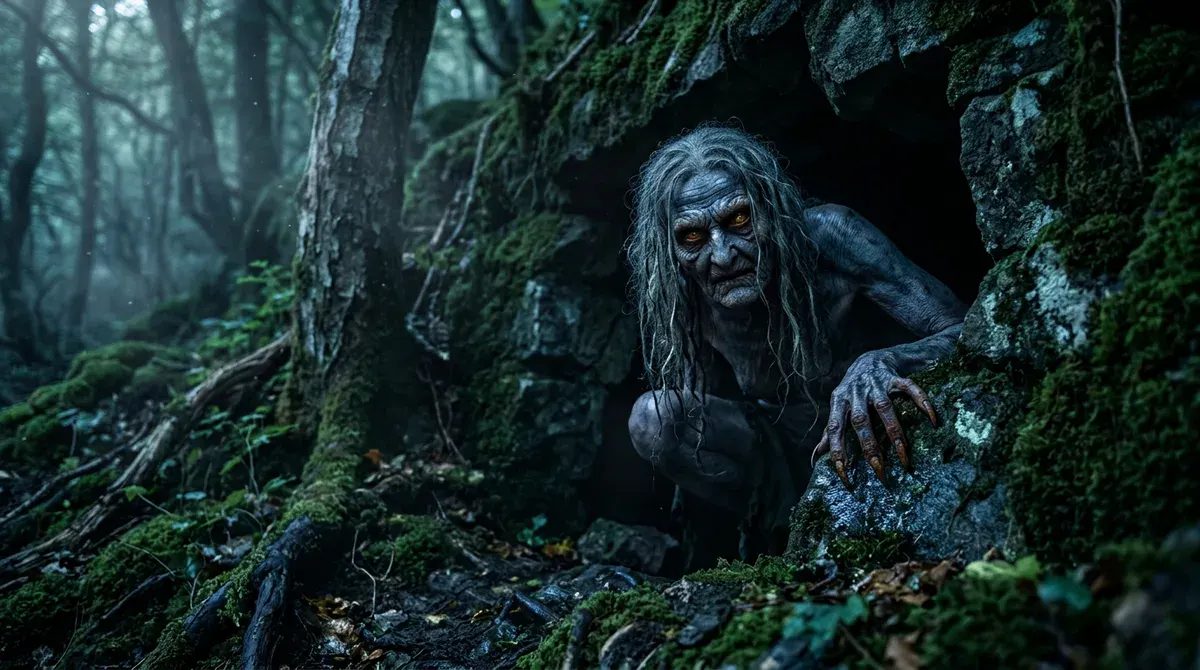
John Heyrick’s 1797 poem, On a Cave Called Black Annis’s Bower, gave the figure the monstrous shape most people still picture. Earlier records offer a religious recluse and a field name, but no creature with claws and a hunger for flesh. Heyrick’s verse turned a quiet hollow in the Dane Hills into a lair with a terrifying resident.
The poem paints a scene that is hard to forget. Black Annis has a blue face, and an oak tree spreads over the cave as if nature itself had grown up to hide her. Her hands end in claws, described in the City of Leicester’s heritage history as “vast talons, foul with human flesh.”
Heyrick’s images go further than the claws. A digitised copy of the poem held by University of Leicester Special Collections describes the skins of human victims hung up inside the cave. Those grisly details transformed a shadowy name into a creature who preyed on the living.
Why she became “Black Annis” is still debated. Some readers point to her dark complexion, the idea that a woman so feared must have had a grim, weathered look. Others suggest the name came from the blackness of the cave itself, a dark opening in the hillside that would have looked threatening to anyone passing by. The surviving sources offer more than one explanation, and none of them settles the matter.
Later writers did not simply repeat Heyrick’s lines. They embellished them, adding detail after detail until the monster felt familiar. An 1874 Leicester Chronicle report described children being warned that she would scratch them, suck their blood and hang their skins to dry. The claws, which began as a few lines of verse, had become a warning passed from parents to children.
What Is Dane Hills, and What Is Hidden in Its Cave?
Dane Hills is a grassy rise on the edge of Leicester, and the cave where Black Annis was said to live was a small hollow somewhere on its slopes. William Kelly’s 1874 recollection gives the clearest sense of its size, describing a space about 7 to 8 feet long and 4 to 5 feet wide. That is roughly the length of a tall man lying down, and little more than a bolt-hole. By the time Kelly made a later visit, the entrance had been closed, so the hollow he remembered was no longer open to anyone curious enough to look inside.
That sealed opening mattered. Once the cave could no longer be seen, it became a place people could only imagine, and imagination had plenty of room to work. Local storytellers filled the gap with tales that stretched far beyond the hill itself.
Some of the most striking stories tie the hills to Leicester’s churches and castle. Tellers spoke of tunnels said to run from Dane Hills toward Leicester Castle, and of passages linking the hill to St Mary de Castro, the church that stands close to the castle grounds. Local speakers also linked the hill to names such as Rupert’s Gateway, which grounded the legend in streets people walked every day.
These tunnel and church links remain local tales, passed down by word of mouth rather than fixed in any written account. Yet the place names do much of the work. Dane Hills, Black Anny’s Bower Close, the cave and the castle all sit on the same map, so each name seems to confirm the others. Stand on the hill, look across at the castle and the church, and the pieces appear to fit together like a puzzle.
How much of a story can a map carry before it starts to pass for history?
What Did Black Annis Do to Children?
Black Annis was used to keep children away from the Dane Hills, and the 1874 newspaper warnings show how that fear worked in everyday life. A Leicester Chronicle account dated 5 September 1874 reported that children playing on the hills were told Black Anna would snatch them. The warning was meant to keep young visitors close to home, where a grown-up could see them.
The name in that report is also worth noticing. Burton had written Agnes in 1622, and the 1874 text uses Anna, so the figure’s name had changed as it passed from one speaker to the next. Stories told aloud rarely stay word for word, and the spoken version of Black Annis seems to have been far more fluid than any printed copy.
Long before the newspaper warnings, the hills had a different kind of gathering. Leicester’s municipal records first mention an Easter Monday hunt on Dane Hills in 1668, and the custom was already described as ancient at that time. John Throsby later described a mock hare hunt in which a dead cat, prepared with aniseed water, was chased across the slopes. Trubshaw also reports that the municipal custom began falling into disuse around 1767, which means the hunt had been part of the town’s calendar for generations before it faded.
The Easter hunt and the figure in the cave may have had nothing to do with each other, yet both belonged to the same hill, and both drew people out onto its slopes at particular times of year. A crowd gathering on the grass each spring might well have carried stories with it, and each retelling could have left the hill feeling a little more haunted.
Would a child who heard the warning on the hill have walked home with a different feeling about that place?
Witch-Herbs, Wartime Stories and Later Sightings
Folk belief in Leicester did not stay confined to the cave. Local households were said to guard their homes against the bogeywoman with witch-herbs, sprigs of greenery and charms hung near doors and windows. Those precautions kept the figure present in everyday life long after the hill itself was out of sight. Many families who hung such charms would have seen them as ordinary common sense, not as superstition.
Later sightings followed the land as it changed. As fields around Dane Hills gave way to streets and houses, people continued to describe strange figures and unsettling noises on the slopes. When a housing estate was built nearby, it became a fresh setting for the old warnings. Each new row of houses seemed to bring the legend closer to front doors, even though the cave itself stayed sealed.
Wartime brought new anxieties. Children evacuated into Leicester from other places heard the old tales from local playmates and were told to keep away from the hills and the hollow in the slope. For a child far from home, a story about a monstrous woman living in a nearby cave could feel far more real than it did to a child who had grown up with it.
Most of these accounts survive through oral memory, passed from parents to children and from neighbour to neighbour, along with reports printed in the local press. Memory reshapes details with every telling, and newspapers recorded what they were told rather than checking every claim. What the stories reveal is belief in action, people acting on fear and handing it down, rather than proof of a creature living in the hill.
Is Black Annis Really an Ancient Pagan Goddess?
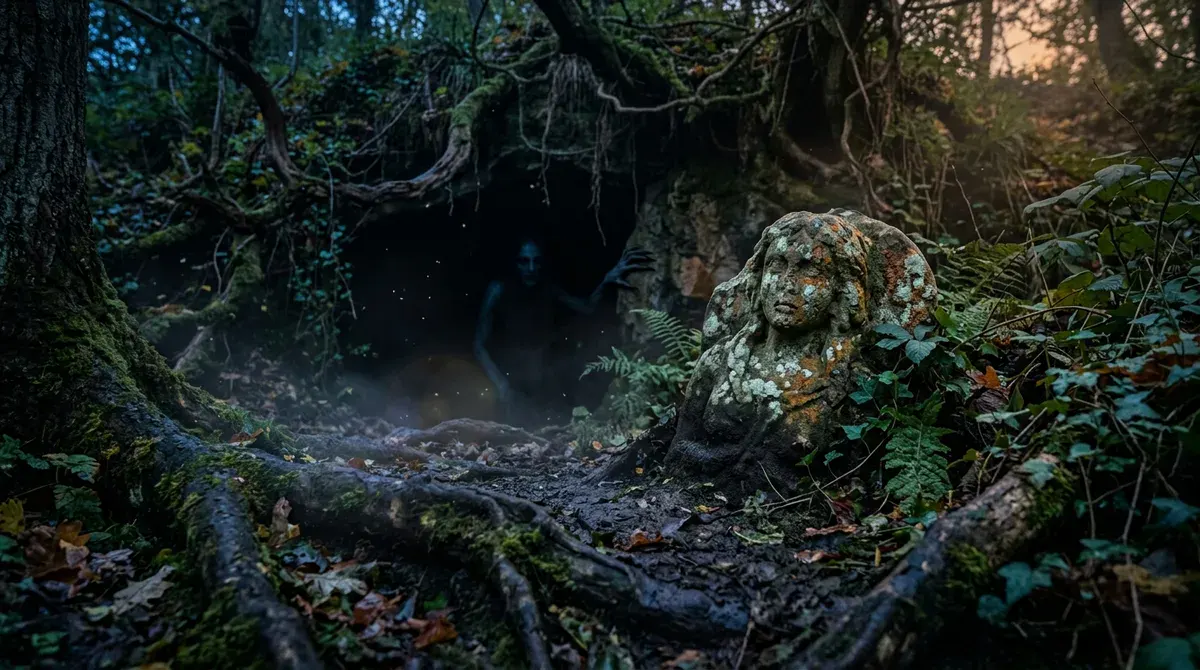
No, the surviving record does not show that Black Annis was ever worshipped as an ancient pagan goddess, though many modern writers have treated her that way. By the end of the twentieth century, she was commonly described as a pagan goddess, with roots pushed back into a distant past.
The Celtic goddess theory has an obvious appeal. Across the British Isles, local deities were once honoured at hills, springs and groves, and a fierce woman living in a hillside cave seems to belong to that older world. The idea gives the legend a deep history that feels satisfying, as if a shadow from prehistory had been waiting under the Dane Hills grass all along.
The 2006 folklore study urges caution. Its author describes the supposed links between Black Annis and ancient goddesses as speculative rather than established history. The earliest records, including the 1622 account, the 1764 land deed and the 1874 newspaper report, offer no goddess, ritual or offering, so the pagan link owes more to later interpretation than to the earliest texts.
Modern media keeps reshaping the figure. Comics, video games and online bogeyman wiki entries recast her for new audiences, sometimes as a villain with an invented backstory and sometimes as a mythic queen of the hills. Each version adds details that never appeared in the older texts, and readers can easily mistake a recent invention for an ancient belief.
Folklorists also place her within a wider pattern. Across England, many bogeywomen were said to guard particular places, such as wells, woods or hills, and to frighten children away from dangerous ground. Seen this way, Black Annis may be a local example of a common figure rather than a surviving goddess. So which is she: a faded memory of an older faith, or a story that people keep building on the hill?
Weighing the Legend for Yourself
Start with the hill itself. On a quiet afternoon, walk the slopes of Dane Hills and look for the spot where the hollow was once said to sit. By the time William Kelly made a later visit, the entrance had been closed, so the place now reveals more about how people remembered it than about the cave itself.
Then make a simple chart. Draw four columns for the 1622 anchorite, the 1764 field name, Heyrick’s 1797 poem and the 1874 newspaper warning. Under each, write only what that record actually says, such as a name, a size, a claw or a warning about children. You will quickly see which details appear once and which travel from one account to the next.
Next, try a deeper search. Leicester’s libraries and archives are a good place to look for old maps and newspaper runs. Check whether “Black Anny’s Bower Close” appears on maps made after 1764, and whether any printed guide still mentions the Easter Monday hunt.
Finally, ask yourself a personal question. If you had to tell the story to a child standing on that hill, which detail would you keep, and which would you leave out? Share your answer in the comments below, and tell us whether you think the legend grew from a real person, a local warning or something much older.
Frequently Asked Questions
1. Are there other bogeywomen in English folklore similar to Black Annis?
Yes, English folklore has several bogeywomen who guarded particular places and frightened children away from dangerous ground. Jenny Greenteeth, a water-dwelling hag said to drag unwary children into ponds and pools, is one well-known example from northern England. Folklorists often group these figures together because each one turned a risky spot, such as a well, wood or hill, into a place children were told to avoid.
2. Where exactly on Dane Hills was Black Annis’s cave located?
The cave is described only as a small hollow somewhere on the slopes of Dane Hills, rather than at a fixed, marked point. William Kelly’s 1874 recollection gives its size as about 7 to 8 feet long and 4 to 5 feet wide. Because its entrance had been closed by the time of his later visit, the spot is hard to pinpoint today.
3. Do Leicester families still tell Black Annis stories to their children?
The strongest records of family storytelling come from the nineteenth and twentieth centuries, including the 1874 warnings to children playing on the hills. Local households once hung witch-herbs near doors and windows to guard against her, and evacuated children picked up the tales from local playmates during the war. Today the legend is retold in books, comics and online media, which keep reshaping her for new audiences.