Stull Cemetery Haunting: How a Kansas Legend Gained Momentum
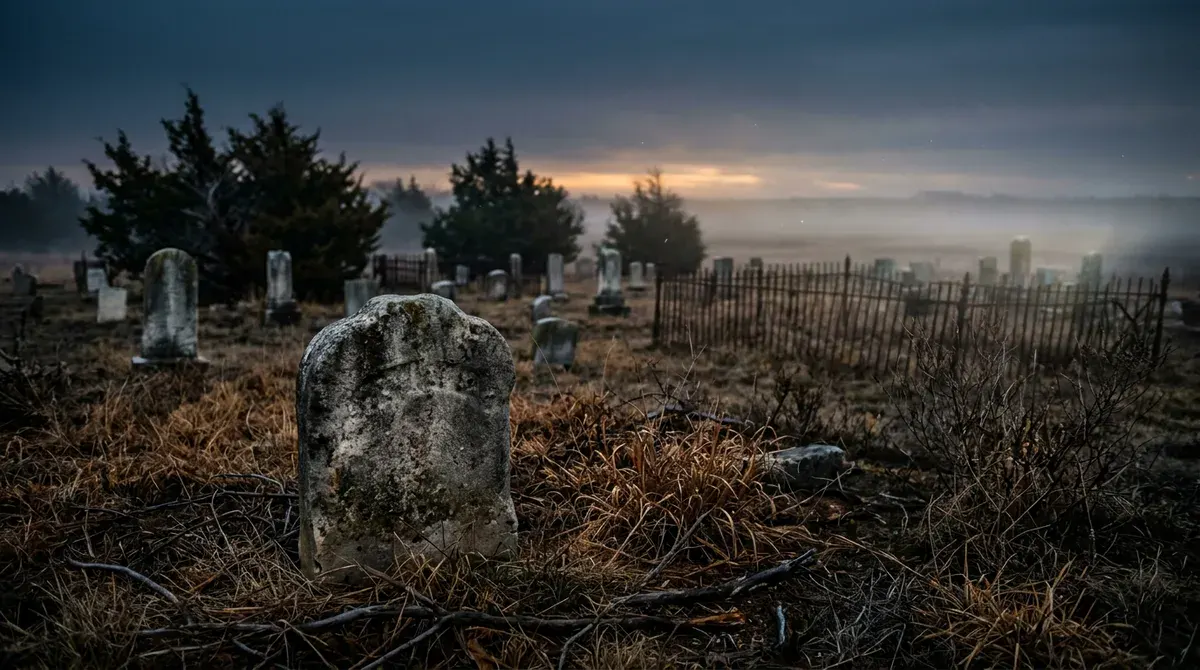
The Stull Cemetery haunting is a legend that grew through retelling. No record has confirmed a supernatural event there. Its core claim, that the Devil appears at the cemetery on Halloween and the spring equinox, took shape in the Kansas countryside near Lawrence. It spread after a University Daily Kansan article published on November 5, 1974, which is often identified as the moment the tale reached a much wider audience.
The local history begins far more quietly. By 1857, six families lived near what became Stull. In 1859, eighteen settlers organized Evangelical Emmanuel Church, according to the Douglas County Rural Historic Resources Guide. Construction of the stone church began by 1867 and cost $2,000. The church stood beside a cemetery on land donated for that purpose.
Key Takeaways
- The Stull Cemetery haunting is a legend that grew through retelling, and no record has confirmed a supernatural event at the site.
- The claim that the Devil appears at Stull Cemetery on Halloween and the spring equinox first reached a wide audience through a University Daily Kansan article published on November 5, 1974, which presented the tale as folklore.
- Evangelical Emmanuel Church was organized in 1859 by eighteen settlers, more than a century before the Devil’s visits became a widely told story in 1974.
- Kansas law treats damage to cemeteries seriously, making damage of $1,000 to under $25,000 a severity level 9 nonperson felony and damage under $1,000 a class A nonperson misdemeanor.
- The Stull Cemetery is private land posted against trespassing, so visitors who want to see the hill should stay on the public road.
Where Stull’s Story Began on Deer Creek
Long before the name Stull appeared on maps, the land was known as Deer Creek, after the stream that wound through the rolling prairie. Those who first arrived found open grassland, a line of trees along the water, and plenty of room for fields and barns.
Many of the newcomers were German speakers, and others came from Pennsylvania, bringing the Pennsylvania Dutch customs of their home communities. They planted crops, raised livestock, and split rails for fences. Their faith shaped the settlement as much as their farming did. The churches they built became places where neighbors gathered for worship, weddings, funerals, and work days.
As the community grew, it needed a clear address for its mail. A member of the Stull family ran the local post office, and over time the settlement took on the family’s name. The change marked a shift from a loose network of farms to a place with its own identity on paper, even if daily life stayed much the same.
Life here was practical and slow. Roads were rough, the seasons dictated the work, and a trip to town could take most of a day. Stories were told at kitchen tables and church suppers, but they were the kind families passed down about harvests, storms, and hard winters.
That is what makes the later legend so striking. The people who settled Stull left behind records of hard work, prayer, and neighborly duty. The eerie tale that would one day draw visitors from far away came much later. It grew from retelling rather than from anything written in the settlement’s early years.
How Did a Country Church Become a Gateway to Hell?
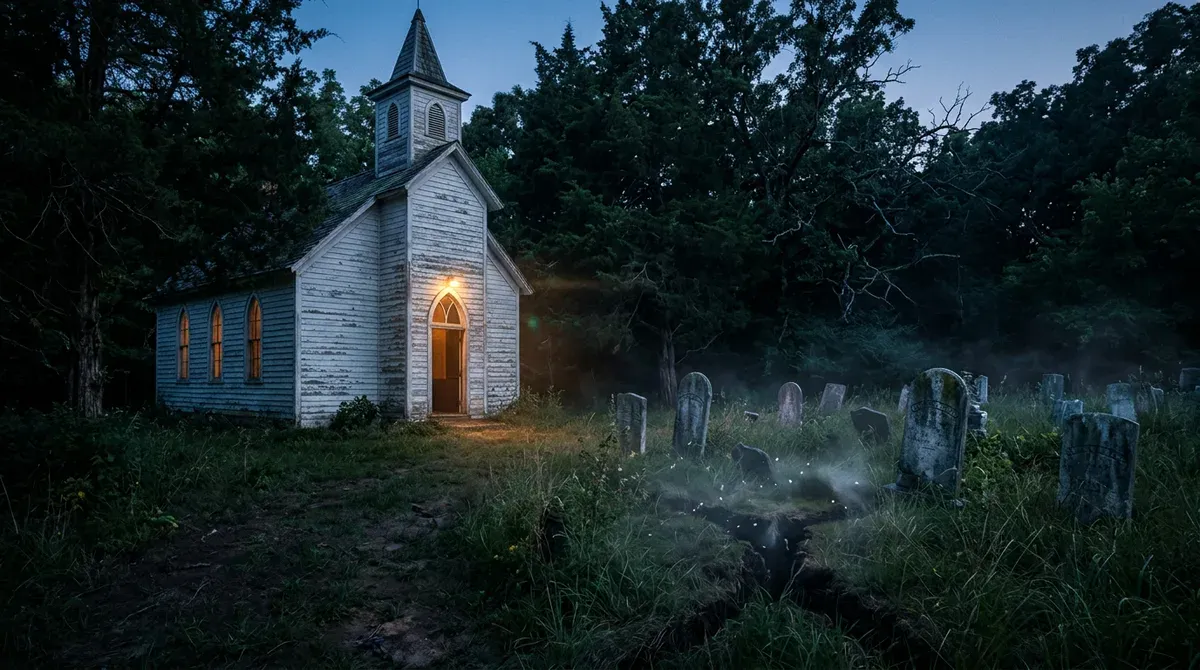
A country church did not earn its reputation as a gateway to hell through anything written in its early years. That reputation took shape in the 1970s, after a legend that had grown around an ordinary stone church and its burial ground reached a much larger audience.
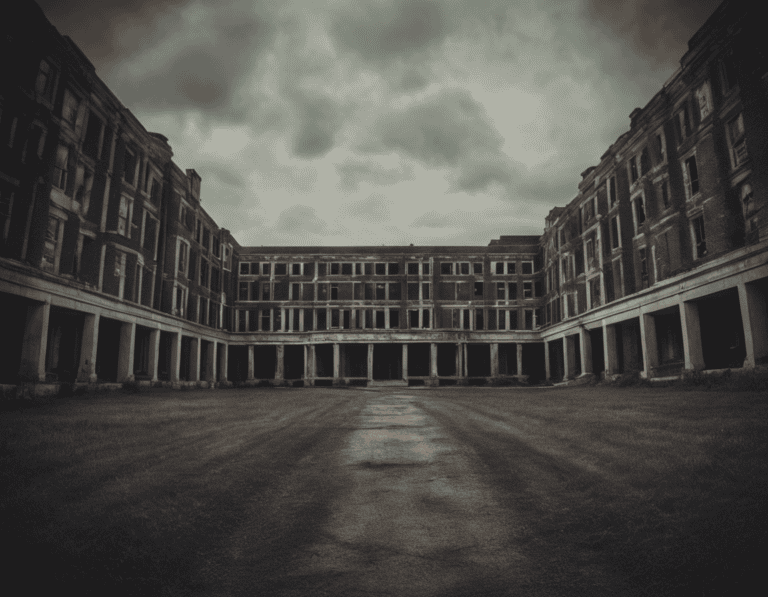
The building facts are plain. The cemetery’s boundaries were extended in 1952, and the hill where it sits came to be called Emanuel Hill. The county’s historic guide also records that the land for the church and the cemetery was donated together, so the two have been linked since the beginning. For decades, the congregation met there for services, funerals, and church suppers. Nothing about the place set it apart from hundreds of other rural churches in Kansas.
The supernatural claims arrived later. The turning point is most often traced to a University Daily Kansan article published on November 5, 1974, a student newspaper story connected to the University of Kansas. It tied the Devil to the cemetery, saying he appears there twice a year, on Halloween and the spring equinox. The article presented this as folklore, not as a verified event. Clio, a history reference site, notes that the claim was reported as a legend from the start.
Once a story like this is in print, it no longer belongs to its author. Other readers repeat it, add a detail, and pass it along with more confidence than the original carried. The student article gave the legend a date, a place, and a reason to visit, and those three things were enough to let it travel.
What Stories Were Added Along the Way?
Over time, retellings added witches, hidden stairs, a claim about Pope John Paul II, and a range of eerie details that have no roots in the settlement’s history. Each addition made the story more vivid, and each one made it harder to trace back to a source.
Several of the added claims are easy to recognize as folklore:
- A witch’s grave: Some tellers say a witch is buried in the cemetery and point to a stone as hers, though the stories rarely agree on her name or when she died.
- Hidden stairs and tunnels: Some versions describe passages beneath the hill that link the church to nearby farms. Such a route has never been found, but secret passages make a place feel older and more dangerous.
- Pope John Paul II: One version claims the pope had a connection to the site. That link sits far outside the history of a small Kansas congregation, but it gave the legend worldwide reach.
- A boy werewolf and unconsecrated ground: Online posts describe a boy who became a werewolf and claim the cemetery was never blessed by the church. These details spread quickly through online retelling.
Each new layer seems to grow from the same habit. A dramatic detail is repeated, shortened, and passed on with more confidence than the last teller had, until it is treated as part of the history.
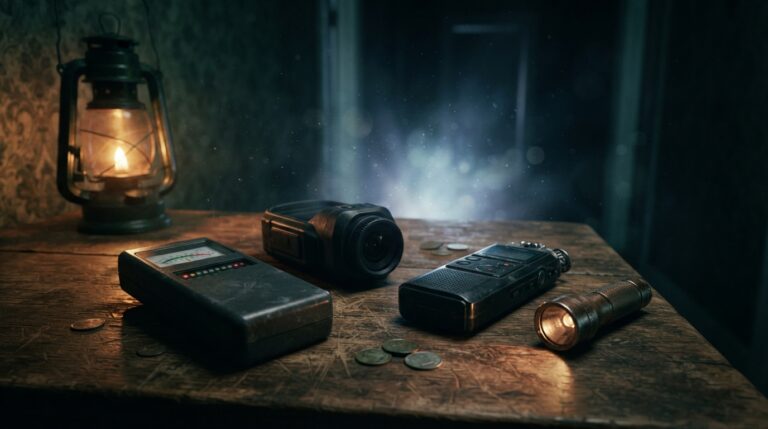
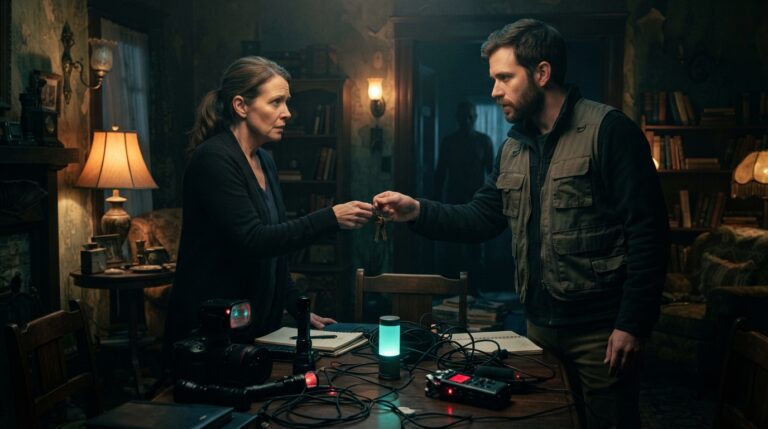
Visitors who come at night bring their own accounts. Some describe a wind that seems to blow only around the hill, even on still evenings. A few say their recording equipment captured unusual electromagnetic field readings. Believers see these moments as signs that something lingers. Skeptics point out that wind moves freely across open prairie and that meters can react to many ordinary things. Both readings leave the visitor to decide what the night actually held.
Why Do Halloween Crowds Keep Causing Trouble?
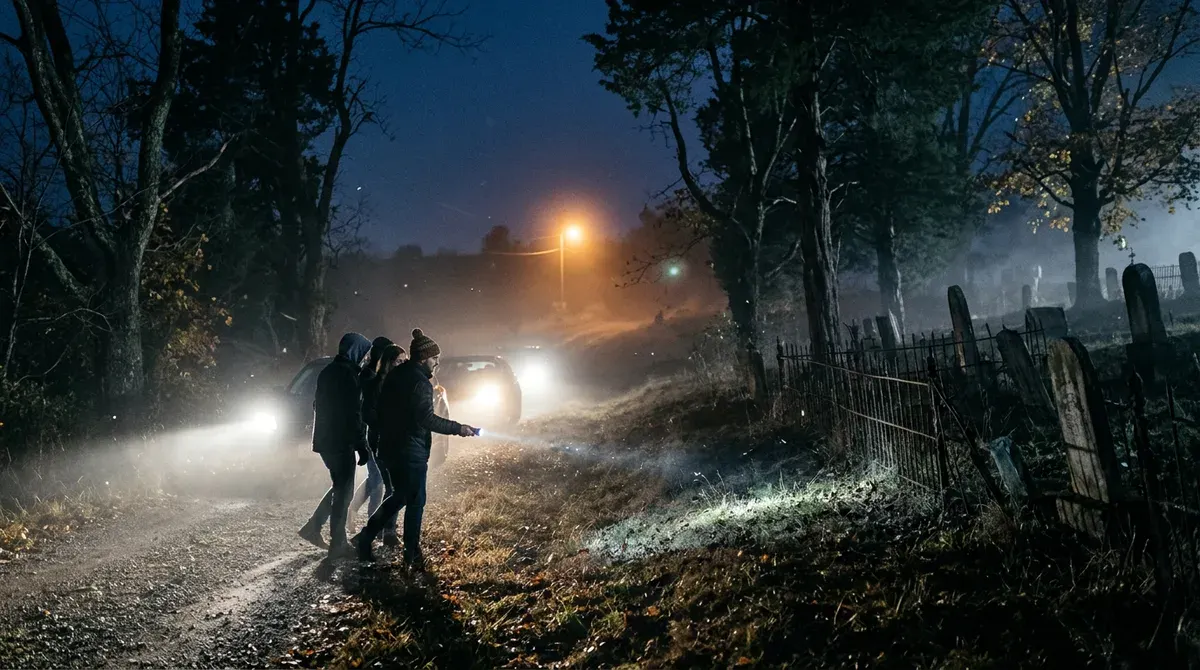
Halloween crowds keep causing trouble because the legend draws night visitors to a private, active burial ground, and some of them damage the property they came to see. The story has led to vandalism and littering on the hill, leaving behind broken items, trash, and scars on a place where families still bury their dead.
The cemetery is not a public park. It remains an active burial ground that is privately owned and posted against trespassing. Mourners still come to visit graves, and anyone who wanders in after dark is entering land that belongs to someone else. The signs are not decoration. They tell visitors that the grounds are closed to them.
Kansas law treats damage to cemeteries seriously. Under the state’s Kansas criminal desecration statute, the offense covers recklessly damaging cemetery property, including a grave, a marker, a tree, or other cemetery property. The law does not limit the offense to graves alone, so a broken headstone and a damaged tree both fall under it.
The penalty depends on how much damage is done. Damage of $1,000 to under $25,000 is a severity level 9 nonperson felony, which is a serious crime with lasting consequences. Damage under $1,000 is a class A nonperson misdemeanor, a less serious offense that still carries real penalties. The word “nonperson” means the offense involves property rather than harm to a person.
Officials have described Halloween visits as having quieted over time, which suggests the wave of trouble has eased from its peak. Still, the legend keeps finding new listeners, and each new group of curious visitors arrives with the same question: what is on the other side of that gate?
Is There Any Evidence Behind the Haunting Claims?
No documented proof supports the haunting claims. The cemetery has no proof or evidence behind the stories of the Devil, witches, or hidden stairs, so the legend rests on retelling rather than on anything recorded at the site.
Personal accounts still matter, and many of them are sincere. Visitors share stories online about a wind that seems to blow only around the hill, even on evenings when the trees beside the road stand perfectly still. Anyone who has stood on an open rise in Kansas knows that air moves in strange ways across the prairie. A hilltop cemetery can catch a breeze that a flat field never feels.
Some visitors also point to electromagnetic field readings from their meters as proof that something was present. What those readings mean is open to debate. Meters respond to power lines, phones, car batteries, and other ordinary electronics, so a spike on a screen does not by itself reveal a spirit.
Legends often gain strength when visitors arrive expecting to see something. A person who climbs the hill at midnight, after reading about the Devil and the spring equinox, is already primed to notice a chill, a rustle, or a blinking light. Expectation does not explain every experience, but it shapes what people remember and what they choose to share.
The record leaves plenty of room for the unexplained. A cold gust or a strange reading can feel meaningful to the person who experienced it, even when nothing in the documented history explains it. Holding both views at once is a fair way to approach the place.
Which part of the story would you need to see before you believed it: the wind, the meter, or the record itself?
What Stands at Stull Cemetery Today?
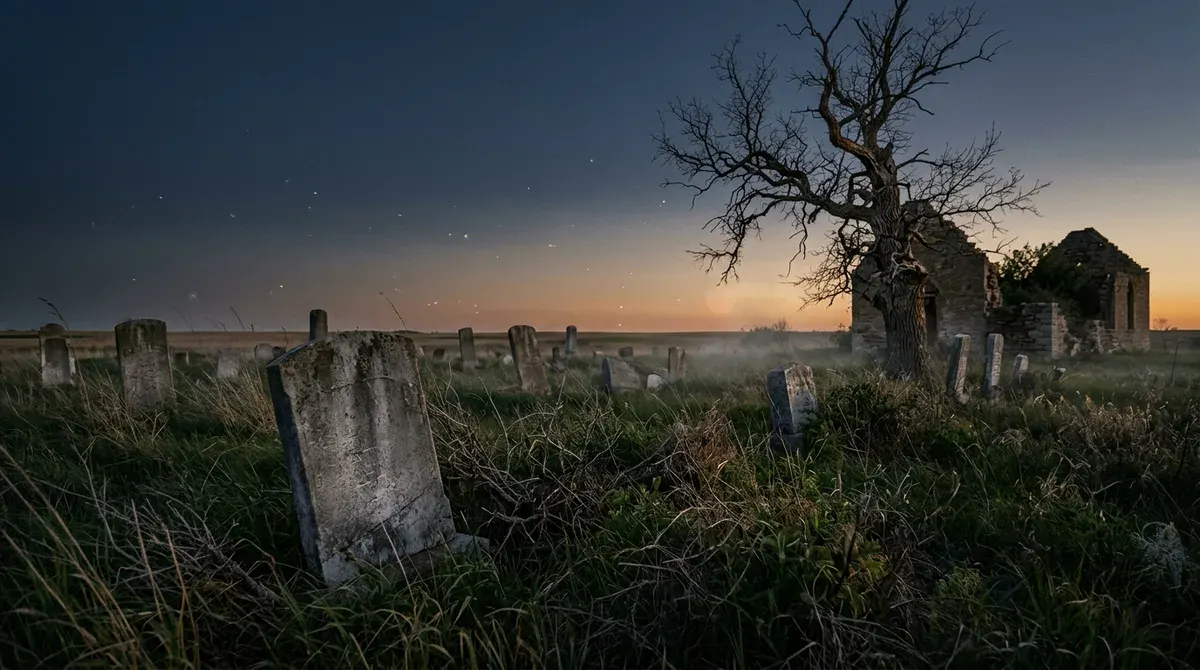
The old Evangelical Emmanuel Church was demolished in 2002, but the cemetery on Emanuel Hill is still an active burial ground. The stone church that once stood beside the graves is gone, and the hill now belongs to the families who still bury and visit their dead there.
The congregation’s newer building, Stull Community of Faith, sits near the cemetery and has its own history. On July 25, 2022, a fire damaged the bell tower and main entrance of that church, as The Lawrence Times reported. The blaze was a reminder that the buildings around the hill are working places of worship, not stops on a ghost tour.
The cemetery itself remains private and posted against trespassing. Anyone who arrives after dark without permission is stepping onto land that someone else owns and cares for. A 2024 news report described the restrictions that continue to apply to the grounds, which makes clear that the gate and the signs are still meant to be respected.
For the people with relatives buried on the hill, the legend is a distant story told by strangers. Their interest is in the headstones, the mowed grass, and the quiet afternoons when a family comes to remember someone they loved.
Weighing the Legend for Yourself
Start by laying the documented dates beside the legend. Evangelical Emmanuel Church was organized in 1859, and its stone building began by 1867. The Devil’s visits gained wide attention with the University Daily Kansan article of November 5, 1974. That gap of more than a century is where the story grew. You can judge for yourself how much of the tale came from the land and how much came from retelling.
Reading the sources firsthand is the best next step. The county’s historic guide shows how ordinary the settlement was. The 1974 student article, if you can find a copy in a university or library archive, shows how the legend was first framed.
The grounds deserve respect as well. The cemetery is private and posted against trespassing, and families still visit their dead there, so the hill is best appreciated from a distance.
How do you think a story like this gains momentum: through retelling, the expectations of visitors, or something else entirely? Share your view in the comments below.
Weighing the Legend for Yourself
Start with a short list of the legend’s most repeated claims: the Devil’s visits on Halloween and the spring equinox, the witch’s grave, the hidden stairs, the Pope John Paul II connection, and the werewolf boy. Beside each claim, note the earliest printed version you can find. Most of the trail will likely lead back to later retellings rather than to records from the settlement years.
Next, look for the 1974 University Daily Kansan article. University archives and public libraries are the most likely places to hold older student newspapers. Read the piece for what it says, what it calls folklore, and what it leaves unsaid. Then compare its wording with a modern online post about the same cemetery. The differences show how much a story can change in a few decades.
If you plan to visit the Stull area, keep your trip to the public road. The cemetery is private and posted against trespassing, and Stull Community of Faith is a working church that was damaged by fire in 2022. Respecting those boundaries is part of understanding the place as it is today, not as the legend describes it.
Finally, ask yourself what would change your mind. A document from the 1800s, a recording anyone could repeat, or a neutral account from someone with no reason to expect a haunting would each carry different weight. Which one would convince you, and why?
Frequently Asked Questions
1. What does an EMF reading measure at Stull Cemetery?
EMF stands for electromagnetic field, an invisible area of energy produced whenever electricity flows. Meters used by visitors show how strong that energy is at a given spot. Power lines, wiring, phones, and car batteries all create readings, so a spike recorded on the hill can come from ordinary sources nearby.
2. Can the public visit Stull Cemetery during the day?
Stull Cemetery is private land, so the public has no open access to its grounds, day or night. The site is posted against trespassing, and families still come to visit graves there. Anyone who wants to see the hill is best served by staying on the public road.