
Shroud Of Turin Authenticity: What The Evidence Really Shows
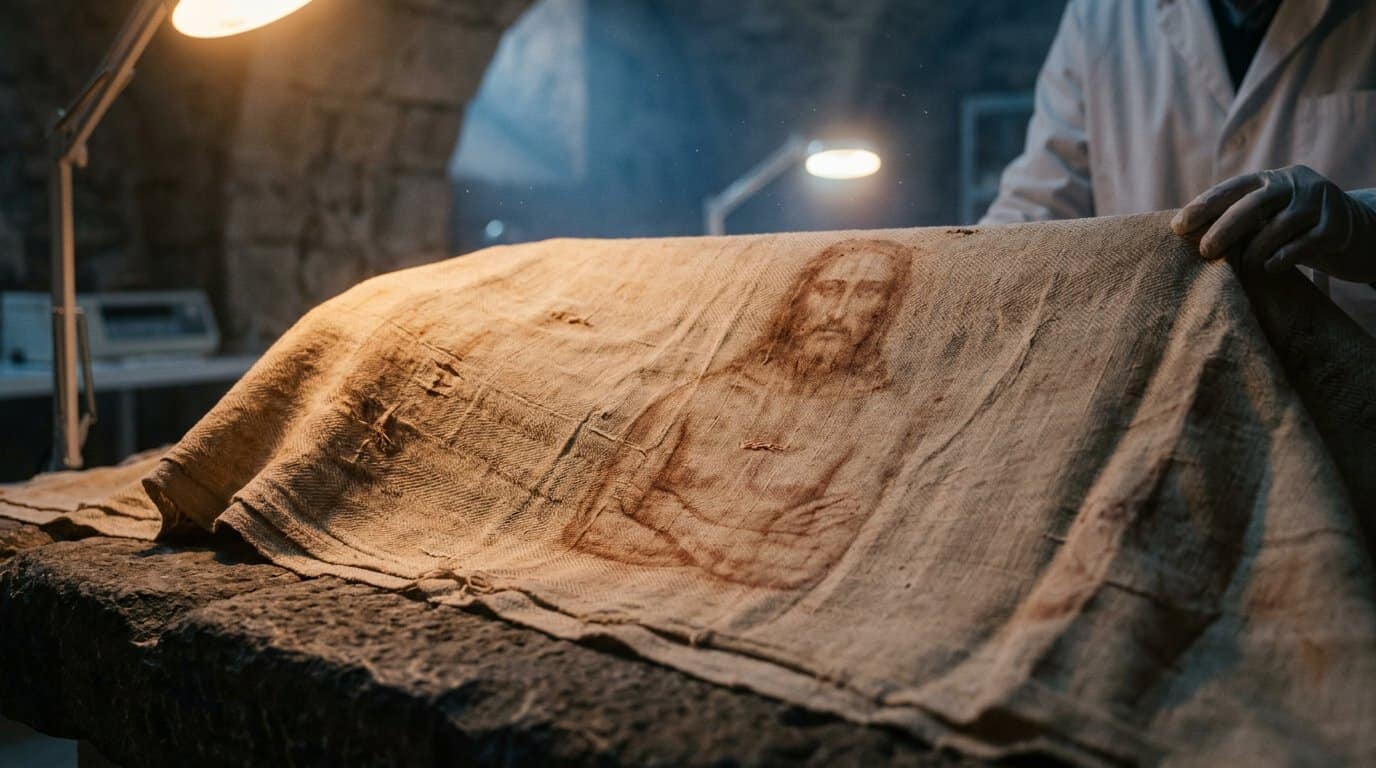
The debate over the Shroud of Turin’s authenticity begins with a haunting image: a faint human figure preserved on linen, which some believe to be the burial cloth of Jesus. The strongest direct evidence points to a medieval origin. Radiocarbon tests dated the cloth to 1260 to 1390 CE. A newer analysis of preserved fragments reportedly found no clear sign of contamination or a repaired section.
Still, the mystery has not disappeared. Critics argue that the tested sample came from only one area, while other studies have suggested an older date using different methods. Laboratory findings, centuries of history, and unexplained features in the image continue to bring evidence, belief, and uncertainty into conflict.
Key Takeaways
- The strongest direct evidence favors a medieval origin: three independent 1988 radiocarbon tests dated the tested linen to 1260–1390 CE, and later fragment analysis found no clear contamination or repair patch.
- The Shroud’s reliable historical record begins in 14th-century Europe, leaving a major gap between its documented appearance and the first century; proposed links to earlier relics remain unverified.
- Competing studies have suggested an age near 2,000 years, but they rely on very small samples and disputed assumptions, so they do not outweigh the radiocarbon evidence or establish a first-century origin.
- The unusual body image and apparent blood marks remain unexplained, but an unexplained image cannot by itself prove that the cloth belonged to Jesus.
Introduction To Shroud Authenticity
The Shroud of Turin is revered by many Christians as the burial cloth of Jesus, yet it is also one of history’s most closely examined artifacts. Its faint front and back image, along with possible blood marks, has raised questions about how the image formed and whether the cloth reflects an ancient burial practice. The central issue is simple to state but difficult to settle: does the linen date to the first century, or did it originate in medieval Europe? Any serious discussion of Shroud of Turin authenticity must consider both religious meaning and testable evidence.
The strongest direct evidence for a medieval origin remains the radiocarbon testing carried out in 1988 by three independent laboratories. The tests produced a calibrated date range of 1260 to 1390 CE, with at least 95 percent confidence, placing the cloth centuries after the time of Jesus. A newer analysis of preserved fragments from the same tested material reported no clear sign of contamination or a separate medieval repair, although critics note that the original test used a small sample from only one area. The Shroud’s documented history also becomes clearer in medieval Europe, where it first appears in records during the 14th century rather than in an unbroken chain reaching back to Jerusalem.
Even so, the debate has not ended. Other studies have reached different conclusions, and the image itself remains difficult to explain. A 2022 X-ray and wide-angle scattering study suggested an age closer to 2,000 years, but it examined a very small sample, and researchers have challenged its interpretation. Theories involving natural burial processes, artistic techniques, chemical reactions, or an unusual physical event continue to compete, with no explanation accepted by everyone. As readers explore related mysteries surrounding ancient relics and unexplained images, the key question is whether the evidence points to a genuine first-century cloth, a remarkable medieval creation, or an artifact whose story is more complicated than either answer suggests.
The Shroud’s Historical Record
The Shroud’s first widely accepted appearances in Europe date to the 1350s, when it was displayed in Lirey, France, by the knight Geoffroi de Charny. Church officials questioned the cloth almost immediately, and the bishop of Troyes later described it as a human-made image rather than an authentic burial relic. In 1453, the Shroud passed to the House of Savoy, which moved it to Turin in 1578. It is now kept in the Cathedral of Saint John the Baptist, where it is displayed only on special occasions.
That medieval record leaves a long gap between the first-century burial of Jesus and the cloth’s appearance in France. Supporters of authenticity suggest that it may have traveled through Eastern Christian communities before reaching Europe. Some connect it with older references to a sacred image from Edessa or Constantinople. However, no surviving document clearly identifies those earlier objects as the same cloth now held in Turin. The missing centuries do not disprove a first-century origin, but they make the historical case difficult to establish, much like other disputed religious relics and historical mysteries.
Scientific testing adds another layer to the story. In 1988, three independent laboratories used radiocarbon dating and placed the tested material between 1260 and 1390 CE, with at least 95 percent confidence, supporting a medieval origin. A 2026 analysis of preserved fragments from those same samples reportedly found no clear sign of contamination or a separate repair patch, while a 2022 X-ray study argued for an age closer to 2,000 years. Because the radiocarbon test examined a small area and the competing study also relied on limited material, researchers continue to debate whether the samples fully represent the cloth. The historical gaps, image formation theories, and conflicting test results keep the question open, even though the strongest direct dating evidence currently favors a medieval origin.
The 1988 Radiocarbon Dating
In 1988, three independent laboratories used accelerator mass spectrometry to test a small piece of the Shroud of Turin. Their results placed the linen’s origin between 1260 and 1390 CE, with at least 95 percent confidence. For researchers evaluating the Shroud’s authenticity, this remains the strongest direct evidence for a medieval date rather than a first-century connection to Jesus. The finding also fits the cloth’s documented appearance in Europe during the Middle Ages, although it does not explain how the faint human image formed.
Questions remain because the laboratories tested material taken from only one area near an edge of the cloth. Critics argue that this section may have been affected by later handling, repairs, or contamination and therefore may not represent the linen as a whole. Supporters of the dating respond that the tests were conducted independently and produced closely matching results, making the medieval date difficult to dismiss. The debate remains open, but current evidence places the balance of probability on a medieval origin while leaving room for further testing and discussion.
New Tests And Competing Dates
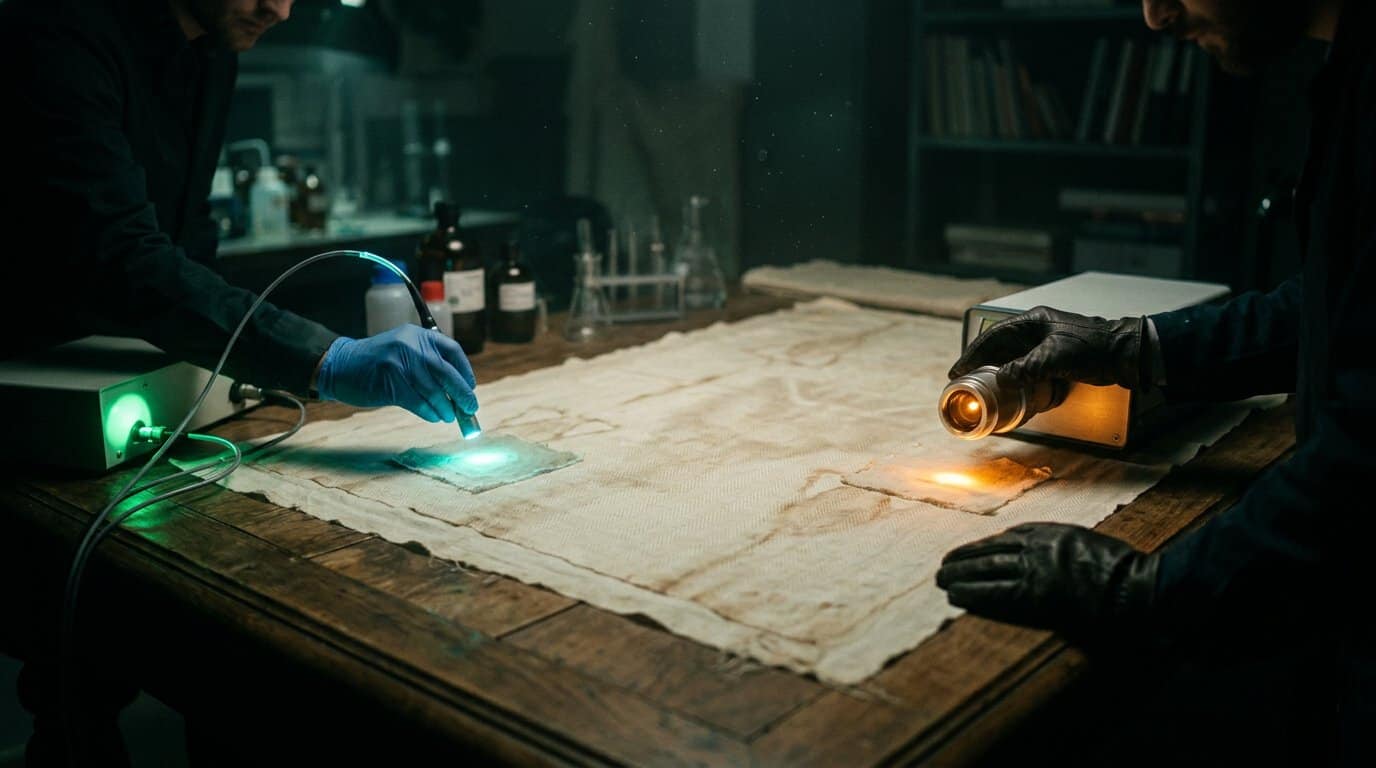
The reported 2026 analysis of preserved fragments renewed attention on fragments preserved from the material used in the 1988 radiocarbon tests. Researchers found that the fragments were consistent with the Shroud’s main cloth and reported no clear sign of contamination or a medieval repair patch. That supports the earlier carbon dating, which placed the linen between 1260 and 1390 CE. Radiocarbon testing has a major strength because it measures the age of the tested plant fibers directly, but the sample was small and came from only one area. It therefore cannot prove that every part of the Shroud was made at the same time.
The 2022 X-ray and WAXS study followed a different approach, examining how the linen’s structure had changed with age. Its authors said the results were compatible with an age of about 2,000 years, which would fit a first-century burial cloth. This method can examine a sample without relying on radioactive decay and offers useful clues about the material’s physical history. However, converting structural changes into a calendar date requires assumptions about heat, moisture, aging, and the conditions the cloth experienced over centuries. Because the study also examined a very small fragment, its findings may describe that piece without representing the entire Shroud.
Together, the competing dates show why the question of Shroud of Turin authenticity remains unsettled for many readers, even though the strongest direct evidence still favors a medieval origin. The 2026 findings weaken claims that the 1988 sample was obviously contaminated or taken from a repaired section, while the 2022 results raise questions about how environmental exposure may affect linen dating. Neither approach explains how the faint body image formed, and neither can establish that the tested material represents the whole cloth. Future work would be more persuasive if it used several carefully documented samples from different areas, with transparent controls for contamination and environmental history. Until then, the evidence invites curiosity but does not erase the central disagreement between a medieval date and a possible first-century story.
Image Formation And Identity Claims
The Shroud’s faint body image remains its most puzzling feature. A front and back view appears on the cloth without the strong brushstrokes usually expected from a painted portrait. The image is mostly a surface discoloration in the linen fibers, while reddish markings have been identified by some researchers as blood, especially around the wrists, head, and side. Other specialists have questioned whether every stain is blood and whether the marks match the injuries described in the Gospels. Its three-to-one herringbone weave is consistent with an ancient textile, but that pattern alone cannot establish when the cloth was made or who once wore it.
Several explanations have been proposed for how the image formed. Natural chemical reactions involving a body, sweat, decomposition gases, and linen could create a faint image over time. Artistic theories suggest pigment, dye, a rubbing method, or another medieval technique. Some researchers have also explored unusual physical effects, including radiation or a brief burst of energy, though these ideas remain difficult to test and have not produced a settled explanation. The 1988 radiocarbon tests by three laboratories dated the sampled material to 1260 to 1390 CE, while a 2022 X-ray study argued for an older date based on a very small sample. A later analysis of preserved fragments from the radiocarbon material reportedly found no clear contamination or repair patch, but debate continues because only one area of the cloth was dated.
A useful comparison chart could separate what the evidence can show from what it cannot. The weave can describe construction, the image can reveal unusual surface details, and radiocarbon testing can estimate the age of the tested fibers. None of those findings, even an ancient date, would prove that the cloth belonged to Jesus, since many people were buried in linen and the chain of custody reaches back only to the medieval period. The strongest direct dating evidence still favors a medieval origin, yet the image formation problem keeps the authenticity debate alive. Readers can consider whether the unresolved chemistry points to a lost artistic process, a rare natural event, or a physical effect that researchers have not yet fully understood.
Conclusion On Shroud Authenticity
The strongest direct evidence in the Shroud of Turin authenticity debate still points to a medieval origin. In 1988, three independent laboratories used radiocarbon testing and placed the tested material between 1260 and 1390 CE, with at least 95 percent confidence. A more recent analysis of preserved fragments from those same samples reportedly found no clear sign of contamination or a medieval repair patch, supporting the view that the dated material came from the main cloth. That evidence does not explain how the faint body image formed, but a puzzling image alone cannot establish that the Shroud is a first-century burial cloth.
The historical record also leaves an important gap, since the Shroud is not clearly documented before the medieval period. Researchers who argue for an older date point to the limited sampling, noting that only a small area was tested, while studies using other methods have suggested an age closer to 2,000 years. Those findings keep the discussion open, especially because the image, stains, and weaving continue to invite forensic and religious interpretations. Which factor most shapes the reader’s view of Shroud authenticity: the radiocarbon evidence, the historical record, or the mystery of how the image was formed?
Radiocarbon Evidence Still Points to a Medieval Shroud
The strongest direct evidence about Shroud of Turin authenticity still points to a medieval origin. In 1988, three independent laboratories used radiocarbon testing and placed the cloth between 1260 and 1390 CE, with at least 95 percent confidence. A 2026 analysis of preserved pieces from those same samples reported no clear signs of contamination or a medieval repair patch, supporting the view that the tested material came from the main cloth. Even so, the testing examined only a small area, leaving room for questions about whether that sample represented the entire Shroud.
The image itself keeps the story from ending with a simple date. Researchers continue to debate how the faint body image formed, while studies of the blood marks, linen fibers, and image chemistry have produced findings that supporters believe are difficult to explain through ordinary medieval art. A 2022 X-ray study proposed an age closer to 2,000 years, but its small sample and disputed assumptions make it far from decisive. These competing results show why the Shroud remains both a scientific puzzle and a powerful religious object.
For now, the balance of evidence favors a medieval cloth, while the exact process that created its image remains unsettled. That conclusion does not erase the Shroud’s historical importance or rule out every possibility connected to an earlier origin, but it does place the burden of proof on claims that it belonged to Jesus. Readers can weigh the evidence for themselves: does the radiocarbon date settle the question, or do the unresolved features of the image leave the door open to a deeper mystery?
Frequently Asked Questions
1. What is the main evidence about the Shroud of Turin’s authenticity?
The strongest direct evidence points to a medieval origin. Radiocarbon tests performed in 1988 by three independent laboratories dated the linen to 1260 to 1390 CE, with at least 95 percent confidence. That result places the cloth many centuries after the time of Jesus, although questions about sampling and image formation keep the debate alive.
2. How reliable were the 1988 radiocarbon tests?
The 1988 testing was significant because three independent laboratories examined the cloth and reached dates within the same medieval range. Critics argue that the tests used a small section from one corner, which might not represent the entire Shroud. Even so, the results remain the most direct scientific evidence for the cloth’s age.
3. Could contamination or a medieval repair have altered the carbon dating?
Some researchers have proposed that contamination or a later repair made the tested section appear younger than the rest of the cloth. A newer analysis of preserved fragments from that testing area found no clear sign of contamination or a separate medieval repair. This weakens that explanation, but it does not remove every concern about whether one small sample can represent the entire Shroud.
4. Why do some researchers believe the Shroud could be older than the radiocarbon date?
Some studies using methods other than radiocarbon testing have suggested an older date. Supporters also point to the image, apparent blood marks, and unusual linen features as reasons for continued investigation. These methods have not produced the same level of agreement or direct historical weight as the 1988 carbon tests. The result is a genuine scientific dispute, but not a settled case for a first-century origin.
5. What does the Shroud’s historical record reveal?
The Shroud’s secure historical trail becomes clear in medieval Europe, especially by the 14th century. Earlier claims connect it to ancient locations and religious traditions, but those links are difficult to verify with surviving records. This gap leaves room for speculation while still giving the medieval evidence the firmer historical foundation.
6. Does the image prove that the Shroud is the burial cloth of Jesus?
The faint front and back image is unusual, and its formation has not been fully explained, which is why the Shroud continues to attract serious interest. However, an unexplained image cannot by itself identify the person or prove a first-century date. Authenticity requires agreement among physical testing, historical records, textile evidence, and the study of the marks on the cloth.
7. What is the Catholic Church’s position on Shroud of Turin authenticity?
The Catholic Church permits devotion to the Shroud but has not formally declared it to be the burial cloth of Jesus. Its religious importance and its scientific identity are treated as separate questions. Believers may view it as a powerful aid to faith, while scientific evidence still points most strongly toward a medieval origin.
8. Is the Shroud of Turin authentic or not?
Based on the strongest available direct evidence, the Shroud is more likely to be a medieval cloth than the burial garment of Jesus. The 1988 radiocarbon results and later fragment analysis support that conclusion, while the limited sample, unusual image, and conflicting studies preserve some uncertainty. The most balanced view recognizes that the evidence is not equally strong on both sides, but the mystery is not fully closed.