Vatican Secret Archives: History, Access, And The Truth Behind The Myths
For centuries, the phrase “Vatican secret archives” has evoked images of locked rooms, forbidden knowledge, and hidden chapters of history. The collection is now officially called the Vatican Apostolic Archive, after Pope Francis changed its name in 2019. The update changed the terminology, not the institution’s purpose. Inside are records from popes, diplomats, tribunals, and Church officials, offering rare evidence about events that shaped the modern world.
Some documents remain restricted because of their age, condition, or sensitive content, while qualified researchers can study many others. That balance leaves room for genuine historical discovery, as well as theories about what may remain unseen. The archive’s story is less about sensational secrets than about how power, faith, and memory are preserved, controlled, and gradually brought to light.
Key Takeaways
- The Vatican Secret Archives were officially renamed the Vatican Apostolic Archive in 2019. The change clarified that “secret” historically meant private or reserved, not sinister or forbidden.
- The archive preserves papal correspondence, diplomatic reports, tribunal files, administrative records, and other documents that reveal how the Catholic Church shaped and responded to major historical events.
- Access is limited to qualified researchers and varies by collection, document condition, privacy concerns, cataloguing status, and permitted dates. Restricted records do not, by themselves, prove that dramatic secrets are being concealed.
- The Vatican Apostolic Archive is distinct from the Vatican Apostolic Library: the archive focuses on institutional and historical records, while the library primarily preserves books, manuscripts, and cultural materials.
Introduction To Vatican Secret Archives
Behind the image of locked rooms and forgotten secrets lies a working historical institution with a precise purpose. The Vatican Secret Archives, now officially called the Vatican Apostolic Archive, preserves records created by popes, the Roman Curia, diplomatic offices, tribunals, and other bodies connected to the Catholic Church. Pope Francis approved the name change on October 22, 2019, and the decision was published on October 28 of that year. The change was mainly terminological. It did not replace the archive or alter its mission.
The word “secret” once suggested something private or reserved, rather than a vault filled with forbidden knowledge. Researchers may apply to study many of the archive’s materials, although access is limited by scholarly rules, available space, the condition of documents, and the time period open for consultation. The collections include papal correspondence, diplomatic reports, legal records, and accounts of major events that shaped Europe and the wider world. The archive is also separate from the Vatican Apostolic Library, which primarily preserves books, manuscripts, and other cultural works.
Rumors often grow around records that cannot be freely viewed, especially when stories involve lost gospels, hidden prophecies, or evidence that could challenge accepted history. Some documents may remain restricted for practical or privacy reasons, but restricted access alone does not prove that a dramatic secret is being concealed. The strongest starting point is the documented record, including official descriptions, catalogues, and the findings of historians who have examined available materials. From there, the Vatican Apostolic Archive becomes intriguing not because every legend is true, but because its surviving documents can reveal how power, belief, and historical memory developed over centuries.
From Secret Archives To Apostolic Archive

For centuries, the records of the papacy and Roman Curia were kept as working documents of Church government, not as a public collection. Pope Paul V organized the Vatican’s central archive in the early 17th century, and Pope Leo XIII opened it to qualified scholars in 1881. The word secretum in “Vatican Secret Archives” came from the Latin sense of “reserved” or “set apart,” rather than from a promise that every document contained a hidden mystery. That older meaning helped create an aura of secrecy, even as the archive gradually became an important center for historical research.
On October 22, 2019, Pope Francis changed the institution’s official name to the Vatican Apostolic Archive, or Archivio Apostolico Vaticano, in a motu proprio published on October 28. The new name was intended to clarify the archive’s role and avoid the modern assumption that “secret” meant sinister or inaccessible. It did not create a new institution, release a hidden collection, or change the archive’s structure and mission. The archive remained the Holy See’s central historical record office, preserving documents connected to the papacy, the Roman Curia, diplomacy, tribunals, religious institutions, and Church administration.
Restricted access is real, but it is not evidence for every popular theory about the Vatican secret archives. Scholars must apply for permission, meet research requirements, and work within limits that can depend on the age, condition, privacy concerns, or classification of records. The archive is also distinct from the Vatican Apostolic Library, which focuses mainly on books, manuscripts, and other cultural materials. Its surviving records can illuminate wars, diplomacy, Church decisions, and disputed episodes, while gaps and restrictions naturally leave room for speculation that documented history can help test.
Records Preserved By The Vatican Archive
The Vatican Apostolic Archive is the Holy See’s central historical archive, preserving records created by the papacy and the offices that helped govern the Catholic Church. Its collections include papal papers, Roman Curia files, diplomatic correspondence, tribunal documents, and records from religious orders and other Church institutions. The name “Vatican Secret Archives” referred to the archive’s private or reserved character, not necessarily to hidden evidence. Pope Francis officially changed the name to Vatican Apostolic Archive on October 22, 2019. The change was mainly terminological, leaving the archive’s mission and structure intact.
| Institution | Primary collections | Historical role |
|---|---|---|
| Vatican Apostolic Archive | Papal records, Curia files, diplomatic letters, tribunal papers, and administrative documents | Documents how the Holy See governed, negotiated, and responded to events |
| Vatican Apostolic Library | Books, manuscripts, printed works, maps, and other cultural materials | Preserves knowledge, religious texts, and works of scholarship |
Researchers can find evidence here about Church diplomacy, political conflicts, religious trials, missions, and relations between the Vatican and governments across centuries. Access is not unlimited, but qualified scholars may request materials under rules that vary by collection, date, condition, and privacy concerns. These restrictions help explain why the archive inspires theories about suppressed revelations, although limited access alone does not prove that extraordinary secrets are being withheld. The strongest approach is to separate documented gaps and closed files from speculation, then follow what the surviving records actually show.
Researchers And Vatican Archive Access
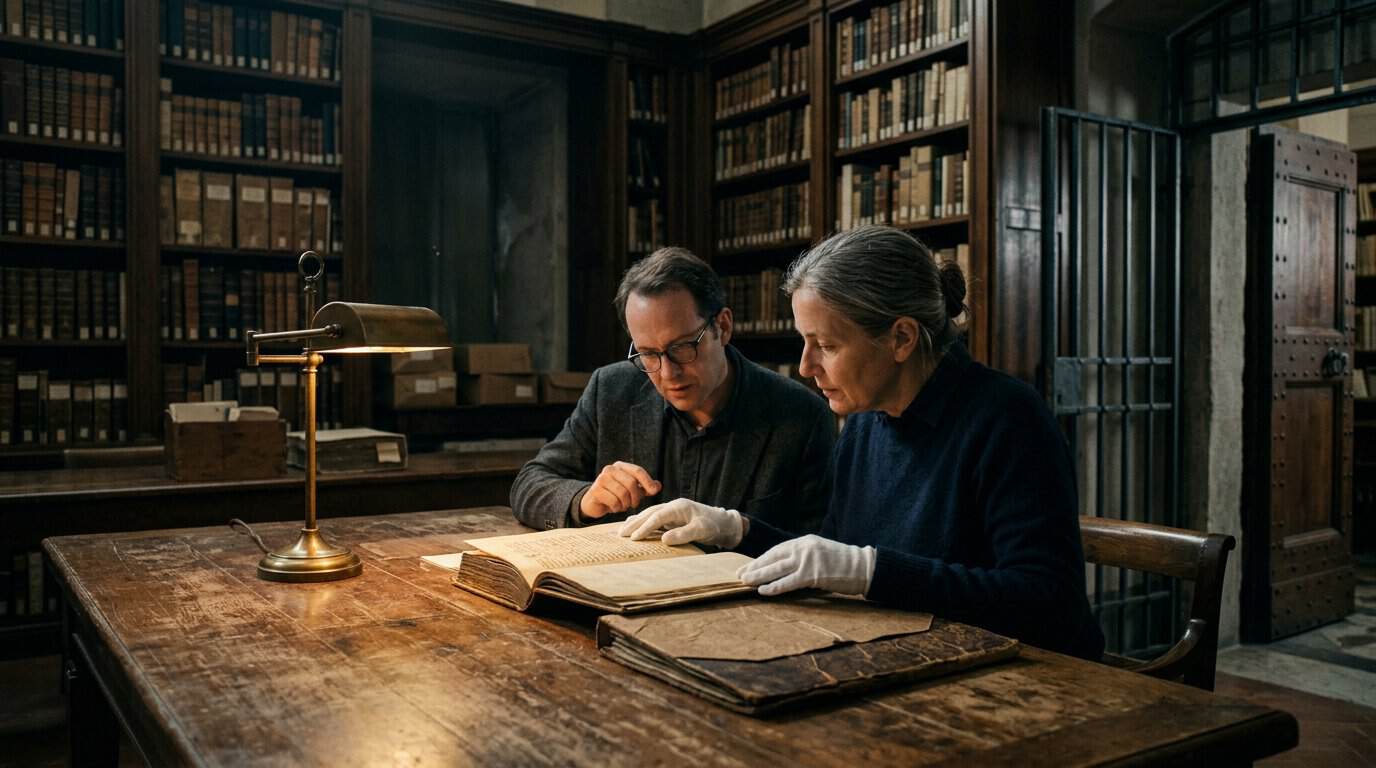
Researchers who enter the Vatican “secret archives” are actually consulting the Vatican Apostolic Archive, the institution’s official name since Pope Francis changed it in October 2019. The archive is open to qualified scholars, including historians and researchers with a clear academic purpose, appropriate credentials, and the required application documents. Visits take place in supervised reading rooms, where staff help researchers work through finding aids, catalogues, and original records. Access is not a free search through every document. Materials may be limited by the archive’s rules, condition, or level of cataloguing.
A major moment came on March 2, 2020, when records from the pontificate of Pope Pius XII, which lasted from 1939 to 1958, became available for scholarly study. This opening encouraged fresh research into wartime diplomacy, the Holocaust, Church administration, and decisions made during one of the twentieth century’s most difficult periods. Even then, some files may remain unavailable because they need preservation work, have not been fully organized, contain sensitive personal information, or fall outside the current date range. Those limits can appear mysterious from the outside, but restricted access is not, by itself, proof of a hidden conspiracy.
The archive’s reputation has grown from the word “secret,” which originally meant private or reserved rather than sinister. Popular stories often fill gaps that researchers cannot yet investigate. In practice, access expands gradually as records are processed, protected, and approved for consultation, giving historians a chance to test dramatic claims against documented evidence. Readers interested in the materials that have shaped these debates can follow the internal article on famous Vatican manuscripts and restricted historical collections. The continuing question is not simply what the Vatican may be hiding, but what future scholars might discover when more carefully preserved records become available.
Evidence Behind Vatican Archive Mysteries
The Vatican “secret archives” are now officially called the Vatican Apostolic Archive, or Archivio Apostolico Vaticano. Pope Francis changed the name in a motu proprio dated October 22, 2019, and published on October 28, 2019, mainly to clarify that “secret” once meant private or reserved, not mysterious or forbidden. The archive preserves records created by popes, Vatican offices, diplomats, tribunals, and religious institutions, making it a vast record of Church history rather than a vault devoted to hidden wonders. Its separate identity also matters because the Vatican Apostolic Archive is not the same institution as the Vatican Apostolic Library, which focuses mainly on books, manuscripts, and other cultural materials.
Access rules help explain why rumors continue to grow around the collection. Qualified researchers may consult many materials through formal procedures and archival catalogues, but access is not the same as unrestricted public browsing. Some records may remain limited because of preservation, privacy, or ongoing administrative concerns. Catalog entries, official descriptions, and published historical studies provide solid evidence for what the archive holds, including diplomatic papers, legal records, and correspondence linked to major events. By contrast, claims about alien encounters, secret bloodlines, a complete hidden gospel, or a single document proving suppressed history usually circulate without a clear catalogue reference or verifiable primary source.
That gap between real restrictions and dramatic speculation is where the archive’s strongest mysteries take shape. A missing reference may reflect an incomplete catalogue, a translation issue, or a document held in another collection. It can also inspire theories about forbidden knowledge when the evidence is difficult to check. Researchers therefore compare dates, authors, archival descriptions, and independent historical work before treating an extraordinary claim as meaningful. Readers exploring related historical mysteries or unexplained religious artifacts can use the same approach, asking which details are documented, which remain uncertain, and which appear only in later retellings.
Conclusion On Vatican Secret Archives

The Vatican Apostolic Archive is restricted because it is a working historical institution with fragile records, privacy concerns, and strict rules for handling sensitive material. Qualified researchers may consult many documents, but access depends on the collection, the document’s age, and archive regulations. The archive preserves papal correspondence, diplomatic reports, tribunal records, administrative files, and papers from religious institutions, making it a record of Church history rather than a vault of one hidden truth. Its holdings are separate from those of the Vatican Apostolic Library, which focuses mainly on books, manuscripts, and other cultural materials. Some records remain unavailable because they have not yet reached the permitted date range or require further organization and review.
Much of the mystery grew from the former name, Vatican Secret Archives, even though “secret” came from the Latin secretum, meaning private or set apart, rather than proof of a worldwide conspiracy. Pope Francis officially changed the name to Vatican Apostolic Archive in October 2019, a terminological change that did not transform its mission or structure. The archive can still raise serious questions about political decisions, disputed events, and forgotten voices, but documented evidence must remain distinct from imaginative theories about forbidden knowledge or supernatural secrets. For readers exploring related historical mysteries, the most useful approach is to compare claims with dates, surviving records, and statements from qualified researchers. Which unanswered Vatican mystery deserves careful investigation next, and where should the line be drawn between a promising question and pure speculation?
The Vatican Archive: What “Secret” Really Means
The Vatican “secret archives” are now officially called the Vatican Apostolic Archive, a name adopted by Pope Francis in October 2019. The change did not create a new institution or reveal a hidden vault. It clarified that “secret” once meant private or reserved, rather than mysterious. The archive preserves centuries of records from popes, Vatican offices, tribunals, diplomats, and other parts of the Catholic Church. Access is limited, but qualified researchers can consult many materials under established rules, including records from major periods of Church history. Its collections offer documented evidence while also showing why some questions remain difficult to answer.
Stories about missing manuscripts, suppressed discoveries, or hidden truths continue to surround the archive because restricted records naturally invite speculation. Yet the strongest conclusions come from comparing catalogued documents, published research, and the historical context in which each record was created. Some files remain unavailable because of preservation needs, privacy concerns, or the gradual process of opening collections, not necessarily because they contain shocking secrets. The Vatican Apostolic Archive is best understood as both a remarkable historical resource and a reminder that incomplete evidence can leave room for competing interpretations. Which unanswered question about its collections deserves closer attention, and what evidence would help separate a genuine mystery from a compelling legend?
Frequently Asked Questions
1. What are the Vatican secret archives?
The Vatican secret archives are the historical records of the popes, Roman Curia, diplomatic offices, tribunals, and other bodies connected to the Catholic Church. The collection is now officially called the Vatican Apostolic Archive, and it preserves evidence about religious, political, and cultural events across centuries.
2. Why were they called the Vatican secret archives?
The word “secret” once meant private or reserved, not necessarily hidden or forbidden. The name helped create an image of locked chambers and dangerous knowledge, but much of the collection can be studied by qualified researchers under established rules.
3. When did the name change to Vatican Apostolic Archive?
Pope Francis approved the name change on October 22, 2019, and the decision was published on October 28, 2019. The change was mainly terminological, so it did not replace the collection or alter its historical mission.
4. What kinds of documents are kept in the archive?
The archive holds papal correspondence, diplomatic reports, legal records, tribunal files, administrative papers, and accounts of major historical events. These documents can reveal how Church leaders, governments, and communities responded to moments of conflict, change, and crisis.
5. Can anyone visit or study the Vatican Apostolic Archive?
Access is available mainly to qualified researchers who apply under the archive’s rules. Entry depends on scholarly credentials, available research space, the condition of the materials, and the time period or collections open for consultation.
6. Why are some Vatican archive documents still restricted?
Some records remain closed because they are fragile, unusually sensitive, or not yet prepared for research. Restrictions can also reflect the archive’s access policies and the need to protect documents from damage while they are preserved and catalogued.
7. Does the archive contain proof of hidden or unexplained events?
The archive contains rare firsthand records that can clarify disputed historical events, but no single collection automatically proves every theory surrounding the Vatican. Its restricted areas naturally encourage speculation, while careful comparison with other historical evidence helps separate genuine discoveries from dramatic claims.
8. Why is the Vatican Apostolic Archive important to historians?
The archive preserves a long record of how religious authority, diplomacy, law, and politics influenced one another. By examining these materials alongside government records and other independent sources, historians can test familiar stories and sometimes uncover overlooked details about the modern world.