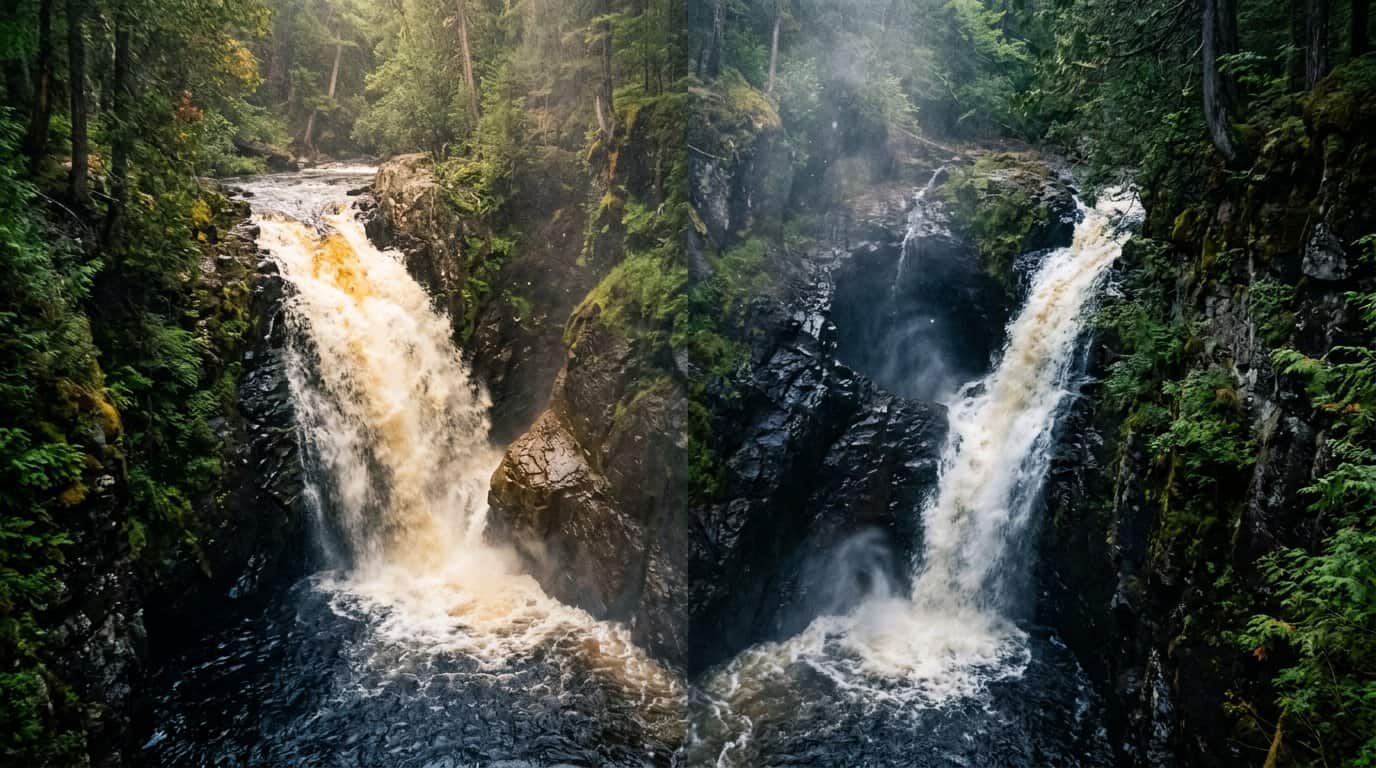
Devil’s Kettle Mystery: Where Did the Missing Water Go?
At a waterfall in northern Minnesota, half of the Brule River crashes into a deep pothole, and for years no one could explain where the water went. The Devil’s Kettle mystery inspired theories about underground tunnels and hidden routes beneath Lake Superior. Its strange appearance still raises questions, especially when the water seems to disappear into solid rock.
The strongest evidence points to a natural explanation. Measurements by Minnesota hydrologists in 2016, announced the following year, found nearly the same amount of water above and below the falls. This suggests that the river remains within its watershed. Instead, turbulent currents likely move through short cavities and cracks before rejoining the river, turning a legendary mystery into a remarkable geological puzzle.
Key Takeaways
- Devil’s Kettle is a waterfall in Judge C.R. Magney State Park where the Brule River splits, sending one branch into a deep volcanic-rock pothole that makes the water appear to vanish.
- Years of floating-object and dye tests failed to reveal a clear outlet, fueling theories about underground tunnels, hidden caves, or a route to Lake Superior.
- Minnesota hydrologists’ 2016 flow measurements found nearly identical water volumes above and below the falls, making it unlikely that the river escapes into another watershed.
- The strongest explanation is that water moves through short, turbulent cavities and fractures in the rock before rejoining the Brule River downstream.
The Devil’s Kettle Mystery
At Judge C.R. Magney State Park on Minnesota’s North Shore, the Brule River divides around a rugged outcrop of volcanic rock. One branch tumbles about 50 feet into a deep pothole known as Devil’s Kettle, while the other continues toward Lake Superior. From the viewing platform, the falling water seems to disappear without a trace, creating a natural puzzle that has drawn curious visitors for generations. The central question is simple: where does the water in the kettle go?
For years, people tested the pothole with floating objects, dye, and other simple tracking methods, yet no clear outlet appeared nearby. This led to theories that the water traveled underground, entered another watershed, or even moved all the way to Lake Superior through hidden passages. These ideas kept the Devil’s Kettle mystery alive, but they were difficult to confirm because the falls force water through narrow cracks and turbulent cavities. The rock itself may conceal the answer more effectively than any dramatic legend suggests.
A major turning point came in fall 2016, when hydrologists from the Minnesota Department of Natural Resources measured the river’s flow above and below the falls. Announced in February 2017, the results showed that nearly the same amount of water existed on both sides of Devil’s Kettle. This meant the river was not losing a large volume to a separate underground route. The best explanation is that water entering the pothole moves through short, rough cavities and fractures before rejoining the Brule River downstream. The mystery may be largely solved, but the hidden path remains a striking reminder that ordinary geology can look extraordinary. Visitors can still decide whether the evidence ends the mystery or makes it more interesting.
Brule River’s Split Waterfall
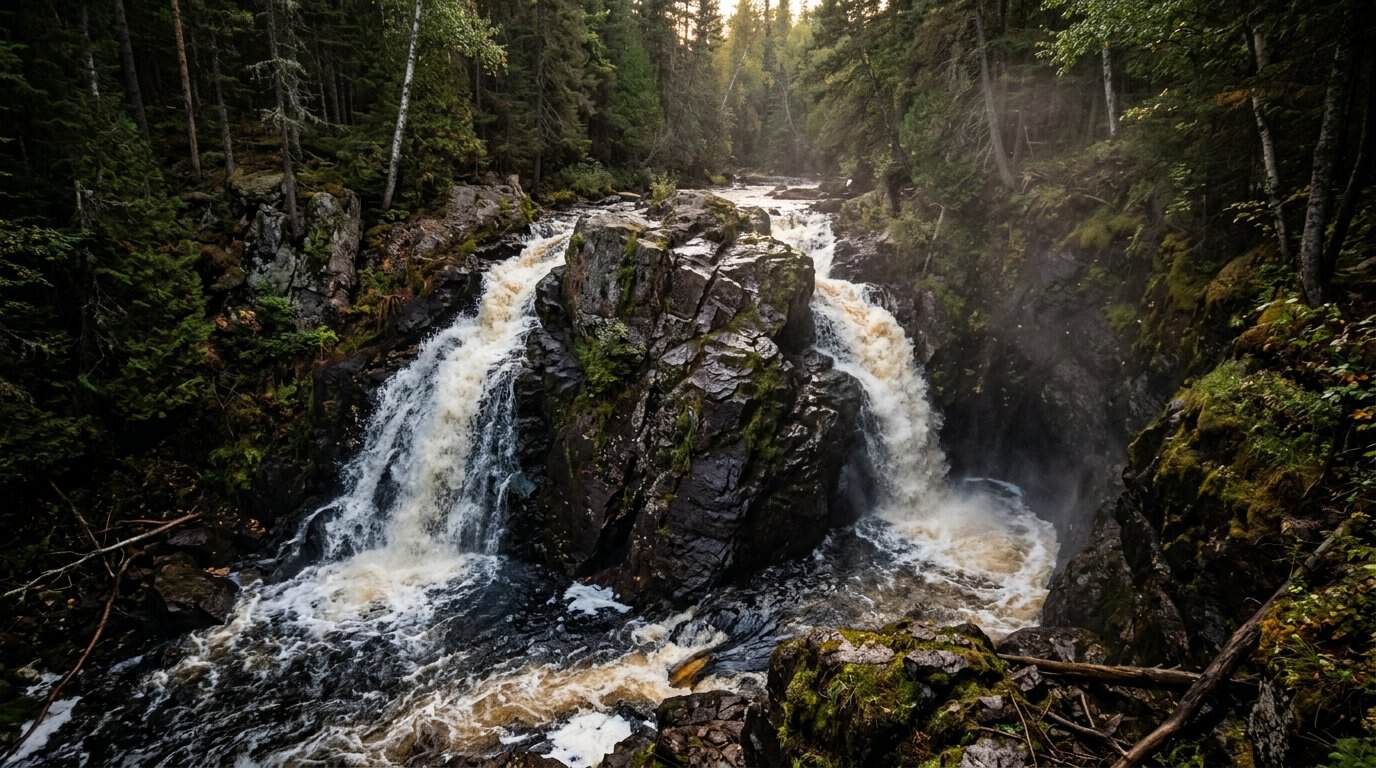
At Devil’s Kettle Falls, the Brule River appears to split in two. One branch tumbles about 50 feet into a clear pool, while the other plunges into a deep pothole known as the kettle. The divide is formed by an ancient, resistant volcanic-rock outcrop in Judge C.R. Magney State Park along Minnesota’s North Shore. Because the kettle hides what happens below the surface, it quickly became the center of a missing-water mystery.
For years, visitors tested the mystery by tossing in objects or using dye, hoping to discover a hidden route to Lake Superior or another watershed. Those experiments did not reveal a clear destination, but they left room for speculation because the kettle contains turbulent, concealed cavities and fractures. In fall 2016, hydrologists from the Minnesota Department of Natural Resources compared the water flowing above and below the falls, with results announced in 2017. Their measurements showed that essentially the same amount of water continued downstream. This suggests that the kettle’s flow moves through short passages in the rock before rejoining the Brule River rather than disappearing entirely. The science offers a likely answer, while the dark, churning pothole still gives the Devil’s Kettle mystery its lasting sense of wonder.
Dye Tests And Hidden Pathways
For years, the Devil’s Kettle mystery seemed to point beneath the Brule River. Visitors dropped sticks, logs, and other objects into the deep pothole, but few, if any, were seen again. This led to theories about an underground river carrying the water toward Lake Superior. Some imagined a hidden cavern or a passage beneath the volcanic rock, while others compared the falls to a natural sinkhole. Informal dye tests and similar experiments added to the story, but they did not clearly show where the water traveled or prove that it entered another watershed. Readers interested in comparable puzzles can explore more about sinkholes and hidden waterways.
Careful measurements eventually offered a less dramatic, but still fascinating, explanation. In fall 2016, hydrologists with the Minnesota Department of Natural Resources compared the amount of water above and below the falls, announcing their findings in February 2017. The measurements were essentially equal, suggesting that the water entering Devil’s Kettle was not disappearing into a separate underground route or flowing all the way to Lake Superior. Instead, it most likely moved through short, rough cavities and cracks in the rock before rejoining the Brule River downstream. The hidden pathways remain difficult to see, preserving the visual mystery while showing how evidence can reshape theories about unexplained natural phenomena.
2016 Flow Measurements Solve Mystery
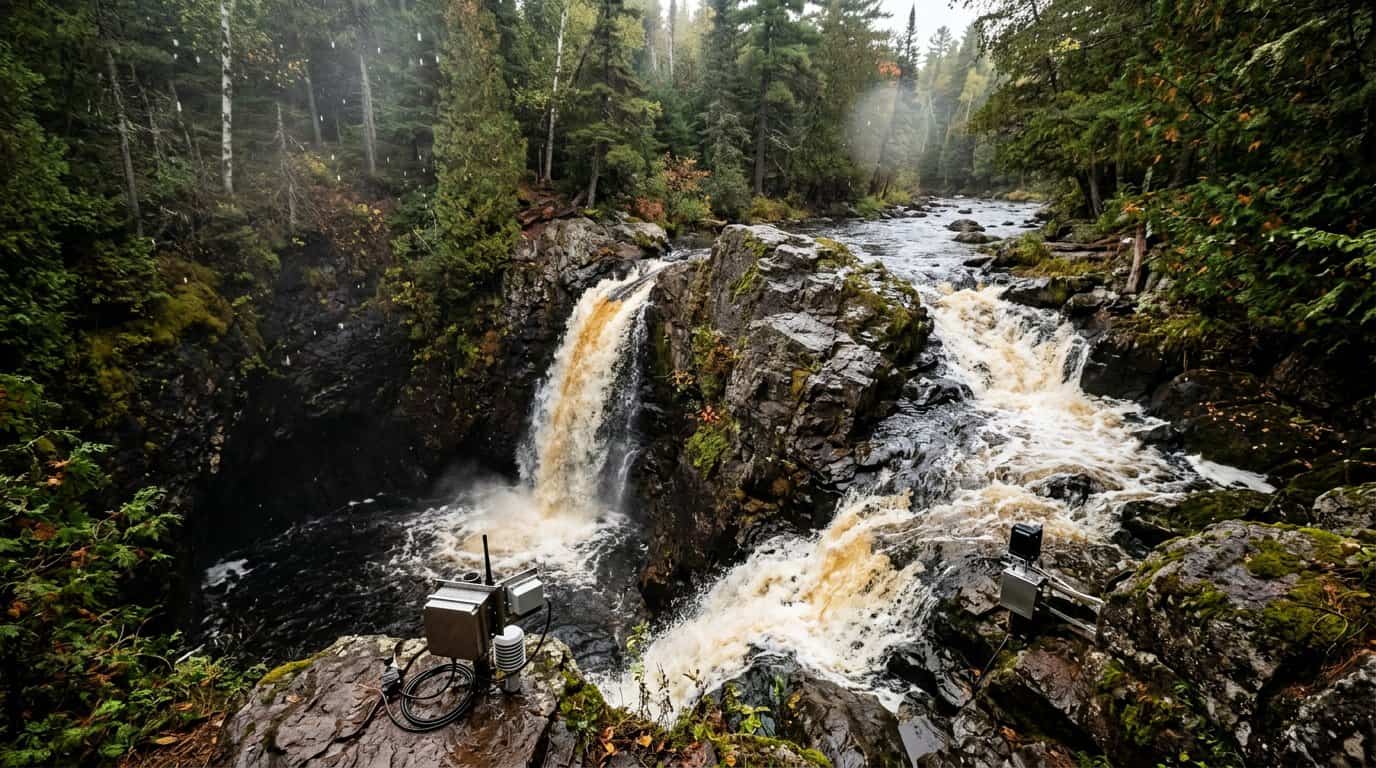
In fall 2016, hydrologists from the Minnesota Department of Natural Resources returned to Devil’s Kettle with a practical question: how much water was really disappearing? They measured the flow above the falls and compared it with the water found downstream. When the results were announced on February 28, 2017, the two amounts were nearly identical. The finding weakened the idea that the missing water slipped into a separate underground river or traveled all the way to Lake Superior.
The strongest evidence now points to a less dramatic, but still fascinating, explanation. Water plunging into the kettle likely rushes through short cavities and cracks in the surrounding volcanic rock, churning below the surface before rejoining the Brule River downstream. Turbulence can scatter water, air, and debris in ways that make the pothole appear bottomless, especially from the viewing platform above.
The department’s work largely solves the mystery, but it does not erase the strange beauty that made Devil’s Kettle famous. Earlier dye tests and the new flow measurements challenge the far-reaching theories while leaving room to wonder about the small spaces beneath the waterfall. The mystery has changed from “Where does the water go?” to “How does the rock carry it so quickly and quietly?” That question offers a grounded way to explore other natural mysteries, where careful evidence can explain the process without taking away the sense of discovery.
What The Kettle Mystery Reveals
The Devil’s Kettle mystery began with a simple question: where did the water go? At Judge C.R. Magney State Park in Minnesota, the Brule River splits at a waterfall, sending one branch into a deep pothole where objects and even large logs seemed to disappear. Dye tests and careful measurements offered a less supernatural answer, showing that the water does not vanish into another watershed or travel all the way to Lake Superior. In fall 2016, hydrologists with the Minnesota Department of Natural Resources found that nearly the same amount of water flowed above and below the falls. This suggests that it moves through short, rough channels and cracks before rejoining the river downstream.
That explanation resolves much of the puzzle, but it does not make Devil’s Kettle ordinary. The volcanic rock still hides the exact pathways beneath the falls, and rushing water can turn narrow cavities into a powerful, unseen maze. Geological research has challenged ideas about an underground tunnel to a distant lake while preserving the more compelling truth that nature can create landscapes that look impossible at first glance. Does the scientific explanation make the site more fascinating, or does it take away some of its mystery? The rushing water and hidden rock channels still leave plenty of room for wonder.
The Evidence Behind Devil’s Kettle Mystery
The Devil’s Kettle mystery remains a striking example of how nature can create the appearance of the impossible. At Judge C.R. Magney State Park, the Brule River splits at a volcanic-rock outcrop, with one side dropping into a deep pothole that once seemed to swallow water without a trace. Dye tests, floating objects, and repeated observations fueled theories about hidden caves, underground rivers, or a connection to Lake Superior. Yet measurements by Minnesota Department of Natural Resources hydrologists in fall 2016 found that nearly the same amount of water flowed above and below the falls.
That evidence suggests the water is not disappearing into another watershed, but moving through short, turbulent cavities and fractures before rejoining the Brule River downstream. Geological research has challenged the most dramatic explanations while still leaving the site visually mysterious, especially when foam, spray, and debris vanish from view. The Devil’s Kettle mystery is therefore less a supernatural puzzle than a reminder that rock and rushing water can hide surprisingly ordinary processes. For visitors and curious readers, the question now is not where the water goes, but what other natural mysteries might be waiting in plain sight.
Frequently Asked Questions
1. What is the Devil’s Kettle mystery?
The Devil’s Kettle mystery centers on a waterfall at Judge C.R. Magney State Park in northern Minnesota. The Brule River splits around volcanic rock, and one branch drops about 50 feet into a deep pothole where the water appears to vanish.
2. Where is Devil’s Kettle located?
Devil’s Kettle is located on Minnesota’s North Shore, inside Judge C.R. Magney State Park. The falls are part of the Brule River, which continues toward Lake Superior after passing through the rugged landscape.
3. Where does the water in Devil’s Kettle go?
The strongest evidence suggests that the water moves through short cavities and cracks in the rock before rejoining the Brule River downstream. Turbulent currents make the flow difficult to see, creating the appearance that the water has disappeared completely.
4. Was the Devil’s Kettle mystery ever solved?
The mystery has a strong natural explanation, although no dramatic underground tunnel has been mapped beneath the pothole. Measurements by Minnesota Department of Natural Resources hydrologists in 2016 showed nearly the same amount of water above and below the falls, indicating that the water remains within the river’s watershed.
5. What did the 2016 water measurements reveal?
Hydrologists compared the amount of water flowing toward the falls with the amount continuing downstream. The nearly matching measurements made it unlikely that a large portion of the river was escaping to another watershed or traveling all the way to Lake Superior.
6. Why did people believe the water traveled underground?
Floating objects, dye, and other simple tests did not reveal an obvious outlet near the kettle. That uncertainty encouraged theories involving hidden tunnels, another watershed, or a secret route beneath Lake Superior. However, the violent water flow and concealed cracks make basic tracking tests unreliable.
7. Is Devil’s Kettle connected to Lake Superior through an underground passage?
There is no strong evidence that Devil’s Kettle sends a major flow directly to Lake Superior through an underground passage. The matching water measurements support a more local explanation, in which the river passes through openings in the rock and returns to its channel nearby.
8. Can visitors still see the Devil’s Kettle mystery today?
Yes, visitors can view the divided Brule River and the powerful drop into Devil’s Kettle from the park’s viewing areas. The scene remains intriguing because the water still appears to disappear, even though modern measurements point toward hidden cracks and turbulent underground movement rather than a supernatural or distant destination.