
Lead Masks Case: Timeline, Evidence, And Theories Behind Brazil’s Unsolved Mystery
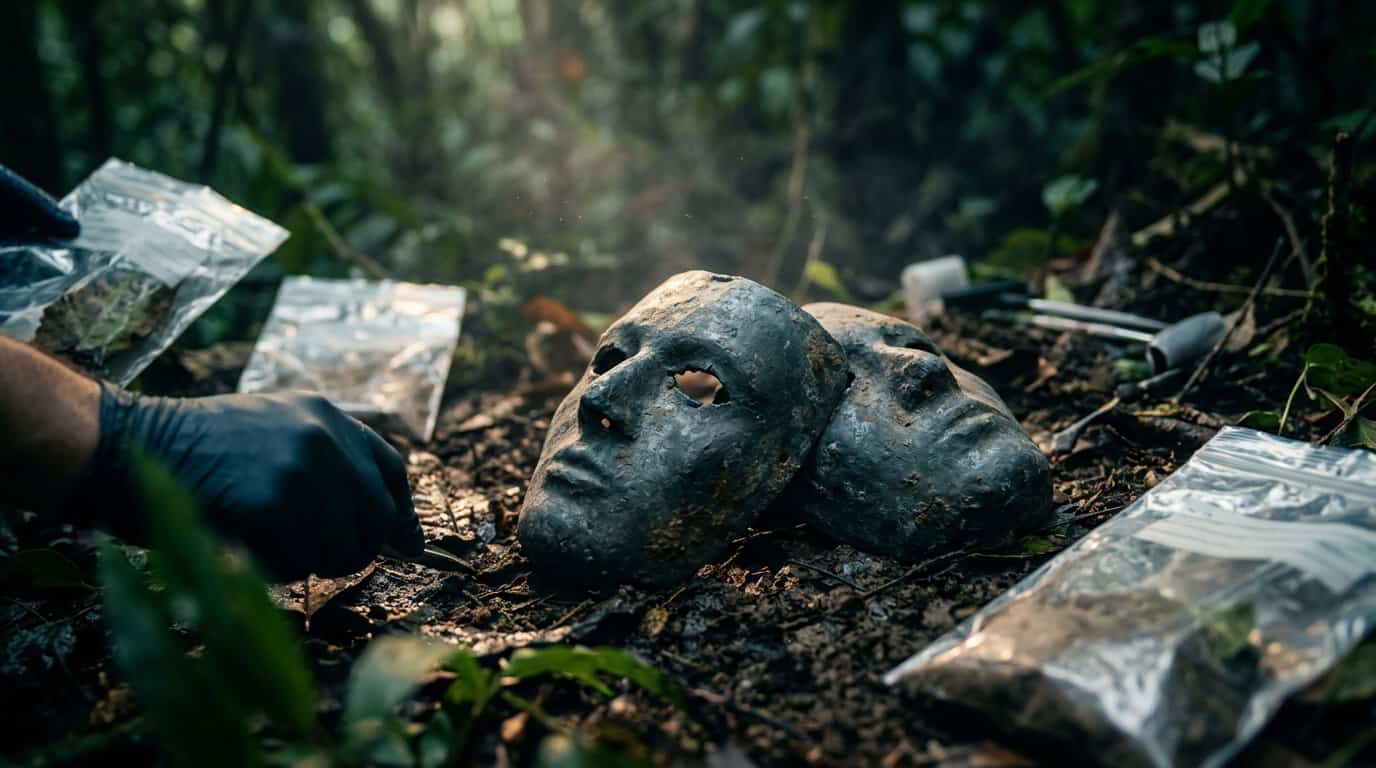
The Lead Masks Case began with a chilling discovery on August 20, 1966. Two electronics technicians were found dead on a hill in Niterói, Brazil. They wore formal clothes and raincoats, with crude lead masks covering their eyes. Nearby, investigators found towels, an empty water bottle, and a handwritten note mentioning capsules and a mysterious “mask signal.” More than half a century later, the scene still raises questions that the official record has never answered.
Were the men conducting a dangerous experiment, taking part in a private ritual, or following instructions they did not understand? The evidence supports several theories, but no reliable forensic finding or confession has resolved the mystery. The case remains a rare puzzle in which documented facts and unexplained details continue to meet.
Key Takeaways
- Two electronics technicians, Manoel Pereira da Cruz and Miguel José Viana, were found dead on Brazil’s Morro do Vintém in 1966 wearing crude lead masks, formal clothing, and raincoats. Other scene evidence included towels, an empty water bottle, and a handwritten note referring to capsules and a “mask signal.”
- The handwritten note provides no definitive explanation: its author, the capsules’ contents, and the meaning of the “mask signal” remain unknown. Its wording supports multiple interpretations, including an experiment, ritual, or misunderstood instructions.
- The cause of death was never conclusively established because decomposition limited the autopsy and reliable toxicology evidence was unavailable or inconclusive. No confirmed evidence proves poisoning, homicide, suicide, an electronics experiment, or supernatural involvement.
- The Lead Masks Case remains officially unresolved because crucial evidence about the men’s final hours, the note, the capsules, and the masks is missing or ambiguous. The documented facts sustain competing theories but do not validate any single explanation.
Morro Do Vintém Discovery
On August 17, 1966, electronics technicians Manoel Pereira da Cruz and Miguel José Viana reportedly left Campos dos Goytacazes for Niterói. They carried raincoats and wore more formal clothes than expected for a trip up a hillside. Three days later, on August 20, a boy found their bodies on Morro do Vintém, where the men lay side by side in a secluded area. Each wore a crude lead mask over the eyes, an unusual detail that gave the case its enduring name. Nearby, investigators found an empty water bottle, towels, and other personal items, but no clear sign of a struggle. A simple timeline graphic and location map could show the reported journey from their departure to the hillside discovery.
The most puzzling evidence was a handwritten note recovered at the scene. It referred to traveling to a particular location, taking capsules, protecting metals, and waiting for a “mask signal.” Police accounts also recorded the men’s formal clothing, raincoats, and carefully placed masks, but the note did not explain who wrote it or what the instructions meant. Because the bodies were already badly decomposed, investigators could not establish a clear cause of death. No reliable later finding has resolved whether poisoning, an accident, or another explanation was involved. The objects support several interpretations, including a planned experiment, a spiritual ritual, or an attempt to follow instructions the men considered important. However, the surviving evidence does not prove any one theory.
The Handwritten Mask Signal Note

The handwritten note found near Manoel Pereira da Cruz and Miguel José Viana gave the Lead Masks Case its most puzzling clue. Its brief instructions referred to traveling to a specific location, taking capsules, protecting metals, and waiting for a “mask signal.” The wording sounds planned and deliberate, yet it does not explain who wrote the message, what the capsules contained, or what the signal was meant to be. Police findings did not establish whether the note described a suicide plan, a test, a spiritual ritual, or something the men believed would protect them.
Some readers view the references to metals and masks as signs of a private scientific experiment, while others connect the language to spiritual contact or coded instructions. These remain possible interpretations, not proven conclusions, because the available evidence does not confirm suicide, homicide, contact with another intelligence, or any experiment. A comparison with the Tamám Shud mystery, another case involving an unexplained note, shows how short messages can inspire theories that go far beyond what their words securely support. The note keeps the mystery alive, but its meaning must remain open until reliable forensic or historical evidence provides a clearer answer.
Autopsy Evidence And Competing Theories
The medical evidence in the Lead Masks Case is frustratingly limited. When Manoel Pereira da Cruz and Miguel José Viana were found on Morro do Vintém on August 20, 1966, their bodies had already decomposed, making a reliable autopsy difficult. Investigators did not establish a confirmed cause of death, and no conclusive toxicology result proved that either man had taken poison or another drug. The scene showed the men lying side by side in formal clothing, with lead eye masks, a water bottle, towels, and a handwritten note, but these objects do not explain what happened.
Poisoning remains one possible explanation, especially because the note reportedly instructed the men to take capsules and wait for a “mask signal.” However, the capsules were not recovered, and the surviving evidence cannot show whether the men swallowed anything, what it contained, or whether it caused their deaths. Accidental experimentation is another theory, since both men worked with electronics and may have been testing an unusual device or procedure, but no confirmed experiment was documented. Criminal involvement has also been suggested, although the known scene has not produced conclusive proof of a struggle, attack, or motive.
Spiritual and UFO-related interpretations grew from the strange instructions, the homemade masks, and the men’s apparent willingness to wait on an isolated hillside. Those details are documented, but the idea that they were responding to extraterrestrial beings or a supernatural message is a later interpretation, not forensic evidence. The same caution applies to claims of a secret group, deliberate poisoning, or a staged meeting. None has been proven through a confession, reliable witness account, or definitive laboratory finding. Until stronger evidence appears, the masks and note preserve the mystery, while the medical record leaves the central question unanswered: what caused the two men to die?
Why The Lead Masks Case Remains Unsolved
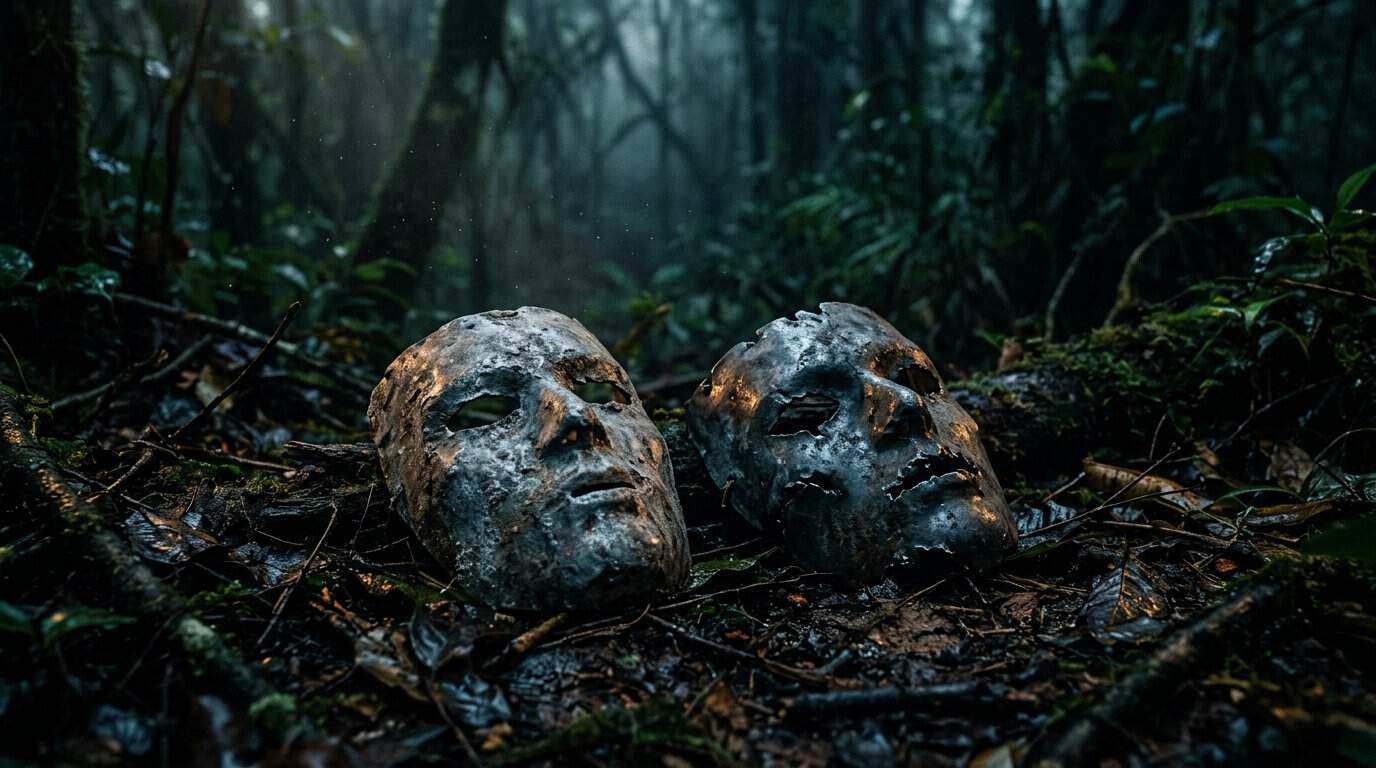
The Lead Masks Case remains unsolved because the surviving evidence never answered the most basic question: what killed Manoel Pereira da Cruz and Miguel José Viana? Their bodies were badly decomposed when they were found on Morro do Vintém, and the available toxicological evidence was missing, limited, or inconclusive. Investigators could not reliably confirm poisoning, an overdose, or another cause of death, while the absence of clear injuries made a violent attack difficult to prove. As a result, the case never produced a definitive homicide finding, even though the men’s formal clothing, lead eye masks, and strange preparations suggested that something unusual had taken place.
The handwritten note deepened the mystery without providing a clear explanation. Its instructions about traveling to a location, taking capsules, protecting metals, and waiting for a “mask signal” could point to a planned experiment, a spiritual belief, or a carefully staged deception. However, the note’s meaning and authorship were never established beyond doubt. With no conclusive toxicology, reliable witness account, or confession, the investigation eventually entered the archives as an unresolved death case rather than a solved crime. No credible new forensic finding has changed that status, and the case illustrates the challenges discussed in this broader guide to cold-case evidence limits.
The Evidence Behind the Lead Masks Deaths
On August 20, 1966, Manoel Pereira da Cruz and Miguel José Viana were found dead on Morro do Vintém in Niterói. They lay side by side in formal clothes and raincoats. The crude lead eye masks, an empty water bottle, towels, and a handwritten note about capsules and waiting for a “mask signal” made the scene unlike an ordinary unexplained death. Police inquiries documented the hillside discovery and surrounding objects, but the available evidence did not clearly show what the capsules were, whether the men took them, or what caused their deaths. With no confirmed witness account or complete scientific explanation, the known timeline ends at the discovery of two technicians surrounded by instructions that remain difficult to interpret.
The masks have inspired theories involving spiritual rituals, secret experiments, radiation, and a planned attempt to shield the eyes from an expected event. None has been proven by the documented facts. Important gaps remain, including uncertainty about the note’s full meaning, the missing or inconclusive medical evidence, and the lack of a reliable account of the men’s final hours. These limits do not prove a supernatural explanation, but they leave room for questions that a simple answer cannot settle. Which explanation best fits the timeline, the handwritten instructions, and the unusual lead masks, while acknowledging that the Lead Masks Case remains officially unresolved?
Frequently Asked Questions
1. What is the Lead Masks Case?
The Lead Masks Case is an unexplained 1966 death investigation in Brazil involving two electronics technicians who were found dead while wearing crude lead masks over their eyes. The unusual clothing, mysterious handwritten note, and lack of a clear cause of death have kept the case open to several interpretations.
2. Who were the men found on Morro do Vintém?
The men were Manoel Pereira da Cruz and Miguel José Viana, two electronics technicians. They reportedly left Campos dos Goytacazes for Niterói on August 17, 1966, and were found three days later on Morro do Vintém.
3. What was found at the scene?
The bodies were found lying side by side in a secluded area. They were dressed in formal clothes and raincoats, with crude lead masks covering their eyes. Investigators also found towels, an empty water bottle, personal items, and a handwritten note, but no clear sign of a struggle.
4. What did the handwritten note say?
The note referred to traveling to a particular location, taking capsules, protecting metals, and waiting for a “mask signal.” Its wording was too vague to establish a clear plan, and the record does not identify who wrote it or explain what the signal meant.
5. Why were the men wearing lead masks?
No confirmed explanation exists for the masks. They may have been connected to an experiment, a private ritual, or an attempt to protect the men from something they believed was dangerous. No theory has been proven by reliable evidence.
6. Do investigators know how the men died?
The official record has never provided a conclusive explanation for their deaths. Because the bodies were already badly decomposed when discovered, important forensic evidence may have been difficult to recover. This left the role of the reported capsules and other details uncertain.
7. Were the deaths connected to an electronics experiment or occult ritual?
Both possibilities have been suggested because the men worked with electronics and left behind unusual instructions involving masks and a signal. However, the known evidence does not prove either an experiment or a ritual, so both remain theories rather than established facts.
8. Why does the Lead Masks Case remain unsolved?
The case combines a documented discovery with unanswered questions about the men’s final movements, the note, the capsules, and the purpose of the masks. With no clear witness account, confession, or decisive forensic finding, the mystery continues to balance plausible explanations against details that remain genuinely unexplained.