Foo Fighter Sightings: The Mystery Lights That Followed World War II Pilots
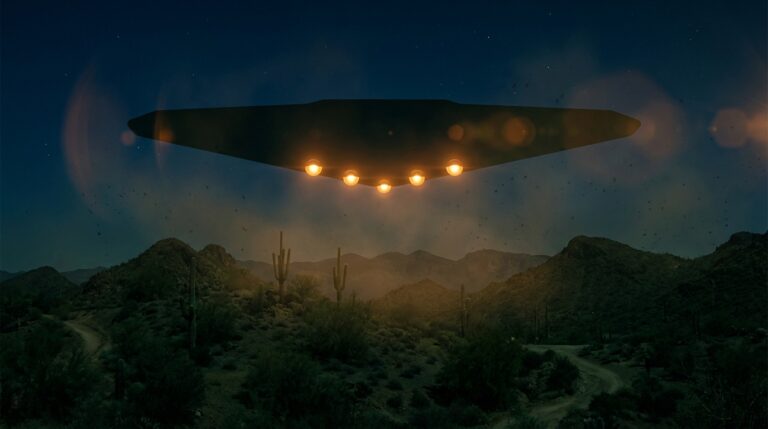
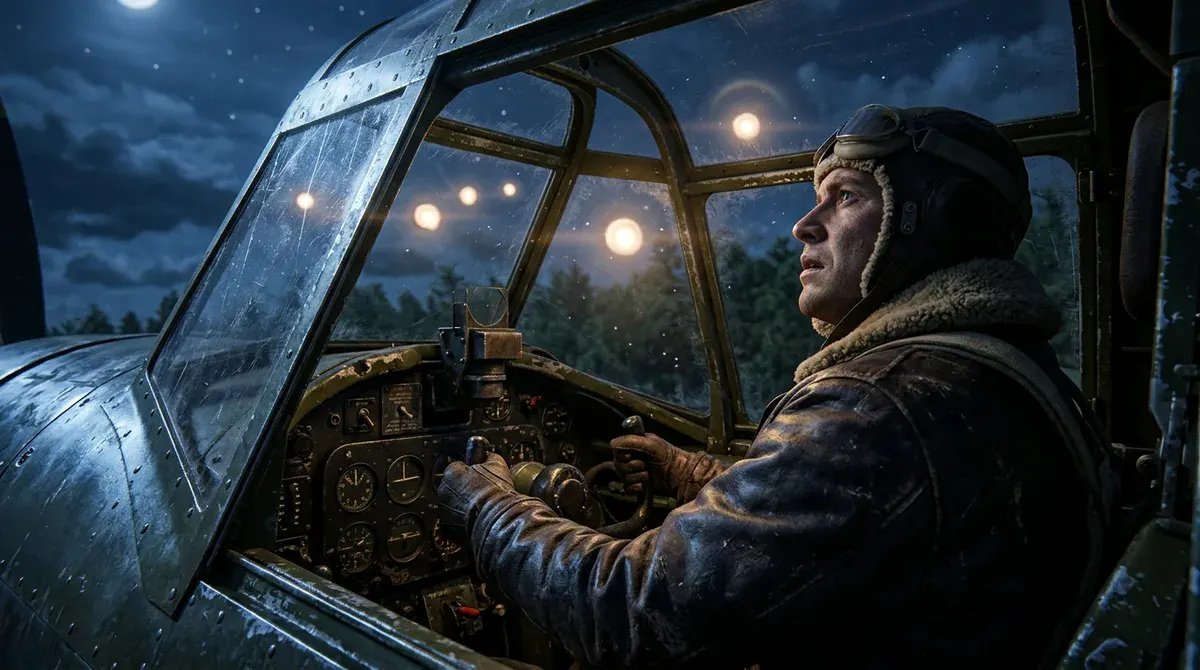
Foo fighter sightings describe glowing lights that seemed to chase, circle and keep pace with Allied warplanes during the closing months of the Second World War. Aircrews of the 415th Night Fighter Squadron over Europe reported them in late 1944 and early 1945. They often described red, orange, green and white lights, sometimes in groups of up to 10, flying alongside aircraft at about 200 miles per hour.
The accounts reached American newspapers on January 2, 1945, when an Associated Press story carried the strange lights to a wide public. Yet the squadron’s records, including 14 extracts covering ten nights, never settled what the lights were. That uncertainty has kept foo fighter sightings one of the war’s most debated puzzles.
Key Takeaways
- Foo fighters were glowing lights that Allied aircrews reported near or following their planes during the Second World War, with the 415th Night Fighter Squadron logging many of the sightings in late 1944 and early 1945.
- The Air Staff file numbered 37153 and titled “Night Phenomena” holds 14 sortie-report extracts from ten nights, yet those records never established what the lights were.
- The Air Ministry’s March 1945 reply linked a few foo fighter reports to Me 262 jet fighters and most of the others to flak rockets, but the ministry still called the affair a mystery.
- The CIA’s 1953 scientific panel offered electrostatic effects like St. Elmo’s fire, electromagnetic phenomena, and ice crystals as possible causes, but it stated that the cause or nature of foo fighters had never been defined.
- The 1953 Robertson Panel unanimously found no evidence of a direct threat to national security from the objects it reviewed, though the panel still could not identify the glowing lights.
Where the Name Foo Fighter Came From
Foo fighters were mysterious lights that Allied aircrews reported seeing near or following their planes during the Second World War. Pilots and crew described glowing balls and clusters that seemed to dart around the sky, keeping pace with their aircraft in the dark.
The name itself was far more casual than the sightings. Among the crews, “foo” became a loose label for the strange glows, and it caught on because it sounded almost like a joke. Many flyers likely borrowed it from Smokey Stover, a popular American comic strip about a firefighter. The strip’s running joke about foo and fire gave the word a playful ring that suited men trading jokes between missions.
Yet the humor hid a serious undercurrent. Crews who saw the lights did not treat them as a bit of fun. They described them in sortie reports, and those reports moved up the chain of command, where officers asked for more detail about color, size and duration.
The name later caused confusion of its own. The rock band Foo Fighters, led by Dave Grohl, shares the same two words, but the band has no connection to the wartime reports. Anyone searching the phrase today is more likely to find concert tickets than night-sky accounts. The lightness of the name is a reminder of how the term began, and of how seriously the pilots who flew beneath those lights took what they saw.
What Did Night Pilots Actually See Over Europe?
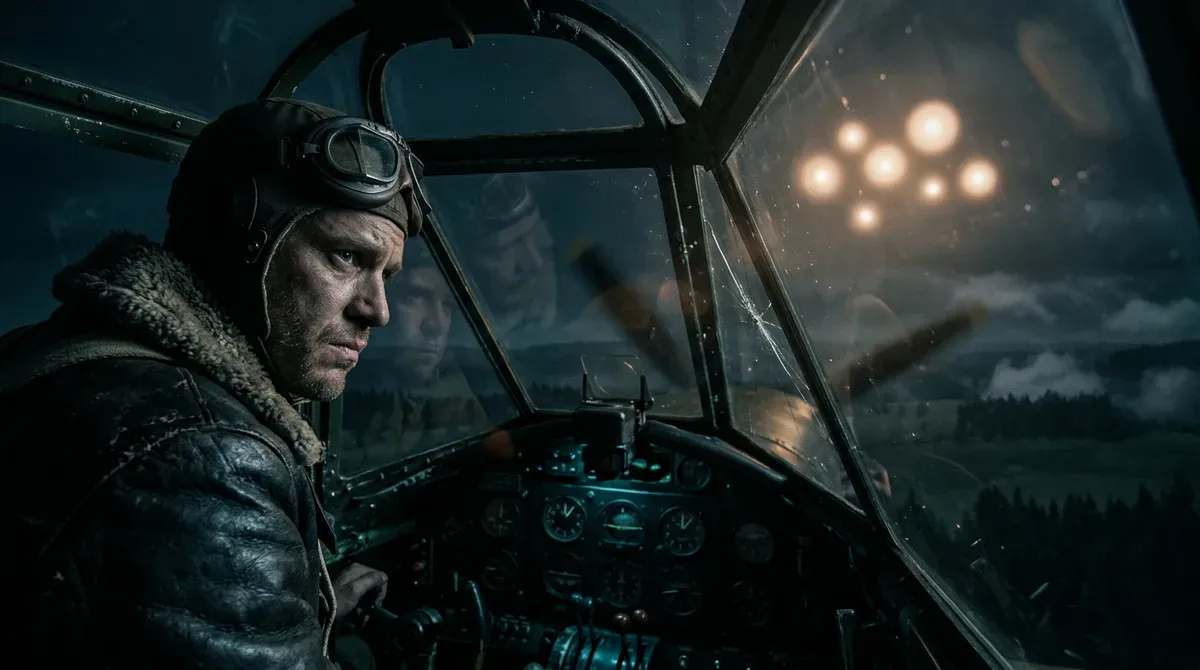
Night pilots over Europe reported clusters of colored lights that hovered beside their aircraft and kept pace with them, and they wrote down what they saw in careful detail. One of the best-known scenes comes from November 1944, when a crew of the 415th Night Fighter Squadron flew near the Rhine north of Strasbourg. The men counted eight to ten bright orange lights, and the display lasted several minutes. Their airborne radar registered nothing nearby, and neither did ground control.
The squadron’s later reports widened the palette. Crews described lights in red, orange, yellow, amber, green and white, and no two accounts read exactly alike. Some sightings involved groups of up to ten lights, described in red, orange or green. Crews said these glows appeared to keep pace with aircraft flying at about 200 miles per hour, a speed that left some flyers feeling they were being escorted through the dark.
Distance mattered as much as color. One extract in the squadron’s files describes a light within 100 feet of an aircraft for five minutes, a close encounter that officers later asked crews to describe more fully. The sortie-report extracts gathered in a SHAEF file show that the Allied command wanted precise details on color, size, altitude and duration.
Pilots also tried a simple test. When they asked ground control whether a bogey, or unidentified aircraft, was nearby, the answer was negative in every reported case. A radar operator or controller could confirm an empty sky, yet the lights stayed visible to the crew.
The records describe what crews saw, not what caused the lights. Each report captures a moment from a cockpit or gun position, with a color, a count and a number of minutes attached. Read side by side, those notes show trained observers working hard to describe something that did not fit neatly into any category they knew.
How Did the Story Reach Newspapers in 1945?
The story reached American readers on January 2, 1945, after correspondent Robert C. Wilson spent New Year’s Eve with the 415th Night Fighter Squadron. Wilson saw the crews at work, and his account carried the strange lights far beyond the squadron’s own briefing rooms.
Official paperwork was already piling up before the headlines appeared. Staff at the Allied command gathered the crews’ reports into a 17-page Air Staff file numbered 37153 and titled “Night Phenomena.” The file holds 14 sortie-report extracts from ten nights, along with correspondence that runs from January 16 through March 18, 1945.
The sequence runs roughly like this:
- December 14–15, 1944: the first sortie extracts in the file describe lights seen by squadron crews.
- December 31, 1944: Robert C. Wilson spends New Year’s Eve with the squadron.
- January 2, 1945: an Associated Press report appears in U.S. newspapers.
- January 16, 1945: correspondence begins in the SHAEF file.
- January 20, 1945: the First Tactical Air Force asks for colors, intensity, size, duration and altitude in future reports.
- January 29–30, 1945: the last sortie extract in the file is recorded.
- March 13, 1945: the Air Ministry replies.
- March 18, 1945: the correspondence in the file ends.
The request from the First Tactical Air Force shows how seriously headquarters took the matter. Officers did not want rumors or vague impressions. They wanted measurements that could be compared from one sortie to the next, so that a pattern might emerge from the sky.
Nearly two months later, the Air Ministry offered an answer of sorts. It suggested that Me 262 jet fighters might explain a few of the reports and that flak rockets were the likeliest explanation for the rest. Even so, the ministry described the affair as still a mystery, and the lights that fit neither explanation remained unaccounted for.
Was the Pacific Seeing Something Different?
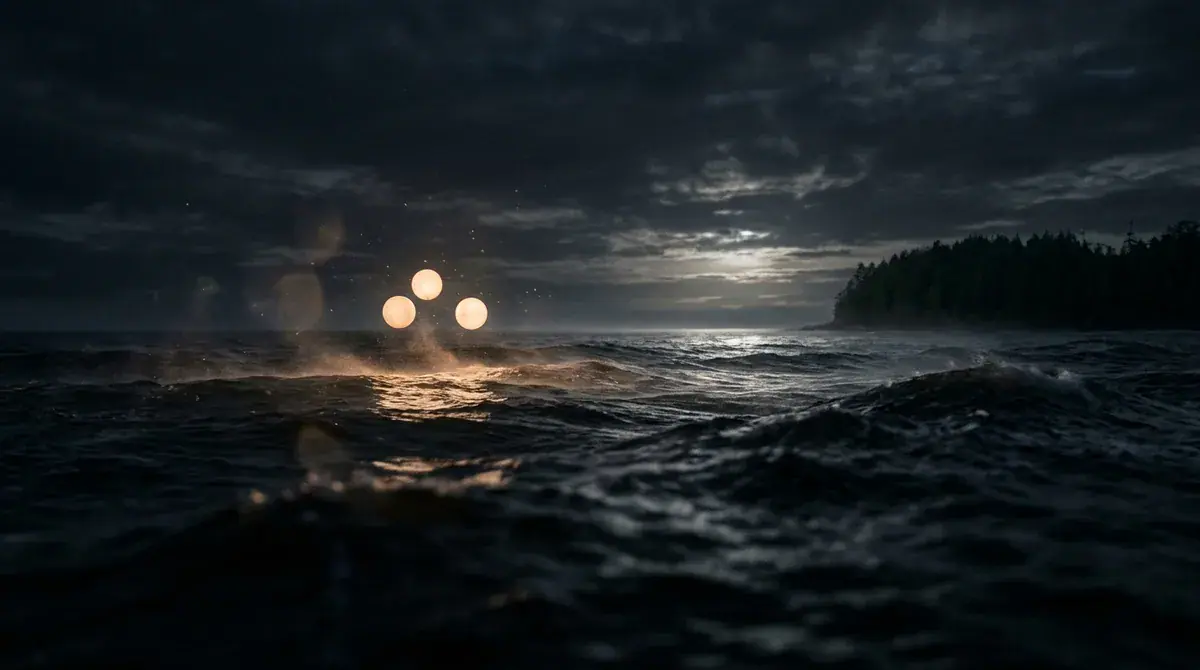
The Pacific reports appear to describe a similar kind of glowing object, but the skies there were different enough that a direct match cannot yet be claimed. The Central Intelligence Agency’s 1953 scientific panel described foo fighters as lights reported by pilots in both the European and Far East theaters, which places the Pacific accounts alongside the reports from the Rhine Valley.
One of the most vivid Pacific reports describes a ball of fire seen near B-29 bombers. Readers can set that image beside the European descriptions of clustered red, orange and green lights and ask whether they are the same phenomenon or two different things seen through different eyes.
German and Japanese pilots also reported unexplained lights in the night sky. If true, the sightings were not limited to Allied crews, and both sides of the war saw something they could not name.
Conditions may have shaped what crews saw. Many Pacific bombers crossed long stretches of open ocean, where the horizon can fade and a pilot has few landmarks to judge distance. Tropical weather brought towering clouds, rain squalls and humid air that could blur lights and make range hard to estimate. Over Europe, night pilots could measure what they saw against rivers, cities and searchlights. Altitude differed as well, since B-29 crews often flew far higher than many European night patrols.
Those differences matter. A ball of fire near a bomber at high altitude, in tropical cloud, is not the same observation as a cluster of lights within sight of a Rhine town. Until matching sortie reports from both theaters can be compared side by side, the question of a shared source remains open.
Could a German Secret Weapon Explain the Lights?
Some Allied officers suspected that the lights were a German secret weapon, built either to unsettle bomber and night-fighter crews or to track Allied aircraft through the dark. The idea had obvious appeal in 1944 and 1945, when Germany was known to be developing jet fighters and new rocket weapons. A glowing device that followed planes would fit the fear of a hidden technology.
The Air Ministry’s reply in March 1945 did not fully endorse that view. It tied a few reports to Me 262 jets, which were far faster than the propeller fighters of the day, and it named flak rockets as the likeliest explanation for most of the others. Those rockets were fired from the ground to burst among enemy aircraft, but they were not designed to hover beside a plane for minutes at a time.
German pilots reporting similar lights cut both ways. If German crews saw the glows too, it becomes harder to dismiss them as an Allied misreading of ordinary events. Yet it also complicates a purely German weapon explanation. A device meant to confuse the enemy would be an odd thing to baffle the very pilots who flew the nights it was meant to serve.
The ministry never confirmed either idea. It still called the affair a mystery, which means the jet and rocket answers covered only part of the reports, and the rest stayed unaccounted for.
So weigh the secret weapon theory against the reports themselves. The lights ranged from red and orange to white, appeared in groups of up to ten, came within 100 feet of an aircraft, and lasted several minutes. Could one hidden German machine produce all of that, across ten nights of sorties? Or do the reports describe several different causes that simply looked alike from a cockpit?
St. Elmo’s Fire, Flak and Ice: Testing the Explanations
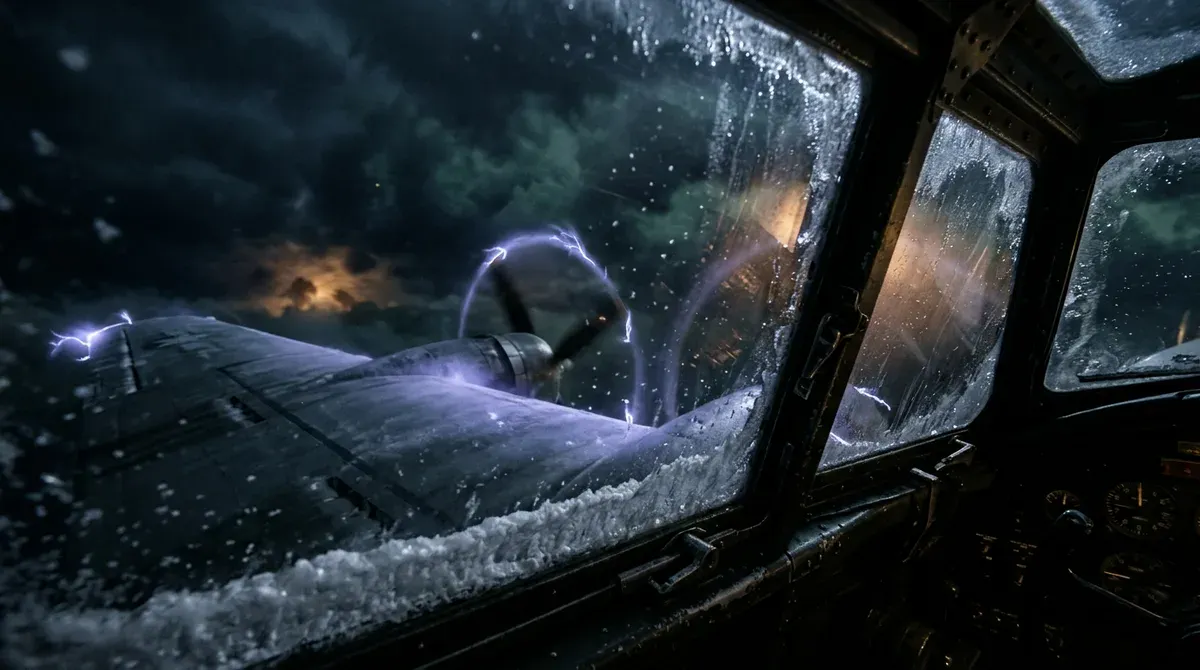
The CIA panel offered three natural explanations for the glows. The first was electrostatic effects similar to St. Elmo’s fire, a pale glow that forms when electric charge builds up on pointed or exposed parts of an object in the air. Pilots have long reported that kind of light on wingtips, propeller blades and antennas during storms, so a plane flying through charged cloud could wear a halo of light. The panel also pointed to electromagnetic phenomena as a possible cause, though the reports rarely describe the crackling or instrument trouble such effects might bring.
Ice crystals offered the third idea. In cold, humid air, tiny ice particles can scatter light from a plane’s own lamps or from distant sources, so a glow can seem to hang beside a wing and drift as the aircraft turns. That fits crews who saw lights moving with them in freezing air. It fits less well with bright orange clusters that stayed in view for several minutes and did not fade with every change of heading.
Flak provides a more down-to-earth answer for sightings near the front. Anti-aircraft guns fired shells that burst in bright flashes, and at night those bursts could look like lights that hung in the air and then faded. A crew near the battle line, watching the sky fill with fire from the ground, might easily mistake a burst for a light close to its wing. Yet flak comes from a known place and lasts only a moment, so it struggles to explain glows that kept pace with a plane for minutes, far from any gun line.
Radar was no cure-all either. Night fighters carried airborne sets that could miss small or nonmetallic objects, and ground controllers tracked only what their screens could show. A blank scope therefore did not prove an empty sky, but it also did not prove that something was there.
The panel’s own verdict was blunt. It said the cause or nature of foo fighters had never been defined, so no single explanation covers every report. Each theory accounts for a slice of the sightings, and the rest of the evidence sits stubbornly outside them.
The Robertson Panel and the Long Wait for Answers
By 1953, the lights had not faded from the minds of military and intelligence officials. A review known as the Robertson Panel was convened to look at unidentified flying objects and to judge whether they could threaten national security. Its members weighed reports from the war years and after, keeping that one question at the center of their work.
The panel reached a clear conclusion. Its members agreed unanimously that the objects they reviewed offered no evidence of a direct threat to national security. That verdict addressed danger, not identity. The panel still could not say what the glowing objects were.
Even after the war, foo fighters remained unexplained. Pilots had described lights that flew near or with their aircraft and maneuvered rapidly, and the 1953 review did not close the file. The question stayed alive among officers and among the crews who had watched the glows from their cockpits and gun positions.
For years, the wartime papers stayed largely out of public view. Squadron notes, sortie extracts and headquarters correspondence sat in government archives, where few outside official circles could read them. Later reviews brought many of those files to light. The reproduced SHAEF file lets researchers hear the squadron’s own language, the exact words crews chose when they tried to describe a light beside their wing.
Declassification gives readers the records themselves. A reader can now study the colors, counts, distances and minutes that crews wrote down, and judge the reports for personal reasons. What it cannot provide is a settled answer. The files show what was reported, while the causes of the lights remain open to debate.
Weighing the Lights for Yourself
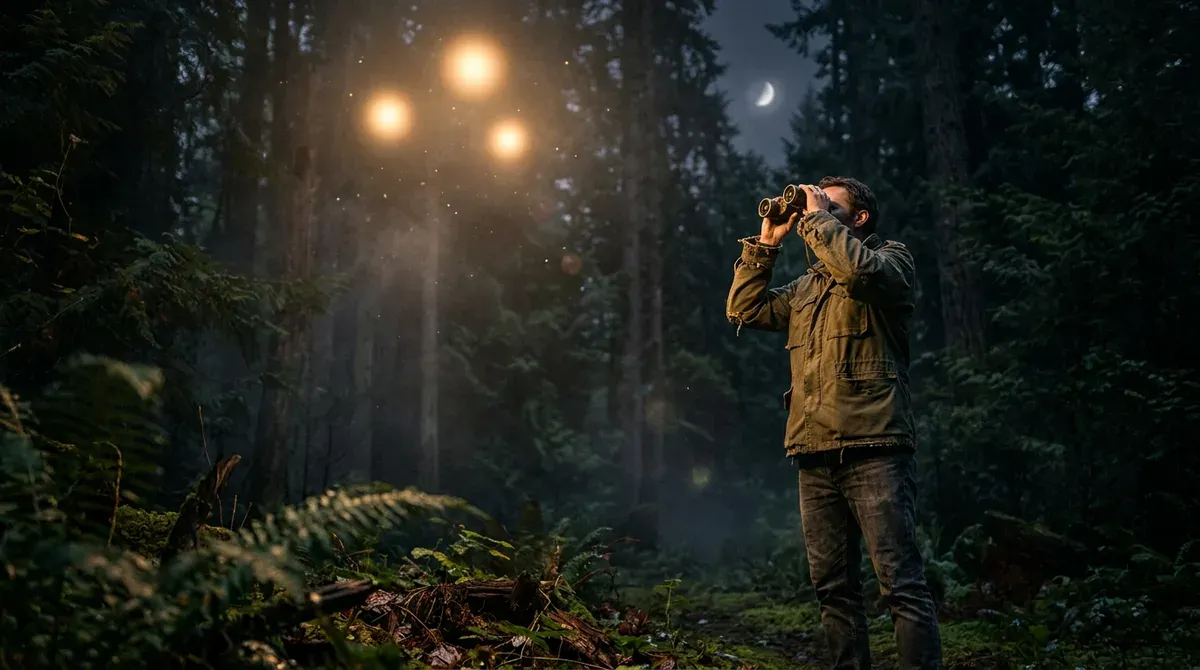
Picture that crew over the Rhine once more, with eight to ten orange lights hanging beside the wing while the radar stays blank and ground control reports no bogey nearby. The strongest facts are clear. Pilots wrote detailed records, the Associated Press carried the story to American readers in January 1945, headquarters demanded measurements, and the 1953 panel found no direct threat to national security. Yet no single explanation fits every report. Secret weapons, flak, St. Elmo’s fire and ice crystals each account for part of the picture, and the rest stays open.
Which explanation feels most convincing to you? Some readers may favor the jet and rocket answers, others the weather, and others the trained eyes of the crews themselves. Our coverage of the ghost rocket reports over Scandinavia, the Battle of Los Angeles air raid and Kenneth Arnold’s sighting near Mount Rainier offers other puzzles to compare. What evidence would change your mind: a matching Pacific sortie report, a clear photograph, or a German crew’s own log?
Building Your Own Comparison
Start with the primary record itself. The Air Staff file numbered 37153 and titled “Night Phenomena” holds the sortie extracts in their original wording, and its title shows what the officers were trying to understand. If you can find a digital copy, read the extracts in date order before you read anyone’s summary of them.
Then build a comparison sheet. Use the fields the First Tactical Air Force requested in January 1945: colors, intensity, size, duration and altitude. Add two more columns from the crews’ reports, weather and whether radar or ground control registered anything. Fill one row for each sortie.
Once you have several rows, test the explanations one at a time. Ask which theory fits the reports where a light stayed within 100 feet for five minutes, and which fits the reports near the front, where flak was bursting. Mark the rows that none of them explain.
Last, look for a Pacific match. Find a B-29 report describing a ball of fire and set it beside your European rows, paying close attention to altitude and cloud. If the conditions differ as much as they seem to, you will have a clearer sense of whether the reports share a single cause.
Frequently Asked Questions
1. Did any pilots or crews report injuries or damage from the lights?
The squadron extracts discussed here focus on colors, counts, distances and minutes. Crews did report lights within 100 feet of their planes for five minutes, which shows how close some encounters came. Readers who want to check the wording for any mention of harm can read the extracts in the original file.
2. Are there photographs of foo fighters from the war, and how reliable are they?
The wartime record discussed here consists of written sortie reports and headquarters correspondence. Because those records capture observations rather than images, their reliability depends on the crews’ written accounts. Anyone searching for photos should look through military archives directly and treat any image with care until its origin is confirmed.
3. How did the foo fighter reports compare with the ghost rocket reports seen in Scandinavia after the war?
Both were unexplained aerial sightings that officials and the public struggled to identify. Foo fighters were glowing lights that flew beside aircraft at night during the war, while ghost rockets were fast objects reported in the sky over Scandinavia after the fighting ended. Our coverage of the ghost rocket reports offers a useful companion for comparing the two puzzles.
4. Could the foo fighter reports have been a hoax?
The sortie extracts were written by squadron crews and passed up the chain of command for officers to review. Several crews described the same kinds of lights in different words, and headquarters later asked for more precise measurements. Some readers may still suspect exaggeration or misreading, and weighing that possibility against the detailed records is part of judging the case for yourself.