The Mystery Of The Kaimanawa Wall Origins
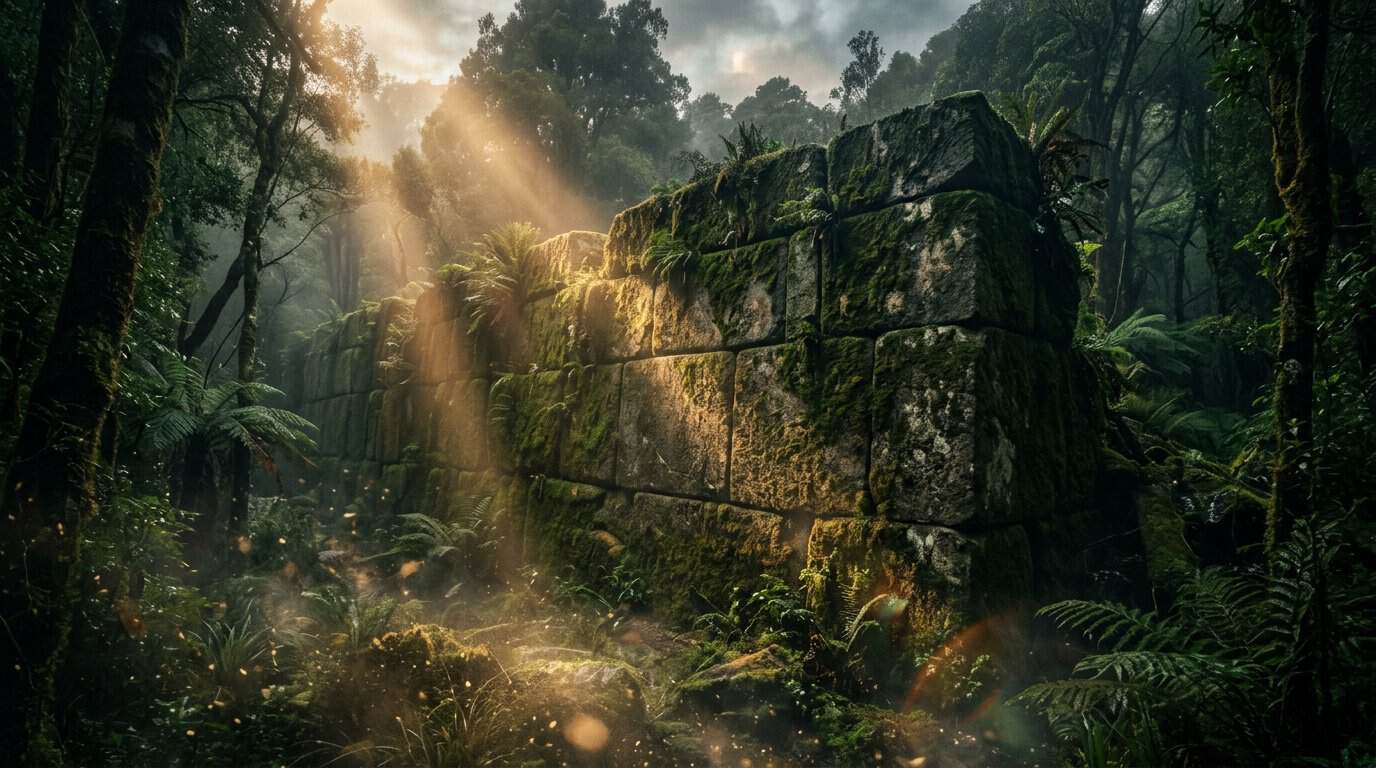
Deep within the shadows of the Kaimanawa State Forest, a mysterious stone structure stands as a silent challenge to the understanding of the past. The kaimanawa wall origins have sparked decades of heated debate, as the formation’s perfectly straight lines and stacked appearance look more like an ancient fortress than a random act of nature. While it sits quietly off a gravel road near Lake Taupo, its presence feels like a puzzle piece that does not quite fit the map of New Zealand’s known history.
For some, these massive blocks are proof of a lost civilization that predates traditional records, suggesting a level of craftsmanship that defies local timelines. Mainstream science offers a different story, pointing toward volcanic forces and the natural cooling of ancient rock. Whether this site is a masterpiece of geological chance or a relic of a forgotten people, the wall invites every visitor to look closer and decide for themselves what secrets might be hidden in the stone.
Key Takeaways
- The Kaimanawa Wall is a controversial stone formation in New Zealand featuring precision-cut rectangular blocks that challenge standard historical timelines.
- Mainstream geology attributes the structure to the natural cooling of 330,000-year-old Rangitaiki ignimbrite, which naturally fractures into symmetrical, right-angled joints.
- Alternative theories propose the wall is a relic of a pre-Maori civilization, such as the Waitaha, suggesting advanced maritime explorers settled the region long before 1250 AD.
- The site remains a focal point for debate because its architectural appearance defies the typical chaos of nature, inviting ongoing investigation into New Zealand’s earliest human history.
The Discovery Of The Kaimanawa Stone Blocks
Deep within the Kaimanawa State Forest near Lake Taupo, a chance discovery in the late 20th century sparked a mystery that still captivates New Zealand today. While exploring the rugged terrain, observers stumbled upon what appeared to be a massive stone structure hidden beneath a layer of earth and vegetation. The initial sighting revealed a series of large, rectangular blocks that seemed to be stacked with incredible precision. Unlike the jagged cliffs found elsewhere in the region, this formation displayed smooth surfaces and straight edges that looked remarkably like a man-made wall. The discovery quickly moved from a local curiosity to a national sensation as people began to wonder if they had found the ruins of an ancient city.
The visual impact of the Kaimanawa wall is undeniable, featuring horizontal and vertical lines that create a grid-like pattern across the rock face. Many early visitors were struck by the way the blocks fit together, noting that the gaps between them were almost uniform in width. This symmetrical appearance led to immediate speculation that the structure could not be a product of nature alone. While the surrounding forest is filled with wild growth, this specific outcrop stands out because of its architectural look. It suggests a level of engineering and planning that seems out of place in a wilderness area that was previously thought to be untouched by early builders.
This fascinating discovery raised urgent questions about who might have constructed such a monumental feature in the heart of the North Island. If the wall was indeed built by human hands, it would suggest that a sophisticated civilization existed in New Zealand long before the arrival of the Maori people. This possibility challenges the standard timeline of Pacific history and hints at a lost chapter of human migration. While some researchers look toward volcanic forces and geological explanations involving volcanic rock cooling, the sheer precision of the blocks continues to fuel the imaginations of those seeking a deeper mystery. The wall remains a silent witness to a debate that balances the laws of science against the alluring call of an unknown past.
Barry Brailsford And The Pre-Maori Civilization Theory
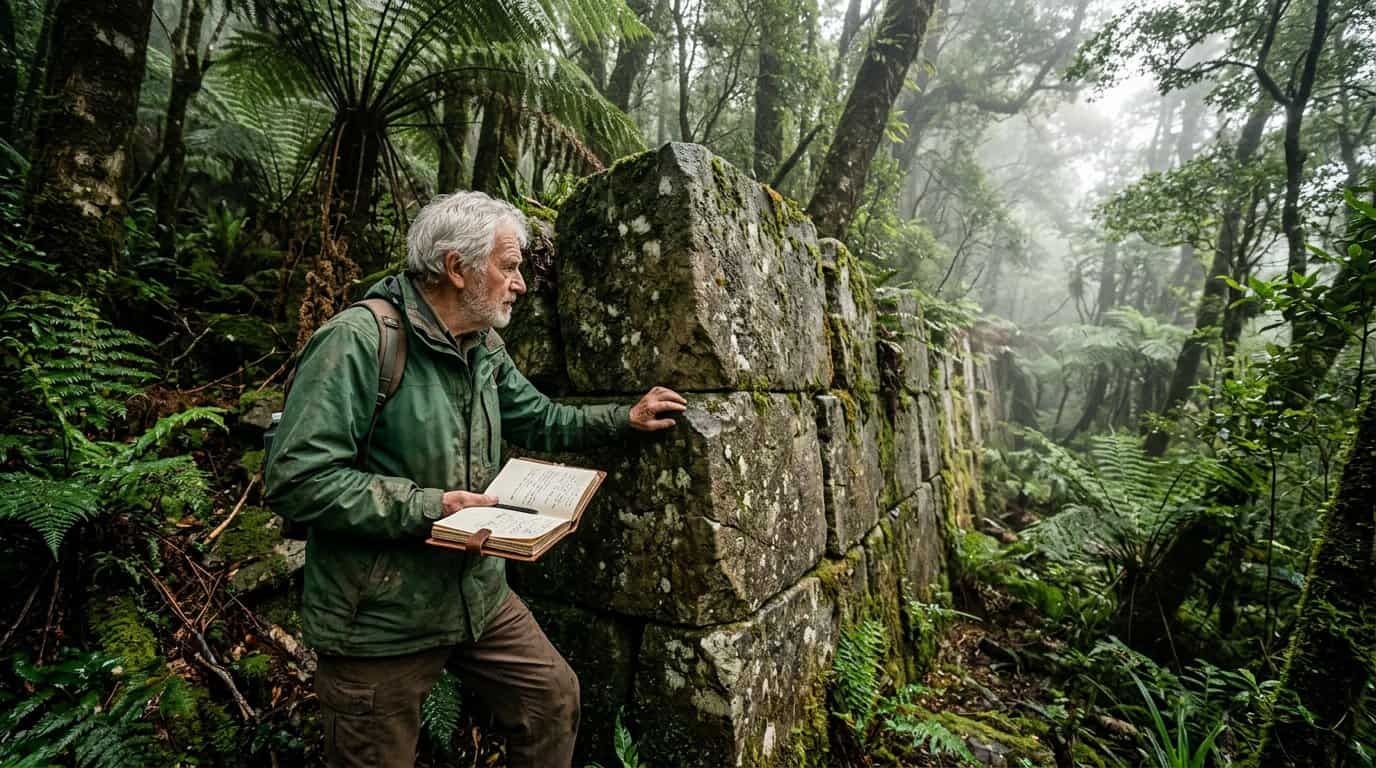
In the 1990s, author Barry Brailsford brought the Kaimanawa Wall into the national spotlight when he claimed the structure was not a natural formation but a relic of an ancient civilization. He proposed that the stones were part of a massive temple or monument built by the Waitaha, a group he described as a peaceful, megalithic culture that inhabited New Zealand long before the arrival of the Maori. According to Brailsford, these early settlers possessed advanced knowledge of astronomy and stonework, allowing them to create precision joints that look like modern masonry. His work suggests that the wall is at least 2,000 years old, which would significantly shift the understanding of human migration in the South Pacific.
This theory gained momentum because the wall features remarkably straight edges and rectangular blocks that appear too perfect to be an accident of nature. Brailsford and his supporters argue that the horizontal and vertical lines resemble the legendary stone ruins found in places like Peru or Egypt. They believe the site served as a spiritual or navigational hub for a global network of ancient explorers who traveled the oceans in search of new lands. While traditional history suggests the first humans arrived in New Zealand around 1250 AD, this alternative perspective invites us to imagine a much older and more complex past.
The idea of a lost civilization remains a captivating mystery that continues to draw curious visitors to the Kaimanawa Forest. Brailsford based much of his research on oral traditions and what he called the hidden history of the land, asserting that the Waitaha were the original guardians of the islands. Even as geologists point toward volcanic cooling as the cause of the patterns, the sheer scale and symmetry of the blocks keep the debate alive. Could there be more to these stones than simple geology, or is our imagination filling in the gaps of a natural wonder? We would love to hear your thoughts on whether this structure looks like the work of nature or the hands of man.
Volcanic Cooling And The Rangitaiki Ignimbrite Debate
Geologists suggest that the Kaimanawa Wall is a remarkable example of nature mimicking human craftsmanship through a process involving the Rangitaiki ignimbrite. This volcanic rock formed roughly 330,000 years ago when a massive pyroclastic flow swept across the region near Lake Taupo. As the thick layers of hot ash and pumice began to settle, they underwent a cooling process that caused the material to contract and harden. This physical change often creates internal pressure that is released through the formation of natural joints. These fractures typically occur at right angles, resulting in the appearance of perfectly stacked blocks that look like they were placed by a master mason.
The debate intensifies when looking at the specific horizontal and vertical lines that define the structure. According to official reports from the New Zealand Department of Conservation, these patterns are characteristic of cooling ignimbrite sheets found throughout the region. While the blocks seem precision cut, scientists point out that the mineral composition remains consistent across the joints, suggesting they were never moved or shaped by tools. This perspective views the wall as a geological wonder rather than a relic of a lost civilization. It provides a fascinating look at how the earth can create symmetry and order through violent volcanic events without any human intervention.
Despite these scientific explanations, the sheer regularity of the stone blocks continues to spark curiosity among those who believe in a pre-Maori culture. Proponents of the man-made theory argue that the gaps between the stones are too uniform to be a mere accident of nature. They point to the way the blocks seem to interlock, suggesting a level of engineering that defies simple volcanic cooling. This tension between geological fact and historical mystery creates a compelling narrative about New Zealand’s ancient past. Could nature truly produce such a convincing imitation of a fortress wall, or are we looking at the weathered remains of an empire lost to time?
Hidden History Or Natural Wonder Of The Forest
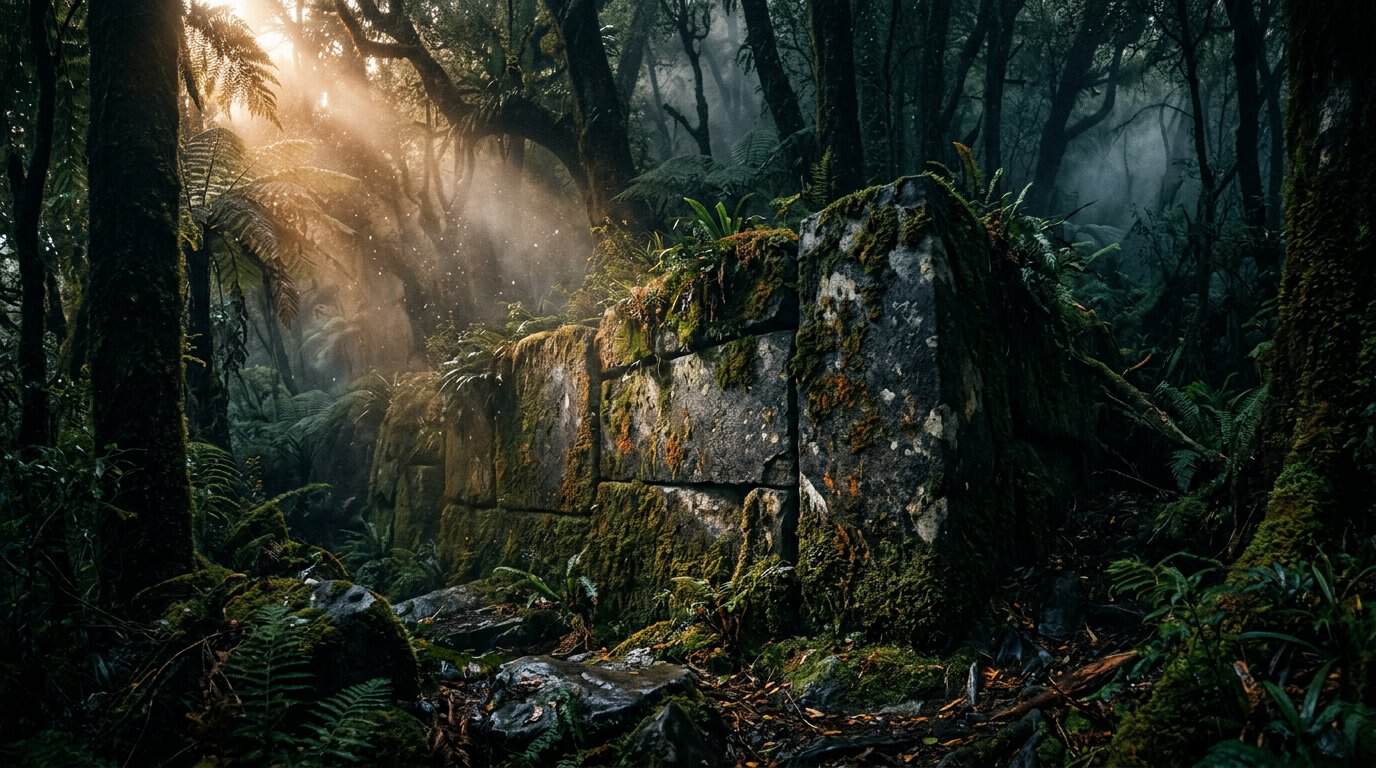
Deep within the Kaimanawa State Forest, a series of stone blocks rises from the earth with such precision that they seem to defy the chaos of nature. These stones feature perfectly straight horizontal and vertical lines, creating an appearance of ancient masonry that has sparked decades of intense debate. While many onlookers see a hand-carved wall built by an advanced civilization, geologists explain the site as an outcrop of Rangitaiki ignimbrite. According to scientific research from the New Zealand Department of Conservation, this volcanic rock formed over 300,000 years ago, and the block-like shapes are the result of natural cooling processes and tectonic pressure.
Despite the geological explanations, the sheer symmetry of the structure fuels theories of a hidden chapter in Pacific history. Some researchers suggest the wall could be an out-of-place artifact left behind by a pre-Maori culture, pointing to the uniformity of the joints as evidence of human intent. This perspective challenges the standard timeline of New Zealand’s first inhabitants and suggests that an unknown maritime people may have settled the islands long before traditional records begin. While skeptics maintain that the fractures are simply the result of volcanic material contracting, the site remains a focal point for those who believe the forest is guarding an ancient architectural secret.
The mystery of the Kaimanawa Wall invites us to look closer at the landscape and question if we truly know every detail of our past. Whether these stones are a masterpiece of Mother Nature or the foundation of a lost city, they continue to inspire wonder and curiosity in everyone who visits. Every crack and corner of the formation offers a new clue, yet the definitive answer remains just out of reach beneath the forest canopy. Do you believe this structure is a remarkable geological coincidence, or could it be the smoking gun for a forgotten civilization? Share your theories and experiences with us as we continue to explore the unexplained corners of the world.
Nature’s Artistry or a Forgotten Civilization?
Ultimately, the Kaimanawa Wall stands as a captivating puzzle that bridges the gap between geological reality and the allure of a hidden past. While the scientific community points to the natural cooling of Rangitaiki ignimbrite as the architect of these precise blocks, the visual evidence remains startlingly human in appearance. The symmetry of the joints and the seemingly intentional stacking continue to fuel theories of a pre-Maori civilization that once navigated the Pacific. For many, this site is not just a rock formation but a symbol of the possibility that our history books are still missing significant chapters.
Exploring the origins of this structure reminds us that our understanding of early human migration is constantly evolving. Whether these stones were shaped by the immense heat of a volcanic eruption or the hands of ancient voyagers, they inspire a necessary sense of wonder about the Pacific’s earliest inhabitants. The Kaimanawa Wall mystery persists because the wall challenges the conventional timeline of New Zealand’s discovery, inviting us to look closer at the landscape for more out-of-place artifacts. Keeping an open mind allows for a deeper appreciation of the mysteries that still lie tucked away within the dense Kaimanawa Forest.
What do you think is the most compelling piece of evidence regarding the Kaimanawa Wall? Do you believe these blocks are a masterpiece of nature, or could they be the remnants of a culture that time has forgotten? The beauty of such mysteries is that they encourage us to ask questions and seek out the truth for ourselves. We invite you to share your thoughts and join the conversation as we continue to investigate the world’s most intriguing anomalies.
Frequently Asked Questions
1. Where exactly is the Kaimanawa wall located?
This mysterious structure is tucked away inside the Kaimanawa State Forest Park, which is situated near Lake Taupo on New Zealand’s North Island. Visitors can find it just off a gravel road known as Clements Mill Road, where it stands as a silent sentinel among the trees.
2. What makes the wall look like it was built by humans?
The structure features large, rectangular blocks of stone that appear to be stacked in a deliberate, grid-like pattern. Many observers point to the perfectly straight horizontal and vertical lines as evidence of intentional craftsmanship rather than random natural erosion.
3. What is the mainstream scientific explanation for the wall?
Geologists suggest the wall is a natural formation of ignimbrite rock that was created by a massive volcanic eruption roughly 330,000 years ago. As the hot rock cooled and contracted, it naturally split into the straight, blocky shapes that we see today.
4. Is there evidence of an ancient civilization at the site?
While no traditional tools or artifacts have been recovered from the immediate area, researchers like Barry Brailsford have argued that the stone blocks align with ancient megalithic sites found in other parts of the world. This has led to theories that a lost civilization may have shaped or utilized the formation.
5. Can the public visit the Kaimanawa wall today?
The site remains accessible to the public and is a popular destination for hikers and mystery seekers exploring the Taupo region. It is located a short walk from the road, allowing anyone to get up close and examine the strange joints and smooth surfaces of the stone.
6. Why is the debate over the wall’s origins so controversial?
The wall challenges the established timeline of New Zealand history, which marks the arrival of the first humans around 700 to 800 years ago. If the stones were truly carved by hand, it would mean a sophisticated society existed in the South Pacific much earlier than current records allow. Similar debates surround the giant walls of Siberia, where massive stone blocks also blur the line between natural geology and ancient engineering.