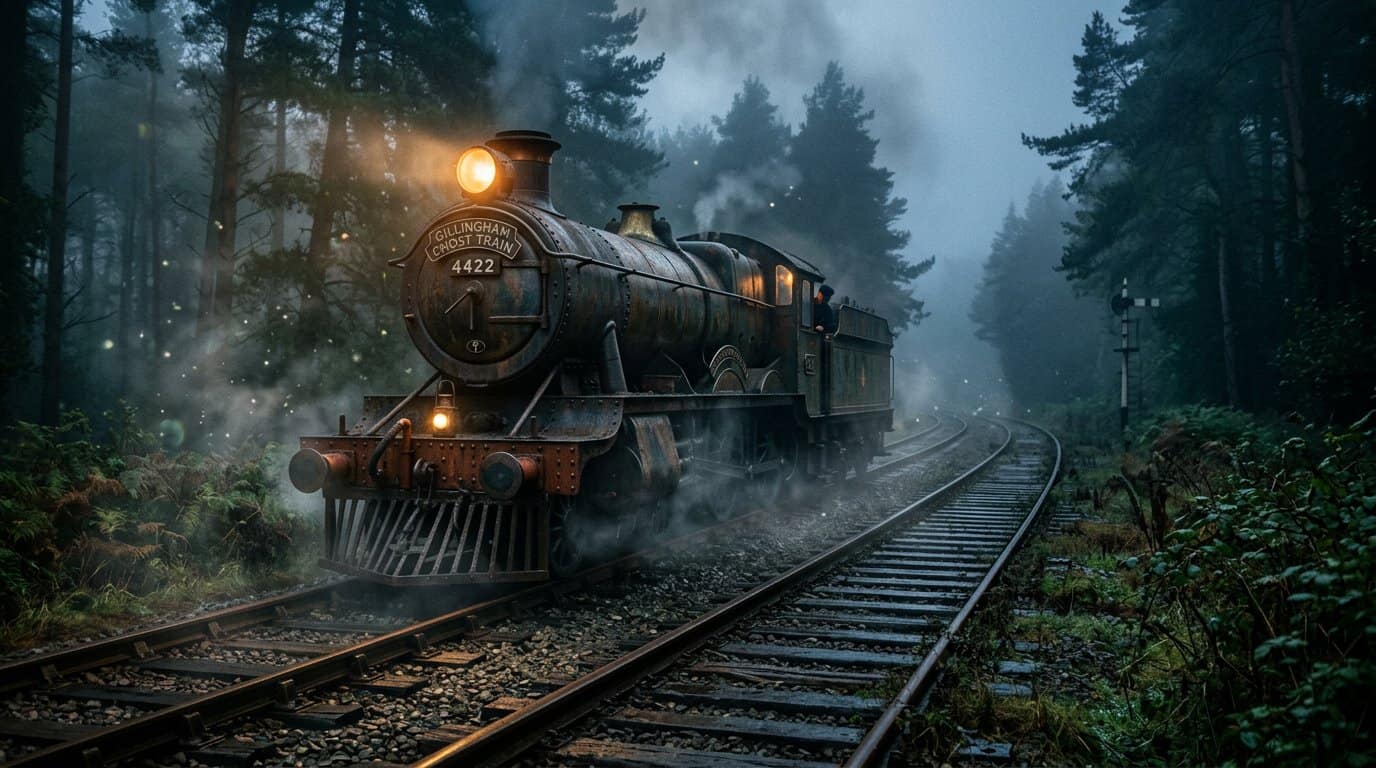
The Haunted Rails Of The Gillingham Ghost Train
As the sun dips below the horizon in Kent, a chilling silence often settles over the tracks near Gillingham railway station. Local whispers tell of the Gillingham ghost train, a spectral presence rooted in a tragic accident from 1885 that claimed the lives of two railway workers. Whether it is the rhythmic clatter of phantom wheels or the sighting of a mysterious figure in a red dress on the embankment, these stories have persisted for generations.
For many commuters, the mystery bridges the gap between historical tragedy and modern sightings that defy easy explanation. While some suggest these encounters are merely tricks of the light or echoes of the past, the consistency of the reports keeps the legend alive. Exploring the thin line between documented history and the unexplained offers a fascinating glimpse into one of the region’s most enduring railway mysteries.
Key Takeaways
- The Gillingham ghost train legend is rooted in a documented 1885 tragedy where two railway workers were killed in a tunnel due to poor visibility caused by thick steam and soot.
- Persistent sightings of a ‘Girl in Black’ near Woodlands Road and a ‘Girl in Red’ on the embankment suggest a residual haunting linked to the Victorian-era accidents on the line.
- Modern railway staff and commuters continue to report unexplained phenomena, including phantom steam engine sounds, disembodied footsteps, and sudden temperature drops near the station tunnels.
- While skeptics attribute these encounters to optical illusions and acoustic echoes, the consistent nature of eyewitness testimony over several decades maintains the site’s reputation as a paranormal landmark.
Tragic Origins In The Gillingham Tunnel
The legend of the Gillingham ghost train finds its somber roots in a real world disaster that occurred on December 12, 1885. On that cold winter day, a group of railway platelayers was performing routine maintenance deep within the confines of the Gillingham tunnel. These men worked in a high pressure environment where safety depended entirely on their ability to hear and see oncoming traffic. However, the unique geography of the tunnel created a dangerous trap that would soon lead to a loss of life. Historical records from the period detail how the routine shift turned into a scene of confusion and terror for the crew on site.
Environmental factors played a decisive role in the tragedy as thick clouds of steam and heavy soot filled the narrow passage. Because coal engines produced immense amounts of smoke, the visibility inside the tunnel was often reduced to almost nothing. When a locomotive roared into the darkness, two of the workers became disoriented by the echoing noise and the blinding vapors. They mistakenly stepped onto the wrong track while trying to avoid the oncoming engine, placing them directly in the path of the speeding train. This mechanical and environmental failure resulted in a fatality that left a lasting mark on the local community.
The sheer intensity of the accident is what many believe fueled the subsequent reports of paranormal activity near the tracks. Local historians note that the suddenness of the event left a lingering sense of unrest that has persisted for over a century. While skeptics might point to the natural echoes and shadows of the tunnel, the specific details of the 1885 tragedy provide a hauntingly accurate framework for the sightings reported by modern witnesses. Much like the Victorian terror of other urban legends, it is this blend of documented railway history and unexplained encounters that keeps the story of the phantom locomotive alive. Have you ever felt an unexplainable chill while standing near an old railway line, or do you believe these stories are simply echoes of a tragic past?
The Girl In Black At Woodlands Road
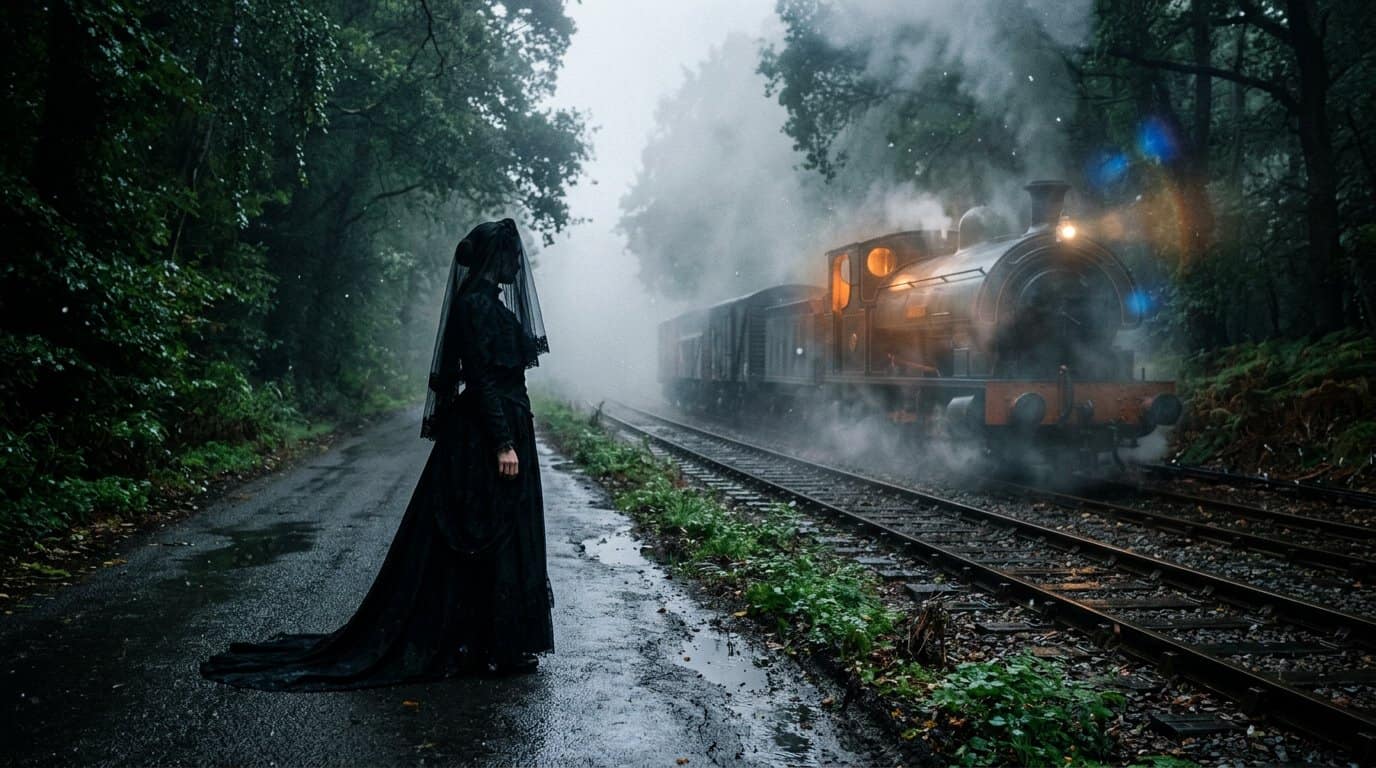
One of the most chilling accounts associated with the Gillingham ghost train involves a young girl in black who frequents the area near the Woodlands Road railway bridge. Local walkers often report seeing her standing perfectly still as if she is waiting for someone to arrive on a late-night service. As people approach her, she does not run away or vanish immediately like a typical apparition might. Instead, she slowly turns toward the passerby with a look of deep sorrow on her face. Many witnesses have described her clothing as being from a much earlier era, possibly the late Victorian period, which aligns with the timing of several historical railway accidents in the region.
The most unsettling aspect of these encounters is the specific phrase the young girl is said to utter before she disappears. Eyewitnesses have consistently told local researchers and historians that she asks, “Is he coming home yet?” in a quiet, melodic voice. Before the startled witness can offer a response or ask who she is looking for, the girl fades into the shadows of the bridge or simply vanishes into the brickwork. This repetitive behavior suggests a residual haunting, where a spirit is trapped in a loop of grief and anticipation. It has led many to wonder if she is the daughter of one of the platelayers who tragically lost their lives in the nearby tunnel in 1885.
While skeptics might suggest these sightings are merely tricks of light and shadow under the bridge, the consistency of the testimony is difficult to ignore. The specific details of her dress and the heartbreaking nature of her question have remained unchanged across decades of reports from different people. Journalistic accounts from the mid-twentieth century mirror the stories told by modern residents, suggesting that this figure is a permanent fixture of the area. Whether she is a memory etched into the environment or a soul still waiting for a father who never returned, she remains the most poignant mystery of the local tracks. Have you ever encountered a figure near the railway that seemed out of place, or do you believe these sightings are simply echoes of a tragic past?
Shadowy Figures And The Red Embankment Ghost
Modern station staff at Gillingham have reported unsettling experiences that move beyond simple campfire stories. Late at night, when the platforms are nearly empty, workers have described the sensation of being watched by unseen eyes from the shadows of the historic architecture. Some employees recount hearing the distant sound of heavy footsteps on the gravel where no one should be walking. These accounts often center around the station tunnels, where the air seems to grow heavy and cold without any logical explanation. While these moments are fleeting, they leave a lasting impression on those tasked with maintaining the grounds after the sun goes down.
One of the most enduring mysteries involves a girl in red seen wandering the embankment near the tracks. Local witnesses and railway enthusiasts have described a girl in a vibrant red dress who appears briefly before vanishing into the foliage. This sighting is frequently linked to the tragic history of the line, specifically the fatal 1885 accident where two railway workers lost their lives in the nearby tunnel. Much like the chilling Hinterkaifeck farm mystery, the contrast of the bright red against the dark, industrial backdrop of the tracks makes for a chilling image that has persisted in local lore for generations. These reports are often delivered with a sense of genuine wonder rather than fear, suggesting a peaceful but persistent presence.
A journalistic look at these phenomena requires us to consider how light and shadow interact with the aged structures of the station. Historic railway stations are filled with reflective surfaces, Victorian ironwork, and shifting artificial lights that can easily create optical illusions. When steam or fog rolls in from the surrounding Kent countryside, it can distort shapes and give the appearance of movement where none exists. However, the consistency of the descriptions regarding the red figure suggests there may be more to the story than just tricks of the eye. Do you believe these sightings are echoes of the past, or is our imagination simply filling in the blanks of a dark station night?
The Lasting Legacy of Gillingham’s Phantom Rails
The legend of the Gillingham ghost train serves as a fascinating bridge between Kent’s industrial past and its modern identity. While the tragic events of 1885 provide a sobering historical anchor, the continued sightings of red figures and phantom lights keep the mystery alive for new generations. This blend of documented railway accidents and unexplained phenomena ensures that the story remains more than just a campfire tale. It is a piece of living folklore that honors those who lost their lives while acknowledging the strange energy that seems to linger near the tracks.
Witness reports over the years have transformed these tracks into a site of profound curiosity for locals and paranormal enthusiasts alike. Whether these experiences are echoes of the Victorian era or simply tricks of light and shadow in the damp tunnels, they reflect a deep connection to the town’s heritage. By examining the chronological accounts of those who have stood on the embankments, a pattern of sightings emerges that is difficult to dismiss entirely. The Gillingham tunnel remains a place where the barrier between the past and the present feels remarkably thin.
Every story added to this local legend helps to paint a clearer picture of what might be happening in the quiet hours of the night. If you have ever caught a glimpse of something unusual near the Gillingham station or have a theory about the girl in the red dress, your perspective is an essential part of this ongoing investigation. Sharing these personal accounts allows the community to explore the boundaries of the known world together. Some investigators even attempt to capture whispers from the void using recording equipment to see if the spirits of the 1885 tragedy still have something to say. Much like phantom hitchhiker legends, what do you believe is truly haunting the rails of Gillingham, and have you ever felt a sudden chill while waiting for the last train home?
Frequently Asked Questions
1. What is the origin of the Gillingham ghost train legend?
The legend stems from a tragic accident on December 12, 1885, when two railway workers lost their lives inside the Gillingham tunnel. These men were performing routine maintenance but became disoriented by thick steam and soot, leading to a fatal encounter with an oncoming locomotive.
2. Who is the mysterious figure in the red dress seen near the tracks?
Local witnesses often report a woman wearing a red dress standing on the embankment near the station. While her identity remains a mystery, her presence is frequently linked to the spectral activity reported by commuters and railway staff in the area.
3. Why was the Gillingham tunnel so dangerous for workers in the 1800s?
The tunnel was a hazardous environment because coal engines filled the narrow space with blinding smoke and deafening noise. These conditions made it nearly impossible for workers to see or hear approaching trains, creating a deadly trap during maintenance shifts.
4. What kind of paranormal activity do people report today?
Many people describe hearing the rhythmic clatter of phantom wheels and the sound of a steam engine when no modern trains are scheduled. Others claim to see shadowy figures and feel a chilling silence that settles over the tracks as the sun begins to set.
5. Is there historical evidence to support the ghost train stories?
Historical records confirm that a real world disaster occurred in the Gillingham tunnel during the winter of 1885. These documented fatalities provide a factual foundation for the sightings and stories that have persisted for over a century.
6. Can the sightings be explained by natural causes?
Some skeptics suggest the encounters are merely tricks of light or echoes bouncing off the tunnel walls. However, the consistency of the descriptions and the deep connection to the 1885 tragedy keep the mystery alive for those who experience the phenomena firsthand.