The Whistling Hills Phenomenon: Exploring Nature’s Ghostly Choir
When a solitary traveler stands on a rugged mountain ridge, a gentle breeze can sometimes transform into a haunting, beautiful melody that seems to rise straight from the earth itself. This captivating experience is known as the whistling hills phenomenon, a rare natural mystery where the terrain acts as a giant, wind-driven musical instrument. For centuries, explorers and locals alike have reported hearing these phantom flutes echoing through narrow canyons and perforated rock formations, often attributing the eerie sounds to wandering spirits or ancient magic.
While modern physics explains that wind flowing over sharp rocky edges creates a natural acoustic loop, the sheer perfection of these earthly melodies leaves plenty of room for wonder. Some geographical formations produce tones so complex and deliberate that it is easy to understand why many still question if something more mysterious is at play. Whether it is simply a masterclass in natural wind dynamics or a deeper, unexplained harmony between the earth and the air, these singing hills continue to enchant anyone lucky enough to hear them.
Key Takeaways
- The whistling hills phenomenon is driven by aeolian sound, where wind sweeping across sharp rock formations creates tiny air vortices and natural acoustic feedback loops to produce continuous musical tones.
- Because these eerie, omnipresent melodies often mimic human wails, they trigger profound psychological responses of vulnerability and have inspired centuries of supernatural folklore.
- Famous geographical locations like the Mojave Desert and the Scottish Highlands act as giant natural flutes, offering an immersive sensory experience that bridges fluid dynamics with ancient mystery.
- Despite clear scientific explanations, the intense emotional weight and deliberate complexity of these environmental sounds continue to challenge our understanding of natural acoustics.
Psychological Impact Of The Whistling Hills
Imagine walking through a quiet mountain pass when a sudden, mournful melody fills the air around you. The whistling hills phenomenon creates a deeply unsettling psychological experience for anyone lucky enough to hear it. Because the sound seems to come from everywhere at once, listeners often report a profound sense of isolation and vulnerability. These acoustic anomalies wrap around the traveler, creating an immersive sensory event that feels distinctly different from a typical visual haunting. The sheer unpredictability of these wind-driven tones leaves many people feeling as though the earth itself is trying to communicate.
It is easy to see why these disembodied tones have inspired countless local ghost stories over the centuries. Folklore researchers often note that communities living near these acoustic hotspots frequently develop legends of wandering spirits or lost souls crying out from the rocks. When the wind hits just the right speed to trigger the natural acoustic feedback, the resulting wail sounds strikingly human. This auditory illusion tricks the brain into perceiving a genuine paranormal encounter, blurring the line between natural acoustics and the supernatural. Even the most hardened skeptics admit that standing alone in the dark while the hills sing around them is enough to make anyone second-guess their beliefs.
The setting can shape the experience as much as the sound itself. In a narrow ravine, a note may bounce between rock walls and seem to travel alongside a walker. Out on an exposed ridge, the same kind of whistle may fade as soon as the listener turns toward it. When the source is hidden behind a rock face, the mind has little visual information to match with the sound, so it can feel as if the melody has no clear direction. That gap between what the ears detect and what the eyes can confirm gives ordinary wind a remarkable power to unsettle.
While wind patterns and natural echoes provide a logical explanation, the intense emotional reaction these sounds trigger remains a fascinating mystery. The psychological weight of the whistling hills reminds us that we still have much to learn about how our minds interpret the unseen world. Could there be a deeper, unexplained energy resonating through these ancient rock formations alongside the passing breeze? We would love to hear your thoughts on this eerie auditory phenomenon in the comments below. Tell us if you have ever experienced an unexplained environmental sound that made you question reality.
Fluid Dynamics Behind The Ghostly Tones
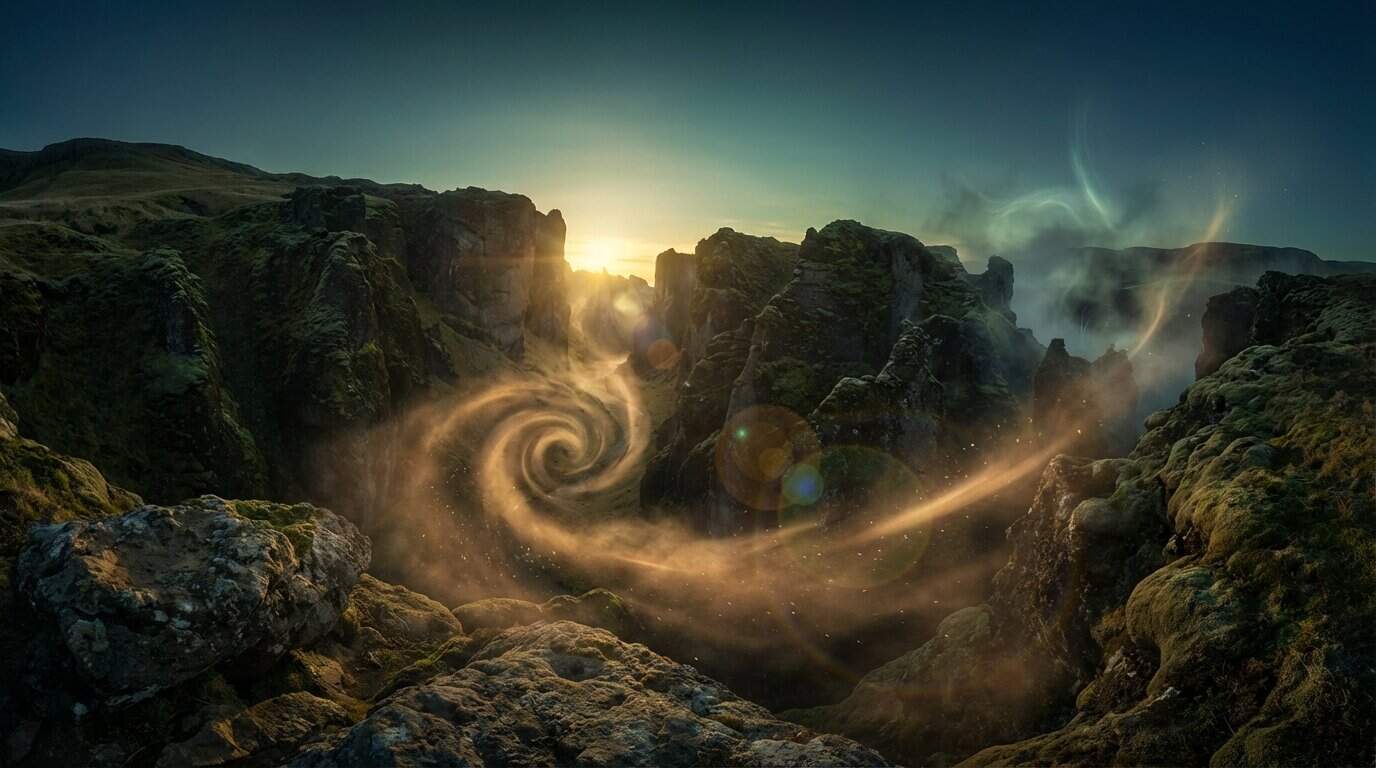
The haunting melodies of the whistling hills begin with a fascinating process known as aeolian sound. Think of the rocky terrain as a colossal, invisible flute carved by nature over thousands of years. When strong gusts of wind sweep across sharp mountain ridges and squeeze through narrow rock gaps, the moving air gets violently sliced apart. According to physicists who study fluid dynamics, this disruption causes the air to spin into tiny, invisible tornadoes called vortices. As these swirling pockets of air break away from the rocks, they create rhythmic vibrations that human ears interpret as a continuous musical tone.
This shedding of air pockets alone is not enough to produce the ghostly wails that terrify and mesmerize isolated travelers. The real acoustic magic happens through a feedback loop, which works exactly like blowing a gentle breath over the open mouth of a glass bottle. If the rhythm of the swirling wind perfectly matches the natural echo of a nearby cave or hollowed rock formation, the sound becomes heavily amplified into a piercing cry. Researchers studying auditory anomalies note that this natural amplification causes profound psychological effects on anyone caught in the area. The resulting phantom chorus feels so deliberate and mournful that it is incredibly easy to understand why locals often attribute the sounds to unseen spirits rather than mere weather.
The pitch and strength of a whistle can shift as the wind changes direction or speed. A gust that meets a narrow opening at one angle may set up a steady note, while a weaker or more scattered flow may produce only a brief hiss. Nearby surfaces also matter: a hollow, a crack, or a second rock wall can reflect sound back toward its source and affect how clearly it carries. These small changes help explain why a hillside may seem silent for hours and then suddenly begin to sing when the weather turns.
Even with a solid scientific understanding of these acoustic anomalies, the sheer emotional weight of the experience remains deeply unsettling. Geologists can pinpoint the exact mechanics of moving air, but they struggle to explain why these specific frequencies trigger such primal fear in the human mind. Paranormal researchers often suggest that these unique geological formations might actually act as natural receivers for unseen environmental energies we do not yet fully comprehend. Could these ancient rocky monuments be capturing something far more mysterious than just a passing weather system? One must wonder if visitors who brave these desolate valleys ever truly leave without feeling like the howling hills were trying to whisper a forbidden secret.
Real-World Examples Of Whistling Landscapes
The earliest recorded encounters with these auditory mysteries date back centuries, with travelers reporting eerie, disembodied melodies echoing through desolate mountain passes. One famous historical example is the ancient whispering rocks of the Mojave Desert, where early explorers documented hearing distinct, choral-like voices carried on the wind. (Insert a visual of jagged, wind-carved desert rock formations here to show readers the exact environment that creates these acoustic anomalies.) Historical journals from the 1800s describe how wind passing through these narrow, perforated stones created a haunting acoustic feedback that terrified weary travelers. While modern physicists explain this simply through wind catching on sharp edges, the sheer emotional impact of the sound leaves many wondering if these ancient stones hold deeper, unexplained energies.
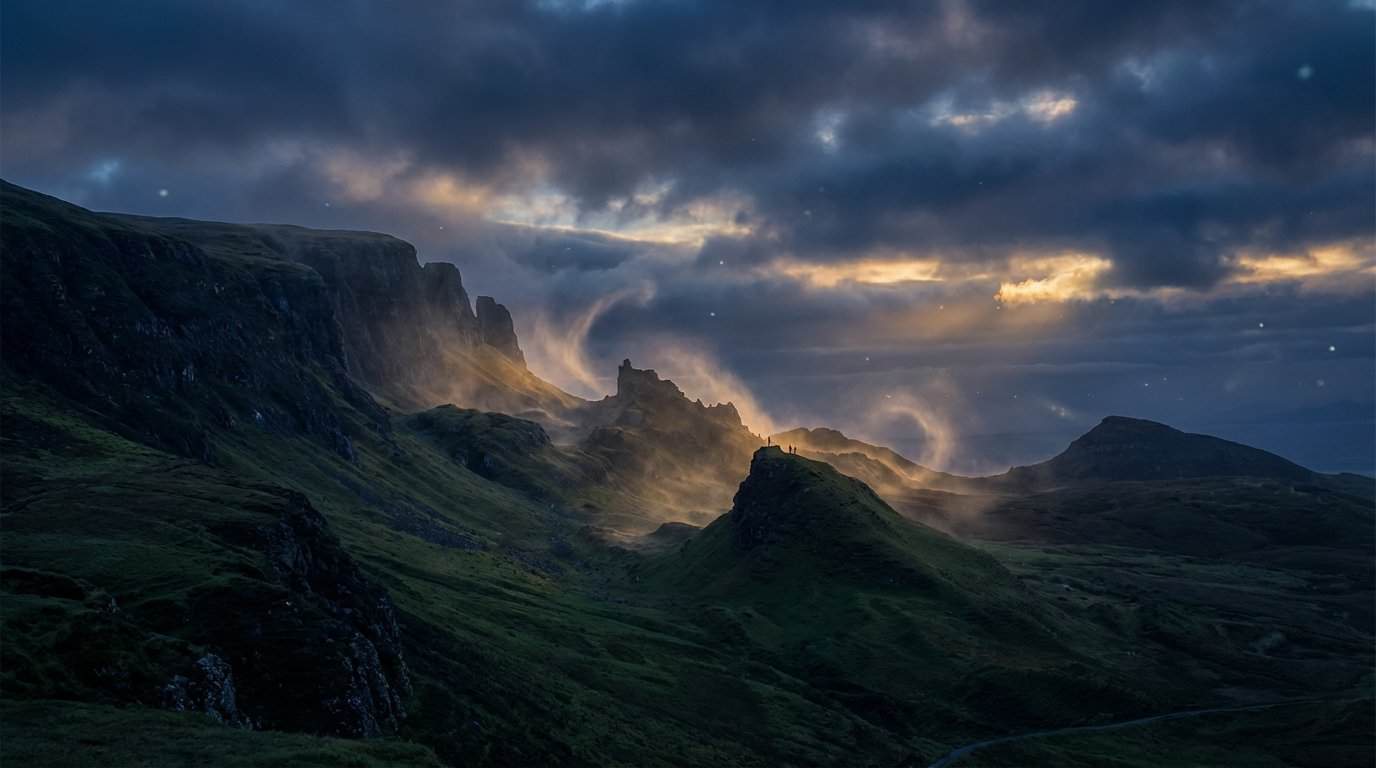
Moving into the twentieth century, researchers began documenting similar acoustic anomalies across global locations, including the remote whistling ridges of the Scottish Highlands. Locals in these areas have long shared tales of phantom musicians playing sorrowful tunes just out of sight. (This is an ideal spot for an internal link to related geographical mysteries, such as our guide on unexplained acoustic phenomena in deep valleys.) Acoustic engineers visiting the Highlands noted that the specific shape of the valleys acts like a giant flute, amplifying the wind into a stable, musical tone. However, the deeply psychological effect these localized sounds have on visitors suggests there is a profound connection between human perception and these strange earthly formations.
Landscape details can help explain why similar reports arise in places that look very different. A dry desert ridge may expose narrow gaps between rocks, while a green mountain valley may funnel air along a long, curved slope. Trees can break up a steady gust, or their leaves and branches can add rustling sounds that make it harder to identify a whistle’s source. In either setting, the shape of the land and the direction of the wind combine to create an acoustic experience that may last only a few moments.
Today, explorers and acoustic hunters continue to seek out these rare whistling hills to experience the sensory thrill of an invisible haunting. The scientific community relies on fluid dynamics to explain how air oscillating against a sharp rocky edge produces these ghostly notes. Yet, anyone who has stood alone in a whistling canyon knows that the clinical explanation rarely captures the chilling, otherworldly presence felt at the site. It is entirely possible that these unique environments act as natural receivers for frequencies we do not fully understand yet. Have you ever visited a remote location and heard a strange, musical wind that felt like it was trying to tell you a secret?
When the Road Seems to Climb
Some hills produce a different kind of mystery. At a gravity hill, a vehicle placed in what appears to be a downhill position may seem to roll uphill, or water may appear to flow against the slope. These places are sometimes called mystery hills or magnetic hills. Their strange reputation can suggest that gravity has changed or that a magnetic force is pulling objects upward. The more ordinary explanation is often an optical illusion created by the surrounding landscape, though each site needs to be considered on its own terms.
The eye judges whether a road is uphill or downhill by comparing it with nearby visual cues. A clear horizon gives the brain a useful reference, but a ridge, rising ground, or obstructed horizon can remove that guide. Trees that lean, distant hills, and buildings set at unusual angles may also distort the apparent level of the scene. When the road’s true downhill slope is hard to see, a slight descent can look like a climb. A parked object then appears to roll uphill, even though it is moving down the slope under ordinary gravity.
That is why a photograph alone may not settle what is happening at a reported gravity hill. Camera angle can flatten the land, and a nearby road that really rises may make a second section look lower by comparison. Careful observation means checking the road from more than one direction and looking for landmarks that reveal the actual grade. A small ball or a bottle may seem to roll uphill, but the result can be misleading if the surface is uneven or the object is pushed slightly at the start. The visual impression is compelling, but it is not by itself evidence that gravity has reversed.
A magnetic hill is often described as a place where a vehicle is drawn uphill by an unusual force. Yet the name does not establish that magnetism is responsible. A reliable investigation would need to separate the apparent slope from the measured one and consider ordinary influences such as the road’s grade and the vehicle’s movement. Some locations may also have a neutral-looking stretch where the slope is difficult to judge, making the transition seem especially uncanny. These landscape puzzles are distinct from whistling hills, but both show how terrain can make familiar natural forces feel unfamiliar.
Where Science Meets the Singing Landscape
The whistling hills phenomenon stands as a perfect example of where natural science and ancient mystery beautifully intersect. Researchers have clearly shown how wind moving through narrow rocky gaps creates these haunting melodies through natural acoustics. However, knowing the physical mechanics does not strip away the profound psychological impact these tones have on anyone who hears them. Standing alone in a remote valley while the earth literally sings remains a deeply moving sensory experience. The ground itself seems to hold a voice, blurring the line between a simple breeze and a conscious whisper.
This unique auditory anomaly continues to captivate those who look beyond standard explanations for environmental sounds. While geologists point to wind and stone, many visitors report feeling an undeniable presence carried within these ghostly frequencies. It is entirely possible that these specific acoustic environments act as a bridge to phenomena that science cannot yet measure. Unlike visual hauntings that rely on fleeting shadows, these immersive soundscapes surround the listener completely and leave a lasting emotional mark. The lingering magic of the hills suggests that the natural world still hides incredible secrets waiting to be heard.
The wild places of the world are full of strange acoustic mysteries, and personal encounters often provide the best clues to understanding them. Explorers and casual hikers alike frequently stumble upon unexplained sounds that defy easy classification. Anyone who has ever heard a haunting melody or an unusual noise while out in nature is encouraged to share their story. Dropping a comment below about a strange environmental sound helps build a community of curious listeners. A single unique auditory encounter might just hold the missing piece to unraveling these fascinating natural enigmas.
Frequently Asked Questions
1. What exactly is the whistling hills phenomenon?
The whistling hills phenomenon is a rare natural mystery where the terrain acts as a giant musical instrument. When a gentle breeze flows over sharp rocky edges and narrow canyons, it creates beautiful and haunting melodies. Modern physics points to a natural acoustic loop, but the sheer perfection of these tones leaves plenty of room for wonder.
2. Does science explain how these hills make music?
Modern physics explains that wind flowing over specific perforated rock formations creates a natural acoustic loop. However, the tones produced are sometimes so complex and deliberate that it feels like a deeper harmony is at play. Even with a scientific explanation, the earthly melodies sound almost too perfect to be purely accidental.
3. Why do people feel unsettled when they hear the whistling hills?
The phenomenon creates a deeply immersive sensory event because the sound seems to come from everywhere at once. Listeners often report a sudden and profound sense of isolation and vulnerability when these mournful melodies wrap around them. The sheer unpredictability of these wind-driven tones leaves many feeling as though the earth itself is trying to communicate.
4. Are there ghost stories associated with the singing landscapes?
For centuries, explorers and local communities have attributed these eerie phantom flutes to wandering spirits or ancient magic. Folklore researchers often note that these disembodied tones inspire countless local ghost stories. It is easy to understand why communities might believe a supernatural force is responsible for such hauntingly beautiful music.
5. Can anyone experience this natural mystery?
Anyone lucky enough to visit these rugged mountain ridges under the right weather conditions can experience the singing hills. The phenomenon requires a specific combination of wind speed and geological formations to produce the phantom flutes. Travelers who seek out these narrow canyons are often rewarded with a breathtaking encounter that blends natural wind dynamics with unexplained magic.
6. Do the hills always play the same melody?
The melodies change constantly depending on the strength and direction of the wind passing through the perforated rocks. At times, the environment might produce a gentle hum, while a stronger gust can transform the sound into a complex and mournful song. This sheer unpredictability is exactly what makes the experience feel like an ancient and living performance.
7. Is it possible that the whistling hills are more than just wind?
While acoustics play a major role, many wonder if there is a deeper and unexplained harmony between the earth and the air. The geographical formations produce tones so deliberate that they invite open-minded skepticism about purely scientific explanations. It is incredibly tempting to believe that these singing hills hold ancient secrets yet to be uncovered.