Indus Script Mystery: What The Ancient Signs Still Hide
For more than a century, tiny seals and clay tablets have preserved the mystery of the Indus script. Their carefully carved signs belonged to one of the world’s earliest urban civilizations, yet no one can say with confidence how they sounded, which language they record, or whether they form writing in the usual sense. The script remains undeciphered, leaving behind a puzzle that is both ancient and deeply personal: messages created by people whose voices have been silent for thousands of years.
Researchers have found patterns in the signs, including likely reading directions and repeated combinations, but patterns alone have not revealed their meaning. Proposed links to known languages and hidden codes continue to fuel debate, while the evidence calls for caution. Somewhere between solid archaeological clues and daring interpretation lies the possibility of recovering how the Harappans named their world, and what they wanted remembered.
Key Takeaways
- The Indus script remains undeciphered: researchers cannot securely identify its sounds, language, grammar, or even confirm whether it records full spoken language. Most inscriptions are too short, and no bilingual text has provided a reliable key.
- Archaeological evidence shows an organized sign system used across the Harappan world from roughly 2600 to 1900 BCE. Repeated sign combinations and probable right-to-left reading direction reveal structure, but they do not establish meaning.
- Theories linking the script to Dravidian, Indo-Aryan, Munda, religious symbols, or systems of identity and trade remain unproven. Any credible decipherment must explain the full range of inscriptions and fit linguistic and archaeological evidence.
- A longer inscription, bilingual artifact, or new archaeological context could unlock information about Harappan governance, trade, beliefs, identities, and language. Until then, interpretations must distinguish carefully between evidence and speculation.
Introduction To The Indus Script Mystery
For more than a century, the signs of the Indus, or Harappan, civilization have posed a simple but stubborn question: what do they say? This urban society flourished mainly between 2600 and 1900 BCE across parts of present-day Pakistan and northwestern India, leaving behind carefully planned cities, seals, pottery, tools, and short inscriptions. Yet the Indus script mystery endures because no proposed reading has gained broad acceptance. As of August 31, 2026, the script remains undeciphered, with no secure agreement about its sounds, words, grammar, or underlying language. Each small sign still raises the possibility that it preserves a lost story about one of the ancient world’s great civilizations.
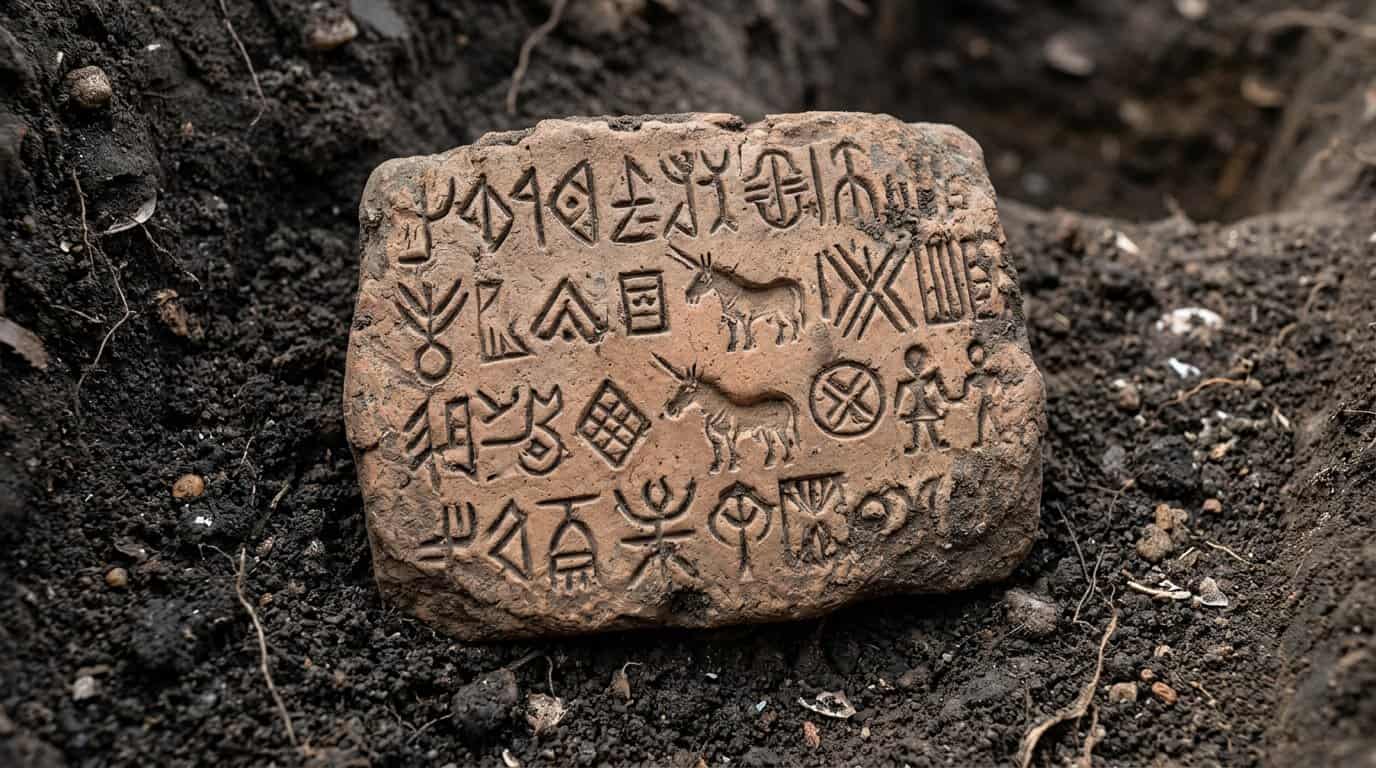
Most surviving examples appear on small seals, clay objects, pottery, metal items, and tablets, often showing a line of symbols beside animals or other images. Researchers have identified patterns in the signs, including recurring combinations and probable reading directions, but the inscriptions are usually so short that they offer few clues. Unlike some other ancient scripts, the Indus signs have not been matched with a clearly known bilingual text that could provide a reliable key. This has led to many proposed solutions, from links with known South Asian languages to theories that the symbols represent names, religious ideas, or an early form of record keeping. None has yet satisfied the full range of archaeological and linguistic evidence.
The mystery continues to capture public interest because a successful decoding could transform understanding of Harappan life. It might reveal how people governed cities, recorded trade, expressed beliefs, or described the identities of rulers and communities. It could also test intriguing connections found in archaeology and mythology. Careful study remains essential because a compelling pattern is not the same as a proven translation. The surviving signs may conceal a written language, a symbolic system, or something more complex than either possibility suggests. For now, the Indus script mystery remains an invitation to examine the evidence closely while asking what voices may still be waiting to be heard.
Harappan Signs And Their World
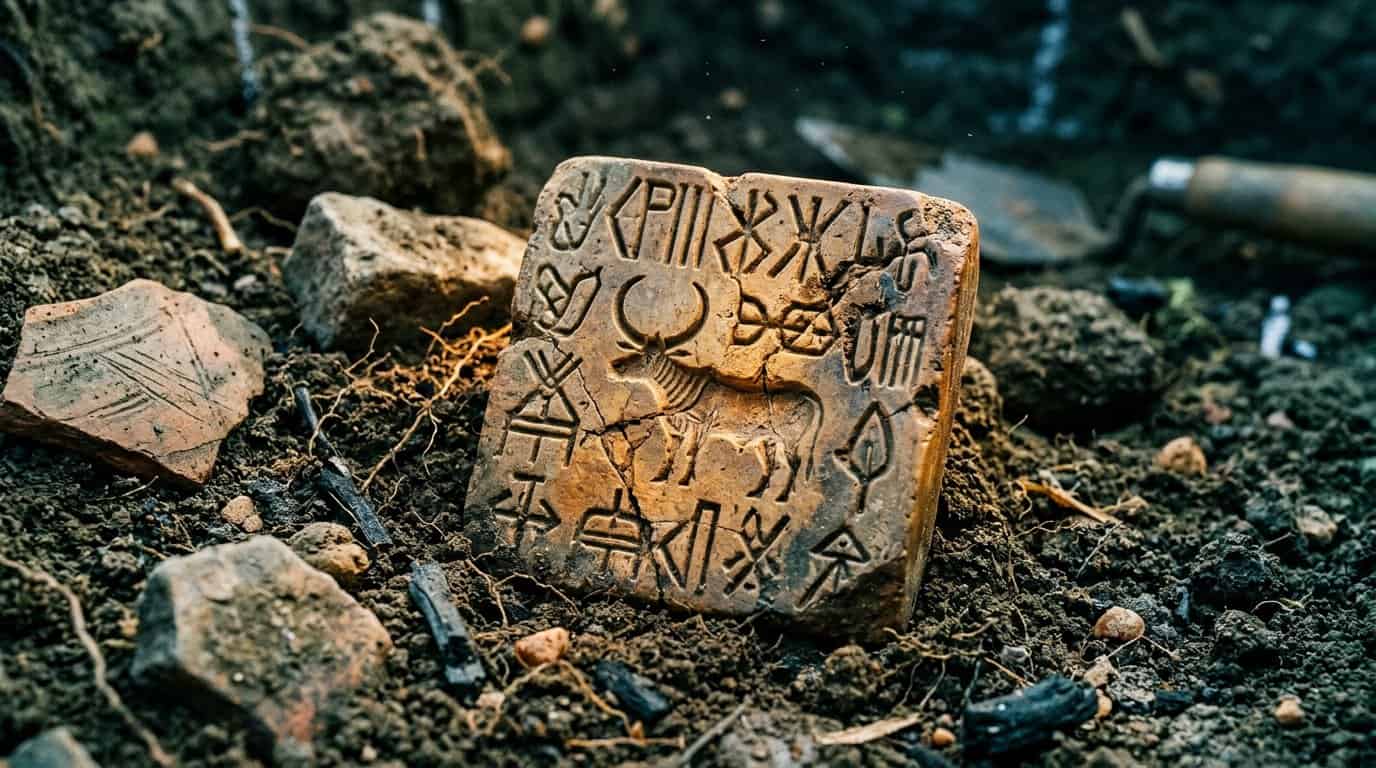
The Indus script appears across the Harappan world, from carefully carved steatite seals to small pottery marks pressed or painted by hand. Its main setting was the Mature Harappan period, about 2600 to 1900 BCE, although related signs appeared in earlier communities. A timeline and map would trace this world from major cities in present-day Pakistan and northwestern India to connected sites in Afghanistan, Iran, and beyond. Harappa and Mohenjo-daro are familiar names, but Dholavira, Lothal, and Rakhigarhi show how widely the sign system traveled.
These signs were not limited to one kind of object or one social setting. They appear on tablets, metal objects, jewelry, pottery, and other small items, suggesting that they may have served several purposes, from marking goods and identity to recording religious or political ideas. At Dholavira, a large signboard made from stone or gypsum blocks offers one of the most striking examples, even though its message remains unknown. Researchers have identified patterns in the order and placement of signs, and many believe the text was usually read from right to left. Yet no sign can be securely matched with a sound, word, grammar, or known language.
That uncertainty keeps the Indus script mystery alive without making every theory equally convincing. Proposed links to later South Asian languages, ancient religious symbols, and lost mythic traditions have attracted attention, but no decoding attempt has gained broad agreement among archaeologists, epigraphers, and historical linguists. A successful reading could reveal names, laws, trade records, beliefs, or stories from a civilization whose cities already show remarkable planning and craftsmanship. Readers can explore the wider setting through the internal article on the Indus Valley civilization, then consider what the silent signs might say about the people who created them.
Seals Symbols And Reading Direction
On thousands of Indus seals, a small group of signs sits above an animal image, creating one of archaeology’s most enduring puzzles. The signs repeat in different combinations, while the animals include the famous “unicorn,” humped bulls, elephants, and rhinoceroses. Many inscriptions are very short, often only a few symbols long, which makes them difficult to compare with longer writings from other ancient cultures. Researchers can identify recurring shapes and sign families, but no sign can yet be securely translated into a sound, word, or name.
Most specialists believe the script was usually read from right to left, based on the way signs are arranged and crowded at one end of an inscription. Studies of sign order also show that some symbols appear more often at the beginning, middle, or end of a sequence, suggesting that the system had rules rather than being a random collection of pictures. This pattern is useful evidence, but it is not a translation, and scholars still cannot agree on the language behind the writing. A schematic seal pattern helps show what researchers can observe without claiming to solve the mystery.
Labeled sign-pattern graphic: [animal image: “unicorn”] | [sign cluster: recurring middle signs] [terminal sign] ← probable reading direction, right to left
The relationship between the animals and the signs remains uncertain. The “unicorn” may have carried religious, political, or clan meaning, or it may simply have marked the identity of a workshop or owner. The text could record a name, title, offering, or place. Catalogs developed by epigraphers such as Iravatham Mahadevan and Asko Parpola have helped organize signs and compare their positions, yet the lack of a bilingual inscription keeps every full reading unproven. That gap has fueled bold decoding attempts and theories about the civilization’s language, but the strongest evidence still points to a complex, undeciphered system whose secrets may depend on finding a longer text or a new archaeological context.
Why Indus Script Decipherment Remains Unsolved
The Indus script remains undeciphered because its surviving messages are frustratingly brief. Most inscriptions contain only a few signs, often carved on seals, pottery, tools, and small tablets, while the longest known examples are still too short to reveal a full sentence or grammar. Researchers have identified recurring patterns and a probable right-to-left reading direction, but they cannot confidently determine the signs’ sounds, words, or underlying language. Unlike the Egyptian Rosetta Stone, no bilingual text has been found to match the Indus signs with a known language, and the limited number of surviving examples leaves little evidence for testing competing readings.
Several ideas have offered possible ways forward, but none has won broad agreement among archaeologists, epigraphers, and historical linguists. Linguistic proposals connect the signs with languages such as early Dravidian, Indo-Aryan, or Munda, while numerical theories suggest that some symbols recorded counts, measures, or economic information. Other researchers question whether the system represented full writing at all, proposing that the signs were symbols of identity, religion, or political authority rather than speech. These theories remain difficult to verify because the same sign can appear in different settings, and there is no secure translation against which a proposed reading can be checked.
Even so, the mystery is not empty of clues, and future discoveries could change the picture. Statistical studies, archaeological context, and comparisons with later South Asian languages may gradually reveal how the signs were organized. A longer inscription or bilingual artifact could provide the breakthrough that current evidence cannot. Readers interested in the wider puzzle can explore the site’s articles on lost ancient languages and other undeciphered scripts, where similar mysteries show why patience and evidence matter. If the Indus script is finally read, it could illuminate the civilization’s rulers, beliefs, trade networks, and perhaps the language spoken by one of the ancient world’s great urban societies.
What A Breakthrough Could Reveal
A reliable reading of the Indus script could turn silent objects into records of everyday life. It might show how Harappan cities were governed, whether officials used titles, and how social roles were organized across settlements from Pakistan to northwestern India. Trade records could clarify what moved through the region, from beads and metals to food and textiles, while personal names might reveal whether one language or several were used. Religious signs could also reshape ideas about ritual, sacred symbols, and figures later linked to South Asian traditions. For now, researchers can study patterns in sign order and placement, but no reading has won broad agreement.
The Dholavira signboard offers one of the most striking clues because its large symbols were meant to be seen from a distance, suggesting that writing could mark public space rather than appear only on small seals. Thousands of seals and sealings add another layer, showing repeated signs alongside animals and other images that may have identified people, institutions, goods, or places. A breakthrough could connect these objects to Mesopotamian records and help explain the Harappans’ long-distance relationships with neighboring cultures. It might even reveal whether distant traders recognized shared names, offices, or commercial rules. Yet the meaning of a symbol cannot be proven simply because it appears beside a familiar animal or within a promising pattern.
That uncertainty makes the mystery exciting and difficult at the same time. A proposed translation could inspire vivid stories about kings, priests, merchants, or forgotten myths, but untested readings can quickly turn speculation into modern mythology. Future discoveries, improved images, or new study of the Dholavira signboard and seal collections may confirm an old theory, revise it, or show that the signs served several purposes instead of recording ordinary speech. The strongest account will be the one that explains many inscriptions consistently, fits archaeological evidence, and survives comparison with Mesopotamian and other neighboring records. Until then, the Indus script remains an invitation to ask better questions rather than a blank space ready for any answer.
Conclusion On The Indus Script Mystery
The Indus script remains undeciphered, and no proposed reading has gained broad agreement among archaeologists, epigraphers, and historical linguists. Yet the surviving signs are not random marks. Repeated symbols, recurring sign positions, and probable reading directions reveal an organized system used by people across the Indus Valley civilization. Found on seals, pottery, tablets, and other objects dating mainly from about 2600 to 1900 BCE, these signs sit within a rich archaeological setting of planned cities, trade networks, religious imagery, and everyday life. That setting offers important clues, even though researchers still cannot securely identify the script’s sounds, language, or grammar. Like other ancient mysteries explored through archaeology and mythology, the Indus script invites careful investigation without requiring a sensational answer.
A future breakthrough could transform understanding of how Harappan communities governed cities, recorded goods, expressed beliefs, and connected with distant regions. The discovery of a bilingual inscription would be especially valuable because it might place known words beside the unknown signs, while a longer text could reveal patterns that brief inscriptions hide. New archaeological discoveries could also show how the symbols were used in daily life, offering context that isolated seals cannot provide. Which kind of evidence might finally unlock the Indus script: a bilingual inscription, a much longer text, or an unexpected archaeological discovery?
Why the Indus Script Still Resists Decoding
The Indus script mystery endures because its signs have survived while their meaning remains out of reach. Found on seals, pottery, tools, and small tablets linked to the Harappan civilization, the writing belongs mainly to the period from about 2600 to 1900 BCE. Researchers have identified repeated patterns, likely reading directions, and common sign positions, yet no interpretation has won broad agreement. Without a confirmed language, sound system, or bilingual inscription, even the most familiar symbols remain undeciphered.
Over the years, scholars have connected the script to possible Dravidian, Indo-Aryan, and other language traditions, while some theories have searched for links with neighboring civilizations. Many proposed readings fail because the inscriptions are usually very short, leaving too little evidence to test grammar or vocabulary. A genuine breakthrough could reveal names, beliefs, trade rules, political authority, or details about everyday life that archaeology alone cannot recover. Until then, the symbols offer an unusual meeting point between careful scientific study and the enduring human fascination with the unknown.
The mystery is therefore not proof of a lost mythology or an undiscovered empire, but neither is it a puzzle without value. Each seal and sign adds evidence about how Indus communities organized information, even when the message itself cannot yet be read. New discoveries, better digital analysis, or a bilingual inscription could change that picture, just as a single key once unlocked other ancient scripts. For now, the Indus script raises a central question: what might the civilization reveal about itself if its silent symbols finally found a voice?
Frequently Asked Questions
1. What is the Indus script mystery?
The Indus script mystery concerns the meaning of the symbols used by the Indus, or Harappan, civilization between about 2600 and 1900 BCE. Researchers have not yet established how the signs sounded, which language they represent, or whether they form a complete writing system in the usual sense.
2. Where has the Indus script been found?
Most examples come from sites across present-day Pakistan and northwestern India, including Harappa, Mohenjo-daro, Dholavira, and Lothal. The signs appear on stone seals, clay tablets, pottery, metal objects, and other small artifacts, often beside animals or symbolic images.
3. Why has the Indus script not been deciphered?
The inscriptions are usually very short, often containing only a few signs, which gives researchers too little context to identify grammar or meaning. No confirmed bilingual inscription, comparable to the Rosetta Stone, has been found, and the underlying language remains unknown.
4. Do researchers know which direction the Indus script was read?
Researchers have found evidence that many inscriptions were probably read from right to left, partly because signs often become more crowded toward one side of a seal. This pattern is useful, but reading direction alone does not reveal the sounds or meaning of the symbols.
5. Is the Indus script a real writing system or a set of symbols?
The question remains open, although repeated sign combinations, consistent patterns, and the wide use of inscriptions suggest that the system carried organized information. Some researchers argue that it recorded language, while others believe it may have worked more like a system of names, titles, or symbols used for identity and trade.
6. What languages might be behind the Indus script?
Proposals have linked the script to early forms of Dravidian, Indo-Aryan, or other lost languages, but none has gained broad acceptance. Linguists and archaeologists continue to test these ideas against sign patterns, ancient place names, and evidence from later South Asian languages, while recognizing that the evidence is incomplete.
7. Have any claims to decipher the Indus script been accepted?
No proposed decipherment has achieved secure agreement among specialists as of August 31, 2026. Scholars such as Iravatham Mahadevan and Asko Parpola have offered influential studies of the signs, while computational research has identified patterns. A convincing reading must explain the full body of evidence rather than a small selection of inscriptions.
8. Could the Indus script eventually be deciphered?
A breakthrough remains possible if archaeologists discover longer inscriptions, a bilingual text, or new evidence connecting the signs with a known language. Until then, careful study of artifacts, settlement patterns, and statistical sign analysis may reveal how the Harappans organized names, beliefs, trade, and memory, even if their exact words remain out of reach.