Devil’s Kettle Waterfall: The Science Behind Minnesota’s Disappearing Falls
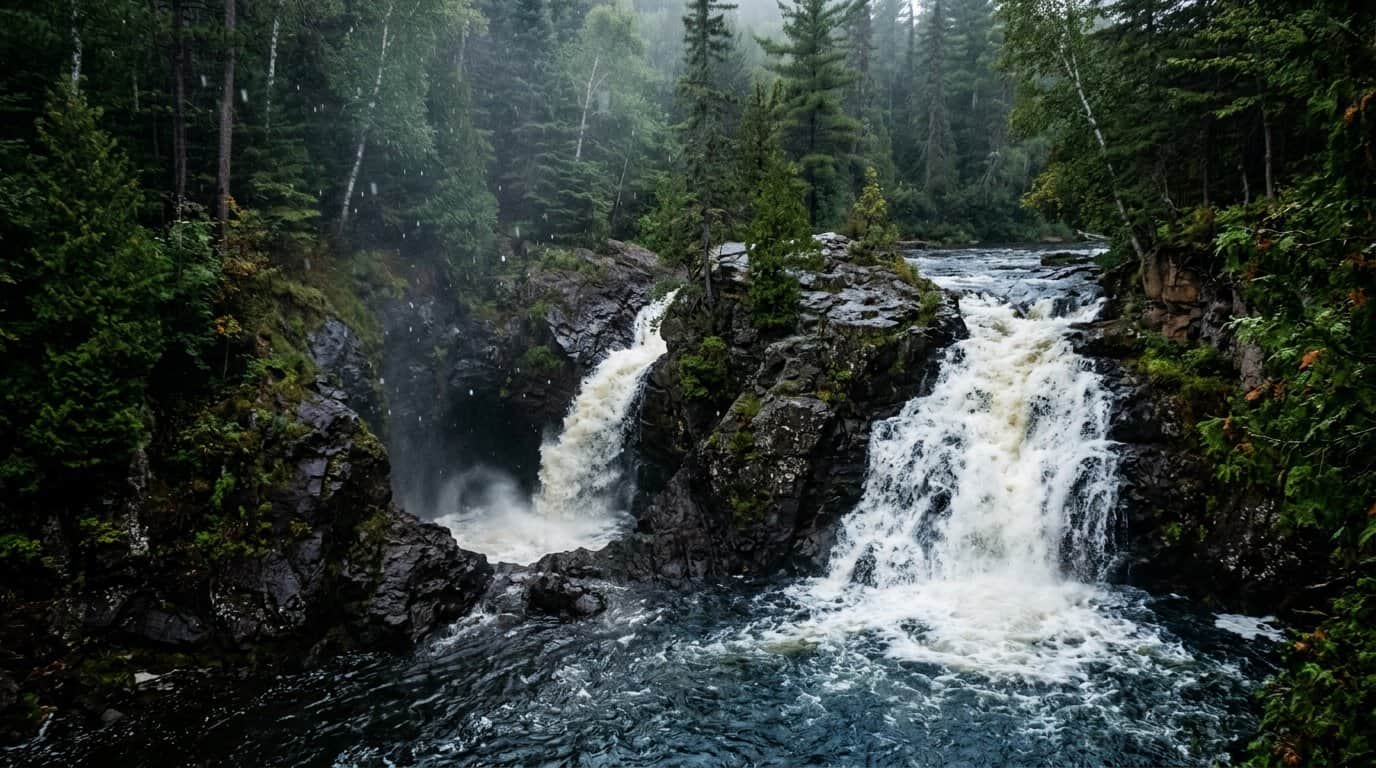
At Minnesota’s Judge C.R. Magney State Park, Devil’s Kettle Waterfall splits the Brule River into two startling paths. One side drops nearly 50 feet in a clear, roaring plunge, while the other disappears into a deep pothole carved into the bedrock. For generations, that vanishing stream has fueled one of the North Shore’s most enduring natural mysteries.
Devil’s Kettle is more than a strange landmark. It is a puzzle shaped by rushing water, fractured rock, and years of unanswered questions. Scientific tests suggest that the river continues downstream, yet the sight of water seemingly swallowed by the earth remains difficult to explain at a glance. The waterfall’s story lies where careful observation meets the lingering thrill of the unknown.
Key Takeaways
- Devil’s Kettle Waterfall in Judge C.R. Magney State Park splits the Brule River into a nearly 50-foot visible drop and a second branch that plunges into a deep pothole in volcanic bedrock.
- Water-flow measurements indicate that the disappearing branch travels through cracks and underground channels before rejoining the Brule River downstream; it does not permanently vanish or flow to a confirmed distant destination.
- Rushing water, trapped stones, erosion, and fractured rhyolite formed the pothole and hidden passages, while the unseen route and lost objects keep the waterfall’s natural mystery alive.
- The falls require a roughly one-mile hike each way with about 175 stairs and steep, potentially slippery terrain, so visitors should check conditions, wear sturdy footwear, and stay behind safety barriers.
Devil’s Kettle Waterfall Introduction
Devil’s Kettle Waterfall is one of the most unusual sights along Minnesota’s North Shore. It lies in Judge C.R. Magney State Park, near Grand Marais, where the Brule River splits around a rocky outcrop. One branch tumbles about 50 feet into the river below, while the other pours into a deep pothole carved into the rhyolite bedrock. From the viewing area, the second stream seems to vanish without a visible outlet.
The scene has turned an ordinary waterfall into a long-running geological mystery. Visitors have watched logs, leaves, and other objects disappear into the kettle, raising an obvious question: where does the water go? The Brule River continues toward Lake Superior, and geological studies and public experiments have offered strong evidence that the missing flow rejoins the river downstream through hidden channels. Even so, the route beneath the rock remains out of sight, allowing uncertainty to remain part of the waterfall’s appeal.
Reaching Devil’s Kettle requires about a one-mile walk each way, including roughly 175 stairs and a steep change in elevation. The effort leads to a setting where rushing water, dark rock, and forest make the mystery feel immediate rather than distant. The strongest explanations focus on erosion, fractures, and underground passages, not paranormal forces. Even so, the unusual formation invites careful questions. Devil’s Kettle offers a chance to weigh what the evidence shows against what the bedrock keeps concealed.
Brule River Falls And Park Setting
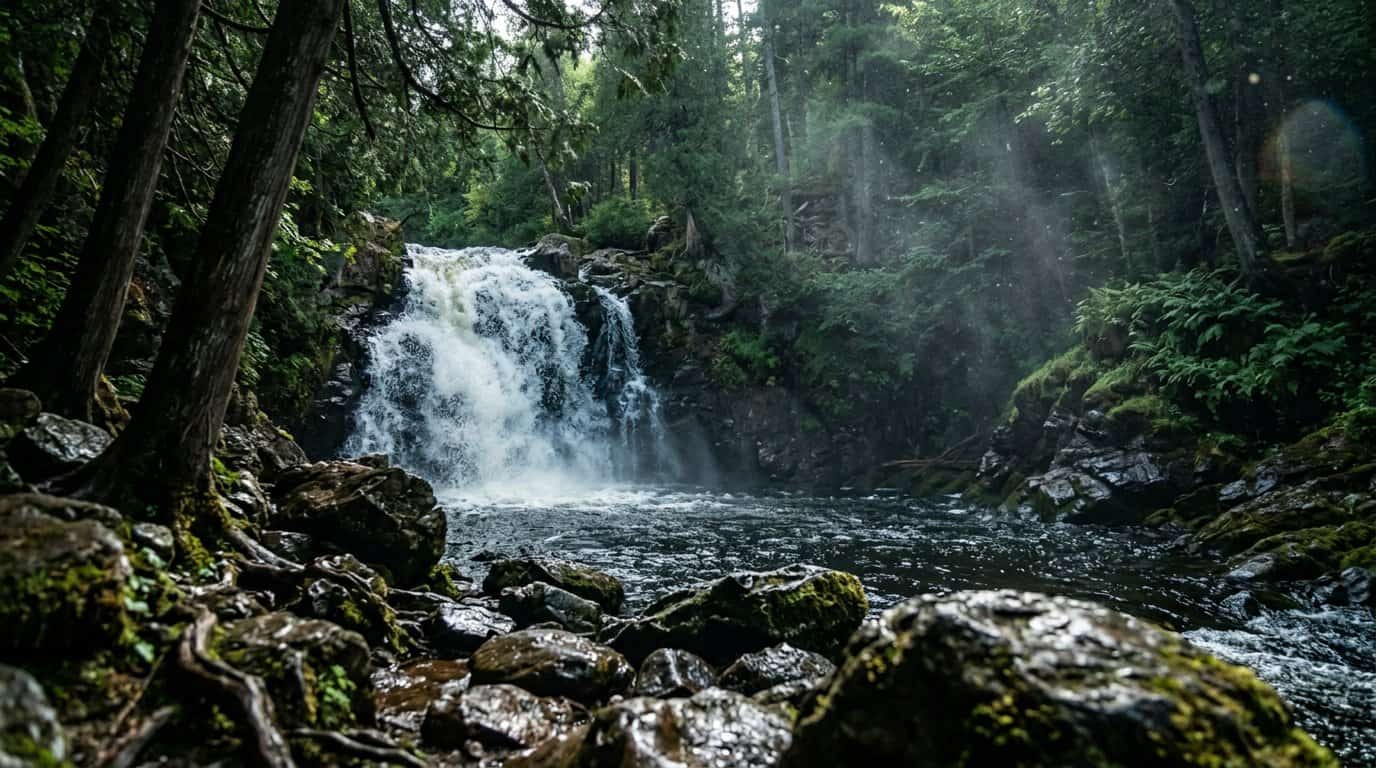
Devil’s Kettle Falls lies on the Brule River in Judge C.R. Magney State Park, about 25 miles northeast of Grand Marais along Minnesota’s North Shore. The waterfall splits around a rocky formation, with one side dropping normally and the other vanishing into a deep pothole. The visible branch falls roughly 50 feet through terrain shaped by ancient volcanic lava flows and dark basalt bedrock. Forest, cliffs, and rushing water give the overlook a remote feeling, even though the falls are a well-known destination.
Reaching the overlook requires a one-mile hike each way, with approximately 175 stairs and about 400 feet of elevation change over the round trip. The return climb can feel demanding, so visitors often allow extra time for rest, changing weather, and slippery steps. A trail photograph showing the stairway and forest path, paired with a simple park map, would help readers understand the scale of the walk before visiting. The final viewpoint brings both branches into view, making it easier to see why the disappearing water has drawn so much attention.
The setting frames the central mystery without requiring a supernatural explanation. The Minnesota DNR has described experiments and water measurements suggesting that the missing flow continues through fractured rock and rejoins the Brule River downstream, although the exact underground path remains difficult to observe. The volcanic bedrock contains natural cracks, channels, and potholes that could hide the route, while the falls leave visitors with an immediate visual puzzle. From the overlook, the question is simple but compelling: where does the water go after it slips beneath the surface?
The Disappearing Water Mystery
Visitors began asking the same question after watching one branch of Devil’s Kettle Falls plunge into the pothole: where does the water go? The waterfall sits on the Brule River in Judge C.R. Magney State Park, and nearby rock walls hide whatever happens below the surface. Over the years, curious observers have dropped sticks, logs, pingpong balls, and other floating objects into the chasm, hoping they would appear downstream. Stories claim that some objects never returned, but those accounts remain difficult to verify and do not establish that the water leaves the river system.
More careful tests have pointed toward a less mysterious answer. The Minnesota Department of Natural Resources reported that researchers compared the amount of water flowing above Devil’s Kettle with the amount found below it. The measurements were close enough to show that the missing flow rejoined the Brule River downstream. Dye tests and other informal experiments are also often mentioned, although detailed public records for every widely repeated claim are limited. Together, the documented flow evidence suggests that underground passages, cracks, and turbulence inside the ancient bedrock can hide the water without sending it to a distant or unknown place.
That explanation may solve the central puzzle, but it does not make the scene any less compelling. The pothole is difficult to observe safely, and the force of the falling water can carry objects into hidden channels where they break apart, sink, or become trapped. This helps explain why stories about lost items continue to circulate alongside the scientific evidence. For visitors, Devil’s Kettle remains a reminder that a natural mystery can be both explainable and genuinely strange, inviting continued questions without requiring a paranormal answer.
Rhyolite Erosion And Underground Channels
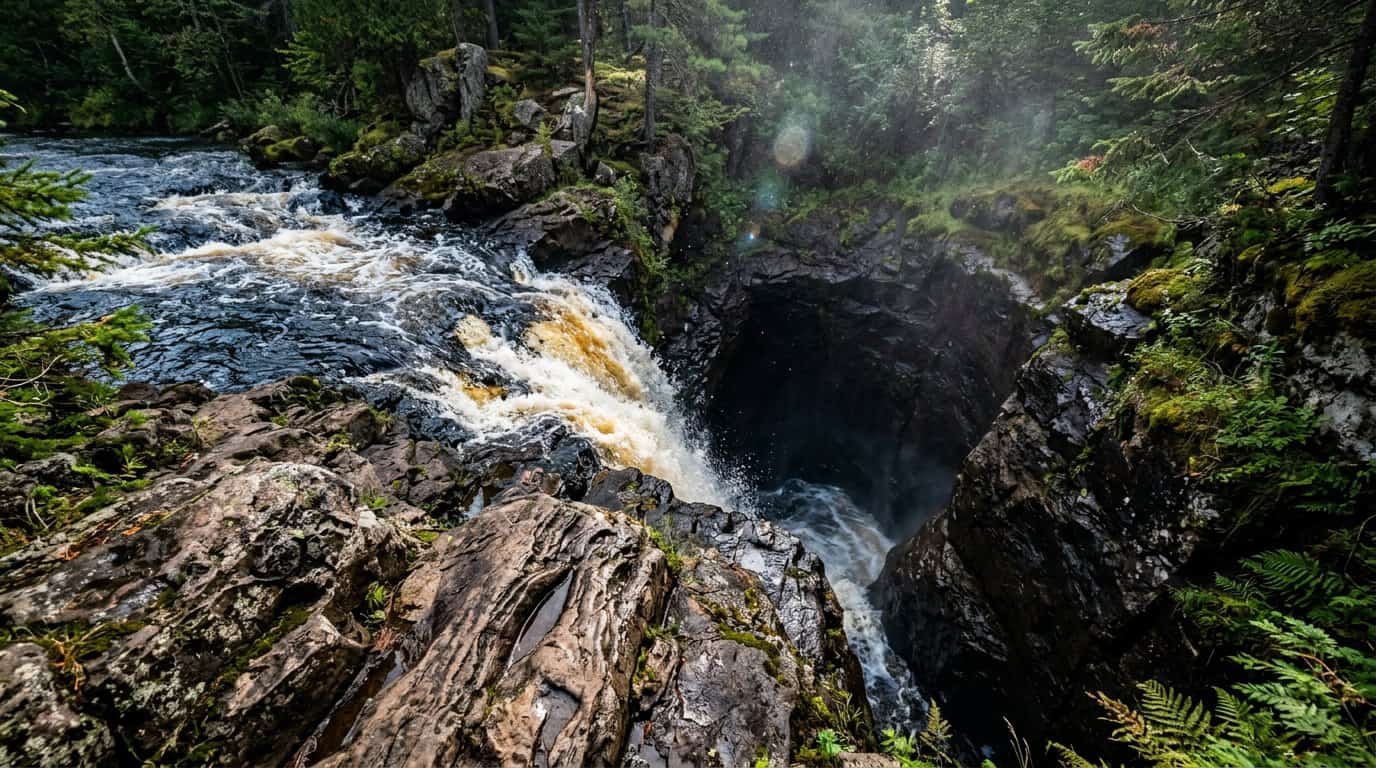
The leading geological explanation for Devil’s Kettle Waterfall begins with the Brule River itself. As the river reaches a resistant layer of rhyolite, it splits around the hard rock, sending one branch over the visible drop and the other into a deep pothole. Over time, rushing water, trapped stones, and repeated swirling likely enlarged cracks and openings beneath the falls, creating hidden passages in the bedrock. This process can make the water seem to vanish without requiring a separate underground river.
Flow comparisons support the idea that the missing water eventually returns to the Brule River downstream. Measurements and observations associated with the Minnesota Department of Natural Resources indicate that the river carries roughly the expected amount of water below the falls, while downstream features show no clear sign of a permanent loss. The exact route remains difficult to see because the rhyolite hides the channels and the turbulent pool prevents easy inspection. That combination of solid geological evidence and an unseen pathway keeps the Devil’s Kettle mystery compelling, even as erosion remains the most likely explanation.
Devil’s Kettle History And Visitor Guide
Judge C.R. Magney State Park began as Brule River State Park in 1957, protecting a rugged stretch of the Brule River near Grand Marais, Minnesota. In 1963, the park was renamed for Judge C. R. Magney, a Cook County judge and public official. Today, the park is best known for Devil’s Kettle Falls, where one side of the waterfall drops normally while the other pours into a deep pothole in the bedrock. The Minnesota Department of Natural Resources describes the visible drop as roughly 50 feet, with the river continuing toward Lake Superior.
Visitors reach the falls by following a trail that is about one mile each way, with approximately 175 stairs and a steep elevation change. The route can be muddy, icy, or uneven depending on the season, and access may be limited during winter or other hazardous conditions, so checking current park updates is wise. A 27-site campground offers a convenient base during its operating season, although reservations and seasonal dates should be confirmed before traveling. Near the overlook and river, wet rocks can become dangerously slippery, making sturdy shoes, careful footing, and respect for barriers essential.
The disappearing water has inspired experiments and geological theories, but no hidden river has ever been publicly confirmed carrying the missing flow all the way to Lake Superior. Dye tests and measurements suggest that the water likely returns to the Brule River through underground cracks and channels, while the unusual shape of the pothole keeps some uncertainty alive. Readers interested in the evidence can compare this story with other natural mysteries or unusual geological formations linked throughout the site. Does Devil’s Kettle seem best explained by erosion, hidden passageways, or a combination of both?
Devil’s Kettle Conclusion
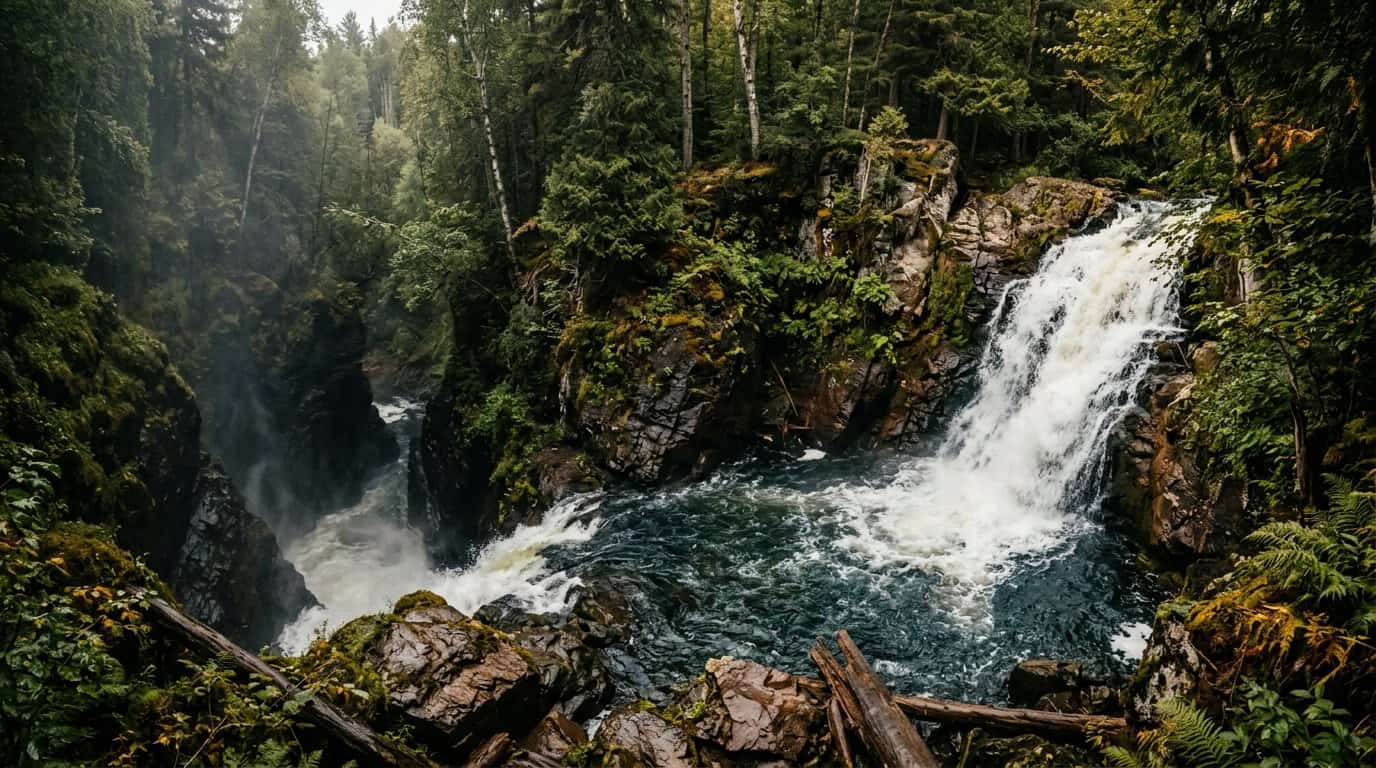
Devil’s Kettle Waterfall brings together three compelling features: a dramatic split in the Brule River, dark volcanic bedrock shaped by erosion, and water that seems to vanish without a trace. One branch drops about 50 feet into the river, while the other pours into a deep pothole carved into the rock. The Minnesota Department of Natural Resources has compared water flow above and below the falls, finding that the missing volume appears to return to the river downstream. That evidence supports a natural underground route through cracks and channels in the bedrock, even though the exact path remains hidden from view.
The mystery became more intriguing through public experiments involving objects dropped into the pothole, many of which were never seen again. Those tests did not reveal a secret tunnel, but they also could not show precisely where the water travels beneath the surface. Devil’s Kettle remains more than a strange landmark because its surroundings demonstrate how erosion can create features that look almost impossible at first glance. Does the geological explanation feel convincing, or does the hidden path of the water still leave room for curiosity?
What Devil’s Kettle Still Hides
Devil’s Kettle Falls remains one of Minnesota’s most memorable natural mysteries because the Brule River seems to split in two. One side drops about 50 feet into the river, while the other plunges into a deep pothole in the bedrock at Judge C.R. Magney State Park. For years, visitors wondered whether the missing water traveled underground, reached Lake Superior, or vanished through a hidden passage. Public experiments using objects such as logs and floating balls did not produce a clear answer, which helped the legend endure.
Modern measurements offer a grounded explanation: the water likely moves through cracks and channels in the rock before rejoining the Brule River downstream. That theory fits the river’s flow, even though the exact path remains hidden from view. Devil’s Kettle is therefore less a proven supernatural event than an example of how unusual geology can create a mystery that science steadily narrows without removing its sense of wonder. Visitors who stand beside the falls can still ask the central question for themselves: does the geological explanation fully solve the mystery, or is there more beneath the river than anyone has yet discovered?
Frequently Asked Questions
1. What is Devil’s Kettle Waterfall?
Devil’s Kettle is a split waterfall on the Brule River in Judge C.R. Magney State Park near Grand Marais, Minnesota. One side drops nearly 50 feet into the river, while the other disappears into a deep pothole in the bedrock.
2. Where does the water in Devil’s Kettle go?
The disappearing water most likely travels through cracks, cavities, and hidden channels in the rock before rejoining the Brule River downstream. Measurements and public tests have shown that the river’s flow remains consistent below the falls, providing strong evidence that the water does not vanish permanently.
3. Has anyone solved the Devil’s Kettle mystery?
Science has explained the broad mystery, but the exact underground route remains hidden from view. The Minnesota Department of Natural Resources and other investigators have used water-flow comparisons and floating objects to show that the missing branch returns to the river, even though no visible outlet has been found.
4. Can logs or other objects thrown into Devil’s Kettle be found downstream?
Large logs, leaves, and other objects have disappeared into the pothole, but they have not reliably appeared in the river below. The force of the water may trap, break apart, or bury objects inside the rock, making this part of the mystery harder to observe directly. Visitors should never throw anything into the kettle.
5. How did Devil’s Kettle form?
The waterfall developed as the Brule River cut through hard rhyolite bedrock shaped by fractures and erosion. Over time, rushing water enlarged a natural opening on one side of the rocky divide, creating the deep pothole that gives the falls its unusual appearance.
6. Where is Devil’s Kettle located, and how difficult is the hike?
Devil’s Kettle is in Judge C.R. Magney State Park along Minnesota’s North Shore, near Grand Marais. The trail covers about one mile each way and includes roughly 175 stairs, steep elevation changes, and uneven ground, so sturdy shoes and careful pacing are important.
7. When is the best time to visit Devil’s Kettle?
Spring and early summer often bring strong water flow, making the split in the Brule River especially dramatic. Fall adds bright forest color, while winter can create striking ice formations, but snow, ice, and slippery stairs can make the trail more difficult and dangerous.
8. Is Devil’s Kettle truly unexplained, or is it only a natural phenomenon?
Devil’s Kettle is a natural geological feature, and the available evidence strongly supports the idea that its water reconnects with the Brule River underground. Still, the unseen path, the missing objects, and the roar of water disappearing into rock leave room for curiosity, which is why the waterfall remains one of Minnesota’s most enduring natural mysteries.