Utsuro-Bune Legend: The 1803 Japanese Mystery Explained
In 1803, a strange circular vessel was said to have drifted onto the coast of Hitachi Province, carrying a young woman who spoke an unknown language. This mysterious account, now known as the utsuro-bune legend, also described a sealed box, unfamiliar writing, and a craft unlike any ordinary boat. Its details still raise questions about what witnesses may have seen and how the story changed as it was recorded.
The legend survives in several Edo-period manuscripts with illustrations, giving it a stronger historical record than many tales of the unknown. Yet those records do not prove that an extraterrestrial craft reached Japan. They may reflect folklore, rumors of foreign contact, or a real maritime mystery reshaped over time. The challenge is to examine each possibility without losing sight of the strange details that made the story unforgettable.
Key Takeaways
- The utsuro-bune legend describes a reported 1803 landing on Japan’s Hitachi coast involving a circular vessel, a foreign-looking woman, a sealed box, unknown writing, and an unfamiliar language.
- Several Edo-period manuscripts, including Ume no Chiri and Toen Shōsetsu, preserve the account, but differences in their descriptions show that the story changed through copying, retelling, and illustration.
- The records document a persistent historical legend—not proof of extraterrestrial visitation. Possible explanations include folklore, a misunderstood foreign or damaged vessel, maritime rumor, or a real encounter reshaped over time.
- The legend remains valuable because it reveals how Edo-period communities interpreted unfamiliar outsiders and objects while highlighting the need to distinguish recurring evidence from later embellishment.
1803 Hitachi Beach Encounter
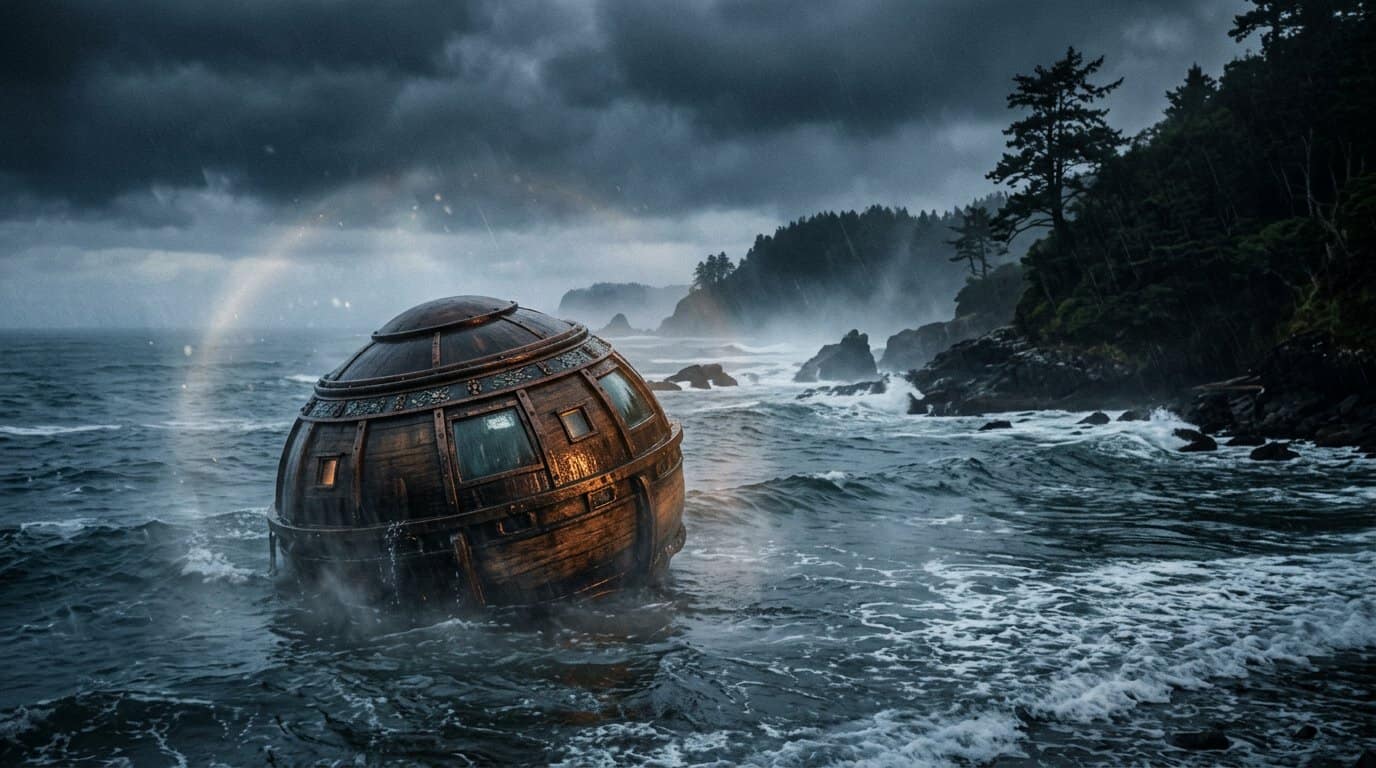
In 1803, fishermen along the coast of Hitachi Province reportedly spotted a strange vessel drifting offshore and brought it toward the beach. The craft was circular and hollow, often described as a wooden or metal-bodied cabin about 3.3 meters high and 5.5 meters wide, with dark iron plates, glass-like windows, and unusual markings on its exterior. Hitachi Province covered part of present-day Ibaraki Prefecture, and later retellings place the landing near Harashakahama, although the exact site remains uncertain. A timeline graphic could show the reported sequence, from the offshore discovery to the vessel’s arrival on the beach and the fishermen’s investigation.
Inside, the fishermen found a young woman with foreign features and long red or brown hair, holding a small sealed box that she refused to surrender. She reportedly spoke an unknown language, while mysterious writing appeared on the vessel’s interior and exterior, making communication impossible. Edo-period accounts such as Ume no Chiri and Toen Shōsetsu preserve different versions of the encounter, suggesting that the story developed through retelling rather than surviving as one fixed report. The records offer no verified evidence of extraterrestrial technology, yet their details invite comparison with other historical accounts of unfamiliar visitors, maritime anomalies, and possible memories of foreign contact. Read alongside related mysteries on this site, the utsuro-bune legend leaves room for curiosity while reminding readers to separate documented manuscripts from later interpretations.
The Woman And Sealed Box
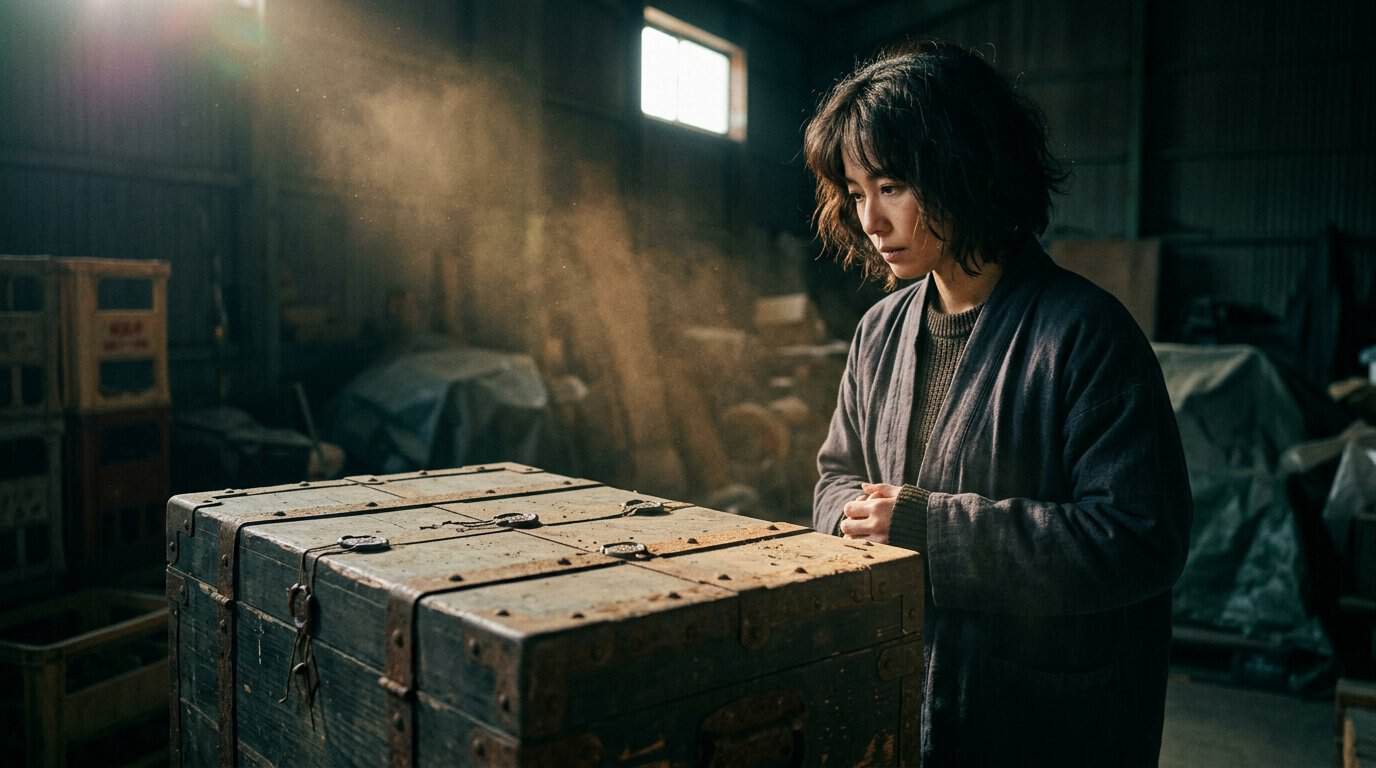
The young woman inside the utsuro-bune appeared foreign to the people who found her on the Hitachi coast in 1803. Surviving accounts describe pale skin, reddish hair, unfamiliar clothing, and speech no one could understand. Her clothes seemed carefully made, but their style did not match local dress, adding to the impression that she had come from far beyond Japan. She reportedly remained calm and showed little fear, even while fishermen and villagers examined the strange vessel. The details vary between Edo-period manuscripts, so the story reads as both a recorded encounter and a legend shaped by retelling.
One detail appears again and again: the woman never let go of a small wooden box. The accounts do not agree on what it held, but they suggest that she guarded it closely and would not allow anyone to inspect it. Mysterious writing covered parts of the vessel, while its round design, glass-like windows, and metal fittings seemed unlike ordinary boats of the period. Works such as Toen Shōsetsu and Ume no Chiri preserve different versions of the event, showing how the story changed over time while keeping the woman and sealed box at its center. These differences leave room for questions about whether the tale began with a real maritime incident, a report of an unfamiliar foreign visitor, or a blend of rumor and imaginative storytelling.
After questioning the woman and failing to understand her language, local authorities reportedly chose not to keep her ashore. They placed her and the vessel back into the sea, a decision that may have reflected fear, uncertainty, or concern about contact with an unknown outsider. No independent record confirms what happened afterward, and the surviving illustrations and manuscripts cannot prove that the craft involved unknown technology. Even so, the careful descriptions of her appearance, possessions, and behavior keep the utsuro-bune legend connected to broader mysteries about strange visitors and unexplained objects.
Edo Manuscripts And Changing Details
The surviving Edo-period manuscripts place the utsuro-bune story in 1803, when a round vessel reportedly drifted onto the coast of Hitachi Province, near modern Ibaraki. One early account, Ume no Chiri from 1815, describes a hollow, disk-shaped craft with windows, metal fittings, and strange writing on its surface. Later works, including Toen Shōsetsu from 1825 and Hyōryūki-shū from 1835, preserve the same basic sequence but alter the vessel’s size, color, materials, and design. These changes create a loose historical timeline rather than a single fixed report, showing how the story developed as it moved through Edo society.
The woman inside also appears differently from one manuscript to another. She is usually described as young and foreign-looking, with pale or reddish features, unfamiliar speech, and a sealed box that she refuses to surrender, while the symbols around her are copied as mysterious writing rather than translated language. Illustrations emphasize different details, including the vessel’s windows, dark or red-brown body, decorative bands, and the woman’s clothing and hair. Such variations may reflect eyewitness confusion, differences in translation, or the artistic choices of writers and illustrators who never saw the original scene. They also leave open a more cautious possibility: the tale may have reshaped memories of an unusual object or foreign traveler without proving the existence of unknown technology.
Taken together, the manuscripts make the utsuro-bune legend historically valuable because they show how people recorded, copied, and interpreted reports of strange visitors during a period when Japan closely monitored foreign contact. Comparing the records helps separate recurring details from later additions, much as researchers do with other mysteries involving unfamiliar objects and unexplained arrivals. The repeated image of a circular craft and a woman carrying a sealed box is intriguing, but the differences warn against treating any one illustration as a photograph-like record. Read as a layered account of folklore, maritime rumor, and possible real-world encounters, the documents preserve both a compelling mystery and evidence of how stories change over time.
Folklore Maritime Mystery Or UFO
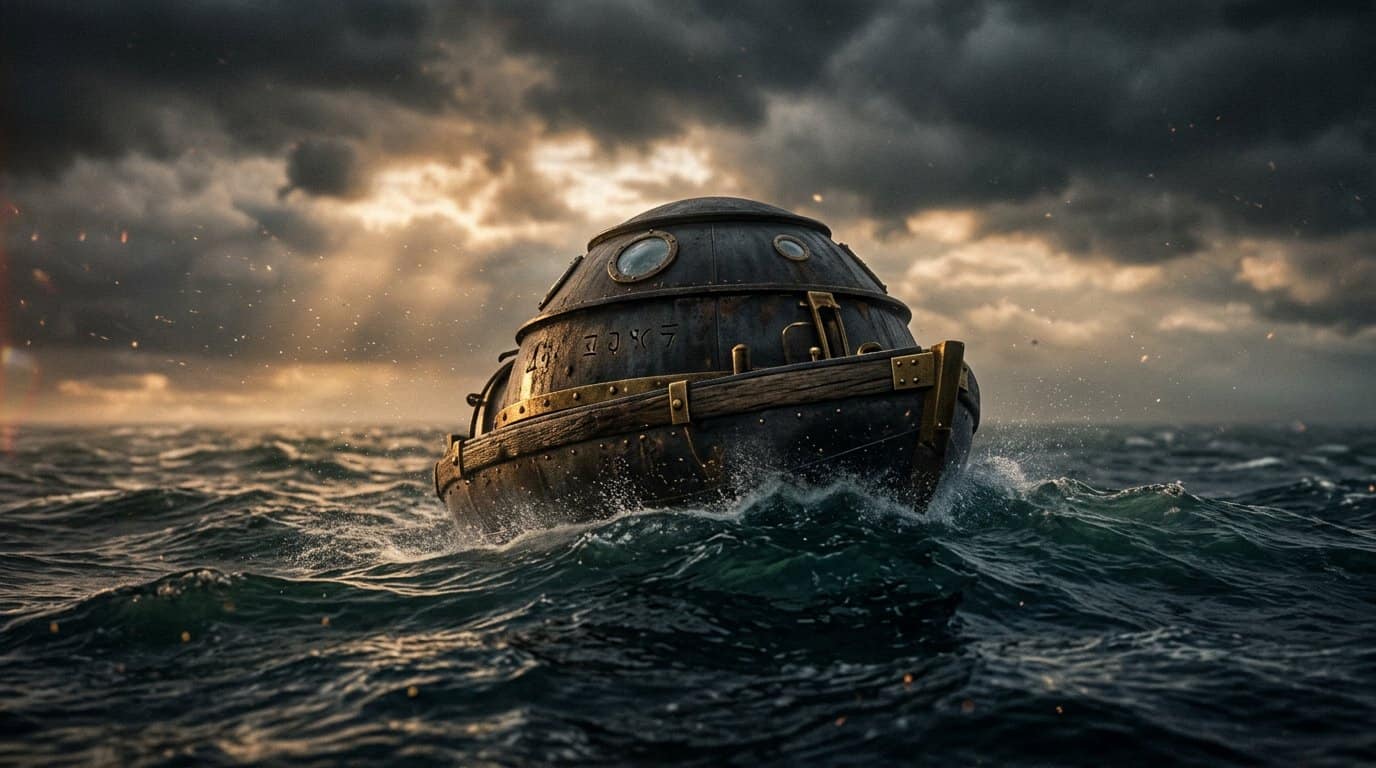
In 1803, a strange vessel was said to have drifted ashore in Hitachi Province, now part of Ibaraki Prefecture. Edo-period accounts describe it as a round, hollow boat with metal fittings, dark windows, and unfamiliar writing across its surface. A young woman with foreign features reportedly emerged carrying a sealed box and speaking a language no one present could understand. The story survives in several illustrated manuscripts, including the accounts known as Toen Shōsetsu and Ume no Chiri, although their differences suggest that the tale changed as it circulated.
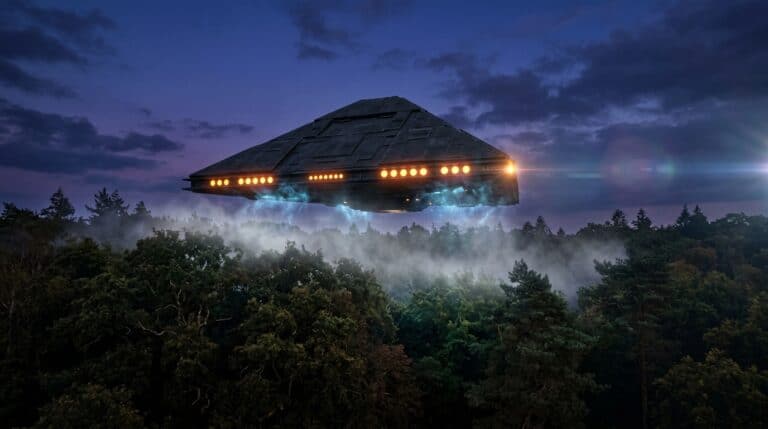
Several interpretations can fit the same dramatic details. Folklore and literary rumor may have shaped a familiar story about a mysterious outsider, while the vessel itself could reflect reports of an unusual fishing craft, a foreign boat, or debris carried by ocean currents. Some researchers connect the woman and her sealed box to memories of foreign contact during Japan’s period of restricted trade, when unfamiliar ships and travelers could inspire both fear and speculation. Modern UFO writers instead see the utsuro-bune as a possible technological craft, pointing to its circular shape, windows, and strange markings. However, those features appear in later retellings and do not prove an extraterrestrial origin.
Read alongside the site’s articles on Japanese mysteries and unexplained historical encounters, the utsuro-bune legend shows how eyewitness claims, cultural expectations, and maritime events can merge over time. The surviving manuscripts provide evidence that people recorded and illustrated the story, not that the landing occurred exactly as described. No surviving object, physical trace, or independent record confirms that an alien craft reached Japan. The enduring question is whether the legend preserves a distorted memory of an unusual visitor or reveals how a mysterious object became a lasting story.
The Utsuro-Bune Legend Endures
In 1803, a strange circular vessel was said to have washed ashore in Hitachi Province, now part of Ibaraki Prefecture. Local people reportedly found a young foreign-looking woman inside, along with a sealed box, unfamiliar writing, and a language they could not understand. After examining the vessel and its passenger, the witnesses allegedly returned them to the sea, leaving no confirmed trail of what happened next. This timeline gives the utsuro-bune legend its enduring mystery, but it also shows how quickly an unusual report could become a dramatic story.
The account survives in several Edo-period manuscripts, many with illustrations, yet these texts are not a single, independently verified record from the beach in 1803. Their differences suggest that the story may have changed through copying, retelling, literary invention, or the blending of rumor with memories of unfamiliar ships and foreign visitors. The evidence cannot prove an otherworldly craft, but it also cannot fully explain the woman, the vessel, or the original event behind the reports. Should the utsuro-bune legend be understood mainly as folklore, a misunderstood maritime encounter, or an unresolved historical mystery?
Frequently Asked Questions
1. What is the utsuro-bune legend?
The utsuro-bune legend is an Edo-period account of a strange, round vessel that reportedly reached the coast of Hitachi Province in 1803. Fishermen found a young woman inside, along with a sealed box, unknown writing, and a craft unlike an ordinary boat.
2. Where did the utsuro-bune encounter supposedly happen?
The story places the event on the coast of Hitachi Province, an area that is now part of Ibaraki Prefecture. Later versions identify a beach called Harashakahama, but the exact landing site has not been confirmed.
3. What did the strange vessel look like?
Descriptions portray the vessel as a hollow, circular craft about 3.3 meters high and 5.5 meters wide. Some accounts mention dark iron plates, glass-like windows, and unusual markings, although the materials and details vary between manuscripts.
4. Who was the woman found inside the utsuro-bune?
The woman was described as young, foreign-looking, and dressed in unfamiliar clothing, with long reddish or brown hair. She reportedly spoke a language no one present understood and held a small sealed box that she refused to give up.
5. Which historical records describe the utsuro-bune story?
Several Edo-period manuscripts preserve versions of the account, including Ume no Chiri and Toen Shōsetsu. Their illustrations and written descriptions give the legend a documented historical footprint, but differences between the records show that the story changed as it was copied and retold.
6. Does the utsuro-bune legend prove that aliens visited Japan?
No, the records do not prove that the vessel was extraterrestrial. The event may reflect folklore, rumors about foreign ships, a real maritime incident, or a mystery reshaped by later storytellers, although the unusual details continue to invite serious discussion.
7. What are the main explanations for the utsuro-bune legend?
Possible explanations include a damaged foreign boat, a drifting rescue vessel, a local story influenced by reports of unknown lands, or a symbolic tale about outsiders. None fully explains every detail, so the strongest approach compares the manuscripts, geography, ship designs, and Edo-period knowledge without treating any single theory as certain.
8. Why does the utsuro-bune legend still matter today?
The legend matters because it sits between documented history, folklore, and the unexplained. It offers a rare glimpse into how people in Edo-period Japan interpreted unfamiliar objects and strangers, while also raising questions that connect with other historical mysteries involving strange visitors, lost ships, and unexplained encounters.