Max Headroom Hijacking Explained: Timeline, Evidence, And Theories
The Max Headroom hijacking began with a strange interruption during Chicago television broadcasts on November 22, 1987. Viewers watching a local station saw a masked figure move against a distorted background before engineers quickly restored the signal. Later that night, the same eerie performance interrupted another station during a popular program, turning a brief prank into one of broadcasting’s most enduring mysteries.
The intruder left behind warped audio, cryptic jokes, and no confirmed identity. Decades later, the hijacking remains officially unsolved, inviting theories about insider access, technical skill, and a carefully planned act of rebellion. Separating what viewers truly saw from speculation helps explain why this bizarre broadcast still unsettles and fascinates people today.
Key Takeaways
- On November 22, 1987, an unidentified masked performer interrupted two Chicago television broadcasts: a brief news interruption around 9 p.m. and a roughly 90-second takeover during Doctor Who later that night.
- The hijacking was likely a deliberate signal intrusion that exploited weaknesses in 1980s broadcast infrastructure, rather than a break-in at either station’s studio. The exact equipment and method remain unconfirmed.
- The distorted performance used Max Headroom imagery, mock advertising, strange audio, and unsettling visual gags, but it offered no clear motive or reliable clue to the perpetrator’s identity.
- Despite investigations and decades of speculation about insiders, technically skilled pranksters, or anti-commercial artists, no one has been publicly identified or charged, making the case an enduring media mystery.
The Two Chicago Broadcast Interruptions
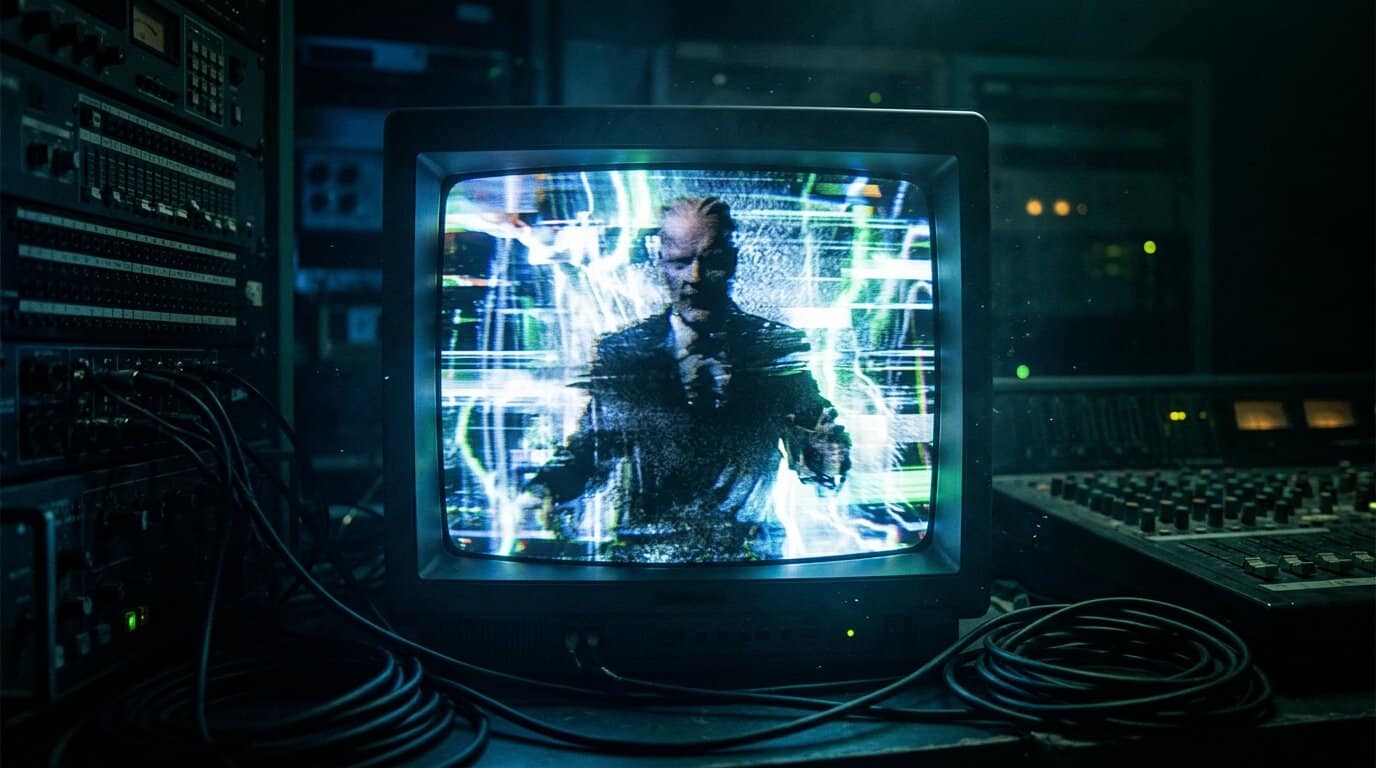
At about 9 p.m. on November 22, 1987, viewers watching a local evening news broadcast saw the regular sports report suddenly disappear. For roughly 25 to 30 seconds, a person wearing a Max Headroom-style mask and dark sunglasses appeared in front of a corrugated-metal backdrop. The figure swayed and jerked while a burst of distorted audio replaced the broadcast, creating the impression of a badly damaged signal. Station engineers quickly switched back to the news, but the interruption had already introduced Chicago to an unknown hijacker.
The longer takeover came later that night, during a Chicago station’s broadcast of Doctor Who, at about 11:15 p.m. The same masked figure returned against the metal background, this time delivering a rambling performance filled with electronic noise, fragments of song, strange gestures, and mock advertising language. The speech included references to familiar commercial imagery, a pointed detail given Max Headroom’s connection to televised advertising. Near the end, the figure’s identity became even harder to interpret as a woman in a dress entered the frame and appeared to spank the masked performer with a household object.
The station restored Doctor Who after about 90 seconds, and the incident soon became known as the Max Headroom hijacking. Engineers and investigators examined the broadcast path, but no publicly identified person was ever charged, leaving the motive and method unresolved. The crude video suggests a carefully prepared prank, while the timing, technical skill, and deliberate advertising references have kept more elaborate theories alive. Decades later, the two interruptions remain a rare mystery preserved on videotape, inviting viewers to decide whether the chaos concealed a message or was the message itself.
How The Television Signal Was Hijacked
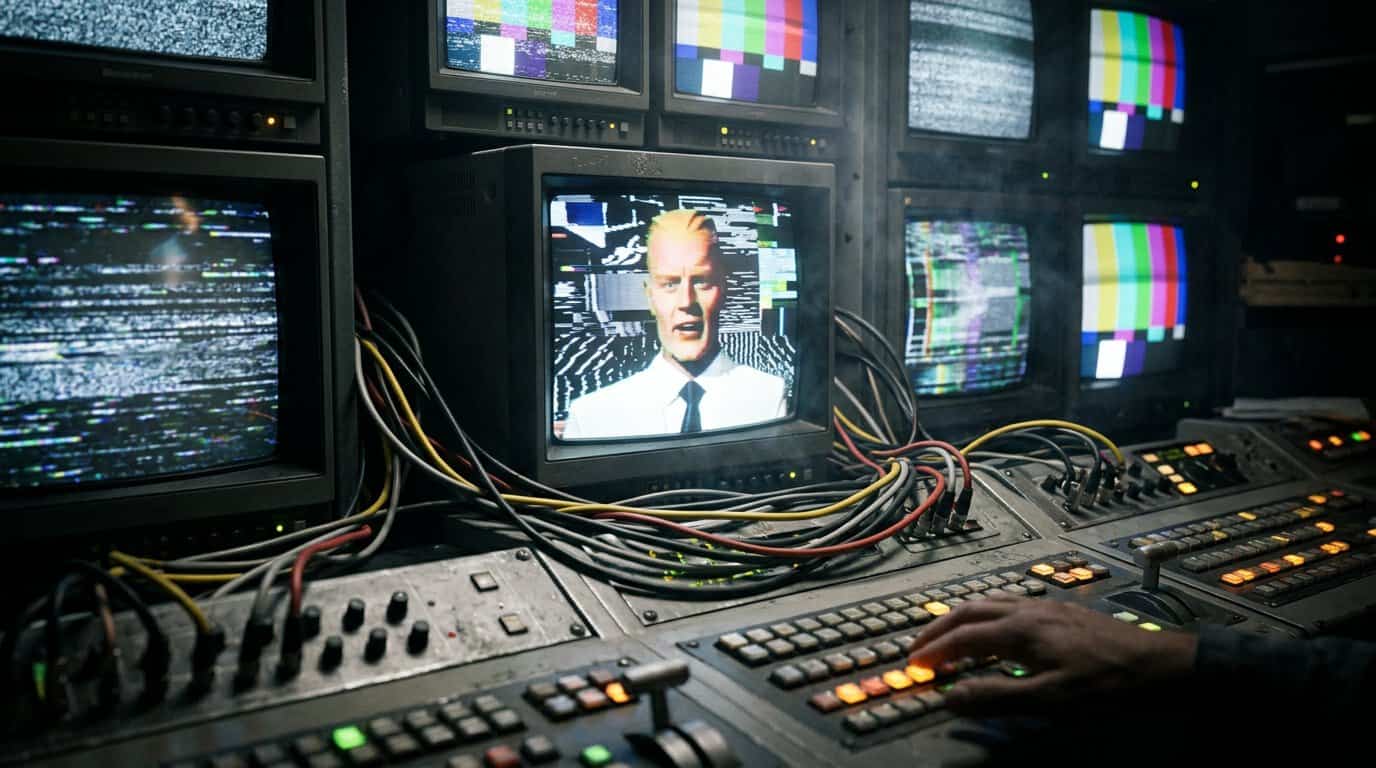
The Max Headroom hijacking appears to have been an attack on the broadcast signal, not a break-in at either station’s studios. Television stations in the 1980s sent programs from a studio to a transmitter through links that could be disrupted if an intruder produced a stronger signal on the same channel. During the first incident, a local station’s 9 p.m. news was interrupted for roughly 25 to 30 seconds before engineers changed the signal path and restored the broadcast. That quick response suggests the station still had control of its transmitter, even though someone had briefly forced an unauthorized picture into the feed.
The later intrusion was harder to stop and lasted about 90 seconds, interrupting an episode of Doctor Who. According to station accounts, engineers could see the strange transmission but could not immediately override it because the unauthorized signal was reaching the broadcast system at a point beyond their normal studio controls. The difference between the two incidents may reflect separate attacks on different parts of the delivery chain, rather than a person entering either station. It also explains why the second interruption continued until the hijacker ended it, leaving viewers with the unsettling impression that the station had lost control entirely.
Those contrasting lengths offer a glimpse of 1980s broadcast technology, when powerful transmitters, microwave links, and analog controls created weak points that were difficult to monitor in real time. A modern digital system might record more evidence, but engineers then had fewer tools for identifying the source of a competing signal while it was happening. The exact method remains unproven, and investigators never publicly identified the person behind the mask. Even so, the pattern supports a grounded theory: the Max Headroom hijacking was likely a carefully prepared signal intrusion, using knowledge of local broadcast infrastructure rather than access to the stations themselves.
Theories Behind The Max Headroom Mystery
The Max Headroom hijacking began on November 22, 1987, when an unauthorized video interrupted a Chicago station’s evening news for about 25 to 30 seconds. Later that night, a longer intrusion replaced programming on another local station, showing a person in a Max Headroom-style mask delivering strange lines and movements. These broadcasts are documented through station accounts, recordings, and contemporaneous reporting, but the identity of the person behind the mask has never been confirmed. The equipment and access needed to disrupt a television signal suggest planning, although they do not prove that the culprit worked in broadcasting.
Several theories attempt to explain who created the video and why. One possibility is a prank by someone with broadcast knowledge, while another points to a disgruntled insider who understood local transmission systems. Some observers see the performance as an art or counterculture statement, and others suspect a stunt linked to Chicago’s television industry, perhaps designed to mock television itself. None of these ideas has been supported by a verified name, confession, or physical evidence, so they remain possibilities rather than established conclusions.
The investigation has endured because it produced memorable footage but few reliable fingerprints, witnesses, or technical clues that could lead to an arrest. No perpetrator has been publicly identified or charged, and the strange script has never yielded a dependable motive. That gap between vivid evidence and missing identity is why the case still belongs beside other unexplained signal intrusions and unsolved media mysteries. Which theory best fits the timing, skill, and theatrical style of the interruption, and what evidence would finally move it beyond speculation?
Why The Hijacking Still Fascinates Viewers
The Max Headroom hijacking still fascinates viewers because it turned a routine television night into a scene that felt both familiar and impossible. On November 22, 1987, an unidentified person in a Max Headroom-style mask interrupted a Chicago station for roughly 25 seconds, then appeared again later during another local broadcast. The distorted voice, strange movements, sunglasses, and cluttered analog-video look made the footage instantly memorable. A concise timeline graphic can show the two interruptions in order, helping readers see how a brief technical intrusion became a carefully staged mystery.
The side-by-side comparison of the two interruptions reveals clues as well as contradictions. The first interruption was short and quickly cut off, while the second lasted longer and included bizarre spoken lines, visual gags, and a person briefly appearing beside the masked figure. Station records and later reporting confirm that the broadcast signal was hijacked, but the identity and motive of the intruder remain unknown. An archival image of the Max Headroom character can also show why the mask was so effective, blending a recognizable pop-culture image with an unsettling homemade performance.
That missing motive keeps the case open to competing theories without proving any of them. Some viewers suspect an elaborate prank by people familiar with broadcast equipment, while others see the performance as an artistic statement, a personal grievance, or an experiment in exploiting weak points in older television systems. The available evidence supports a deliberate act, but it does not clearly explain who planned it or why. What does the footage suggest to readers: a technical stunt, an underground art project, or a message that has never been fully understood?
What the Max Headroom Hijacking Revealed
The Max Headroom hijacking began in Chicago on November 22, 1987, when a local station’s 9 p.m. news signal was interrupted for roughly 25 to 30 seconds. A person wearing a Max Headroom-style mask and sunglasses appeared on screen, moving in front of a strange, prerecorded backdrop. About two hours later, the same figure disrupted another local broadcast during Doctor Who, this time for around 90 seconds. The second interruption included distorted audio, odd jokes, and unsettling images before the station restored its program. Together, the incidents created a mystery that was memorable not because of its length, but because of how personal and deliberate it seemed.
Pulling off the hijack required more than making a video and sending it online because the intruder had to overpower a station’s broadcast signal at the right moment. That technical hurdle has fueled several theories, including the possibility of help from someone familiar with local transmission systems, a small group of technically skilled pranksters, or an operation planned from a nearby location. Some viewers also interpret the performance as satire or a cultural protest, while others see the bizarre script as evidence of little more than an elaborate practical joke. None of these explanations has been confirmed, and the perpetrator remains unidentified and uncharged. Which theory best fits the timing, equipment, and strange performance, and which details still resist explanation?
Frequently Asked Questions
1. What was the Max Headroom hijacking?
The Max Headroom hijacking was an unauthorized television signal interruption in Chicago on November 22, 1987. A masked performer appeared against a corrugated-metal background, moved erratically, and delivered distorted audio and strange jokes before regular programming returned.
2. When did the two Max Headroom interruptions happen?
The first interruption occurred at about 9 p.m. during a local evening news broadcast, replacing a sports report for roughly 25 to 30 seconds. A longer and more elaborate takeover followed at about 11:15 p.m. during another station’s broadcast of Doctor Who.
3. What did viewers see during the broadcast hijacking?
Viewers saw a person wearing a Max Headroom-style mask and dark sunglasses, with a metallic backdrop behind the figure. The performance included warped sound, sudden movements, fragments of song, mock advertising language, and a woman in a dress who appeared near the end of the second interruption.
4. Why was Max Headroom used in the interruption?
Max Headroom was a recognizable television character associated with electronic music, advertising, and a heavily distorted visual style. Using a similar mask gave the hijacker an instantly familiar image while also turning commercial television itself into part of the joke.
5. How was the television signal hijacked?
The interruption required more than an ordinary prank because the intruder had to overpower or replace a station’s broadcast signal. Engineers restored the first broadcast quickly, but the precise equipment and method used for the takeover have never been publicly confirmed, leaving room for theories about technical expertise or insider knowledge.
6. Was the person behind the Max Headroom hijacking ever identified?
No confirmed identity has ever been publicly established. Investigators examined the recordings and the technical details, but the mask, distorted voice, short duration, and lack of a clear location made the search difficult.
7. What theories exist about who carried out the hijacking?
The leading theories suggest a technically skilled television insider, a group with access to broadcast equipment, or an outsider who understood how to exploit weaknesses in the signal system. Some viewers interpret the performance as political or anti-commercial satire, but no theory has been proven by physical evidence or a credible confession.
8. Why does the Max Headroom hijacking remain famous?
The incident combined a real technical breach with an unsettling performance that offered no clear motive or explanation. The surviving recordings preserve enough detail to invite analysis, yet the missing identity and bizarre symbolism keep the case balanced between documented broadcast history and an enduring mystery.