Utsuro-Bune Encounter: The Edo-Era Mystery Of The Hollow Vessel
On February 22, 1803, fishermen on Japan’s Hitachi coast reportedly found a strange, round vessel drifting in from the sea. Inside stood a young woman with unfamiliar features, an unknown language, and a mysterious box she refused to release. The Utsuro-bune encounter became one of Japan’s most enduring unexplained stories, raising questions about who she was and where the vessel came from.
Several Edo-period manuscripts preserve versions of the event, complete with drawings of the craft and its unusual passenger. They offer a genuine historical trail, but no confirmed wreckage, official investigation, or proof of extraterrestrial visitors. Between documented folklore and the possibility of a misunderstood event lies a mystery that still invites careful questions.
Key Takeaways
- The Utsuro-bune encounter is an Edo-period report from February 22, 1803, describing fishermen who found a round vessel, an unfamiliar young woman, a sealed box, and unreadable markings off Japan’s Hitachi coast.
- Several illustrated manuscripts, including Toen Shosetsu, Ume no Chiri, and Hyoryu Kishu, preserve the story, but their differing details suggest it was copied, adapted, and reshaped over time.
- No surviving vessel, physical evidence, official investigation, or independently verified testimony proves that Utsuro-bune involved extraterrestrials or a spacecraft.
- The most responsible interpretations include a misunderstood foreign boat, maritime rumor, local folklore, or a symbolic tale; modern UFO comparisons should remain possibilities rather than established conclusions.
The 1803 Hitachi Coast Report
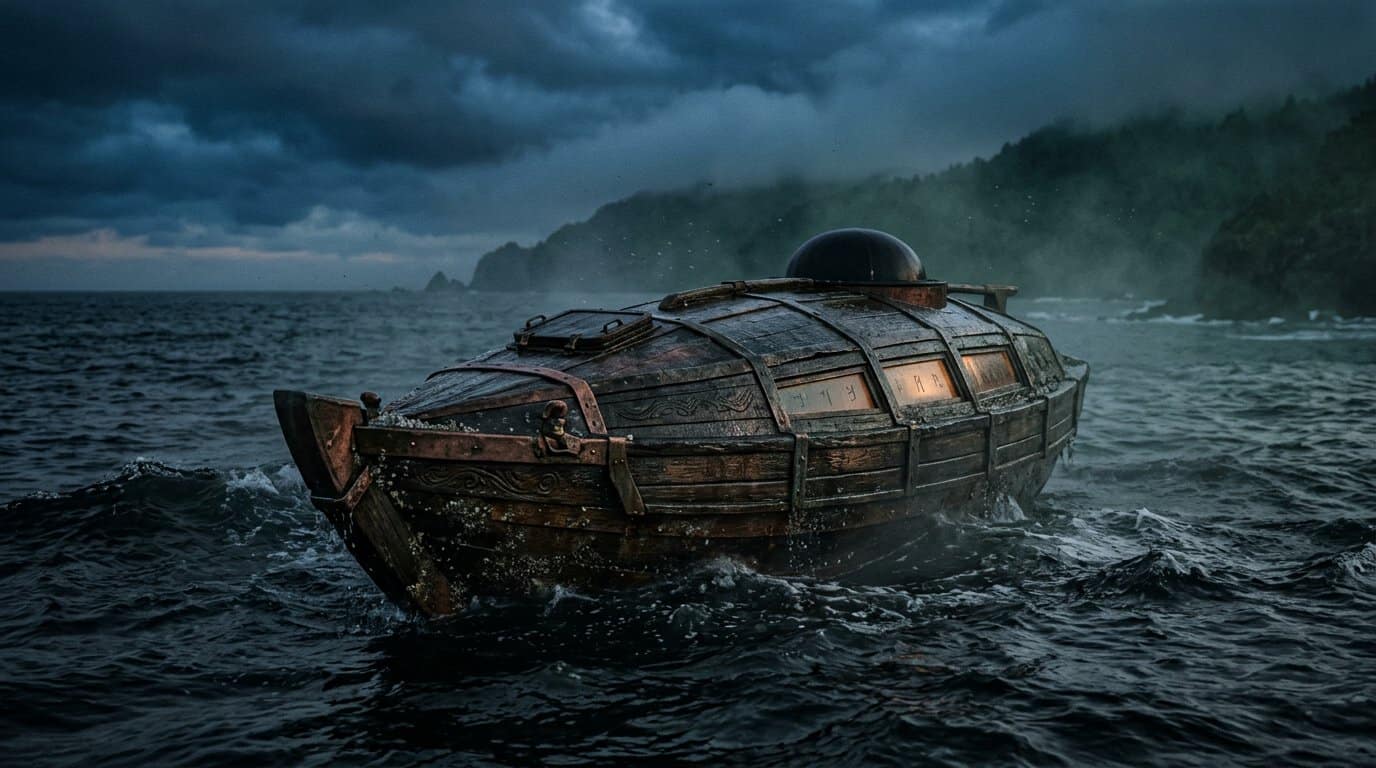
On February 22, 1803, fishermen working off the coast of Hitachi Province, in present-day Ibaraki Prefecture, reportedly saw a strange vessel drifting toward shore. Edo-period accounts describe it as a round, hollow craft several meters across, with a dark reddish-brown surface, metal fittings, glasslike windows, and symbols that no one could read. Its shape has led later writers to compare it with a modern flying saucer, although the original reports present it as a boat found at sea. The story is preserved in illustrated manuscripts such as Ume no Chiri, Toen Shosetsu, and Hyoryo Kishu, written during the nineteenth century.
The fishermen found a young woman inside. She was described as having pale skin, long reddish hair, and unfamiliar clothing. She reportedly held a small box that she would not allow anyone to touch, while her speech remained impossible for the fishermen to understand. The writing on the vessel also resisted translation, leaving the group with no clear answer about where she came from. After examining the craft and its passenger, the fishermen decided to place both back inside the vessel and push it out to sea rather than bring the woman inland.
| Timeline | Reported event |
|---|---|
| February 22, 1803 | A round vessel reaches the Hitachi coast. |
| That day | Fishermen discover a young woman, a sealed box, and unreadable writing. |
| After the encounter | The fishermen return the woman and craft to the sea. |
The Utsuro-bune account is compelling because it connects local folklore with records that circulated close to the alleged event, yet those records do not prove an extraterrestrial origin. No surviving craft, physical evidence, or independently confirmed eyewitness testimony has been found. Differences between the manuscripts also suggest that the story may have changed as it was copied and retold. Possible explanations range from a damaged foreign boat to a symbolic tale shaped by Japan’s isolation-era fears and curiosity about outsiders. Even so, the report leaves an enduring question: did the manuscripts preserve a confused real encounter, a carefully shaped legend, or something that still resists a simple explanation?
Edo Manuscripts And Changing Details
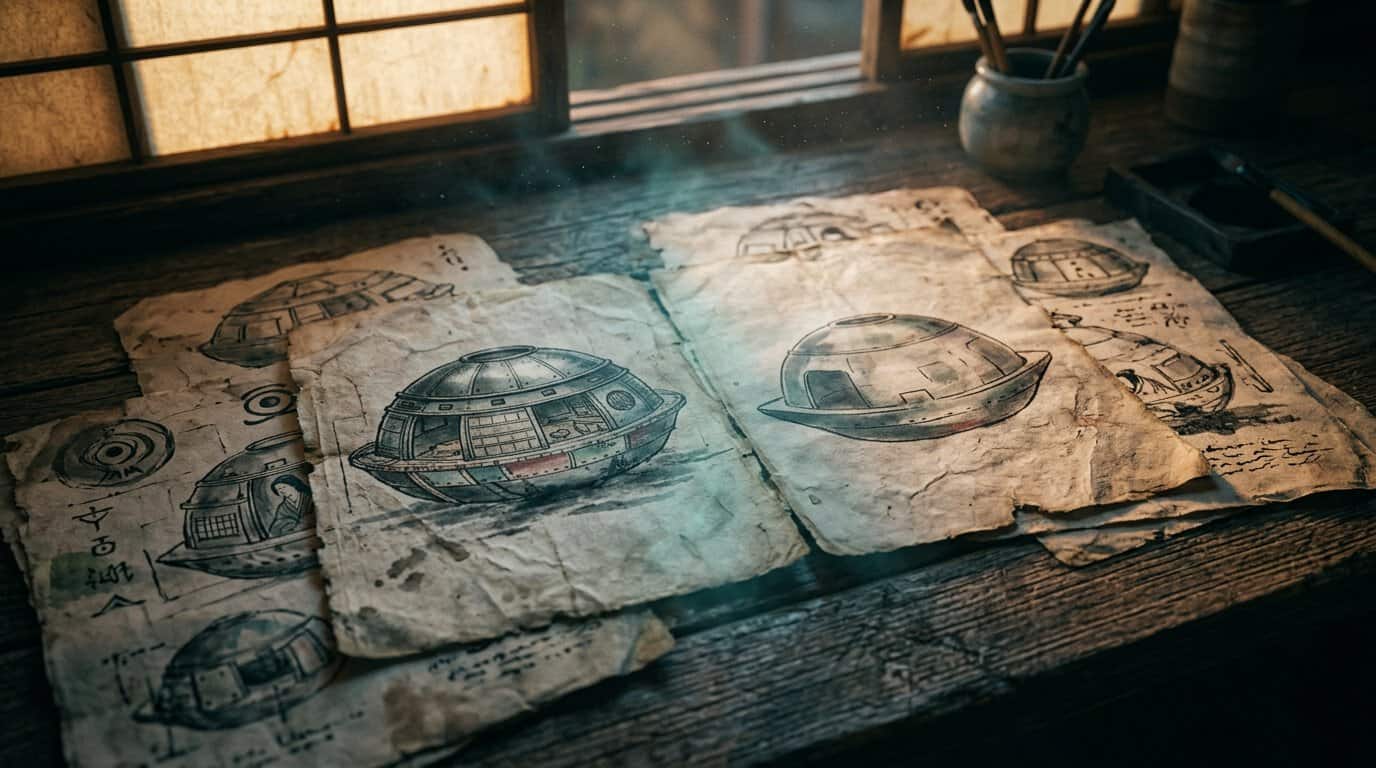
The best-known version of the Utsuro-bune encounter appears in Toen shōsetsu, a collection compiled in 1825. It describes a strange, round vessel reaching Hitachi Province on February 22, 1803, with a young woman inside who spoke an unknown language. Its illustration shows a dark lower hull, a raised upper section, windows, and mysterious writing on the craft. The text also gives measurements and details about iron fittings and unusual materials. These features can resemble an early account of an aerial or technological object, but the manuscript does not prove that interpretation.
Earlier or related records, including Ōshuku zakki and Hyōryūki, tell versions of the same basic story while changing important details. The vessel’s size and shape vary, the woman’s clothing and appearance are not always described alike, and the symbols shown on the craft do not remain consistent from one illustration to another. Some accounts emphasize a sealed, polished object, while others focus more on the strange visitor and the fishermen’s confusion. These differences suggest that the story was copied, adapted, or reshaped as it moved through Edo-period writing rather than preserved as one fixed eyewitness statement.
That does not make the Utsuro-bune encounter meaningless. Multiple manuscripts show that the tale circulated and held real interest during its time. It does mean that modern readers should separate what the records establish from what later theories add, especially when interpreting the craft as a spacecraft, a foreign vessel, or a symbolic story. The documents provide evidence for a persistent 1803 report and its changing literary forms, but no verified object, independent testimony, or physical evidence has been found. For that reason, the case remains a fascinating meeting point between folklore, historical records, and the human tendency to describe the unexplained through the ideas available at the time.
Competing Explanations For Utsuro-Bune
The first explanation treats the Utsuro-bune as a damaged foreign vessel described through Edo-period eyes. Manuscripts such as Toen Shōsetsu and Hyōryū Kishu describe a round craft with dark metal fittings, glass windows, strange writing, and a young woman who could not communicate with the fishermen. Those details might reflect a real boat from an unfamiliar region, although no surviving wreckage, official record, or independently confirmed witness account supports that conclusion. The story also fits the anxieties explored in the site’s article about Edo-period fears of foreign contact, when Japan watched its shores carefully. Still, translating an unfamiliar object into familiar images could have changed the report as it passed from witness to writer.
A second possibility is that the encounter grew from local folklore rather than a single event. The woman, sealed vessel, unreadable writing, and return to the sea resemble motifs found in Japanese tales about visitors from distant realms, while the circular craft may carry religious or symbolic meaning rather than serve as a literal technical description. Some researchers have also connected the story’s imagery to sericulture traditions, including the cultural link between women, silk, cocoons, and enclosed forms, although this interpretation remains suggestive rather than proven. Readers comparing it with the site’s guide to Japanese folklore may notice how unusual arrivals often become stories about boundaries between the known world and the unknown. In that sense, Utsuro-bune could preserve symbolic truth even if its physical details were reshaped.
Maritime storytelling offers a third explanation, since coastal communities regularly shared reports of wrecks, drifting objects, foreign sailors, and strange lights. By the time the 1803 account appeared in several illustrated manuscripts, retelling may have blended observation with rumor, moral themes, and the appeal of a mystery that could not be solved. Modern readers sometimes compare the craft to an unusual aerial vehicle, but that reading risks placing present-day ideas onto an older record created in a very different culture. The case belongs alongside the site’s articles on folklore and historical mystery reports because it documents a persistent story, not proof of visitors from beyond Earth. No explanation, whether foreign boat, folktale, religious image, sericulture symbol, or maritime rumor, has been established as the final answer.
Legend Evidence And Modern UFO Claims
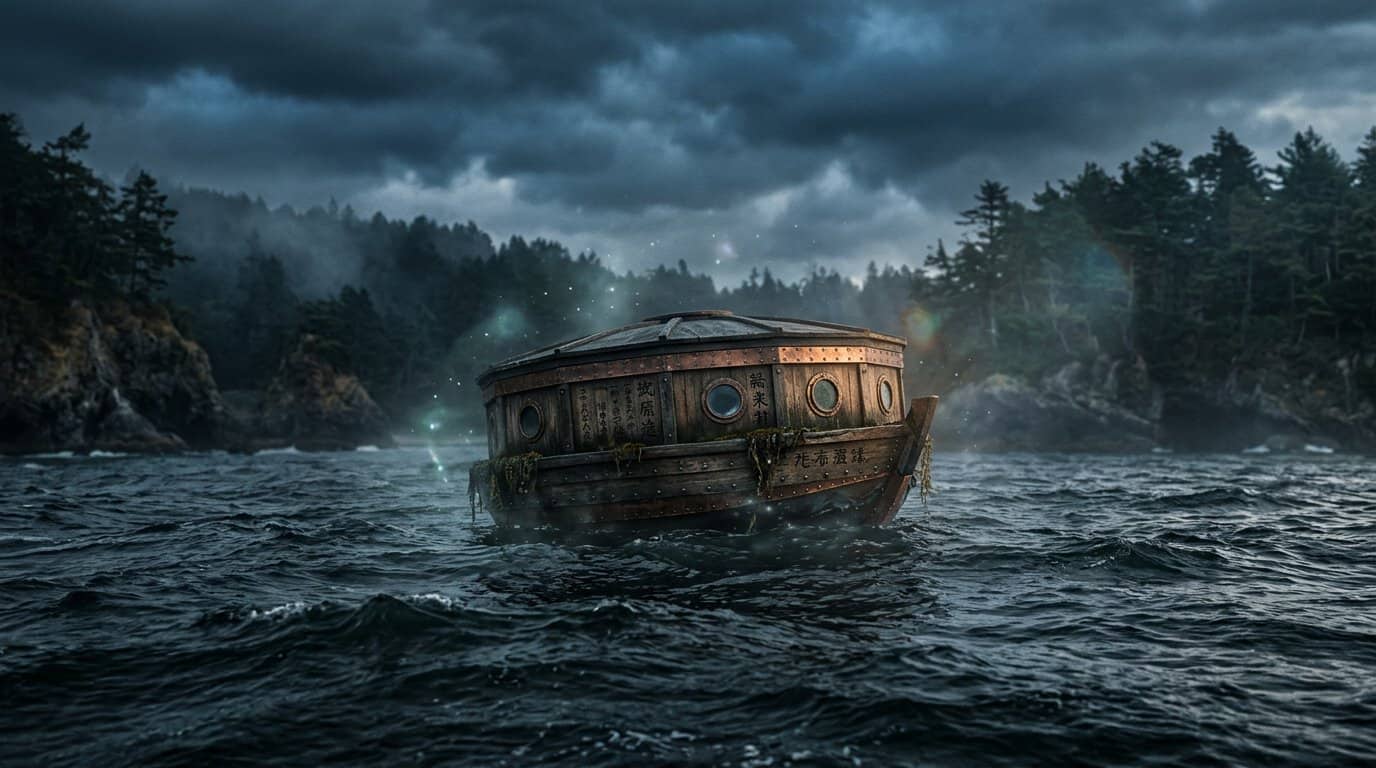
The Utsuro-bune encounter rests on a real historical record of an unusual story, not on a recovered object. Several Edo-period manuscripts describe a round, hollow vessel reaching the coast of Hitachi Province, present-day Ibaraki, on February 22, 1803. In these accounts, fishermen found a young woman inside, along with strange markings and objects they could not explain, before sending her back to sea. Texts such as Toen Shōsetsu and Hyōryū Kishu help show that the tale circulated in Japan, although they do not prove every detail or confirm that the writers witnessed the event.
The records leave room for a real but misunderstood coastal incident, perhaps involving an unfamiliar boat, a foreign castaway, or a story shaped by local folklore. They do not provide a surviving craft, biological evidence, independently confirmed witnesses, or evidence of an official investigation. Details such as the vessel’s windows, metal-like panels, and unknown writing can sound strikingly modern after translation, but words like “hollow boat” also carry symbolic meaning within their historical setting. The distance between what an Edo-era writer recorded and what a modern reader imagines is therefore important.
Modern UFO claims often treat the Utsuro-bune as an early account of an alien spacecraft, yet that conclusion goes beyond the evidence. The encounter is better understood as a meeting point between folklore, coastal rumors, translated descriptions, and the possibility that an unusual event inspired the story. Comparing it with other historical mysteries can reveal how eyewitness reports change as they are copied, illustrated, and retold. The enduring question is not simply whether the woman came from another world, but what the surviving records can honestly tell about the world in which the story began.
Utsuro-Bune Encounter Conclusion
On February 22, 1803, according to later Edo-period accounts, fishermen in Hitachi Province, now Ibaraki Prefecture, found a strange round vessel drifting near the shore. Inside was a young woman who spoke an unfamiliar language and carried a small box, while the craft was marked with unusual symbols and windows. The fishermen reportedly returned her to the sea after failing to learn who she was or where she came from. Versions of the story appear in several illustrated manuscripts, including Toen Shosetsu from 1825 and Ume no Chiri from 1844, showing that the tale circulated widely in Japan.
Those records make the Utsuro-bune encounter valuable evidence of Edo-period storytelling, local belief, and interest in unusual events. They do not, however, confirm that the vessel was extraterrestrial, since no craft, physical remains, independent eyewitness record, or official investigation has been found. Some researchers view the story as folklore shaped by familiar legends about strangers from distant lands, while others suggest that a real maritime incident may have been misunderstood or embellished as it was copied and retold. The vessel’s design can resemble modern ideas about flying saucers, but applying those ideas to an older Japanese account risks reading the present into the past.
Utsuro-bune remains intriguing because its manuscripts preserve a detailed mystery while leaving its central questions unanswered. It may be best understood as a blend of local folklore, a misunderstood encounter at sea, and later literary imagination, although the surviving evidence cannot settle the matter completely. The story is historically real as a documented tradition, even if its extraordinary interpretation remains unproven. Readers can decide for themselves: is the Utsuro-bune encounter best explained as folklore, a maritime event remembered through legend, or an enduring mystery that still deserves an open-minded look?
What the Utsuro-bune Encounter Reveals
The Utsuro-bune encounter remains a fascinating record from Japan’s Edo period, not confirmed proof of an extraterrestrial visit. On February 22, 1803, fishermen in Hitachi Province, now Ibaraki Prefecture, reportedly found a strange round vessel carrying a young woman who spoke an unknown language. Several illustrated manuscripts preserve versions of the story, showing that the account circulated widely and may reflect a real local report, a folktale, or a blend of both. The vessel’s unusual design and the woman’s mysterious objects naturally invite comparisons with modern reports of unusual aerial encounters, but those comparisons remain interpretations rather than evidence.
What makes the case valuable is the way it sits between history, folklore, and the unexplained. No surviving craft, biological remains, official investigation, or independently verified testimony establishes what the fishermen actually saw, while differences among the manuscripts suggest that the story changed as it was copied and retold. A damaged boat, a foreign visitor, or a symbolic tale are all possible explanations, and the idea of a nonhuman craft cannot be proven from the available record. The Utsuro-bune encounter therefore encourages curiosity with caution, leaving readers to consider whether it preserves a distorted event, an imaginative legend, or an early account that still holds an unanswered clue.
Frequently Asked Questions
1. What is the Utsuro-bune encounter?
The Utsuro-bune encounter is an Edo-period story about fishermen who reportedly found a strange, round vessel drifting near Japan’s Hitachi coast on February 22, 1803. Inside was a young woman with unfamiliar features, clothing, and language, along with a small box she refused to release. The event remains a blend of historical folklore, mystery, and unanswered questions.
2. Where and when did the Utsuro-bune encounter happen?
The reported encounter took place off the coast of Hitachi Province, in present-day Ibaraki Prefecture, Japan. The commonly cited date is February 22, 1803, during the Edo period. The fishermen reportedly examined the vessel and its passenger before sending both back out to sea.
3. What did the Utsuro-bune vessel look like?
Edo-period accounts describe the craft as a round, hollow vessel several meters across, with a dark reddish-brown exterior, metal fittings, and glasslike windows. Strange symbols reportedly appeared on parts of the vessel, but no one could translate them. Later writers compared its shape to a flying saucer, although the original reports describe a boat found drifting on the sea.
4. Which historical documents describe the Utsuro-bune story?
Several nineteenth-century manuscripts preserve versions of the encounter, including Ume no Chiri, Toen Shosetsu, and Hyoryu Kishu. These works include written descriptions and drawings of the vessel and its passenger, giving the story a genuine historical record. However, they were not modern investigation reports, and their differences show that the account circulated in more than one form.
5. Who was the woman found inside the vessel?
The woman was described as young, pale-skinned, and dressed in unfamiliar clothing, with long reddish hair. Her language could not be understood by the fishermen, and she reportedly carried a small box that she refused to let anyone touch. No confirmed identity, homeland, or later record has connected her to a known person.
6. Was the Utsuro-bune vessel an extraterrestrial spacecraft?
There is no confirmed evidence that the vessel came from another planet or that the woman was extraterrestrial. The round shape, strange markings, and unfamiliar passenger invite that possibility, but the manuscripts provide no scientific proof, physical remains, or official investigation to support it. An unusual boat, a misunderstood foreign visitor, a folklore tradition, or an event altered through retelling remain possible explanations.
7. Why do some people compare Utsuro-bune with a UFO sighting?
Modern readers often notice similarities between the vessel’s round shape, windowlike features, metal fittings, and unreadable symbols and popular images of flying saucers. That comparison began long after the Edo-period accounts and reflects modern expectations more than the original context. The documents themselves present the object as a mysterious craft found at sea, not as a vehicle seen flying through the sky.
8. What is known for certain about the Utsuro-bune encounter?
It is certain that Edo-period manuscripts recorded the story and preserved illustrations of a strange vessel and its passenger. It is not certain that the event happened exactly as described, because no wreckage, official report, or independent physical evidence has been found. The strongest conclusion is that Utsuro-bune is a documented historical mystery whose meaning remains open to careful debate.