

Black Volga Legend: The Cold War Car That Became A Fear Symbol
A black car slows beside a school, and the playground suddenly falls silent. This is the heart of the Black Volga legend, a chilling story that spread through Poland in the 1960s and 1970s. According to the tale, a black Soviet Volga was used to abduct children and other vulnerable people. Its polished body, links to state power, and whispered stories of secret kidnappings made the vehicle seem less like a car than a warning.
Some details may have grown with every retelling, but the fear behind the legend was real. Rumors of missing children, organ theft, secret police, and shadowy officials moved through homes, schools, and newspapers, blending genuine uncertainty with speculation. The Black Volga remains a powerful example of how a familiar object can become a symbol of danger, and how folklore may preserve anxieties that official records leave unexplained.
Key Takeaways
- The Black Volga legend became widespread in Poland during the 1960s and 1970s, when the black Soviet Volga symbolized government authority, privilege, secrecy, and danger.
- Stories about abductions, organ theft, secret police, and mysterious drivers were fueled by real anxieties about child safety, unexplained disappearances, censorship, and distrust of communist institutions.
- No reliable evidence confirms a coordinated kidnapping network operating through Black Volgas; folklorists generally classify the tale as a rumor-and-legend complex rather than documented history.
- The legend endures because it shows how communities transform an ordinary object into a symbol of fear, preserving Cold War tensions and social memory through repeated retelling.
Black Volga Legend Introduction
A black Soviet Volga waits beside a school gate, its dark windows turned toward children heading home. On another day, the same car seems to appear on an empty street, then vanish before anyone can learn who was driving. This unsettling image lies at the heart of the Black Volga legend, known in Poland as Czarna Wołga. The story became especially widespread in Poland during the 1960s and 1970s, when a government-associated Volga could signal authority, secrecy, and danger.
The rumor claimed that strangers used the car to abduct children, steal organs, or target other vulnerable people. Versions changed from town to town, and similar black-car stories circulated across Central and Eastern Europe. Fear of secret police, distrust of communist institutions, reports of unexplained disappearances, and older local prejudices helped the tale take root. Parents, teachers, children, journalists, and officials all played a part in passing it along, often adding new details each time.
The Black Volga legend remains compelling because it sits between documented history and frightening folklore. There is no reliable evidence of a single kidnapping organization operating through black Volgas, yet real anxieties about child safety and political secrecy gave the story emotional force. This article follows the legend’s Cold War setting, examines the claims behind the mysterious vehicle, and considers why the rumor survived long after the original cars disappeared. The goal is not to dismiss every frightening account, but to separate what can be supported from what belongs to the powerful world of urban legend.
Black Volga Origins In Communist Poland
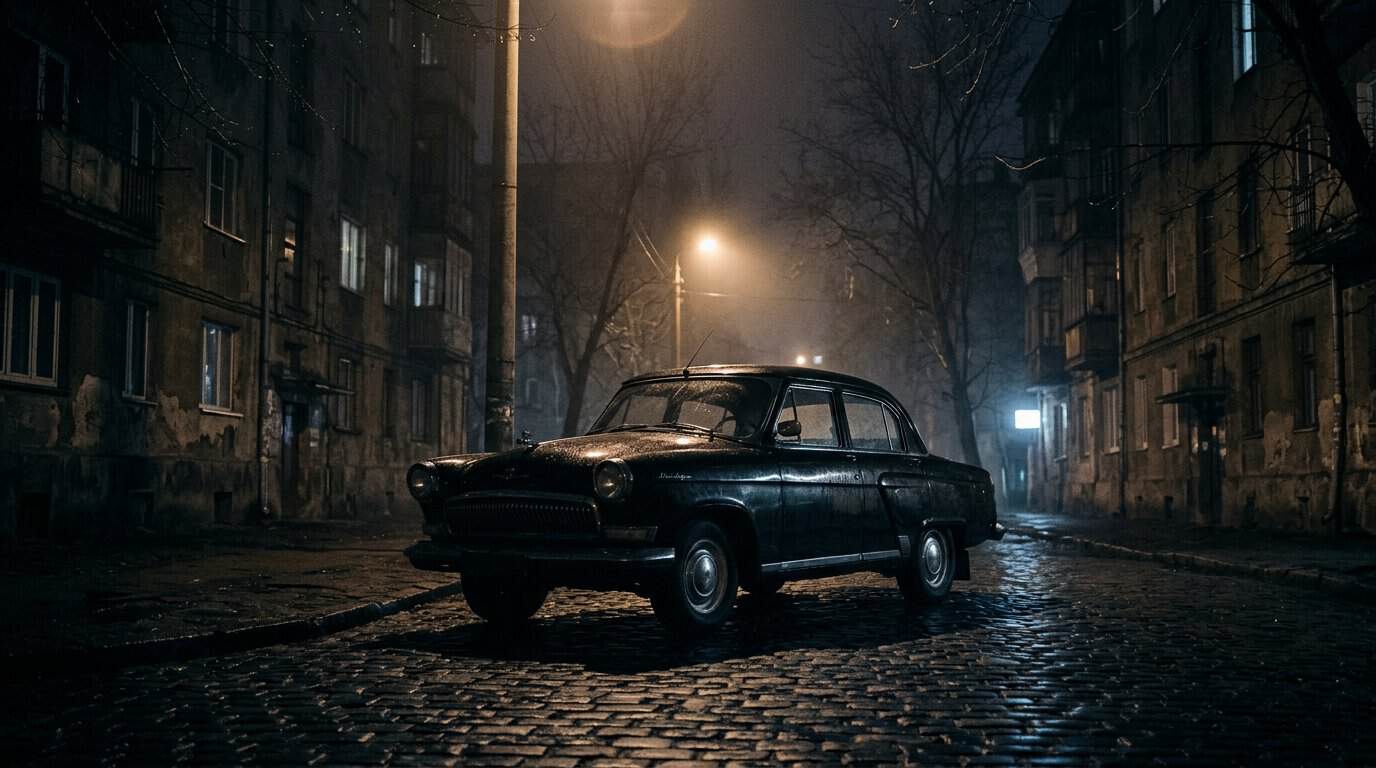
In communist Poland, the black Soviet Volga became more than a large automobile. During the 1960s and 1970s, its dark body and association with government officials made it a familiar sign of authority, privilege, and restricted information. Most people could not easily obtain such a car, so its appearance outside a school, housing block, or quiet street could feel significant. That sense of distance helped transform an ordinary vehicle into a symbol of powerful people who seemed to operate beyond public scrutiny.
Rumors soon gave the car a darker role, claiming that strangers in a Black Volga watched children, offered them rides, or made them disappear. Some versions blamed secret police agents, while others connected the vehicle to wealthy foreigners, religious outsiders, or imagined groups seeking victims for organ theft. Polish folklorists generally understand these stories as a legend complex shaped by repeated retelling, not as proof of a single kidnapping network. Even so, the rumors reflected genuine fears about child safety, unexplained absences, and the limited information available from official institutions.
The legend gained strength because distrust was already part of daily life under communist rule. Families often suspected that police reports concealed uncomfortable facts, while censorship made it difficult to test rumors against reliable information. A parked black Volga could therefore become a small mystery that carried the weight of wider social tension, especially when children repeated the warning at school or adults passed it along at home. No documented evidence has established a real Black Volga organization, yet the story remains revealing because it shows how fear, secrecy, and memory can turn a government-associated car into an enduring urban legend.
Black Volga Kidnapping Claims
In Poland, the Black Volga legend became especially widespread during the 1960s and 1970s. Stories described a dark Soviet Volga stopping near schools or quiet streets, with mysterious drivers supposedly luring children inside. Some accounts claimed the vehicle belonged to secret police officers, wealthy officials, or foreigners seeking victims, while others linked it to missing children and organ theft. These details changed from one neighborhood to another, and no reliable evidence has established a real kidnapping network behind the tales.
Related black-car legends appeared across Central, Eastern, and Southeastern Europe, but their details reflected local fears. Polish versions often focused on children, communist power, and the intimidating image of a government-associated car, while stories elsewhere sometimes involved black luxury cars, limousines, or vehicles connected to criminals, foreigners, or political agents. In some communities, the supposed victims were travelers, political opponents, or people who vanished without explanation rather than schoolchildren. The recurring figure was not always the Black Volga itself, but the unsettling driver whose identity and purpose remained hidden.
The story gained strength in a period shaped by limited information, distrust of official institutions, and anxious conversations about unexplained disappearances. Folklorists generally describe it as a rumor-and-legend complex rather than verified evidence of organized abductions. That conclusion does not erase the real fears that gave the tale meaning, especially concerns about child safety and the silence surrounding some missing-person cases. The Black Volga remains intriguing because an ordinary, recognizable car became a moving symbol of Cold War uncertainty, showing how social memory can turn suspicion into a story that lasts for generations.
Evidence Behind The Black Volga
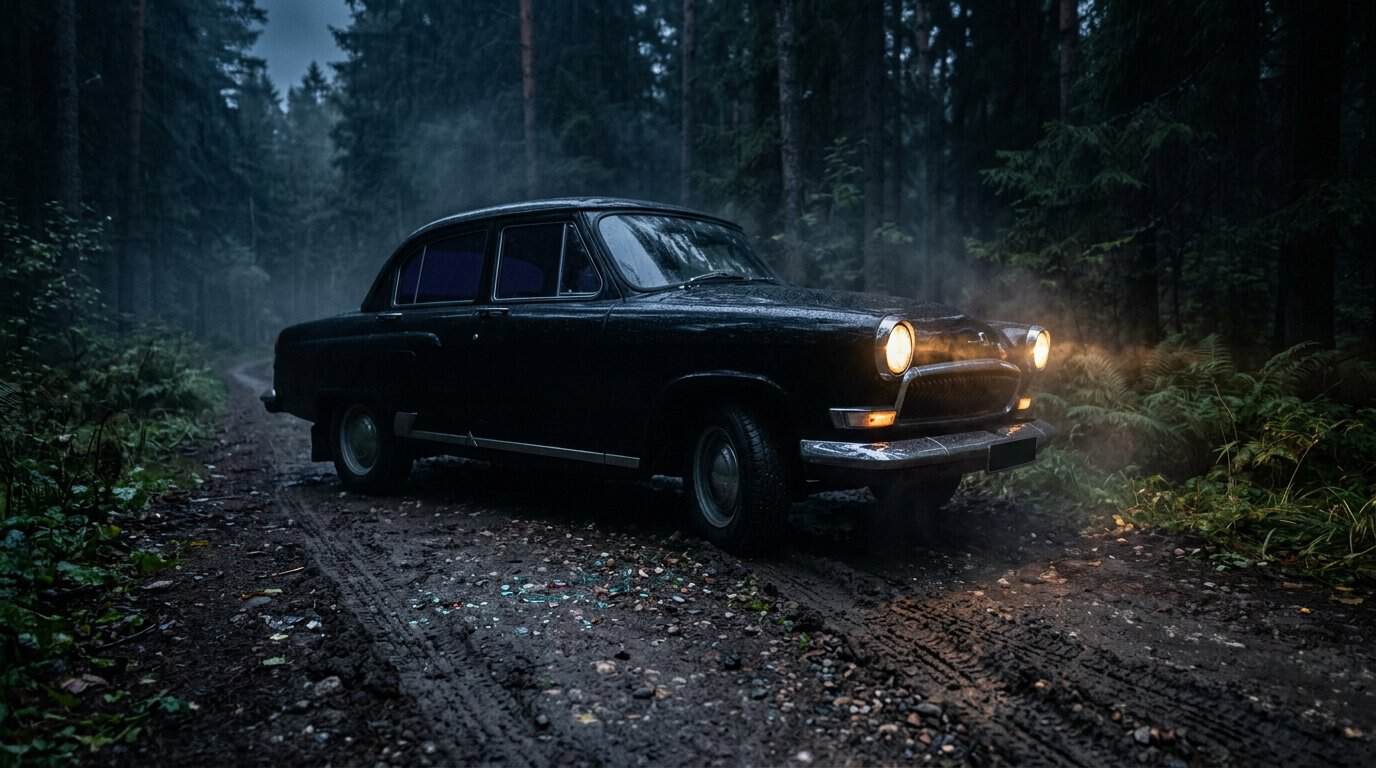
Folklore research places the Black Volga legend most strongly in Poland during the 1960s and 1970s, when the black Soviet Volga became a familiar symbol of official power and secrecy. Newspaper archives and local recollections preserve reports of suspicious cars, missing children, and warnings about organ theft, but these accounts rarely provide the details needed to connect one incident to another. A frightening story could begin with a real disappearance, a misunderstood vehicle, or a parent’s warning, then gain new details as it passed through a neighborhood. Children repeated what they heard at school, teachers and parents added cautions, and journalists or officials sometimes repeated the rumor while trying to explain it. In that process, separate events could appear to be evidence of one hidden pattern.
Historical documentation has not revealed a coordinated organization using Black Volgas to abduct children, nor a consistent chain of police reports proving that such a group existed. That absence does not erase every troubling disappearance or witness account, but it does make the larger kidnapping story difficult to verify. Folklorists generally view the legend as a rumor-and-legend complex shaped by Cold War distrust, fear of secret institutions, and anxiety about vulnerable children. The repeated stories therefore show something real about the era, even when they do not confirm the alleged kidnappers: communities were trying to make sense of danger in a world where official information was limited and suspicion traveled quickly.
Black Volga Memory In Modern Culture
In Poland during the 1960s and 1970s, the Black Volga shifted from an unfamiliar car into a moving symbol of danger. The black Soviet Volga looked official, expensive, and closely tied to the power of the communist state, making it an ideal vehicle for stories about secret police, abductors, and missing children. As the tale spread through families, schools, newspapers, and neighborhood conversations, immediate fear gradually became a form of social memory. Folklore research treats the story as a rumor-and-legend complex rather than proof of a single kidnapping network, while still showing how real anxieties gave the rumor emotional force.
A period photograph of a black Soviet Volga parked on a 1960s or 1970s Polish street would help readers see why the vehicle felt so imposing, especially with a caption explaining its government associations and limited availability. A simple timeline graphic could trace the legend from postwar car culture and early rumors, through its peak in communist-era Poland, to later internet retellings and horror fiction. The story also connects naturally with related pages on organ theft rumors, phantom vehicles, and Cold War urban legends, where similar fears about anonymous cars and hidden institutions appear across Eastern Europe. These visual and thematic links show that the Black Volga was not an isolated tale, but part of a wider pattern of rumor shaped by uncertainty.
Today, the Black Volga is remembered less as an immediate threat than as a compact image of communist-era Poland, childhood warnings, and distrust of official power. Some versions may have grown from ordinary encounters with unfamiliar vehicles, genuine disappearances, or sensational reporting, while others carried older prejudices about outsiders and secret organizations. That mixture helps explain why the legend remains compelling even though documented evidence for a coordinated abduction operation is lacking. When readers compare family memories with historical records, do they see the Black Volga mainly as a warning story, a reflection of political fear, or a legend that may still preserve fragments of real events?
Black Volga Legend Conclusion

The Black Volga legend shows how an ordinary object can become frightening when it carries the weight of its time. In Poland during the 1960s and 1970s, the black Soviet Volga was recognizable, expensive, and associated with officials, authority, and hidden power. Stories claimed that its occupants abducted children or targeted other vulnerable people, sometimes for organ theft or secret experiments. No evidence has confirmed a single kidnapping network behind the legend, and folklorists generally understand it as a rumor-and-legend complex shaped by fear, repetition, and uncertainty. Still, the stories reflected real anxieties about child safety, unexplained disappearances, and institutions that many people did not trust.
Over time, the Black Volga became more than a tale about a strange vehicle moving through a quiet street. It captured the atmosphere of Cold War Eastern Europe, where political secrecy, social tension, and local prejudice could turn an unfamiliar car into a warning sign. Parents, teachers, children, journalists, and officials all helped pass the story along, giving it new details while preserving its central image. Today, the legend survives as both a cautionary story and a piece of retro cultural memory, showing how communities make sense of dangers they cannot clearly see. Is the Black Volga best understood as a warning about vulnerable people, a reflection of Cold War society, or a haunting fragment of the past that still invites belief?
How the Black Volga Became a Legend
The Black Volga legend remains one of the clearest examples of how fear can turn an ordinary object into a symbol of danger. In Poland during the 1960s and 1970s, the black Soviet Volga became linked in popular stories to child abductions, organ theft, secret police, and unexplained disappearances. Similar black-car rumors spread across Central, Eastern, and Southeastern Europe, shaped by distrust of authorities, Cold War tensions, and local fears about vulnerable children. Although no reliable evidence confirms a coordinated kidnapping network operating through these cars, real crimes and missing-person cases may have helped the stories feel believable.
What gives the legend its lasting power is the way it blends memory, rumor, and social history. A dark vehicle waiting near a school could become a warning repeated by parents, teachers, and children, with each retelling adding new details and deeper suspicion. The Black Volga may not reveal a hidden organization, but it does show how communities interpret danger when official information is limited or untrusted. Readers can consider which parts of the legend reflect documented events and which belong to collective imagination, then compare it with other Cold War mysteries and urban legends that continue to shape public memory.
Frequently Asked Questions
1. What is the Black Volga legend?
The Black Volga legend is a Polish urban legend about a black Soviet Volga allegedly used to abduct children and other vulnerable people. The story spread widely during the 1960s and 1970s, turning an official-looking car into a symbol of secrecy, danger, and hidden power.
2. Where did the Black Volga legend begin?
The legend became especially widespread in Poland, where it was known as Czarna Wołga, or Black Volga. Similar black-car stories appeared across Central and Eastern Europe, but the Polish version gained strength from public fear of secret police, unexplained disappearances, and distrust of communist institutions.
3. Why was the Volga considered frightening?
The Soviet Volga was a large car often linked with government offices, senior officials, and state services. Its dark paint, shadowed windows, and uncommon appearance near schools made it seem powerful and difficult to identify, giving ordinary sightings an unsettling meaning.
4. Did Black Volga drivers really abduct children?
There is no reliable evidence that a coordinated Black Volga kidnapping network operated as described in the rumors. Individual crimes and missing-person cases may have helped fuel the story, but repeated retellings added claims about secret agents, organ theft, and mysterious drivers that were not supported by clear records.
5. Why did people believe the Black Volga stories?
The rumors grew in an atmosphere where official information was limited and many people distrusted authorities. A missing child, an unfamiliar car, or a warning from a teacher could quickly become part of a larger story, especially when parents were already worried about safety and had few trusted ways to verify what had happened.
6. Was organ theft part of the original Black Volga legend?
Organ theft appears in some later and regional versions of the legend rather than in every early account. Such details often emerge in folklore when older fears about abduction combine with modern anxieties about medicine, hidden institutions, and the frightening idea that a missing person may have been used for an unknown purpose.
7. How can the Black Volga legend be separated from historical fact?
The legend should be compared with police records, newspaper reports, court documents, and documented missing-person cases instead of being treated as one confirmed event. Historical evidence can show whether a specific disappearance or crime occurred, while folklore helps explain how fear transformed separate incidents into a single story about a mysterious car.
8. Why does the Black Volga legend still matter today?
The legend shows how a familiar object can become a warning when society feels uncertain or powerless. It also connects with wider mysteries involving missing people, secret policing, and unexplained sightings, making it useful for studying how communities preserve fear, memory, and unanswered questions long after the original rumors have faded.