The Giant Of Castelnau And The Mystery Of France’s Ancient Colossus
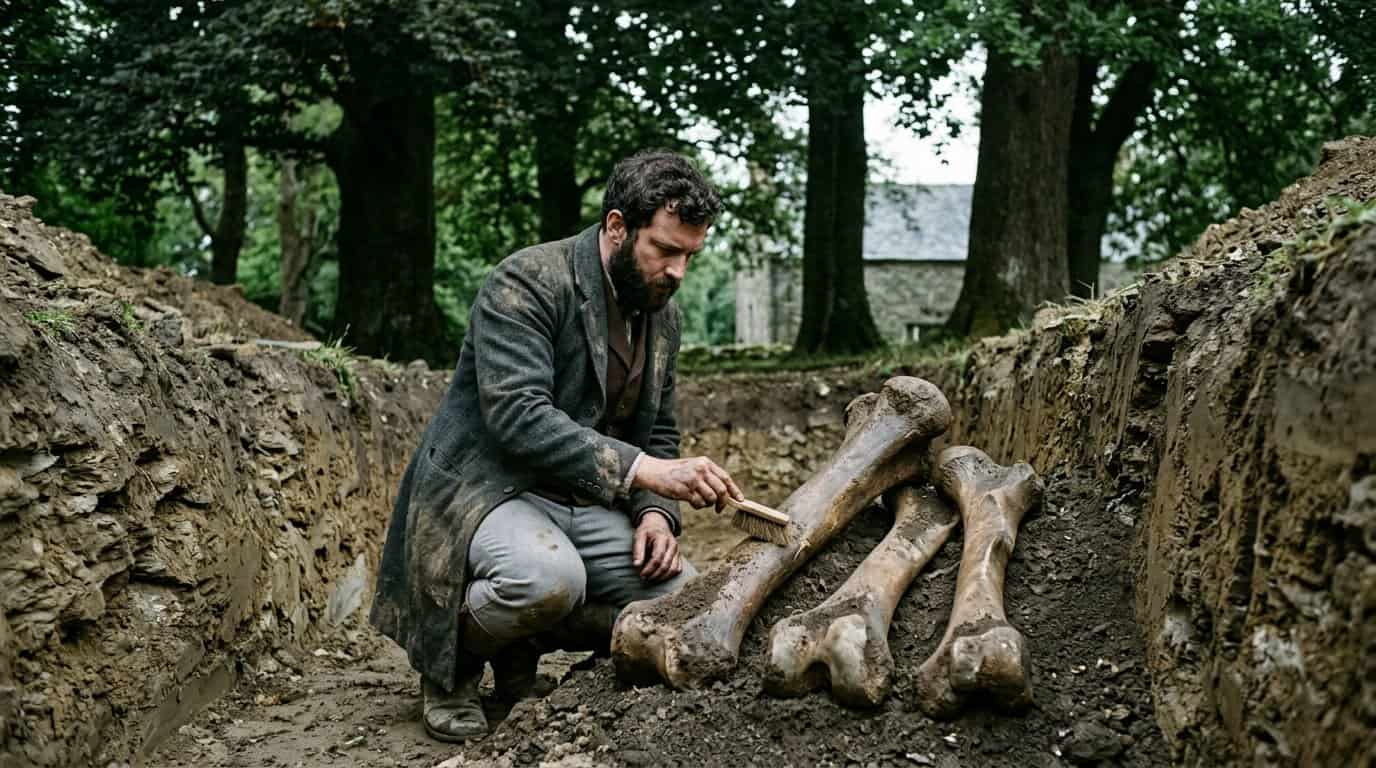
In the winter of 1890, a discovery in a quiet French burial mound sent shockwaves through the scientific community and sparked a mystery that remains unsolved today. While digging in the soil of Castelnau-le-Lez, anthropologist Georges Vacher de Lapouge unearthed three massive bone fragments that defied all conventional logic. These remains, which became known as the giant of Castelnau, appeared to belong to a human of impossible proportions. Based on the size of the humerus and tibia, experts at the time estimated the individual stood over eleven feet tall.
The find was not just a local curiosity. It was featured in leading scientific journals and examined by some of the era’s most respected researchers. However, as the decades passed, the physical evidence vanished into the archives of history, leaving behind only grainy photographs and written reports. This disappearance has fueled a century of debate between those who believe in an ancient race of giants and skeptics who demand modern proof. Today, the story sits at the fascinating intersection of genuine archaeology and the unexplained, waiting for a new generation to uncover the truth.
Key Takeaways
- Anthropologist Georges Vacher de Lapouge discovered three massive bone fragments in 1890 that belonged to a human estimated to stand over eleven feet tall.
- Scientific measurements published in the journal La Nature revealed the bone volume and density were nearly double those of a standard adult male, suggesting a physically powerful individual rather than a victim of disease.
- The physical remains vanished after being sent to the University of Montpellier, leaving only detailed historical records and sketches for modern researchers to analyze.
- The discovery suggests the existence of a lost lineage of giants or extreme biological anomalies during the Bronze Age that challenge the conventional timeline of human evolution.
Georges Vacher De Lapouge And The Castelnau Discovery
In the winter of 1890, Georges Vacher de Lapouge set out to explore a Bronze Age burial mound in Castelnau-le-Lez, France. While excavating the ancient tumulus, he stumbled upon three bone fragments that seemed to defy the known laws of human biology. These remains included a humerus, a tibia, and a femoral shaft, all found within the deep sediment of the earth. Lapouge noted that the volume of these bones was nearly double that of a normal human specimen. The discovery immediately sparked a wave of curiosity across the scientific community of the time.
After carefully measuring the fragments, Lapouge estimated that the individual would have stood an incredible eleven feet and six inches tall. He published his findings in the journal La Nature, where he provided detailed illustrations comparing the giant remains to standard human bones. According to his reports, the bone tissue was exceptionally dense and showed no signs of disease or abnormality. This suggested that the giant of Castelnau was not a victim of a growth disorder but belonged to a physically powerful race of people. The sheer scale of the discovery hinted at a hidden chapter of European history that had long been forgotten.
While modern science often views such claims with skepticism, the documentation provided by Lapouge remains a compelling piece of historical evidence. He was a trained anthropologist who approached the excavation with a methodical eye, documenting the exact placement of the bones within the Bronze Age layers. Although the physical remains vanished over a century ago, the detailed records continue to fuel theories about a lost lineage of giants. It raises the question of whether ancient legends of massive beings in the French countryside might actually be rooted in physical reality. What do you think happened to these massive bones after they were sent to the university for study?
Scientific Measurements Of The Eleven Foot Tall Man
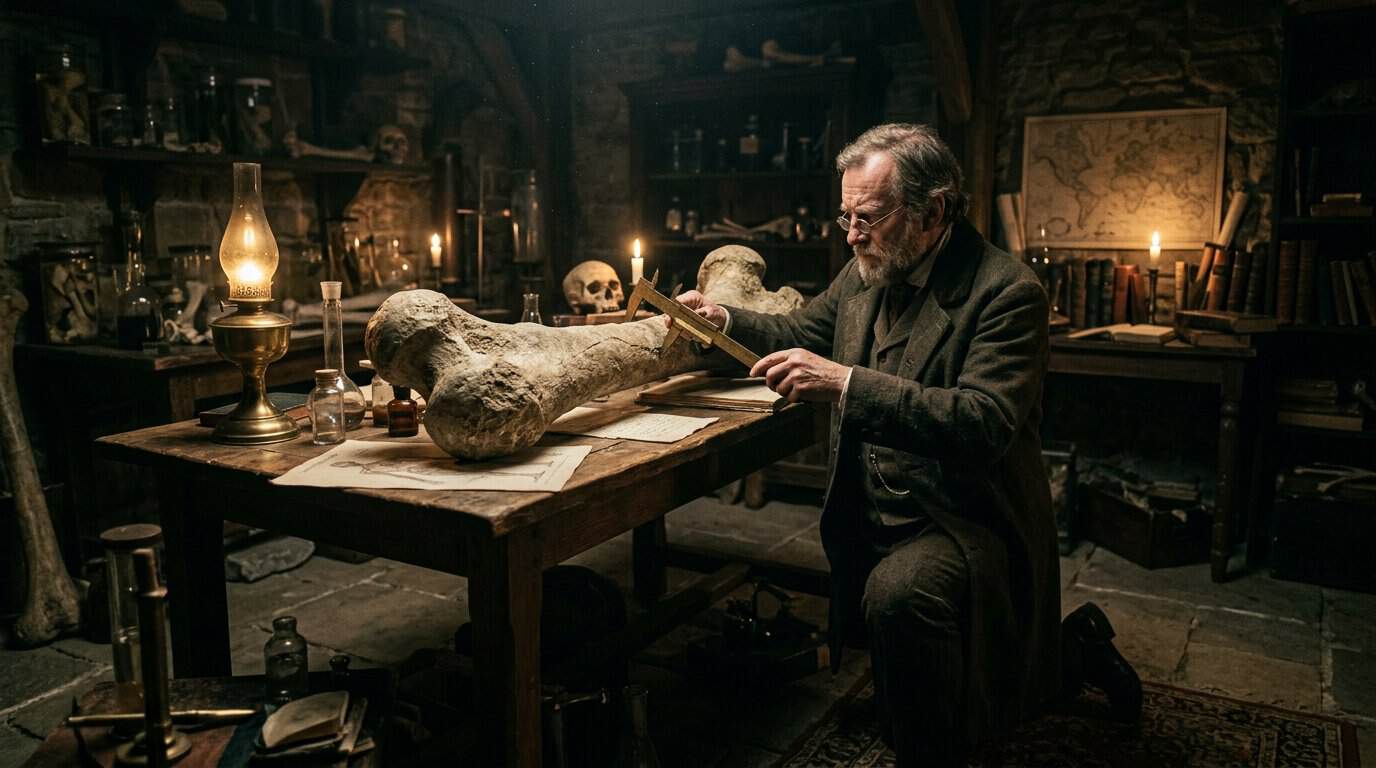
The measurements published in the scientific journal La Nature in 1890 paint a startling picture of a human whose size defies modern expectations. Georges Vacher de Lapouge, the anthropologist who made the discovery, carefully examined three specific bone fragments found at the base of a Bronze Age burial mound. The humerus, or upper arm bone, and the tibia, which is the shin bone, were found in a state that suggested they belonged to a truly massive individual. According to the reports, the volume of these fragments was more than double that of a normal sized adult male. Lapouge noted that the thickness of the bone walls was also significantly greater than what is typically seen in the human species.
When it came to calculating the total height of the individual, the specific dimensions of the femoral mid-shaft played a crucial role. By comparing the length and circumference of these fragments to standard human anatomy, Lapouge estimated that the man would have stood roughly eleven feet and six inches tall. This staggering height would make him one of the largest humans to ever walk the earth, far exceeding any recorded modern giants. The scientific community at the time took these measurements seriously enough to feature them in prominent journals, sparking a debate about a lost race of giants. These proportions suggest that the Giant of Castelnau was not just a tall person, but a being of incredible physical power and scale.
The sheer scale of these remains challenges our current understanding of human history and the biological limits of our ancestors. While some researchers suggest the bones could be the result of a rare growth disorder, the specific density and structure described by Lapouge point toward a healthy, albeit massive, frame. It is fascinating to consider that such a discovery was documented with such precision before the evidence seemingly vanished into history. These measurements serve as a bridge between ancient legends of giants and the rigorous world of nineteenth century anthropology. If these fragments were indeed human, they represent a forgotten chapter in the story of our origins that remains largely unexplored today.
Lost Evidence And The Search For Truth
The mystery of the Giant of Castelnau took a frustrating turn when the physical evidence vanished from the public record over a century ago. After Georges Vacher de Lapouge presented his findings to the scientific community in the journal La Nature, the massive bone fragments were reportedly sent to the University of Montpellier for further study. Since that time, the humerus, tibia, and femoral shaft have disappeared, leaving researchers with only old sketches and written reports to analyze. This lack of physical remains makes modern carbon dating or DNA testing impossible, which keeps the debate between mainstream science and alternative historians alive. Many curious minds wonder how such significant artifacts could simply be lost to time without a trace.
Mainstream archaeologists often suggest that the bones might have been misidentified or were simply the result of a rare medical condition like gigantism. However, those who believe in suppressed history argue that the disappearance of the bones is part of a larger pattern to hide evidence of ancient giants. These researchers point to the detailed measurements provided by Lapouge, who was an experienced anthropologist, as proof that the discovery was legitimate and not a simple mistake. They suggest that the sheer size of the individual, estimated at over eleven feet tall, challenges the conventional timeline of human evolution. This tension creates a fascinating divide between those who trust the official record and those who suspect a chilling mystery is being hidden.
Today, the search for the truth about the Castelnau discovery continues through the study of historical archives and similar find sites across Europe. While the physical bones are missing, the documentation remains a compelling piece of evidence for anyone interested in the mysteries of the Bronze Age. Enthusiasts often compare this case to other legends of giants found in ancient burial mounds, seeking a common thread that might explain our forgotten past. The story serves as a reminder that history is often more complex than what is found in modern textbooks. Do you believe these bones were lost by accident, or is it possible that evidence of ancient giants is being intentionally kept from the public?
The Enormous Mystery of France’s Neolithic Giant
The discovery of the Giant of Castelnau remains one of the most intriguing chapters in the study of Europe’s ancient past. By uncovering bones that suggested a human reaching over eleven feet in height, Georges Vacher de Lapouge challenged the traditional boundaries of Neolithic history. These findings suggest that the Bronze Age environment of France may have been home to individuals who defy our modern understanding of human biology. While the physical evidence has vanished into the corridors of time, the detailed reports and measurements recorded in the late 19th century continue to fuel the fire of curiosity. This mystery serves as a reminder that the earth still holds secrets that might rewrite the story of our ancestors.
The disappearance of these massive bone fragments has created a void where scientific certainty once stood, leaving room for both skepticism and wonder. Some researchers believe these remains were evidence of a forgotten lineage of giants, while others wonder if they were simply extreme biological anomalies. The lack of modern access to the Castelnau bones prevents a final verdict, yet the historical documentation remains a compelling piece of a much larger puzzle involving ancient giants across the globe. Exploring these fringe possibilities allows us to look at the Neolithic era through a lens of untapped potential and hidden truths. It invites us to consider that the history we know might only be a small fraction of the reality that once existed.
What do you make of the incredible measurements reported by Lapouge at the Castelnau burial site? It is fascinating to imagine a world where such towering figures walked among the early inhabitants of France. Do you believe these bones represent a lost group of humans, or could they be the result of a rare medical condition that has since been forgotten? Some people even suggest that such finds are often suppressed to keep our established history intact and unchallenged. Similar accounts, such as the mystery of the giant of Kandahar, continue to captivate those who believe that massive humanoids once existed in remote corners of the world. We would love to hear your thoughts and theories on this archaeological mystery in the comments below.
Frequently Asked Questions
1. Who was the person responsible for finding the giant of Castelnau?
Georges Vacher de Lapouge, a French anthropologist, discovered the massive remains during the winter of 1890. He was exploring a Bronze Age burial mound in Castelnau-le-Lez when he unearthed the oversized bone fragments. His findings were documented in several respected scientific journals of that era.
2. How tall was the giant estimated to be?
Based on the size of the humerus and tibia fragments, experts estimated the individual stood over eleven feet tall. Some specific measurements suggested a height of eleven feet and six inches. This is nearly double the height of an average human being from that time period.
3. What specific bones were discovered in the burial mound?
The discovery consisted of three distinct bone fragments found deep within the earth. These included a humerus (upper arm bone), a tibia (shin bone), and a femoral shaft (thigh bone). Each piece was noted for having a volume nearly twice as large as a standard human specimen.
4. Where can the physical bones be seen today?
The physical evidence unfortunately vanished into historical archives many decades ago. While grainy photographs and detailed written reports still exist, the actual bones are no longer available for modern testing. This disappearance remains one of the most frustrating parts of the mystery for researchers.
5. Was the discovery taken seriously by the scientific community?
The find was featured in leading scientific journals such as La Nature and was examined by respected researchers of the late 19th century. It was not merely a local legend, as it underwent formal measurement and study by professionals in the field of anthropology. The sheer scale of the bones defied the conventional logic of the time.
6. What are the main theories about the origin of these remains?
Some researchers believe the bones belong to an ancient race of giants that once inhabited Europe during prehistoric times. Others suggest the remains could represent a rare case of extreme gigantism or even a misunderstood fossil from an earlier species. The truth remains hidden at the intersection of genuine archaeology and the unexplained.